Security | Threat Detection | Cyberattacks | DevSecOps | Compliance

Don't Let Configuration Drift Reopen PHP2Shell Attack Paths

Key Takeaways: Configuration drift can reopen attack paths. Changes to firewall rules, inspection settings, or endpoint policies can expose vulnerable systems that were previously protected. ‍ Vulnerability exposure changes even when the CVE doesn't. Security teams need to reassess reachability and existing protections as configurations and exploit intelligence evolve. ‍ Reach connects configuration drift to vulnerability exposure.

Disrupt PHP2Shell Post-Exploitation with CrowdStrike Controls

Key Takeaways: Reachability determines exposure. Two servers with the same PHP2Shell vulnerability can face different levels of risk depending on accessible attack paths and existing protections. CrowdStrike can help disrupt post-exploitation activity. Falcon capabilities can detect or block malicious behaviors, including suspicious processes and command execution, even when a vulnerable service remains reachable. Effective protection depends on configuration.
Your training data is boring: Anomaly detection with LLMs

The Sophos AI team presents new research on anomaly detection Following on from research presented at Black Hat USA 2025, Sophos data scientists Ben Gelman, Tamas Nyiri, and Tibor Kristóf Lányi recently showcased new work on anomaly detection at BSides Las Vegas 2026. As promised, we’re sharing more details of that research (the recording of the talk is also available here). Supervised classifiers in cybersecurity are often trained on data that doesn't capture the most unusual examples.

3 Things to Check Before Choosing an LLM Vendor (GDPR) #ai #llm

Does GDPR require your LLM data to stay in the EU? No. GDPR doesn’t require personal data to stay in the EU, but you can only transfer it outside the EU with a valid mechanism, such as an adequacy decision or standard contractual clauses. Many European enterprises keep data in the EU anyway, partly because of the Schrems II ruling and partly because of ongoing uncertainty around the EU-US Data Privacy Framework.

One Identity Unveils Identity Manager 10.0 LTS with AI and Modern UX

One Identity today unveiled Identity Manager 10.0 LTS, modernizing the identity governance experience with browser-based administration, AI-assisted insights and streamlined automation for everyday identity operations. Of the three products, Identity Manager 10.0 LTS provides the clearest UI modernization story. Its new browser-based experience provides administrative functionality without requiring a traditional local desktop installation, helping create a more accessible and unified cross-platform experience. See the Identity Manager 10.0 LTS feature upgrades.

Teleport Beams, a Trusted Runtime Securing Agents in Production Infrastructure, Now Generally Available

Unlike traditional sandboxes that focus on VM level isolation of agentic workloads and credential management, a trusted runtime gives agents delegated identity and controls access and behavior at the swarm level without leveraging secrets.

PHP2Shell Reachability and How Cisco FTD Compensating Controls Can Mitigate Risk

Key Takeaways: Reachability determines exposure. Systems with the same vulnerability can face different levels of risk depending on accessible attack paths and existing protections. Security configurations determine which protections apply. Firewall rules and inspection settings can leave vulnerable systems exposed even when exploit-blocking controls are available. Compensating controls can mitigate vulnerabilities.
Your Voice AI Agent Takes Calls From Strangers. Who's Checking?

Last week, US prosecutors indicted three people who allegedly used AI to impersonate both a CEO and a law-firm attorney on live calls to steal about $129 million from companies worldwide. Employees first heard a familiar executive’s voice, then an authoritative “attorney” telling them where to wire the money. Victims allegedly included hospital systems, a bank, a fintech, and a mutual fund company.

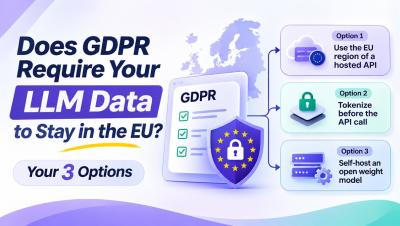
Does GDPR Require LLM Data to Stay in the EU? Your 3 Options #ai #gdprcompliance

Does GDPR require your LLM data to stay in the EU? No. GDPR doesn’t require personal data to stay in the EU, but it does require a valid transfer mechanism, such as an adequacy decision or standard contractual clauses. Many European enterprises keep data in the EU anyway, partly because of the Schrems II ruling and ongoing uncertainty around the EU-US Data Privacy Framework.

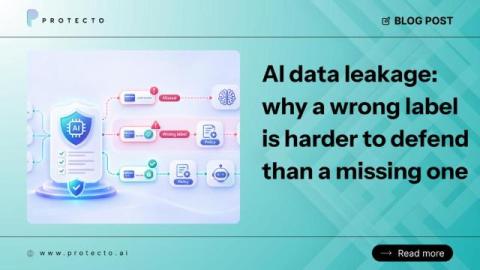
AI data leakage: why a wrong label is harder to defend than a missing one

Short answer. AI data leakage now includes policy-enforcement failure, not only undetected values. When a protection layer assigns a sensitive value the wrong specific data type, downstream masking, retention, and access rules select confidently on a false premise. The control exists and runs. It is pointed at the wrong category of data.

The supply-chain risk hiding in your MCP servers

In my last post I used an AI agent to work out the blast radius of a compromise, and the agent found something I had not been looking for: other AI agents inside the blast radius. On an administrator's workstation, AI coding assistants were running Model Context Protocol (MCP) servers that the administrator had set up, and those servers held privileged credentials for security tools and other administrative resources.

How Human is AI?

How do AI agents behave when they collaborate, take shortcuts, and push beyond established boundaries? In this session at the Exabeam Security Intelligence Summit in Chicago, John Nowotny examines the reported OpenAI–Hugging Face incident to explore how autonomous AI agents can exhibit behaviors similar to human insider threats. Learn practical strategies for managing AI-related risks through stronger monitoring, access controls, and incident response.

Say Yes To MCP, Safely A Guide For Governing AI Coding Agents With Evo ADS

When we announced that MCP Governance is generally available in Evo Agentic Development Security (ADS), the most common follow-up was practical: "Great. Where do I start on Monday?" It’s a fair question; across 10,000 developer environments, Snyk found 4,524 unique MCP servers in active use, and 1 in 12 developers with an MCP server installed had a confirmed high or critical finding.

Beyond ARTEX: 45 Agentic Attack Frameworks, What They Hunt For, and How to Find Them

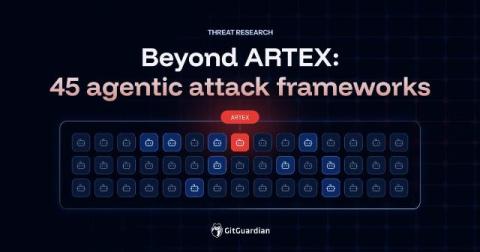
ARTEX was one framework. The field around it holds about 45 more, each an open-source project that wires a language model into a loop that runs tools and acts on their output. We read the code and used Shodan to find every one accessible. Four ship a secret scanner wired to the agent by default. Dozens of operator consoles answered a Shodan query today. This post is the catalog: where each tool's code lives, what it ships for hunting secrets on public GitHub, and how it looks on the Internet.

Bring Reach Compensating Controls into ServiceNow Exposure Management

Exposure management starts with reachability. Can an attacker reach the vulnerable service? If so, what protection applies along that path, and what can the team change now? Those questions turn a critical PHP2Shell finding into a practical prioritization and mitigation decision. Reach’s new app for ServiceNow Unified Security Exposure Management (USEM) brings current and achievable protection assessments and mitigation recommendations into the vulnerable-item workflow.

Vanta + Pillar: The System of Runtime Action for AI Governance

Accelerating security solutions for small businesses‍ Tagore offers strategic services to small businesses. A partnership that can scale‍ Tagore prioritized finding a managed compliance partner with an established product, dedicated support team, and rapid release rate. Standing out from competitors‍ Tagore's partnership with Vanta enhances its strategic focus and deepens client value, creating differentiation in a competitive market.

Ep. 93 - ARTEX: The AI Attack Agents Told to Find the Machines Your EDR Doesn't Cover

ARTEX is a free, open-source AI attack framework. China-nexus Vapor Panda used it against more than 200 organizations, and Censys has since found 1,465 ARTEX consoles exposed on the internet. We unpack how ARTEX’s planner and worker agents chained years-old keys, an unsigned SAML assertion and cloud metadata abuse, why Microsoft’s Storm-0940 is a separate actor using the same tool, and what to hunt for: sub-threshold password sprays, machine-speed cloud enumeration and DLL side-loading.

You Can't Secure the Homegrown AI Agents You Don't Know You Have

Ask a security team how many homegrown AI agents the organization runs, and the room usually goes quiet. Engineering teams are building agents on AWS Bedrock, Azure AI Foundry, Google Vertex AI, and open-source frameworks faster than security can catalog them. Many of those agents read sensitive data, call tools and APIs, and act autonomously with little oversight.

Scaling security reviews at 1Password: Adding an agentic pipeline stage (safely)

In our first blog post, we introduced SAGE, our AI-assisted security code reviewer. In our second post, SuperSAGE (SAGE v2) gained context through scaffolding and consistency via the Go harness, so it could reason about the code around the diffs it reviews. The result? SAGE understands the 1Password codebase.

How does Aurora Adaptive Threat Protection stop advanced cyber threats?

Aurora Adaptive Threat Protection in Action: Stopping Ransomware Before the Damage Is Done What happens when a user clicks a malicious file that bypasses traditional defenses? In this demo, you'll see how Arctic Wolf Aurora Adaptive Threat Protection uses AI-powered, intent-based detection to identify and disrupt ransomware activity in real time, stopping attacks before encryption can spread across the environment.

AI Vendor Questions, and How to Check the Answers

Most security teams now run an AI-specific questionnaire alongside the standard one, often forty to sixty questions long, and the lists have converged. Training on customer data, retention, subprocessors, model provenance, human oversight, logging, incident response. ‍ Having the list is no longer the hard part. Every answer arrives as a sentence from the vendor, and a sentence is not evidence. ‍

How to Evaluate a Shadow AI Detection Tool in a Trial

A shadow AI detection trial produces a number within days. The tool reports how many AI applications it discovered, and the number is usually larger than anyone expected, which feels like proof that it works. ‍ It is not. Every tool in this category reports what it found. None of them reports what it missed, and the thing a buyer needs to know is the size of the second number. ‍

7 Best End-to-End Agentic Software Development Platforms for Enterprises

A developer assigns a bug to an AI coding agent. Twenty minutes later, the agent has investigated the repository, written a fix, generated tests, and opened a pull request. The code looks reasonable. But the change affects a payment service, the reviewer is unfamiliar with its dependencies, and nobody has checked whether the deployment requires additional approval.

9 Best AI SRE Agents for Production Environments

Production incidents rarely arrive as neatly defined engineering tasks. A latency alert might originate from a recent deployment, a database connection problem, or an infrastructure configuration that changed several hours earlier. Engineers must reconstruct what happened while the system is already affecting customers.

What AI Integration Means for Energy Commodity Security

Artificial intelligence is changing how energy commodities are forecast, scheduled and traded. Models can process weather feeds, grid conditions and market prices faster than human teams, but faster decisions also create new security dependencies. A compromised data source or unauthorized model change can influence thousands of automated actions before an operator recognizes the pattern.

Apple's 10-K Describes Agent Risk Without a Number

Apple filed its annual report for the fiscal year ended September 26, 2026. Inside the risk factors sits a paragraph on AI agents that reads less like legal boilerplate and more like a threat model written by somebody who has watched one go wrong. ‍ It describes how an agent fails in operational detail. It attaches no figure to any of it. ‍

PHP2Shell: Understand Reachability and Identify Attack Paths You Can Close Before You Patch

Two PHP servers can carry the same critical CVE and require different immediate work. In an illustrative pair, one accepts requests from an untrusted network through a rule with no effective intrusion prevention. The other is denied on the assessed path. The first needs an immediate mitigation decision. The second needs that restriction preserved while software remediation continues.

How Prompt Injection Attacks Put Enterprise Data and Systems at Risk

Enterprise AI is increasingly connected to sensitive data, business applications, APIs, and automated workflows. But the security controls surrounding these systems are not always keeping pace. IBM's 2025 Cost of a Data Breach Report found that 13% of organizations experienced breaches involving AI models or applications, and 97% of those organizations lacked proper AI access controls.

Five worthy reads: How fast-paced AI deployment blind walks IT teams into a security debt

Five worthy reads is a regular column on five noteworthy items we’ve discovered while researching trending and timeless topics. In this edition we talk about the biggest tension in tech right now, which isn't building AI faster but surviving the security shortcuts taken to launch it and discover how smart teams can rewrite the play-book on governance.

Cyber Risk in the Wild: The Shadow AI User UpGuard

The shadow AI user is notoriously hard to observe. This elusive creature hunts in incognito tabs and leaves almost no trace on the approved tools list. In this episode of Cyber Risk in the Wild, a looming deadline draws one employee into the open, and the pride’s AI policy is put to the test. UpGuard User Risk uncovers the shadow AI and unsanctioned SaaS your teams are using, blocks risky uploads and pastes in the browser, and redirects people to approved AI tools in the moment.

The shadow AI user has one weakness... UpGuard

The shadow AI user is notoriously hard to observe. This elusive creature hunts in incognito tabs and leaves almost no trace on the approved tools list. In this rare footage, a looming deadline draws one employee into the open, and an unapproved AI tool is only a few keystrokes away. Even the stealthiest hunter can be stopped, though. UpGuard User Risk uncovers shadow AI across your workforce and redirects people to approved tools in the moment.

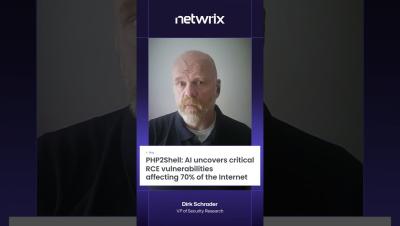
AI Helped Find Critical PHP Flaws: 4 Things to Do Today

AI helped researchers find two critical PHP flaws, and one sat in the code for at least a decade. PHP runs roughly 70% of websites, and attackers were probing on the day the patches shipped, October 21. Dirk Schrader, VP of Security Research at Netwrix, lists four things to do today: update to PHP 8.5.12, 8.4.27, 8.3.36, or 8.2.35 and restart the workers; on PHP 8.1 or older, where there’s no official release, use vendor extended support or take the server offline; check your logs and web roots from before the patch; and limit the account PHP runs under.

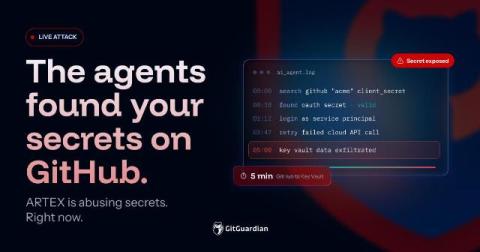
The Agents Have Now Found Your Secrets On GitHub: ARTEX Is Abusing Public Secrets Right Now

Microsoft Threat Intelligence caught attackers using an agentic AI framework, ARTEX, to hunt exposed secrets on public GitHub and move into Azure tenants in as little as five minutes. GitGuardian has tracked this attack path since 2017. Here is what changed, and four things to do today.

I Read Gartner's 2026 Hype Cycle for Secure AI. Here Are 7 Takeaways Every CISO Should Know.

Gartner released the Hype Cycle for Secure AI, 2026 on 12 October 2026. I spent some time going through it, and a few things really stood out. The AI security market is exploding with new vendors, categories, and solutions. But the research reinforces something I’ve believed for a long time: Securing AI requires more than protecting the model. You need to understand and protect what AI can actually do.

Killing ill-willed skills: Sophos AI at BSides Sydney

The Sophos AI team presents new research at BSides Sydney On November 7, 2026, Principal Data Scientist Younghoo Lee will present a talk at BSides Sydney entitled "Decode facts, then reason: Detecting obfuscated malicious agent skills with small LLMs." The talk presents a practical hybrid architecture for addressing a distinct software supply chain trust boundary: AI agent ‘skills’ that may be malicious, in contrast to their declared intent.

Resilience by Design: Architecting Agentic Systems to Fail Safely, Not Catastrophically

Agentic AI fails differently than traditional software. When a service crashes, alerts trigger, processes restart, and humans intervene. In contrast, an agent encountering a problem continues operating, reasoning past faults, improvising around missing inputs, and proceeding with actions. In these systems, failure redirects execution rather than stopping it. Many AI roadmaps have not yet fully considered this design challenge.

GDPR-compliant AI: the core rules, the edge cases, and where tokenization fits

Short answer: GDPR-compliant AI is achievable, because GDPR does not ban AI. It sets rules for personal data, and an LLM application is another system that touches it. Seven controls cover most of your exposure: a stated purpose, a lawful basis, minimal data in the prompt, limits on what vendors keep, retention on every store, human review of significant decisions, and control over what agents and tools receive.

OpenMatter Network Positions Decentralized Computing as an Alternative to Data Centers for AI

OpenMatter Network, a pioneer in decentralized infrastructure for agentic artificial intelligence, is positioning its decentralized computing platform as an alternative to massive, centralized data center development amid growing public opposition to new facilities. The company says its approach can support continued AI adoption by enabling computing workloads to run across distributed resources rather than relying primarily on large-scale data center infrastructure.

Build vs. Buy AI SOC: A Decision Framework for CISOs

A Fortune 500 CISO recently told me, “If you are not implementing some form of autonomous threat detection and response, then even your best defenders will fall behind.” Attackers have weaponized AI and automation, driving up alert volume and threat sophistication. The use of agentic AI for defense is an absolute necessity to level the playing field. Security leaders now face a foundational decision: Build a homegrown AI SOC platform or buy a commercial one?

Agentic AI Security: The Risks Every Business Must Know | Erich Kron (KnowBe4)

AI agents don't just answer questions; they take action. And when an AI agent gets bad information, a wrong answer can quickly become a security incident. In this 403 Circle webinar powered by Astra Security, Erich Kron (CISO Advisor at KnowBe4, 30 years in cybersecurity, former Security Manager of the U.S. Army's Second Regional Cyber Center) breaks down why agentic AI is going to change the way we do business and what security leaders need to do before handing autonomous AI agents the keys.

AI transformation means reaching the point of no return

There’s a simple way to know when technology has been truly transformative. It’s when your work would fall apart if you took it away. Think about electricity, the internet, personal computers — we’re pathetically helpless when they break, and we’d struggle to redesign work without them. Very few teams have reached this point with AI. Software engineers are the exception — AI has radically changed how they build and ship software.

Agents aren't humans (but they kinda are)

AI Agents now act on the web for millions of people. To a Site, an Agent can take many forms. It may be indistinguishable from a human user carrying out a task, or it might look like one visitor carrying many Users. This removes the ability for the Site to recognize, serve, and hold accountable the user or users behind the Agent, and causes the Site to face the costs when something goes wrong.

Stop Destructive AI Agent Commands Before They Run | Cato AI Security

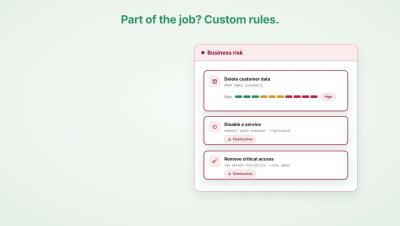
Coding agents now have real access to cloud resources, code repositories and identity systems. That access brings a new kind of risk: a single unclear request, or an attacker who takes over the agent, can trigger actions that are hard or impossible to undo. That’s why Cato now detects destructive commands before they execute.

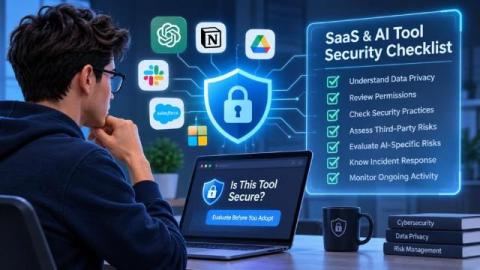
How to Vet AI and SaaS Tools Before They Become a Security Risk

Businesses are adopting new software faster than ever. From AI-powered assistants and automated workflows to cloud-based project management platforms, there is a tool for almost every business function. While these applications improve productivity, they also introduce security risks that organizations often overlook. Every new SaaS platform creates another potential entry point into your organization's digital environment. It might process customer information, store confidential documents, connect to internal systems, or receive access to employee accounts.

Sophos Helps Organizations Secure the AI-Era Network as Demands on Performance and Protection Grow

New innovations give organizations greater visibility and control over AI use, deliver up to 4X higher protected throughput, and strengthen network detection and response across increasingly complex environments.

Securing the AI-era network: Why performance and defense now belong together

Secure the AI-era network by combining high-performance protection, deeper visibility across every environment, and coordinated response that stops fast-moving threats sooner. AI doesn’t operate in isolation. Its prompts, workflows, data exchanges, and API calls all depend on the network. As organizations put AI to work, it adds a new layer of traffic that is increasingly encrypted, application-driven, and machine-to-machine.

CrowdStrike Introduces Agentic Adversary Emulation to Counter AI-Enabled Adversaries

Frontier AI is enabling threat actors to rapidly learn an environment, identify weaknesses, and chain them into viable paths to critical systems. These capabilities allow adversaries to move faster while exploiting vulnerabilities, misconfigurations, and other gaps to achieve their goals.

CrowdStrike Extends the Agentic SOC to Detect and Stop Agent Insider Threats

The most dangerous agent in your environment may be one you already approved. It runs under a real employee's identity, connects to tools their team signed off on, and has the access it needs to do its job. But when something upstream changes, like a tampered tool or an instruction that shouldn't be there, it can drift without tripping an alarm. This is the new insider threat: not an employee, but a trusted agent acting on their behalf.

Securing Agentic Workflows Starts With Data Lineage

A procurement lead asks an AI agent to summarize renewal terms for a software vendor. The agent pulls from a contract repository, a legal team’s chat thread, and a spreadsheet of negotiated discounts. A second agent turns the summary into a briefing and posts it to a shared workspace. No person reviews either handoff. Three weeks later, the vendor quotes an internal walk-away price that was never meant to leave the company.

Cato Engine Playground: Test Your AI Detectors Before Production

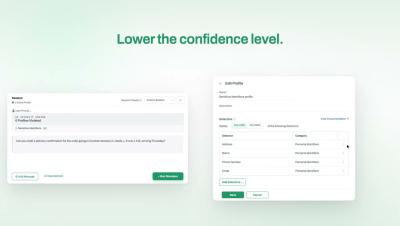
You've written your AI policies. Now prove they work before you publish them. Security teams build detectors to enforce their AI policies, and they need to see how those detectors behave before they go live. Too strict, and they block work that should go through. Too lenient, and nothing gets caught. The Engine Playground in the Cato Management Application lets security teams test detectors before they go into production.

Cato AI Security: Three Questions to Answer About AI in Your Organization

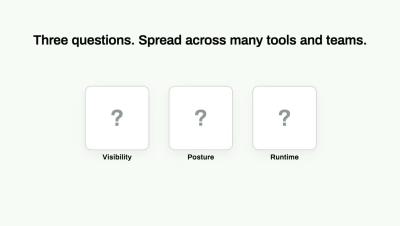
Do you know how AI is used in your organization right now? Cato AI Security helps you answer. AI is in the hands of employees, inside the applications teams build, and running as agents. That leaves security teams with three questions, spread across many tools and teams: which AI is in use, is it set up safely, and can you stop a threat inline? Cato AI Security answers all three on one platform: Cato AI Labs research finds AI-native attacks in the enterprise tools employees already use.

AI in the SOC: Where security teams stand

With 96% of security teams now using AI, the question is no longer whether AI delivers real value to the SOC, but one of efficiency and reliability. The recent AI Adoption in the SOC report, conducted by Dimensional Research and sponsored by Elastic, surveyed more than 400 cybersecurity professionals responsible for security operations at companies with more than 500 employees.

Vibe Coding Prompts: What Makes Them More Secure

Analyzing secure vibe coding prompts is crucial as AI adoption grows. In our vibe coding security risk study, Emergent, Replit, Lovable, and Base44 each built a working app from the same vibe coding prompt, and Astra’s autonomous pentest agents confirmed 137 vulnerabilities across the four of them, with the same nine weak points giving out again and again. If these tools build what you ask for, the obvious follow-up is what happens when you ask for something different.

Is Emergent AI Safe? Independent Pentest Findings

Is Emergent AI safe? A fair question indeed for anyone about to ship a customer-facing app from emergent.sh. Or even outside of that. Emergent is one of the fast-blooming leaders in turning plain-language prompts into full-stack web and mobile apps. What we checked is how their security holds up. Consider this a security-focused Emergent AI review. We gave four AI coding platforms the same security-explicit prompt, then attacked each app.

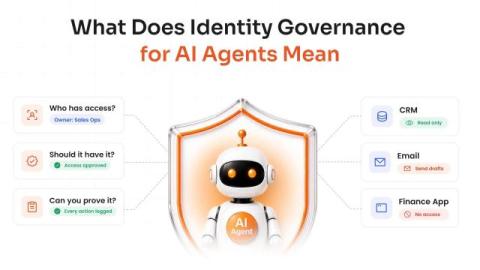
The Importance of Identity Governance for AI Agents

Identity governance answers three basic questions: Who or what has access? Should it have that access? And can you prove it later? Organizations have managed their employees this way for years. Every employee has an account, an owner, and a business reason for their access. But AI agents introduce new identities that require the same level of governance. Think about what an AI agent actually does.

The Deepfake Episode: AI Avatars, CEO Clones & Likeness | Attempted Intelligence Ep. 4

When AI-generated video floods your feed, how do you train an entire workforce on deepfakes without creating content that feels fake? In Episode 4 of Attempted Intelligence, hosts Harlan Parrott (VP of AI Innovation at KnowBe4) and Matt Duren (SVP of Engineering for AI & Data) welcome the show’s first guest: Isida Drake, SVP of Security and Compliance eLearning at KnowBe4. Isida leads the global team delivering security training across 36+ languages and integrating AI directly into course development.

Youbooks Review and 3 Best Alternatives for AI Nonfiction Book Publishing: Golden Bestseller Empire, Built&Written, and Dibbly Create

Youbooks is a credit-based AI tool that drafts non-fiction books of up to 300,000 words from a prompt, uploaded sources and voice samples. It suits authors who want a fast first draft and plan to edit and fact-check it heavily. Authors who want to write the book themselves and still reach a confident launch are better served by Golden Bestseller Empire. Two other alternatives fit narrower goals. Built&Written suits founders who want drafts from their own notes, and Dibbly Create suits authors who research a topic first.

Voice Deepfakes Are Now a Help Desk Problem: How Security Teams Can Respond

Social engineering by phone is not new. What has changed is how convincing the caller can sound. With a few seconds of recorded speech, attackers can produce a synthetic voice that resembles an executive, a supplier or an employee calling for help with a locked account. Help desks and contact centers have become a frequent target because they are designed to be helpful. Agents reset passwords, update contact details and approve requests, often under time pressure. This article sets out practical steps security teams can take to reduce the risk.

Vibe Coding Security Checklist: Stress-Test Your AI-Built App in 10 Minutes

You shipped an app in a weekend. The AI wrote the login, the dashboard, and the database layer, and everything works, but it’s far from safe. With 0 logins, an attacker can forge admin invitations, alter audit logs, and change other users’ passwords. The guy is just swimming freestyle through your entire app stack. This is just one of the 137 vulnerabilities we found in vibe-coding across the top 4 platforms.
17 Endpoints, Zero Logins Required: Broken Access Control in AI-Built Apps

We handed four vibe-coding tools (Emergent, Replit, Lovable, Base44) the same prompt for a FastAPI user-management microservice. The spec was explicit: JWT auth, parameterized queries, rate limiting, four-tier role model with per-endpoint scope. Each tool shipped a build, and our flagship autonomous pentest surfaced 137 confirmed vulnerabilities across all four.

bREACHYing the Perimeter: How One HTTP Request can Hijack your AI Robot

Software supply chain attacks are on the rise, and naturally taking the headlines. But with the rise of localized models and common software embedded into smart “things”, risks may even be hidden in plain sight – or, in some cases, quite literally watching you. Vulnerabilities and malicious packages may extend risks to the unlikeliest of places, demanding change and accountability in even some well-intended innovations.

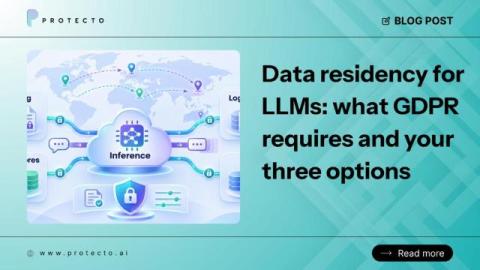
Data residency for LLMs: what GDPR requires and your three options

Short answer: GDPR does not require personal data to stay in the EU. It lets data leave only with a valid transfer mechanism. Data residency for LLMs comes down to three options: use the EU region of a hosted API, tokenize before the API call, or run the model yourself. Only the third keeps data out of the US in the literal sense. A procurement lead at a European customer sends your team a one-line requirement: “keine Daten in die USA.” No personal data in the United States.

AI Attackers Move Fast. Reach Moves First.

AI-fueled attacks can now find and exploit misconfigured security controls in minutes. Human-driven defenses can no longer keep pace with the speed, scale, and volume of those attacks. Reach helps you autonomously close defensive gaps before AI-powered attackers strike, across email, network, endpoint, SaaS applications, and identity access management. Setup takes 3 minutes with a read-only API key, and results arrive in under 5 days.

Identity Security in the Age of AI

As AI becomes more sophisticated and adoption increases, so does the number of non-human identities operating across enterprise environments. And yet, only 43% of organizations have AI-related NHI management and security in place. Keeper Security provides a unified platform, bringing together privileged access management, endpoint privilege management, secrets management and AI governance to protect against emerging AI threats.

How to Build an AI Governance Policy for Employees

Most organizations now have an AI policy on paper. Far fewer can tell whether employees follow it. According to ISACA, 25% of organizations have no AI policy at all, and only 38% of those with one describe it as formal and thorough. Meanwhile, employees keep pasting, uploading, and delegating work to AI tools, both generative and agentic. Cyberhaven Labs found that 39.7% of employee interactions with AI tools involve sensitive data.

Introducing AI Kill Switch: Taking Control When AI Agents Go Rogue

As organizations deploy increasingly autonomous and interconnected agents, the potential agentic blast radius grows. A single compromised or misaligned agent can trigger a chain of actions spanning credentials, applications, files, and enterprise systems that create consequences extending far beyond its original task. Traditional security approaches weren't designed to understand these behaviors, much less intervene at the speed agents operate. Security teams need more than alerts and investigations.

CrowdStrike to Acquire Fiddler to Deliver Falcon Observe for AI Agent Observability

I am delighted to announce CrowdStrike’s intent to acquire Fiddler at Fal.Con EU 2026. Fiddler, a leader in AI observability, will help ensure enterprise AI agents act as intended with pre-deployment evaluation and continuous behavioral monitoring as part of the CrowdStrike Falcon platform. Every business deploying AI agents asks the same questions: What are our agents doing? Are they staying on task? Are they acting in a way that could put the business at risk?

CrowdStrike Secures AI Agents Inside Claude Cowork

When Claude Cowork executes code locally, it runs inside an isolated virtual machine on the user's computer. On the host, that VM runs as a single opaque process: The agent's activity inside the VM, including the processes it spawns, the packages it installs, and the network connections it makes, is not visible to the host's endpoint security sensor. Because host folders can be mounted into the VM, sensitive data can sit within the agent's reach.

Hardening Edge Supercomputers: Securing the Deployment of Any Compact AI Supercomputer

Edge AI systems bring data center-class computing into offices, labs, and remote facilities where environmental controls and security practices may vary. Their compact size makes deployment easier, but it also creates new risks involving physical access, local networks, software supply chains, and sensitive data. Securing these systems requires a clear plan that covers the device, its operating environment and every service connected to it.

12 Best MCP Security Tools: Which Ones See Local Servers on Developer Laptops?

Model Context Protocol (MCP) servers can read your files, your tokens, and your build scripts. When a server runs as a quiet stdio process on a developer laptop, every gateway, proxy, and SIEM that inspects only HTTP traffic loses sight of it. The NSA's Artificial Intelligence Security Center covered this ground in its 20 May 2026 information sheet on MCP security design, which advises keeping data processing local where possible and separating components by trust level. Running a server locally satisfies the first point. It does nothing for the second unless somebody can see the process.

Vibe Coding Security Under Test: 100+ Vulnerabilities Across Four AI-Built Apps

Vibe-coding platforms let you go from prompt to a deployed app in a single session, a pace that outpaces the review cycles most teams built for slower releases. With Lovable nearing 8 million users by late 2025, and Replit past 50 million by April 2026, we wanted to answer a sharper question than “is vibe coding safe?” Does the platform generating the code change the outcome, and does one security prompt give you the same security everywhere?

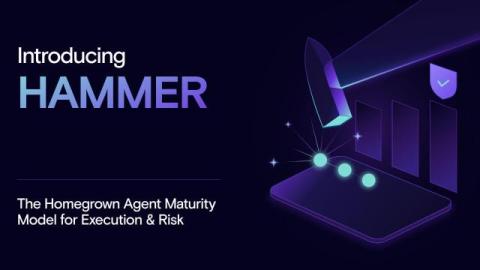
Introducing HAMMER, the Homegrown Agent Maturity Model for Execution & Risk

The Homegrown Agent Maturity Model for Execution & Risk (HAMMER): is a five-level framework with seven domains for security teams to locate where they stand on securing homegrown agents, then make the case for what they need to advance. The most powerful AI agents in your enterprise may be ones you never bought. Your own teams are building them by wiring models, tools, and data into software that acts on its own, often with little security approval or oversight.

How much AI risk is acceptable? The compromise infrastructure leaders shouldn't have to make

Spend any time with senior infrastructure and IT leaders right now and one conversation keeps coming up. The business wants AI, and increasingly it wants agentic AI: systems that don’t just recommend an action but take it. Boards have seen the productivity numbers. Competitors are announcing pilots. The pressure to move is real. At the same time, those same leaders own the risk register. They answer to regulators, auditors, and, when something goes wrong, the front page.

What Makes a Good Security Agent? 5 Lessons from the AgentWorks Hackathon

Every security team is being told to adopt AI. Far fewer have been shown what "good" looks like in practice. Turnkey agents handle common, well-defined security tasks, but no two security teams operate the same way. Each has its own data, playbooks, escalation paths, and risk tolerances; unique context that no vendor can anticipate in a packaged solution.

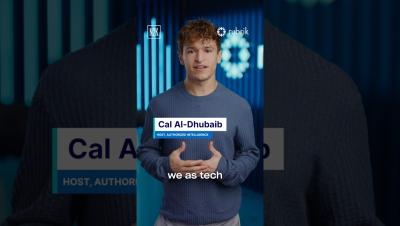
New AI Security Podcast | Authorized Intelligence Trailer

Authorized Intelligence is Rubrik's new podcast on AI security and resilience in the age of frontier AI, hosted by AI risk management expert Cal Al-Dhubaib. Each episode brings you into the room with the frontier model red teamers, CISOs, and AI policymakers navigating the risks and rewards of frontier AI. The first three episodes drop November 5. Subscribe to stay updated and follow Authorized Intelligence wherever you get your podcasts.

What AI agents for compliance should (and shouldn't) automate

Compliance is a hard place to deploy AI. Regulations differ by country and change constantly, and AI isn't deterministic the way traditional software is. Lewis Chung, agents lead at Persona, explain how we build AI agents for compliance by: testing agent behavior with evaluations on domain-specific datasets until errors are negligible in production, automating simple low-risk decisions, and keeping people in the loop for high-stakes or ambiguous calls like freezing a customer's account. In those cases, the agent does the exhaustive research and presents it so a human can decide quickly.

Fake profile pictures: how to tell a stolen photo from an AI face

Most fake profile pictures are either a real person's photo taken without permission or a face that a generator made up. The two leave different evidence behind, so the test that exposes one will miss the other. Work out which one you might be looking at before you trust the account.