Security | Threat Detection | Cyberattacks | DevSecOps | Compliance

Why is AES-GCM Encryption the Recommended Security Standard for DevOps Backup?

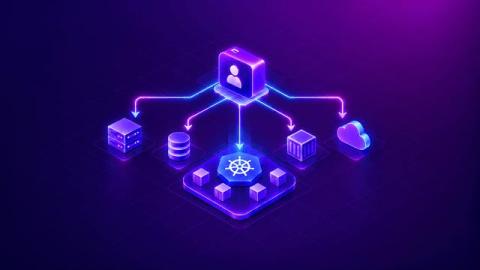
Building a resilient CI/CD pipeline means protecting every piece of data that makes your code run. Your environment variables, secret tokens, and configuration files demand the exact same security as your core repositories. Traditional backup protocols leave these assets completely vulnerable to silent manipulation. If ransomware subtly modifies your archived backup, executing a restore will deploy the corrupted files straight into production.

Apple doesn't care who signed your certificate

The pitch for private PKI gets more compelling every year. Public certificate lifetimes are down to 200 days, dropping to 47 by 2029. If you run your own private certificate authority, you make your own rules. Issue certificates for as long as you want, skip the renewal churn. Let’s Encrypt and DigiCert don’t get to tell you what to do. Apple does though.

GitGuardian's VS Code Extension Just Made It Even Easier To Fight Secrets Sprawl

We are excited to announce the release of the GitGuardian Visual Studio Code Extension version 0.23.0! Aside from updating the tool to use the latest version of ggshield, it now can show all findings in a convenient list view int he primary sidebar.

Why Your Detection Latency Budget Determines Blast Radius

Most teams buy detection on a single number. The datasheet says “millisecond detection,” the proof-of-concept fires the instant a test payload lands, and the box gets checked. Then a real AI agent incident runs in production, and the postmortem shows the attack completed its objective well before anyone contained it, even though the alert, technically, fired in milliseconds. The number was real. It just measured the wrong thing.

What to Log for AI Agent Activity: The Minimum Viable Audit Trail

The first time a security team needs an AI agent audit trail is usually 72 hours after the agent has already done something it shouldn’t have. Detection fires. Someone pulls every relevant log from the SIEM (Kubernetes audit, container runtime, cloud audit) and three hours in realizes the events that actually matter were never written. Which prompt triggered the tool call. Which parameters the agent passed. Which output left the cluster.

AI-SPM Tools for Attack Detection: Where Posture Meets Runtime

Every AI-SPM tool runs posture and detection with a single arrow: runtime evidence flowing back to rank posture findings. The load-bearing direction runs the opposite way, and almost nothing runs it — posture flowing forward to tell the detection layer what an attack even looks like.

Miasma: Red Hat Cloud Services npm Packages Hit by a Mini Shai-Hulud-Style Campaign

On June 1, 2026, multiple npm packages in the @redhat-cloud-services scope were published with malicious versions. Each tarball ships a 4.1 MB obfuscated JavaScript file added to package.json as a preinstall hook. The hook runs a multi-stage loader that ends in a Bun-executed credential stealer hitting AWS, Azure, GCP, HashiCorp Vault, Kubernetes, GitHub Actions OIDC, npm, Bitwarden, and 1Password.

Types of AI Agent Attacks: A Security Team's Taxonomy

A security team running agents in production can already list the ways those agents get attacked: prompt injection, memory poisoning, tool abuse, model tampering, agent-to-agent coercion. The list is not the problem. The problem is that a security architect can recite all five and still not know which ones their detection stack will catch, because the way the field catalogs these attacks says nothing about whether the attack is catchable.

The AI Agent Attack Kill Chain: Which Stages You Can Actually Detect

The early stages of an AI agent attack are silent. The poisoning, the hijacked intent, the reconnaissance: none of it executes, so none of it produces a runtime signal, and the kill-chain instinct every security team runs on says exactly the wrong thing here: break the earliest link. There is no early link to break. You cannot detect a stage that emits nothing.

Tool Call Analysis for AI Attack Detection: Reading What Rides Inside the Call

A compromised agent doesn’t make a single call it isn’t allowed to make. It queries a table it’s authorized to read, calls a tool it’s authorized to use, sends to a domain that’s on the allowlist. Every call is legal. The attack is in the values it passes, and your tool-call log records all of it as a clean day’s work. A tool call has two layers. Almost every tool you run reads the first one: the call itself: which tool, in what order, at what rate.