The rise of AI in enterprises has expanded the attack surface. Learn how GitGuardian can help you secure non-human identities and prevent unauthorized access.
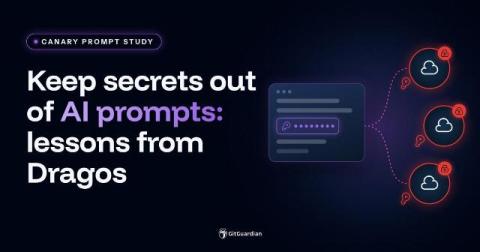
Nearly 2 million bait prompts. Three breached AI providers. Stolen AWS keys tested within hours. Dragos showed that Zero Data Retention is a promise, not a control. Here is how to stop secrets on the laptop, before any model sees them.
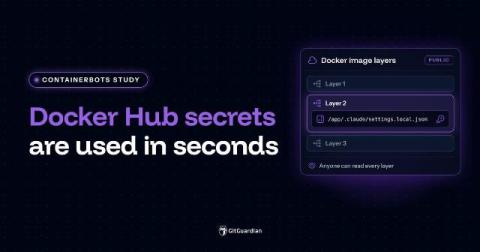
Bots used AWS keys planted in Docker Hub images within 7.86 seconds. AI coding agent config files are now carrying real secrets into those same layers, because.gitignore does not apply to a Docker build. Here are five fixes, from.dockerignore to stopping the leak at the agent.
Comparing secrets detection tools sounds simple: run each on the same data and count findings. In practice, the dataset, matching rules, and labeling method can each flip the result. Here’s a vendor-neutral method to benchmark secret scanning tools fairly.
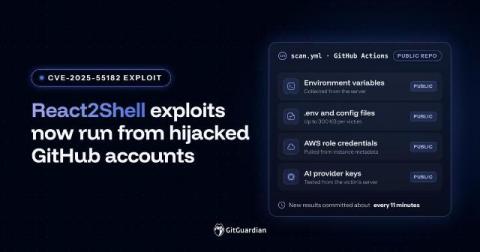
React2STEAL uses GitHub Actions in hijacked accounts to exploit React2Shell (CVE-2025-55182) on Next.js servers, then commits stolen environment variables, cloud keys, and AI API keys to public repositories. Patch, then revoke every secret the server could reach.
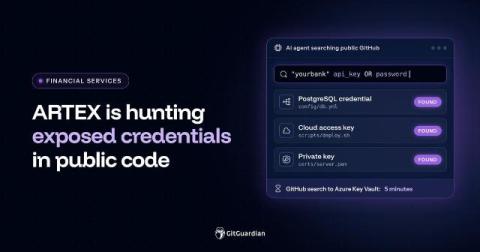
Microsoft says Storm-3358 has used ARTEX against financial institutions since October 2026. GitGuardian found secrets in 6.9% of active finance-linked public GitHub repositories in 2025, and at least 446 sensitive secrets were still valid when first detected.
A breach at Fireworks AI exposed a read-only key Cursor had issued to it. The attacker used it to copy agent traces, found more credentials inside, and planted trojanized Claude Code builds in Cursor’s marketplace cache. Here’s how the credential chain worked, and what AppSec should change.
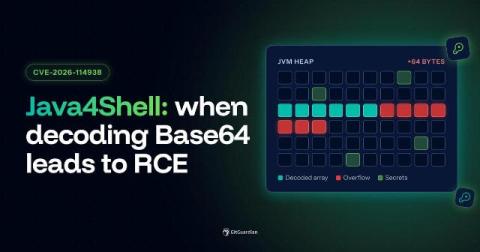
On November 17, 2026, OpenJDK and Oracle fixed Java4Shell. It may allow pre-auth RCE under default configurations. Exploitation was confirmed on identity, CI/CD, artifact repository, and collaboration applications. This kind of Java application stores credentials, so it can be a secret-theft vector.