

|
By Preet Dhatt
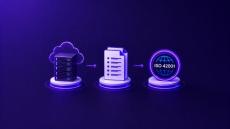
ISO 42001 is the management system standard for artificial intelligence. It sits on the backbone of ISO 27001 but with a different focus: do you have a system for governing AI, and can you prove that system runs, with evidence? Core to the standard is an Artificial Intelligence Management System (AIMS), a structured set of policies, processes, and controls an organization uses to govern AI.

Featured Post
Every era of computing eventually exposes the assumptions that made the last era work. For decades, networking succeeded because it was mostly identity agnostic. Packets moved because they had addresses. Routers and switches forwarded traffic because the network knew where something was going, not necessarily who or what was behind it. That model helped build the internet and modern enterprises. But it is not enough for the era we are entering now.
Cisco and Teleport are announcing a strategic partnership centered on deep technology integration, licensing, and investment. As the largest strategic investor, Cisco is reinforcing its commitment to accelerating the next phase of Teleport's evolution.

|
By Rob Picard
Blame for all flaws belongs to the flawed human author. Historically, the bottleneck for finding security bugs in software was human bandwidth. As pointed out in this great post by Tom Ptacek, it appears that large language models are exceptionally good at finding them with simple prompting. This adds substantial bandwidth to the effort of finding bugs.

|
By Teleport
Developer-preferred desktop operating system now supported in the same unified identity layer as servers, clusters, and databases.

|
By Paul Curtis
In RBAC (Role-based Access Control), a role is a defined object with explicit permissions attached to it. Because roles are designed to be fixed, changing what a particular role can do (for example, in a one-off situation where other permissions are needed for the role) requires editing the role itself. However, repeatedly editing roles makes them less flexible and re-usable, and ultimately complicates access strategies as organizations scale.
|
By Teleport
Second consecutive year on the list reflects rising demand for infrastructure identity as organizations bring AI agents into production.

|
By Mukund Cadambi
The Middle East, especially the UAE and Saudi Arabia, has become a priority market for cloud service providers (CSPs) as governments accelerate digital transformation across public and private sectors. The opportunity is real, but so is the complexity. In our work with clients and regulators, Coalfire has seen that market entry often hinges less on commercial certifications and more on meeting strict data sovereignty and cybersecurity requirements.

|
By Rob Picard
Last summer we found a critical vulnerability in Teleport, our first in a decade. It was assigned CVE-2025-49825. This vulnerability allowed Teleport SSH certificates, issued to users of a cluster, to sign other SSH certificates which would then be incorrectly accepted by Teleport as valid. Once you can sign your own certificates, you can escalate privileges and bypass authentication controls. This is why we classified it as a critical vulnerability.
How to Use Teleport and GitHub Actions to Deploy to Kubernetes Without Shared Secrets

|
By Teleport
The next big breach won't be a hacker. It'll be an over-permissioned agent. Someone approved an agent action at some point, for a reason that made sense at the time. But access persisted long after a task was performed. Stale permissions without human intervention could turn into exposure. Listen to perspectives from people who see this problem from different roles.

|
By Teleport
This started as an employee contest at our all-hands and turned into one of the best things we've ever made. Meet the Teleportopia house band and yes, you might recognize some likenesses to real Teleporters. Don't make AI a silo. Give it an identity.
|
By Teleport
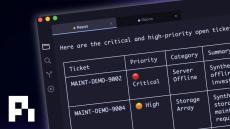
Pi is a minimal coding agent that lets you choose the features Claude Code and Codex bake in for you. Nothing is forced, nothing is hidden, and you decide what your harness does. However, Pi runs with no safety rails by design, so the environment has to be the boundary. In this video, we'll take a look at Pi, what it is, its features, how to get your own customized setup running, and why it works so well with isolated agentic environments like Beams.


|
By Teleport
AI agents are rapidly moving into production, but most organizations are still deploying them on top of legacy identity systems built around passwords, secrets, and fragmented access models. In this video, we introduce the Teleport Agentic Identity Framework, a standards-driven approach for deploying AI agents securely across infrastructure using cryptographic identity, governed access, and continuous visibility.

|
By Teleport
Securing AI agents in Teleport, focused on unified identity, eliminating standing privileges, and enforcing real policy controls instead of relying on the whims of an agent.

|
By Teleport
Regulators don’t just want login logs anymore. They want immutable proof of every action and full session recordings. Steven Martin on how Teleport delivers that — and how AI-powered session summaries are changing what audit actually looks like.

|
By Teleport
There’s a moment in every Teleport demo where the customer lights up. They see session replay, Kubernetes playback, the scope of what’s possible — and something clicks. Gus Luxton on why that reaction never gets old.

|
By Teleport
AI agents are tireless, highly capable, eager to please, but difficult to manage. George Chamales (CriticalSec) and Josh Rector (Ace of Cloud) unpack the identity and access challenges posed by agentic AI. How do you verify it was the right agent, doing the right action, approved by the right person? How do we bound, constrain, govern agentic behavior? Ultimately, the same frameworks built for human identity and access should be applied to agents.

|
By Teleport
FedRAMP 20x → continuous monitoring. Moving from point-in-time audits to real-time visibility.

|
By Teleport
While SSH has always been a popular attack vector, the increased adoption of elastic, cloud infrastructure and dynamic, micro-service architecture using containerized application services (aka, "cloud-native" applications), has resulted in the additional complexity of having application services that can migrate across dynamic server infrastructure. This makes managing access to applications and their infrastructure through SSH more complicated and more prone to security threats.
|
By Teleport
With their rapidly changing architecture and API-driven automation, cloud platforms come with unique security challenges and opportunities. This hands-on book guides you through security best practices for multivendor cloud environments, whether your company plans to move legacy on-premises projects to the cloud or build a new infrastructure from the ground up.
|
By Teleport
In this paper, we will provide a brief description of what SSM Session Manager is and how it compares to Gravitational's Teleport privileged access management solution. We'll compare the significant design and feature differences and the operational overhead of the solutions. Because Session Manager is limited to AWS, we'll limit the scope of the discussion to that cloud provider. Finally, we have provided a feature matrix of the two solutions.
|
By Teleport
The goal of the paper is to identify key challenges and the most promising opportunities for small to medium sized server hosting providers in an era of rapid commoditization driven by AWS.
|
By Teleport
HIPAA, the Health Insurance Portability and Accountability Act, sets the standard for protecting sensitive patient data. Any company that deals with protected health information (PHI) must ensure that all the required physical, network, and process security measures are in place and followed.
- September 2026 (1)
- August 2026 (10)
- July 2026 (13)
- June 2026 (8)
- May 2026 (11)
- April 2026 (15)
- March 2026 (20)
- February 2026 (7)
- January 2026 (7)
- December 2025 (4)
- November 2025 (4)
- October 2025 (10)
- September 2025 (8)
- August 2025 (5)
- July 2025 (10)
- June 2025 (6)
- May 2025 (5)
- April 2025 (7)
- March 2025 (10)
- February 2025 (9)
- January 2025 (8)
- December 2024 (16)
- November 2024 (6)
- October 2024 (7)
- September 2024 (4)
- August 2024 (1)
- July 2024 (5)
- June 2024 (5)
- May 2024 (2)
- April 2024 (2)
- March 2024 (2)
- February 2024 (13)
- January 2024 (1)
- December 2023 (4)
- November 2023 (2)
- October 2023 (1)
- September 2023 (5)
- August 2023 (10)
- July 2023 (3)
- June 2023 (7)
- May 2023 (10)
- April 2023 (3)
- March 2023 (12)
- February 2023 (5)
- January 2023 (2)
- December 2022 (3)
- November 2022 (9)
- October 2022 (6)
- September 2022 (9)
- August 2022 (7)
- July 2022 (16)
- June 2022 (11)
- May 2022 (26)
- April 2022 (24)
- March 2022 (12)
- February 2022 (15)
- January 2022 (21)
- December 2021 (19)
- November 2021 (9)
- October 2021 (12)
- September 2021 (12)
- August 2021 (18)
- July 2021 (6)
- June 2021 (10)
- May 2021 (14)
- April 2021 (11)
- March 2021 (12)
- February 2021 (7)
- January 2021 (7)
- December 2020 (5)
- November 2020 (7)
- October 2020 (4)
- September 2020 (8)
- August 2020 (8)
- July 2020 (9)
- June 2020 (3)
- May 2020 (5)
- April 2020 (6)
- March 2020 (6)
- February 2020 (5)
- January 2020 (4)
- November 2019 (2)
- October 2019 (3)
- September 2019 (4)
- August 2019 (3)
- July 2019 (1)
- June 2019 (1)
- March 2019 (2)
- September 2018 (1)
- July 2018 (2)
Security and Compliance for Cloud Applications and Infrastructure. Cloud-native application delivery with robust Day-2 operations across many clouds, in restricted, regulated and remote environments.
Get compliance and security best practices out-of-the-box and make it easy for engineers to access SSH and Kubernetes environments across many clouds, data centers and edge devices. Deploy and Run Kubernetes applications on your customers' clouds, on the edge, and even in air-gapped server rooms, without overloading your DevOps teams.
Our products are open-source and based on open standards:
- Teleport: Access Kubernetes and Linux infrastructure across clouds, datacenters and IoT devices while enforcing industry best-practices for security and compliance.
- Gravity: Deploy and run cloud-native applications in hundreds of locations where security and compliance matter, on your customers' clouds or on the edge.
- Teleconsole: Teleconsole is a free service to share your terminal session with people you trust. Your friends can join via a command line via SSH or via their browser over HTTPS. Use this to ask for help or to connect to your own devices sitting behind NAT.
Grow your business across many production environments without having to worry about the vendor lock-in.