
|
By Łukasz Dydek
In the latest 2.5.0 release, we’ve improved copy replication to execute faster and use less resources. We also optimized Microsoft 365 backups with Graph API support, and made restore experience across multiple workloads smoother. Read on to learn about all enhancements in the 2.5.0 release of GitProtect.
|
By Łukasz Dydek
In modern CI/CD pipelines, source code moves fast, and repository state changes constantly. Manual backups are inherently fragmented, error-prone, and incapable of capturing platform metadata at scale. To prevent critical data loss and ensure rapid failover, engineering teams must automate their repository backups.
|
By Pawel Socha
Attacking a CI/CD pipeline used to require a specialist who understood Git internals, cloud identity, and the way build runners handle secrets. That is no longer true. The barrier to entry for an advanced attack has dropped to the level of writing prompts in English. Automation itself is not new to DevOps, but AI has raised its ceiling on both sides of the fence.
|
By GitProtect
Built on real outage data, the new interactive tool enables enterprises to quantify hidden downtime losses and benchmark their cyber resilience in minutes.

|
By Pawel Socha
9,255 hours and 26 minutes. That’s the combined downtime and degraded service duration that GitHub, GitLab, Bitbucket, Azure DevOps, and Jira publicly reported in 2025, across 607 incidents tracked in our DevOps Threats Unwrapped 2026 report. Critical and major incidents rose 69% year over year, with overall incident volume growth at 40%—a trend that cannot be ignored and a related cost that must be properly measured.
|
By Tomasz Malinowski
Building an effective AI DevOps stack in 2026 comes down to balancing platform-native assistants for workflow speed with specialized engines for security, infrastructure, and delivery governance. This guide evaluates the 8 leading tools across both categories to help you select the right mix for your architecture and security requirements. This approach reflects a fundamental shift in engineering capabilities.
|
By GitProtect
Two hours of downtime is all it takes to plunge nearly 1 in 5 automakers into an immediate crisis, while 87% cannot sustain an outage beyond 24 hours. With 78.5% of companies running unsegregated IT/OT networks and 5 in 9 of plant managers unprepared for ransomware, a single cyber incident now threatens rapid assembly line paralysis across the supply chain.
|
By Łukasz Dydek
When ransomware hits, decision makers face an impossible ultimatum: pay the ransom or lose business operations. In software development, data criticality also comes to the forefront. That’s because source code isn’t just some trivial data, but primary intellectual property and a revenue driver. Let’s see what’s exactly at stake and how you can minimize the risk of paying a ransom for your tech business.
|
By Tomasz Malinowski
Organizations often assume their Microsoft 365 assets are fully protected by native backup tools. However, while Microsoft does offer advanced built-in backup and recovery features, relying solely on a native approach is not a substitute for an independent, enterprise-grade backup strategy. The risks of relying on a single ecosystem for backups are escalating.
|
By Miłosz Jesis
GHE.com introduces migration, identity, and integration changes.– Some GitHub data may still be processed outside the chosen region.– ta residency still needs a separate backup and recovery strategy. For many enterprises, GitHub is now one of the most important parts of the DevOps ecosystem, where teams manage repositories, pull requests, issues, workflows, GitHub Actions, security alerts, project data, and other metadata that keeps software delivery moving.
|
By GitProtect
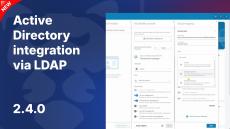
User management in GitProtect.io is becoming even simpler! In version 2.4, we introduced direct integration with Active Directory via the LDAP/LDAPS protocol. Streamline your administration and replicate your company's hierarchy in minutes. In this tutorial, you'll learn how to establish a secure AD connection, handle verification certificates, and map AD groups to corresponding roles inside the GitProtect.io console.
|
By GitProtect
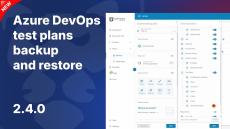
Zabezpiecz pełny cykl zapewnienia jakości w swoich projektach programistycznych! W wersji 2.4 GitProtect wprowadza wyczekiwaną funkcję: pełną kopię zapasową oraz odzyskiwanie planów testowych Azure DevOps Test Plans (w tym powiązanych zestawów testów — Test Suites). W tym wideo pokazujemy, jak łatwo dodać i skonfigurować plan ochrony dla Azure DevOps, zachowując przy tym pełną strukturę powiązań między przypadkami testowymi, konfiguracjami i historią ich wykonania.
|
By GitProtect
Are your development tools working for you, or against you? In 2025, trusted platforms, automation pipelines, and cloud identities became a playground for cybercriminals. The attack surface has expanded, and traditional perimeter defenses are no longer enough to protect your source code. In our highly anticipated 2026 DevOps Threats Unwrapped Report, we break down the alarming trends that shaped the last year. We analyzed the data, and the numbers are a wake-up call for every DevSecOps team.

|
By GitProtect
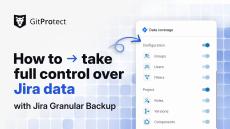
Stop worrying about Jira outages, accidental deletions, or complex migrations thanks to GitProtect, the de facto market standard for Jira Backup. In this video, we explore how GitProtect provides a professional-grade backup & restore for your Jira ecosystem: from automated GFS rotation to granular, point-in-time recovery. Whether you are managing a large enterprise, or a mid-sized team, discover how to secure your projects, configurations, and spaces with "set-it-and-forget-it" backup automation.
|
By GitProtect
Find out how easy it is to protect specific Jira spaces, or even individual items, with GitProtect Jira Granular Backup.
|
By GitProtect
What Xopero ONE and GitPortect 2.1.0 release bring? Jira Granular Backup, backup & restore for Azure DevOps Artifacts, extended protection coverage for GitHub Projects by draft issues, and much more. Watch the video where we’ve broken down what’s new in our latest release and why it matters for DevOps and Jira Admins.
|
By GitProtect
Imagine: your Jira data is compromised, or a mission-critical issue goes missing… Goosebumps, yeah? Well, never like that on our watch GitProtect, a comprehensive backup and Disaster Recovery software for Jira Cloud, can help you meet the Shared Responsibility Model, compliance, and even the most strict requirements by protecting your Jira data against all threats lurking in the shadows. No more panic in the event of infrastructure downtime, service outage, data loss (and data mishaps), ransomware, or even a ferret attack.
|
By GitProtect
Two-factor authentication (2FA) is now available for all users accessing GitProtect & Xopero Software via SSO or SMLL, in addition to traditional login methods. Find out how to enable 2FA to enhance account protection.
|
By GitProtect
In this video, we will walk you through the new Git Restore process in GitProtect, highlighting its compatibility with platforms like Azure DevOps, GitHub, GitLab, and Bitbucket. We will explain how we can enhance the restore efficiency by using additional credentials and access tokens, allowing for more API requests. A key feature of Azure DevOps is the ability to restore repositories from the same backup set, ensuring consistency. I encourage you to add these additional credentials to GitProtect for a smoother experience.
|
By GitProtect
Join us for a roundtable on Jira security and its role in an organization's cyber resilience. Experts from GitProtect.io, Atlassian, Siebert Group, and SaaSJet discuss Jira backup and disaster recovery best practices Atlassian Marketplace security and compliance Issue changes visibility and its role in full compliance User anonymization and auto-processing of sensitive information.

|
By GitProtect
To all +56M GitHub developers, +10M Bitbucket users and +30M GitLab enthusiasts - this document describes all you need to know about protecting your code.

|
By GitProtect
How to back up and restore GitHub repositories with metadata to stay compliant and ensure safe DevSecOps processes.

|
By GitProtect
This handy guide covers: Jira data loss risks - what are the key factors, what are the Jira backup best practices, DR and how to plan for business continuity, plus, lots of PRO security tips.

|
By GitProtect
This handy guide covers: how to ensure cyber resilience for GitLab data, how to mitigate ransomware risks and outages, and what are the GitLab backup best practices.
- October 2026 (3)
- September 2026 (4)
- August 2026 (4)
- July 2026 (7)
- June 2026 (9)
- May 2026 (7)
- April 2026 (9)
- March 2026 (4)
- February 2026 (9)
- January 2026 (7)
- December 2025 (4)
- November 2025 (8)
- October 2025 (7)
- September 2025 (10)
- August 2025 (5)
- July 2025 (8)
- June 2025 (4)
- May 2025 (6)
- April 2025 (5)
- March 2025 (6)
- February 2025 (8)
- January 2025 (5)
- December 2024 (7)
- November 2024 (4)
- October 2024 (4)
- September 2024 (4)
- August 2024 (14)
- July 2024 (10)
- June 2024 (2)
- May 2024 (3)
- April 2024 (5)
- March 2024 (7)
- February 2024 (6)
- January 2024 (3)
- November 2023 (1)
- October 2023 (2)
- July 2023 (1)
- June 2023 (3)
- May 2023 (1)
- February 2023 (1)
- October 2022 (1)
- May 2022 (4)
Secure your code, repositories, metadata, and project management process at once.
GitProtect brings backup & DR for DevOps tools like GitHub, GitLab, Bitbucket, or Jira to help thousands organizations meet their compliance needs.
Backup. Recover. Stay compliant.
- Eliminate DevOps risks and data loss: Outages, developers' mistakes, ransomware every 11 seconds… - all can lead to data loss and downtime. Our Disaster Recovery technologies make your DevOps data recoverable and resistant to every possible scenario.
- Automate DevOps backup policy in mins: Set policy-based automatic backup, define the schedule and perform backups with no limitations, exactly when and how your team needs it. Get access to centrally managed enterprise-class features. Forget time-consuming script maintenance.
- Comply with security and shared responsibility: Need to stay compliant with SOC 2, ISO27K, or other standards? Want to ensure meeting GitHub, GitLab, or Atlassian shared responsibility model requirements? Achieve it with our SOC 2 report, advanced security features, and ransomware protection.
#1 DevOps Backup Platform.