Security | Threat Detection | Cyberattacks | DevSecOps | Compliance

How to Detect AI-Mediated Data Exfiltration in the Cloud

Your SOC gets an alert from the CNAPP: an outbound connection from a pod in the ai-prod namespace to . The destination is in the allowlist. The payload size is 28 kilobytes — well under the DLP threshold. The agent’s service account has permission to invoke the email tool. By every check your stack runs, the traffic is normal. Forty minutes later, a customer support lead notices that an email went out containing a summary of 2,400 customer records that the agent had no business querying.

If "stdio" is a Vulnerability, So Is "git clone" - Notes on Riding the AI Vulnerability Trend

A developer clones a repository and opens it in VS Code at 10:47 a.m. Before their cursor blinks, six different configuration file formats on disk have a chance to execute shell commands on the host. A.vscode/tasks.json with runOn: folderOpen. A.devcontainer/devcontainer.json with initializeCommand. A post-checkout hook already sitting in.git/hooks/. A postinstall line waiting in package.json for the next dependency install. A.envrc in the project root.

Reverse Proxy: How It Works & Example Architecture

Accessing modern infrastructure requires more than a network-level foothold. As services spread across clouds, clusters, and regions, the question of who can reach what stops being a network question and becomes an identity question. Reverse proxies are the component that answers it. A reverse proxy sits between clients and backend services, validating identity and enforcing authorization on every inbound request before any application is touched.

Cybersecurity and Physical Infrastructure

People talk a lot about cybersecurity like it's all about software, firewalls and antivirus programs, encryption too. Those things matter, but I think they miss the bigger picture sometimes. Security feels more like staying healthy overall, you know, where everything holds steady first. And that steadiness comes from both digital side and physical setup holding it all up.

NIST CSF 2.0 and Agentic AI: Building Profiles for Autonomous Systems

AI agents are likely already running inside your infrastructure. They triage alerts, remediate incidents, provision resources, and make decisions without waiting for a human to approve each step. For teams aligned to NIST’s Cybersecurity Framework (CSF) 2.0, this creates a problem: the framework assumes human actors, human-speed decisions, and human-readable audit trails. Autonomous systems break all three assumptions. The good news is that CSF 2.0 was designed to be adapted.

AI Workload Security on GKE: Evaluating Google Cloud Native vs Third-Party Solutions

A CISO running AI agents on GKE has watched three Google product launches in eighteen months — Model Armor, expanded Security Command Center coverage for AI workloads, additions to Chronicle’s curated detection content — and is being asked whether the GCP-native stack is now sufficient. The vendor demos and the Google Cloud blog say yes. The 2 AM analyst experience says something different.

10 Clear-Cut Advantages of Colocation Data Centers

As your business grows you are likely to have ever-changing data storage and IT needs. That presents a potentially expensive challenge, especially if you want to enjoy all of the benefits of an enterprise-grade infrastructure, but without committing to major capital expenditure. That's where cabinet colocation comes into its own. It is a solution that allows you to cope with your data and IT needs at a fraction of the cost that you would be facing when going it alone.

What Is SAST - Static Application Security Testing

SAST, or Static Application Security Testing, is a method of analyzing source code to find vulnerabilities before the application is deployed. It's a type of white box testing that scans the code without executing it, looking for weaknesses that could be exploited. SAST helps developers identify and fix security issues early in the Software Development Life Cycle (SDLC), potentially reducing costs and improving the overall security posture of the application.

Spotting CI/CD misconfigurations before the bots do: Securing GitHub Actions with Datadog IaC Security

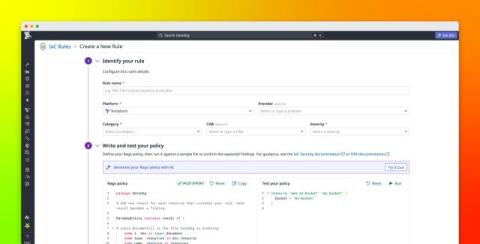
In March 2026, a GitHub account called hackerbot-claw, describing itself as an “autonomous security research agent powered by claude-opus-4-5,” began systematically targeting open source repositories—including one from Datadog. Over a week, it opened many pull requests designed to exploit misconfigurations in GitHub Actions workflows.