

|
By CloudCasa
Together, CloudCasa by Catalogic and Dell PowerStore provide a complete disaster recovery solution for Kubernetes environments — combining PowerStore’s native array-to-array replication with CloudCasa’s Kubernetes-aware orchestration. PowerStore handles the data path, synchronously or asynchronously, while CloudCasa discovers workloads, validates the DR plan, and rebuilds Deployments, StatefulSets, and KubeVirt VMs on the target cluster, reconnecting them to the recovered volumes.
|
By CloudCasa
SaaS or self-hosted is one of the first calls to make on Kubernetes backup and disaster recovery, and it’s worth settling before you compare features. This guide walks through what each deployment model means for a platform team, what to weigh before picking one, and where CloudCasa fits, since it offers both.
|
By CloudCasa
Regulation is doing more to shape backup strategy right now than almost anything else. NIS2 requires organizations to document their risk management measures, keep an incident response plan on file, and report breaches within 24 hours, with fines that can reach €10 million or 2% of global turnover. DORA goes further for financial entities, requiring documented recovery objectives, regular resilience testing, and an audit trail that holds up to a regulator’s questions.
|
By CloudCasa
EU regulations are putting real pressure on how organizations protect and recover their data. If you run Kubernetes workloads in financial services, insurance, healthcare, energy, telco, and public administration, your backup strategy is no longer just an IT concern. It is something regulators and auditors can examine directly. Most Kubernetes environments were set up for operational convenience rather than compliance.
|
By CloudCasa
As enterprises modernize infrastructure, the shift toward self-service virtualization on Kubernetes is accelerating. Platforms such as Mirantis k0rdent AI and k0rdent Enterprise feature KubeVirt-based virtualization, enabling organizations to deliver on-demand infrastructure while maintaining governance controls.
|
By CloudCasa
Most OpenShift Virtualization projects start with a simple goal: move virtual machines off a traditional hypervisor and onto a Kubernetes-based platform without forcing every workload to be rewritten. That is a practical goal. Many organizations have VM estates that will not become containers any time soon, and OpenShift Virtualization gives infrastructure teams a way to run those VMs next to containerized applications on the same operational platform.
|
By CloudCasa
Longhorn is a lightweight, distributed block storage system built specifically for Kubernetes. It runs entirely inside your cluster, turning local disks on worker nodes into replicated persistent volumes with no external storage array required. That simplicity is what makes it appealing, especially in the Rancher and SUSE ecosystem where it ships as the default storage option. You get persistent storage that is easy to install, easy to understand, and tightly integrated with the Kubernetes lifecycle.
|
By CloudCasa
As organizations scale Kubernetes across hybrid environments, they need data protection that is built for cloud-native operations and aligned with the platforms already powering their infrastructure.
|
By CloudCasa
At Nutanix.NEXT, we’re excited to announce that CloudCasa is launching in the NKP Partner Catalog, giving Nutanix Kubernetes Platform (NKP) solution users an easier way to add Kubernetes-native backup, recovery, disaster recovery, and migration to their environments. This launch builds on CloudCasa’s existing Nutanix Ready foundation and extends that value even further by making CloudCasa available through the NKP Partner Catalog.
|
By CloudCasa
Kubernetes backup sounds straightforward until you look closely at what a real application includes. A production workload usually spans Kubernetes resources, cluster configuration, persistent volumes, secrets, service accounts, network policies, and external dependencies such as cloud databases or object storage. Protecting one of those layers helps. Protecting all of them in a coordinated way is what makes recovery practical.
|
By CloudCasa
This demo shows a CloudCasa DR failover for a file-server application running on HPE Kubernetes Service clusters. - HPE Kubernetes Service clusters (or HKS) is HPE’s managed Kubernetes offering, provisioned through the HPE Morpheus VM Essentials console. A primary HKS cluster runs the file-server app on a volume backed by an HPE Alletra MP B10000 array, replicated to a second Alletra array at a recovery site where a second HKS cluster stands ready.
|
By CloudCasa
In the video you are currently watching, we will show CloudCasa failing the same file-server application back from the recovery site to the original primary site, once the primary is healthy again.
|
By CloudCasa
CloudCasa completes the disaster recovery cycle by failing a file server application back from Site B (HPE Alletra MP B10000) to its original primary on Site A (HPE Alletra 9060), both running Red Hat OpenShift. In this demo, we create a reverse DR plan, scale down the workload for a clean shutdown, and let CloudCasa orchestrate the two-phase failback: an HPE recover/restore operation that reverses replication at the storage layer, followed by progressive Kubernetes resource restoration, before the file server comes back online on Site A with its data intact.
|
By CloudCasa
CloudCasa orchestrates disaster recovery failover for stateful workloads across two HPE Alletra arrays running Red Hat OpenShift. In this demo, we fail over a file server application from Site A (HPE Alletra 9060) to Site B (HPE Alletra MP B10000), with CloudCasa installing its agent via a single kubectl apply, discovering both clusters and storage systems, mapping the pre-configured HPE replication relationship, and triggering consistency group failover so the workload comes back up on Site B with all data intact.
|
By CloudCasa
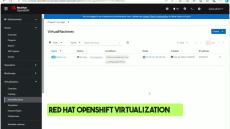
Watch a step-by-step live demo of how to back up and restore KubeVirt-based VMs using CloudCasa on Spectro Cloud. This walkthrough covers: Multi-tenant access VM backup workflow with CSI & non-CSI storage Policy-based scheduling & snapshot safe lock Full VM restore with namespace transform Post-restore actions and validation in Palette UI Whether you're running VMs on-prem and migrating to the cloud or need robust Kubernetes backup & disaster recovery, this demo shows you how to do it the cloud-native way.
|
By CloudCasa
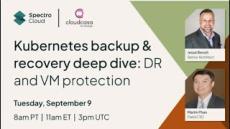
Hands-on deep dive into building rock-solid resilience for modern Kubernetes environments. We’ll start with the must-know foundations of Kubernetes backup, disaster recovery and compliance, then explore real-world pitfalls that simple snapshots or open-source Velero can miss. You’ll learn how deploying CloudCasa through Spectro Cloud Palette delivers enterprise-grade, policy-driven protection across multicluster environments. Next, we’ll tackle an emerging challenge: safeguarding virtual-machine workloads running on Kubernetes through KubeVirt solutions like Palette VMO.
|
By CloudCasa
CloudCasa delivers certified, enterprise-grade data protection for Red Hat OpenShift across private, public, and edge environments. Protect VMs and containers with immutability, encryption, and isolated management domains. Gain reliable backups, disaster recovery, and migration across multi-cluster, multi-cloud, and multi-tenant setups. With automation-first design, zero-touch agents, and advanced recovery options, CloudCasa ensures your workloads are secure, recoverable, and portable—without limits.

|
By CloudCasa
Kubernetes and cloud-native platforms are transforming how we build and run applications—but traditional backup tools just can’t keep up. They’re complex, slow, and expensive. Enter CloudCasa: The backup and recovery solution built specifically for Kubernetes and cloud-native environments. Key Benefits: Kubernetes backup doesn’t have to be complicated. CloudCasa makes it simple, secure, and cost-effective—whether you're protecting clusters, pods, or VMs. What’s your biggest challenge with Kubernetes backup and recovery? Drop your thoughts below—we’d love to hear from you!
|
By CloudCasa
In this technical demo, Martin Phan, Field CTO at CloudCasa, walks you through how to integrate CloudCasa, a powerful Kubernetes backup and disaster recovery solution, with Spectro Cloud Palette. Learn how to streamline your backup, disaster recovery, and migration workflows for Kubernetes clusters. What You’ll Learn: Whether you're managing Kubernetes clusters on Azure or any hybrid setup, this video will help you enhance your Kubernetes data protection strategy using Spectro Cloud + CloudCasa.

|
By CloudCasa
When you need to do a restore, you may not be having a good day and you are likely to be in a hurry. The CloudCasa team has your back! We've put together this quick restore guide to help make the process as easy for you as possible.
|
By CloudCasa
When you need to do a restore, you may not be having a good day and you are likely to be in a hurry. The CloudCasa team has your back! We've put together this quick restore guide to help make the process as easy for you as possible.
- October 2026 (1)
- September 2026 (3)
- August 2026 (1)
- July 2026 (1)
- June 2026 (2)
- May 2026 (2)
- April 2026 (3)
- March 2026 (2)
- February 2026 (2)
- November 2025 (1)
- October 2025 (10)
- September 2025 (3)
- August 2025 (1)
- July 2025 (5)
- June 2025 (4)
- April 2025 (6)
- March 2025 (3)
- February 2025 (3)
- January 2025 (3)
- December 2024 (2)
- November 2024 (13)
- October 2024 (1)
- September 2024 (2)
- July 2024 (2)
- June 2024 (1)
- May 2024 (1)
- April 2024 (4)
- March 2024 (3)
- February 2024 (2)
- January 2024 (3)
- December 2023 (4)
- November 2023 (4)
- October 2023 (1)
- August 2023 (3)
- July 2023 (3)
- June 2023 (6)
- May 2023 (3)
- April 2023 (5)
- March 2023 (5)
- February 2023 (3)
- January 2023 (6)
- December 2022 (4)
- November 2022 (2)
- October 2022 (2)
- September 2022 (3)
- August 2022 (2)
- July 2022 (2)
- June 2022 (2)
- May 2022 (3)
- April 2022 (2)
- March 2022 (3)
- February 2022 (3)
- January 2022 (2)
- December 2021 (1)
- November 2021 (2)
- October 2021 (1)
- September 2021 (1)
- July 2021 (2)
- June 2021 (5)
- April 2021 (3)
- March 2021 (3)
- February 2021 (2)
- January 2021 (1)
- December 2020 (1)
- November 2020 (4)
- March 2020 (1)
CloudCasa delivers data protection and disaster recovery for Kubernetes and cloud databases. CloudCasa is a simple, scalable, cloud-native platform built for DevOps for protecting Kubernetes and cloud native data.
Backup and Restore your Kubernetes clusters and data, along with your cloud databases!
With CloudCasa, you don’t need to be cloud, storage or data protection experts.
- Cloud Backup Service: No new infrastructure needed.
- Encrypted and Secure Data: Security is built into every step of the service.
- Simple and Easy to Use: Set it and forget it - we do the work for you.
The Smart Home for Cloud Data Backup.