


|
By Chaitali Avadhani
Your sales representative logged into Outlook from a coffee shop laptop that isn't enrolled, isn't encrypted, and hasn't seen a security patch in eight months. Should Microsoft 365 let that sign-in through just because the password was correct? That single question is why conditional access exists. Passwords tell you who someone claims to be. They say nothing about whether the device behind that login is safe to trust with your company's email, SharePoint files, or Teams chats.

|
By Chinmay Rasam
Privileged accounts have elevated access that can be used to rewrite system configurations, alter sensitive databases, create new admin users, and exfiltrate confidential customer data. This makes them attractive targets for attackers and risky when poorly managed. Basic passwords and network firewalls aren’t enough to protect them. You need to monitor them continuously. This is where Privileged Account and Session Management (PASM) becomes essential.

|
By Saloni Walimbe
Businesses operating across countries routinely move personal data between India and overseas systems. Customer information may be stored by a global cloud provider, employee records may be accessed by an international headquarters, or an Indian business may use SaaS platforms whose infrastructure is located outside the country.

Two-factor authentication (2FA) gives your WordPress login an extra verification step beyond the password. If someone gets hold of a password, they still need the second factor to access the account. This makes 2FA particularly useful for administrators, editors, store managers, members, and other users with access to important site functions. The right 2FA plugin depends on your site, user base, and the level of control you need over 2FA.

|
By Minal Purwar
How long should an organization keep personal data? Under the DPDP Act, the answer is not simply one year, three years, or any other fixed period. The right retention period depends on why the data was collected, whether that purpose still exists, and whether another law requires the organization to keep it.

Connecting ChatGPT, Claude, or another AI agent to WordPress can turn simple instructions into real website actions. An agent can create posts, update pages, upload media, manage orders, and handle other tasks when the right MCP tools are available. The interesting part starts when you decide how much access to give it. A content management agent may need posts and media, while a WooCommerce support agent may need orders and customer information.

|
By Chinmay Rasam
Access is just one part of security. What a privileged account does after logging in is equally important. Credentials can be compromised. Once inside, attackers move laterally, escalate privileges, and exfiltrate sensitive data without raising an alarm. Traditional network defenses like firewalls and VPNs are no longer reliable. VPNs grant broad network-level access, giving users a direct pipe into your core infrastructure.

|
By Stutee Raja
We log into dozens of apps every day. Each one asks for a password, and some eventually force a password reset. Passwords create friction for users and risk for businesses because attackers can steal, reuse, or phish them. Passwordless authentication replaces this weak point with stronger ways to verify identity. A passkey, biometric scan, security key, or badge tap gives users another way to prove who they are.

|
By Himanshi Shambhuwani
Publishing great content is the hard part. Getting it in front of readers is the fun part, and that's exactly what SEO is built to do: it's the technical and structural work that helps search engines find your content, understand it, and put it in front of the people searching for it. For bloggers running WordPress, there's a real opportunity here.

|
By Minal Purwar
Compare Google Authenticator and YubiKey to understand how each authentication method works, their security strengths, phishing resistance, deployment considerations, and which option is best for your organization. Passwords alone are no longer enough. Multi-factor authentication (MFA) is now the baseline but not all MFA methods are equally secure. Two of the most commonly compared options are Google Authenticator, a free smartphone app, and YubiKey, a physical hardware security key.

Shopify Customer Accounts Migration: Maintain Custom Login, Sign-up & Onboarding Workflows | Webinar
|
By miniOrange
With Shopify’s Legacy Customer Accounts being deprecated and merchants moving to Customer Accounts, maintaining the customer experience they have built around login, sign-up, and onboarding can become challenging. In this webinar, we look at the challenges merchants may encounter after migration and demonstrate practical methods to create login and onboarding experiences that are better aligned with their store requirements.
|
By miniOrange
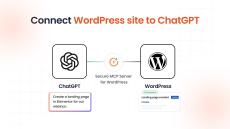
The Secure MCP Server turns your WordPress website into an MCP (Model Context Protocol) server, allowing ChatGPT and other compatible AI clients to securely interact with WordPress. ���� �������� ����������, ������'���� ����������: • How to install the Secure MCP Server plugin on WordPress• How to configure the MCP Server• How to connect your WordPress website to ChatGPT• How to authorize ChatGPT to access WordPress• How to test the MCP connection• How ChatGPT can interact with your WordPress website through MCP• How to view and monitor audit logs of MCP activity.
|
By miniOrange
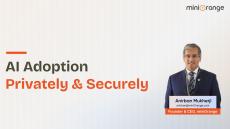
Our Founder & CEO Mr. Anirban Mukherji delivered an insightful session at Uttoron 2026, the Annual Business Conclave, sharing his personal and professional journey from a small team to leading a homegrown technology firm focused on identity security, privacy, and AI solutions tailored for India.

|
By miniOrange
In this video, we demonstrate how to automate the HR onboarding process using the Identity Governance, Auditing & Access Control via JSM app. You'll learn how to create an onboarding automation workflow that provisions new employees, assigns applications and roles, routes approvals, and tracks every action with complete audit visibility, all from within Jira Service Management. In this video, you’ll learn how to.

|
By miniOrange
In this Webinar, Learn to secure your WordPress AI agents against common risks. Understand how to implement audit trails and smarter permissions for your site. Integrating AI agents with WordPress offers powerful marketing capabilities, but it introduces significant security vulnerabilities. This webinar explains how to manage these risks by addressing scoping, identity verification, and access control. If you are a developer or site owner building autonomous workflows, this breakdown highlights exactly where your current setup might be exposed.


|
By miniOrange
Privacy is no longer just policy, it’s a legal responsibility. In this Podcast, Vidushi Gupta in discussion with miniOrange Legal officer Adwaita Bhgwat on how India’s DPDP Act 2023 is reshaping data protection, consent, and organizational accountability across every business that handles personal data.

|
By miniOrange
Simplify your team's access to documentation by centralizing authentication. By integrating Keycloak with Confluence using the miniOrange OAuth/OIDC SSO plugin, you can provide a secure, one-click login experience while maintaining full control over your user identity data. In this video, we walk through the end-to-end setup: starting with creating a Client in the Keycloak Admin Console and finishing with the final configuration in the Confluence Administration dashboard. You will see exactly how to manage Realm settings, redirect URIs, and attribute mapping to ensure a smooth SSO flow.

|
By miniOrange
This video walks you through the complete setup of SAML Single Sign-On (SSO) in Jira using miniOrange as your Identity Provider (IdP). In just a few easy steps, you'll learn how to configure secure authentication for your Jira users using the miniOrange platform. With this integration, you can: Enable seamless SSO login to Jira using miniOrange credentials Improve security with SAML-based authentication Centralize user access control through miniOrange Streamline user access to Jira Software and Jira Service Management.

|
By miniOrange
This step-by-step video tutorial walks you through the complete configuration of the miniOrange SAML SSO for Confluence plugin using a Custom Identity Provider. Learn how to set up secure Single Sign-On (SSO) for your Confluence users, verify the integration, and experience seamless login using your Custom IdP. Timestamps: With this plugin, you can: Enable secure login to Confluence using your Custom IdP credentials Configure SAML responses and user attributes as per your IdP Map IdP user groups to Confluence roles for access control Improve user experience with seamless authentication.
- September 2026 (5)
- August 2026 (28)
- July 2026 (34)
- June 2026 (33)
- May 2026 (32)
- April 2026 (24)
- March 2026 (32)
- February 2026 (25)
- January 2026 (19)
- December 2025 (27)
- November 2025 (19)
- October 2025 (24)
- September 2025 (24)
- August 2025 (16)
- July 2025 (18)
- June 2025 (18)
- May 2025 (18)
- April 2025 (15)
- March 2025 (16)
- February 2025 (19)
- January 2025 (18)
- December 2024 (8)
- November 2024 (8)
- October 2024 (13)
- September 2024 (20)
- August 2024 (5)
- May 2024 (1)
Get industry-leading security solutions for your employees, customer, and partner to enhance productivity, frictionless user experience, and increased customer sign-ups.
miniOrange is a world-class cybersecurity organization that has been delivering innovative products in the cybersecurity space for over a decade. With a focus on Identity and Access Management (IAM) and Customer Identity and Access Management (CIAM), we offer cutting-edge solutions to secure your workforce, customers, and partners.
Secure Digital Experience for your Workforce:
- Frictionless Secure Login: Avoid the burden of signing in and out many times for app access of users abd business partners and improve your Workforce Productivity.
- Remote Workforce Access: Secure Identities of remote users and get secure access to tools and devices they require in a timely manner from any location – without compromising security.
- Security with ease: Use our services to manage workforce identities without a second thought. Let us worry about the Security and Privacy of your workforce identities.
- Migrate and reduce IT Friction: Reduce your costs by migrating to the cloud and enhancing your workforce or business resources.
- Improve Business Agility: Organize Identity and Access Management (IAM) solutions that can be adopted, managed easily and used by the workforce right away.
Customer Identity & Access Management (CIAM):
- Redefine Customer Experience: Enable your customers to enjoy effortless access from anywhere, anytime, on any device with seamless authentication methods like Single Sign-On (SSO), Passwordless Login, Social Login, etc. Provide customized recommendations, targeted promotions, and personalized content by leveraging comprehensive customer profiles provided by our CIAM platform and foster better customer engagement.
- Secure Your Customer Accounts & Manage Access: Prioritize the security of customer accounts by implementing robust authentication mechanisms, including MFA and Adaptive MFA. With our CIAM platform, enable 2FA with 15+ MFA methods to choose from. Streamline the onboarding process by automating the provisioning of customer accounts, granting immediate access to the necessary resources.
- Ask for Consent & Comply with Regulations: Enable customers to have full control over their personal information by providing transparency and easy-to-use privacy & consent management tools. Easily comply with requirements of data protection regulations like the General Data Protection Regulation (GDPR), California Consumer Privacy Act (CCPA), etc., and earn higher brand credibility. Know more about other compliance.