Security | Threat Detection | Cyberattacks | DevSecOps | Compliance

A Guide to Firewall Management: How to Set Up Proper Firewall Rules

Firewalls remain one of the most foundational controls in any security program. Nearly every organization has at least one, and in many cases, hundreds. Despite widespread deployment, firewalls are frequently a source of unintended exposure rather than protection. The reason is almost always in how firewall rules are maintained over time, not the technology itself.

Find and Fix Risky Firewall Rules | Reach Security Demo

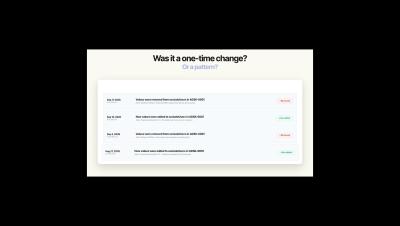
A firewall rule set to allow any source to any destination can stay live for months. It cancels out the rules beneath it and lets traffic pass unchecked. That kind of drift sets off no alarm. It builds up between quarterly reviews, while small teams govern 50 or more firewalls and hundreds of rule changes a week. Reach Network Security Assurance finds these controls, shows how long each has been open, ties the finding to real exposure, and guides the fix.

What Is Firewall Configuration and Why Is It So Important?

Firewall configuration is the set of rules, policies, and settings that define how a firewall behaves. Without configuration, a firewall is hardware and software waiting for instructions. With configuration, it becomes a control that determines what traffic is permitted, what is blocked, and what gets inspected before a decision is made. Get the configuration right, and the firewall does its job. Let it drift, and you have the appearance of protection without the substance of it. This is not an edge case.

Your Firewall Rules Are Drifting Right Now. You Just Can't See It

Firewalls are the single most common source of misconfiguration-related breaches, yet they get changed a hundred times a week and audited once a quarter. This is the network security gap AI attackers exploit first. Endpoint gets the budget. Identity gets the roadmap. The firewall gets changed constantly and reviewed rarely. It is also the control most tied to breaches: 42% of security teams pinned a firewall misconfiguration to a breach or near miss last year, ahead of EDR at 40% and identity at 39%.

Continuous Assurance Across Every Network Security Control

Every security leader can describe their network security architecture in confident detail: how traffic should flow, where segmentation boundaries sit, which access should never be permitted. What almost none can tell me with certainty is whether their live controls are actually enforcing that design right now, at this very hour. That gap between what we intend and what is actually running in production is where modern breaches live, and it widens with every change we make.

What Is Network Security Assurance?

Every security leader has a version of the network in their head. They know which systems should be segmented, which applications should be reachable, which ports should never be open, and which access paths should not exist. They know how the architecture is supposed to work. The harder question is whether the live environment is actually enforcing that design right now. That question is getting more difficult to answer.

Optimize Microsoft Entra ID Conditional Access | Reach Security

Which of your users can reach a sensitive app without ever hitting MFA? Most security teams can't answer that with confidence. Microsoft Entra ID and Conditional Access is powerful. But exclusions stack up, MFA coverage drifts, and risk-based protections go unused. This creates openings for fast-moving AI-powered attackers. Reach continuously validates your controls against your security intent, closes the gaps, and proves the risk reduction.

Microsoft Defender for Endpoint: Protection You're Paying For But Not Using

Microsoft Defender for Endpoint ships with serious firepower. But most of it is sitting idle. ASR rules get stuck in audit mode. Devices never get fully onboarded. Exploit protection is switched off. Security baselines drifting across device groups. You're paying for protection that isn't turned on. Reach analyzes your Defender deployment, surfaces every gap, prioritizes the fixes by real risk reduced, and keeps your controls aligned as you scale.