Security | Threat Detection | Cyberattacks | DevSecOps | Compliance

Close Defensive Gaps Before AI Attacks Exploit Them

The speed of AI-powered attacks is mind-numbing. CrowdStrike found that average eCrime breakout time fell to 29 minutes, with the fastest recorded breakout at 27 seconds. Armadin showed an LLM-driven NTLM relay attack completing in under three minutes, then roughly 1.5 minutes with BloodHound MCP context.

Security Hardening Explained: Why is it Critical for Your Security Program?

Security hardening is the practice of systematically reducing the ways an attacker can get into, move through, or persist in your environment.The reason this is a priority is that the gap between "deployed" and "properly configured" is where most breaches actually live. This guide covers the core principles of hardening, how it maps to compliance requirements, and how automated tooling has changed the way mature security teams operationalize it at scale.

How Reach Fixes Microsoft Defender for Office 365 Configuration Drift

Microsoft Defender for Office 365 is powerful out of the box. The problem? Configurations drift. IT teams make changes the security team doesn't know about. Anti-phishing policies weaken. Safe Links gaps open up. And AI-powered attackers are finding those openings faster than any team can manually catch them. Reach analyzes your Microsoft Defender for Office 365 controls, activates underutilized capabilities, remediates misconfigurations, and keeps your deployment aligned to your security baseline continuously.

What is Security Debt and What Should Your Organization Do About it?

Businesses are constantly investing in new security tools to protect their digital environments. However, many organizations are only tapping into a small fraction of what those tools can actually do. This massive amount of unused potential adds up to something called security debt: a growing risk for organizations of all sizes. Security debt occurs when tools capable of mitigating threats are underutilized, misconfigured, or left idle.

Measuring Real Risk Reduction Across Your Security Stack

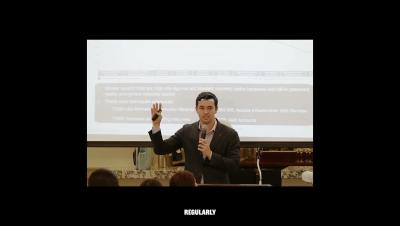
Garrett Hamilton recently presented at the North Texas ISSA Lunch & Learn in Plano, TX to talk about what risk reduction actually looks like in practice. Reach shows customers exactly which controls they've deployed, the user impact of those changes, and how much risk has been reduced across IAM, EDR, email, firewall, and SASE. Not feature checklists. Targeted, measurable outcomes tied to the business.

The Configuration Drift Behind the Teams Helpdesk Breach

On April 22, 2026, Google's Threat Intelligence Group and Mandiant disclosed a campaign by a threat actor they're tracking as UNC6692. The group breached enterprise networks by impersonating IT helpdesk staff over Microsoft Teams, ultimately exfiltrating Active Directory databases and achieving full domain compromise. What's notable about UNC6692 is what they didn't do. They didn't use a zero-day. They didn't exploit a software vulnerability.

New Research Finds Configuration Drift is Driving Cybersecurity Incidents Across 97% of Organizations

The study, commissioned by Reach Security, reveals widespread misconfigurations, slow remediation cycles, and manual approaches to drift management, highlighting the urgent need for preemptive approaches that continuously validate security controls.

Microsoft E3, E5, and E7 Security Licenses: A Data-Driven Upgrade Guide

Upgrading Microsoft enterprise licenses from E3 to E5 or from Entra ID Plan 1 to Plan 2? Whether your company is making the move or evaluating it, the key question is: How do you turn licensing changes into real security gains? Platformizing remains a major trend in 2025, and Microsoft often sits at the center of these efforts due to its broad security capabilities. But maximizing value from E3 and E5 licenses requires time, expertise, and contextual understanding of your environment.

Exploring CSPM: What is Cloud Security Posture Management?

Cloud Security Posture Management (CSPM) is a category of cloud security tooling that automates the identification and remediation of misconfigurations and security risks across cloud environments. CSPM solutions continuously monitor how cloud resources are set up, compare those configurations against industry benchmarks and organizational policies, and flag issues that could create security exposure.