


|
By Aaron Smith
October has made a strong case for this year’s Cybersecurity Awareness Month (opens in a new tab) theme, “Securing the Next 250,” chosen in honor of the U.S.’s 250th anniversary. The initiative, started by the Cybersecurity and Infrastructure Security Agency (CISA) and the National Cybersecurity Alliance (NCA), occurs annually in October to raise awareness about online safety and empower individuals and businesses to protect themselves from cybercrime.
|
By HuntIQ Team
Learn how Tanium turned a bug hidden inside other software into a fleet-wide answer, a tested Tanium Atlas hunt and lab-proven detection guidance within a day of the flaw's scope widening.

|
By HuntIQ Team
Learn how Tanium put a fleet-wide PHP inventory in every Tanium Cloud tenant about eight hours after PHP shipped its php2shell fix.
On October 17, 2026, a researcher reported that eight intermediate certificate authorities (CAs) run by eMudhra have private keys that anyone can calculate from the public certificates. Six of the CAs are for TLS (website) certificates and two are for code signing. Sectigo cross-signed the same eight keys, so 16 certificates are affected in total With these keys, anyone can issue a certificate for any website, or sign software, and it chains to root CAs that many systems trust.
If you run Node.js, update to 26.12.1, 24.22.1 or 22.23.4 now. If you run Python, upgrade the Brotli package to 1.2.1 and brotlicffi to 1.2.1.0. If you run Bun, move to 1.4.4. All three carry a fix for CVE-2026-111497, an out-of-bounds write in Google's Brotli decoder that can let a remote, unauthenticated attacker crash a process, read its memory or potentially run code by sending it crafted compressed data. Google's CVE record scores it 9.2 under CVSS v4.0.
|
By Tanium
Real-time visibility, control, and compliance for RTX Spark, NVIDIA DGX Spark, NVIDIA DGX Station and DGX Station for Windows.
|
By Tanium Staff
For the last three years, enterprise AI happened somewhere else. Models trained in someone’s cloud, inference ran behind an API, and the endpoint stayed where it had always been: on a laptop that opened a browser. With local AI computing platforms like NVIDIA DGX Spark (opens in a new tab), RTX Spark (opens in a new tab), and DGX Station (opens in a new tab), that framework is ending.
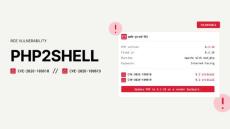
If you run PHP anywhere in your environment, patch to PHP 8.5.12, 8.4.27, 8.3.36 or 8.2.35 now. Two critical flaws disclosed this week, CVE-2026-109618 and CVE-2026-109619 (nicknamed "PHP2Shell"), let an unauthenticated attacker run code on a server with nothing more than a crafted web request. Both carry a CVSS v4.0 score of 9.2, every earlier release is affected, and exploitation in the wild has been reported. The patch is the easy part.
|
By Tanium Staff
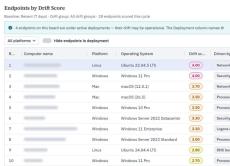
The next attacker in your environment probably won't look like an attacker. With AI in the mix, they can sign in with stolen credentials and use the same tools your IT team uses every day. Nothing about that activity matches a known-bad file or a known-bad rule. That is the problem Endpoint Drift is built to solve. It learns what normal looks like for each endpoint, then shows you which ones have started behaving differently, and why.
|
By HuntIQ Team
Stacking is usually the first thing we reach for on a persistence hunt. Pull every service, autorun or scheduled task across the environment, count how many endpoints have each one, and sort ascending. The entries at the bottom, the ones that show up on one or two machines, are where you start digging. In one Tanium Customer's environment, that didn't work at all. Each endpoint returned somewhere between a hundred and five hundred rows, and almost every one of them was unique to that endpoint.
|
By Tanium
PHP2Shell is here. See how Tanium finds PHP across your environment, scopes your exposure, and maps attack paths so you know what to patch first. In this special edition, we walk through how Tanium gives you visibility into the new PHP2Shell vulnerabilities (CVE-2026-109618 and CVE-2026-109619) and the resources available to help you respond.
|
By Tanium
The refreshed Tanium Certified Operator (TCO) exam swaps simulations for concept-based Q&A. See what changed, what didn’t, and how to prep. The TCO is the foundational Tanium exam: testing whether you understand the basics of interacting in Tanium. This episode covers what changed in the latest cert refresh, what stayed the same, which version to take, and how to prepare.

|
By Tanium
Can you move faster without risking downtime? Mythos is putting pressure on IT teams to patch in days, not weeks. But September's Patch Tuesday was a reminder that speed comes with its own risk: what happens when the patch you need to deploy quickly is the thing that causes an outage? In this session, we'll unpack what September taught us about faster patch cycles and look at how teams can shorten remediation timelines without giving up the testing and control that keep production running.

|
By Tanium
Tanium's new Service Graph for Tanium Atlas connector now sends only what changed to your ServiceNow CMDB; empowering your workflows and automations near real-time data. Today we’re looking at the new Service Graph Connector for Tanium Atlas. Instead of re-sending your whole inventory every cycle, it detects what changed since the last sync and sends only that - keeping your CMDB current without the load of a full sync every time.

|
By Tanium
How do you patch faster - all while honoring your patching policies and *not* breaking things? Attackers are using AI to find and exploit vulnerabilities faster, and vendors are shipping patches faster too. Your patching processes need to keep up! In this episode we show how to automate patching on a monthly cadence, roll it out in rings, and keep control of the process the whole way through. zero-touch, ring-based patch automation with Tanium deployment plans, in Atlas or the classic console.

|
By Tanium
Attackers don't wait for humans, and neither should your SOC. Tanium Security Operations brings detection, investigation, hunting, and response together on one platform that moves at machine speed. See how Tanium Atlas works as an extension of your team: pulling live telemetry, historical activity, and the full process tree the moment a threat surfaces, hunting a hypothesis across every endpoint in your fleet, and containing threats from one endpoint to hundreds of thousands. When the hunt needs to go deeper, HuntIQ's hands-on experts take it from there, inside your environment.

|
By Tanium
Tanium Provision takes a device from bare metal to domain-joined and software-ready, hands-off, from start to finish. This episode walks through the entire process, end to end. Rob Broughall takes us through the full provisioning journey: setting up the infrastructure, building a Windows 11 bundle from the ground up, and watching a device go from bare metal to domain-joined and running software in under two hours.

|
By Tanium
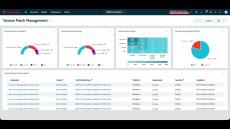
Vulnerability and compliance scans just got faster with Tanium's new scan engine. Today we're digging into Tanium Scan Engine 7.0, a rebuild of Comply scanning that moves enumeration onto Tanium Index instead of scanning live every time. The result: faster scans, lower resource usage, and one less dependency to worry about (goodbye, JRE!!).
|
By Tanium
A critical vulnerability is discovered. Minutes later, it's patched — approved, scheduled, and deployed, with no one bouncing between systems to make it happen. In this video, Steven Payne shows how Tanium and ServiceNow close the gap between finding a problem and fixing it, turning a vulnerability into a governed change request and an executed patch deployment without a single manual hand-off. It's change management and endpoint remediation working as one motion instead of two disconnected jobs. If patch cycles have ever felt like a race against the clock, watch how much faster — and safer — that race can be.
|
By Tanium
Want to point your own AI at Tanium? The Atlas MCP Server makes that possible — governed, scoped, and available today. In this episode we cover: Tanium MCP - Available now (read-only) How to set up OAuth clients and how RBAC applies How to scope a single-purpose agent to one module, like Asset, using path-based tool filtering How to tell which tools consume Atlas AI credits - and which don't!

|
By Tanium
Whole-of-state cybersecurity requires three components - governance, implementation and validation.

|
By Tanium
Preventing risks and breaches through cyber hygiene across endpoints is safer than remediation. And if done well, cyber hygiene can become a lightweight part of the way the company operates.

|
By Tanium
Protecting data from theft and improper use has long been the domain of cybersecurity and IT executives. But today, this is also a very real concern for the C-suite and, in many cases, the board of directors, all of whom are well aware of the repercussions of a data breach and failing to comply with regulations.

|
By Tanium
Cybersecurity and reliability risks cannot be managed by working in silos. The key to solving complex IT operations problems collaboratively is to build a common engineering approach.
- October 2026 (17)
- September 2026 (12)
- August 2026 (15)
- July 2026 (9)
- June 2026 (13)
- May 2026 (17)
- April 2026 (15)
- March 2026 (14)
- February 2026 (5)
- January 2026 (10)
- December 2025 (6)
- November 2025 (11)
- October 2025 (15)
- September 2025 (16)
- August 2025 (13)
- July 2025 (16)
- June 2025 (14)
- May 2025 (12)
- April 2025 (14)
- March 2025 (13)
- February 2025 (15)
- January 2025 (12)
- December 2024 (18)
- November 2024 (10)
- October 2024 (18)
- September 2024 (16)
- August 2024 (14)
- July 2024 (15)
- June 2024 (14)
- May 2024 (15)
- April 2024 (17)
- March 2024 (10)
- February 2024 (11)
- January 2024 (12)
- December 2023 (11)
- November 2023 (13)
- October 2023 (7)
- September 2023 (19)
- August 2023 (14)
- July 2023 (11)
- June 2023 (20)
- May 2023 (10)
- April 2023 (17)
- March 2023 (13)
- February 2023 (13)
- January 2023 (14)
- December 2022 (7)
Empowering the world’s largest organizations to manage and protect their mission-critical networks.
The industry’s approach to endpoint management is flawed. Every IT security and management provider offers only a small piece of the solution required to protect our environments. Organizations are forced to buy tens of these different solutions, stitch them together, and make decisions based on stale, inaccurate and incomplete data. CIOs and CISOs need a new way to manage and secure their endpoints.
It's time for a different approach:
- Visibility: See into every endpoint, managed or unmanaged, with complete, accurate and real-time visibility.
- Control: Whether in the cloud or on premises, take control of your entire IT estate in seconds with minimal network impact.
- Remediation: Enable teams to investigate and respond to incidents with complete, high-fidelity data in real time.
Converge tools, workflows and teams across the entire endpoint management cycle.