

|
By Robin Johns
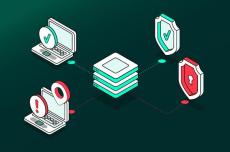
For the last few years, when somebody says “AI,” what they are usually referring to is a Large Language Model, or LLM for short. You chuck some text in, it has a think, and it gives you some more text back. This is brilliant if you want code written, documents summarised, or quantum physics explained to you in a limerick, but while this is great for humans, most software doesn’t actually want a beautifully written paragraph. Software just wants an answer so it can make a decision.
|
By Sangita Patel
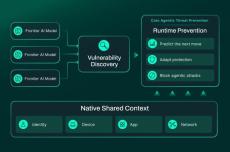
Access to powerful AI models is opening new possibilities for cybersecurity. Models can help uncover weaknesses, investigate threats, and explore how attackers might break into an environment. Using several models can bring different strengths to that work. But model access alone does not answer a critical question: can your defense stop an attack while it is happening? In the frontier AI era, discovery needs to connect to action.
|
By Amad Hussain
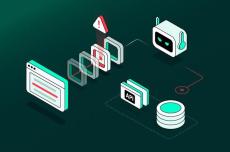
An AI agent is software that can act on your behalf. It may read documents, emails, and web pages, then use the systems you connected to complete a task. Amazon Bedrock AgentCore makes these agents faster to build and deploy. But securing them requires more than limiting which systems an agent can access. You also need to consider what the agent can read once it gets there. A document, email, or web page may contain hidden or malicious instructions designed to influence an agent’s next action.

|
By Neil Langridge
With hybrid work as the new standard, consistently enforcing security across every edge is a challenge for teams. Working from any location or device creates a persistent challenge: how to enforce consistent, risk-based access controls across users, devices, and applications without introducing policy gaps or operational complexity. To understand the impact, let’s consider the user experience within a single global organization operating across three continents.

|
By Etay Maor
Somewhere in the first nine months of 2026, AI stopped being a talking point in ransomware and became part of how the work actually gets done. Tracking new ransomware-as-a-service (RaaS) launches, darknet recruitment ads and public incident reporting through this period shows a three-step progression: AI as advertising, AI as an assistant, and AI built directly into ransomware.

|
By Liron Hakim Bobrov
Imagine a developer asks a coding agent to investigate a failed deployment. The agent can read the project directory, inspect source code and configuration files, search the web for troubleshooting guidance, and use the developer’s approved tools.

For MSPs and service providers, a managed SASE offering needs to be repeatable across a small and midsize business (SMB) customer base, from selling and licensing, through provisioning and support. But traditional per-customer licensing can introduce friction every time a partner adds or expands a customer. That process can slow onboarding, add administrative work, and limit how partners allocate capacity.

|
By Amad Hussain
We told everyone to adopt AI, and they did. Almost anyone can now produce polished, professional work in seconds. The newest shortcut behind that speed is skills: small files that hand an AI agent a new ability. Skills are also where the risk now sits. One file can hold dozens of instructions and actions, so anything buried inside travels with it, and the agent follows all of it without asking. Most of those agents run unwatched, so the speed you gained is now exposure nobody in the business is measuring.

|
By Jason Viera
Network edge vulnerabilities are accelerating. Cato’s cloud-native architecture reduces customers’ attack surface and shortens exposure to emerging vulnerabilities. The Cato CVE Exposure Calculator shows what that difference could mean for your organization. Another Known Exploited Vulnerability (KEV). Another emergency CAB. Another weekend spent upgrading firmware. You have to respond. The question is how much each response costs the business.

|
By Dr. Guy Waizel
On Monday, August 17, 2026, Cato recorded record-breaking post-Obon traffic across its Japan Points of Presence (PoPs) as employees returned to work together. At one of Cato’s Tokyo PoPs, traffic rose to more than 15 times its typical level for the same morning period on normal business days.
|
By Cato Networks
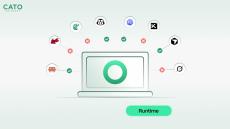
Local AI agents are becoming part of everyday work, accessing enterprise data, using tools, and completing tasks directly on employee devices. Security teams need to enable this adoption without losing visibility, control, or governance over agent actions - even when those actions happen locally.
|
By Cato Networks
As an SMB managed SASE business grows, the real challenge is often operational: how to add customers and respond to changing needs without adding licensing friction. Cato SMB FlexPool helps eligible MSPs and service providers managed committed capacity at the partner level, supporting faster growth, better utilization, and control of the managed service experience. Contact your Cato channel representative to discuss SMB FlexPool eligibility and pool sizing.

|
By Cato Networks
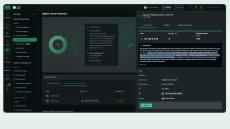
AI-powered attacks are moving faster, adapting in seconds, and overwhelming traditional defenses with machine-speed activity. In this video, Jason Wright explains why security teams need Agentic Threat Defense built on customized predictions, automatic adaptation, and cloud-native scale. Watch how Cato Agentic Threat Prevention helps reduce the risk of AI-powered threats, stop adaptive attacks earlier, and scale prevention to stop agentic attacks.
|
By Cato Networks
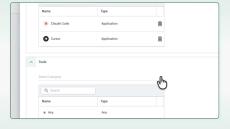
AI-powered adversaries are accelerating vulnerability discovery and automating attacks. For security teams, the challenge is adaptive attack chains, machine-speed execution, and attack volumes beyond manual workflows. Cato is redefining prevention in the AI era—predicting enterprise-specific attack paths, adapting protections at machine speed, and scaling defense with cloud-native scale. This means enterprises can do more than just react to attacks, they can prevent them.
|
By Cato Networks
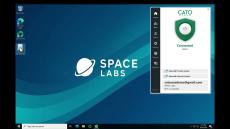
Enterprise AI is spreading fast across employees, applications, and agents. Security teams need a way to enable AI adoption without losing visibility, control, or governance. In this demo, see how Cato helps organizations secure AI across three fronts: · AI employees use, including sanctioned and unsanctioned AI tools· AI applications teams build, including LLM apps connected to enterprise data· Agentic AI, where agents can access tools, data, and workflows.
|
By Cato Networks
See how Cato helps stop an Agent Tesla-style malware credential theft attack before it becomes business impact. In this demo, a remote finance user opens what appears to be a routine invoice. Behind that simple action is a common attack path: malware designed to steal credentials, keystrokes, and sensitive business data.
|
By Cato Networks
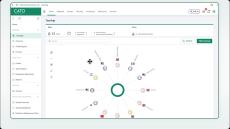
See how Cato Private Access helps organizations access the app, not the network. In this demo, we show how IT teams can deliver secure access to private applications without routing or firewall changes, while maintaining application-level access control, centralized policy enforcement, and visibility through the Cato Management Application. We also highlight how Cato manages private application access through the Cato SASE platform, enabling a more unified, operationally efficient approach than traditional connector-based architectures.
|
By Cato Networks
The attack lifecycle is compressing. Frontier AI models like Anthropic’s Mythos and OpenAI’s GPT-5.5-Cyber can help bad actors research vulnerabilities, test approaches, adapt code, and change delivery methods at machine speed and scale. That reduces the time, skill, and coordination needed to move from vulnerability discovery to active attack. When attacks behave this way, security needs to operate in real time with full visibility and context across the attack path.
|
By Cato Networks
Most organizations understand the need for Zero Trust access to private applications. The challenge is delivering it without creating operational bottlenecks, increasing network risk, or slowing projects with weeks of coordination. In this video, Chris Rudolph explains how Cato Private Access enables secure, application-level access to private applications without requiring routing updates, inbound firewall changes, or complex network redesigns.

|
By Cato Networks
The consulting firm wanted a secure, reliable network to better manage resources for modern applications so employees could work more effectively. With the Cato SASE Platform, they got that and much more: centralized visibility, control, and the foundation for secure growth.
|
By Cato Networks
Organizations require an understanding of the positive ROI implications of security transformation with a holistic, cloud-delivered security architecture. A well-formed security transformation strategy provides an objective cost analysis of potential savings gained by retiring traditional security tools. Understanding how a single converged software stack provides both a financial ROI and a technical ROI will help organizations uncover hidden savings to be gained with their transformation projects.

|
By Cato Networks
When exploring a revolutionary architecture like SASE, it helps to have specific, relatable examples. SASE overlaps both networking and security spaces, sometimes making it difficult to see the whole picture. In this new eBook, we explore what SASE looks like for 5 different industry verticals: Retail & Hospitality, Manufacturing, Credit Unions, Health & Pharmaceuticals and Technology. Many of the benefits of SASE can provide value to any organization, so even if your specific vertical isn't covered, you should take a look!
|
By Cato Networks
While organizations realize they must deploy zero trust, knowing where to begin and how to deploy has become an impediment for many. The Cybersecurity and Infrastructure Agency (CISA) is one of several zero-trust maturity models that provide organizations with a measurable path to zero trust. The Cato SSE 360 architecture is a secure platform that helps facilitate Zero Trust maturity while delivering complete 360-degree protection for users, applications and data. This white paper will discuss how Cato SSE 360 can help facilitate Zero Trust Maturity.

|
By Cato Networks
Before SASE, network and network security services were delivered through multiple point solutions, including legacy appliances. These legacy appliances operated in silos and required countless IT resources and attention to deploy, manage, maintain, and replace. Today, some enterprises are still trapped using these legacy appliances, despite their shortcomings. In the parallel, modern world, SASE offers a single cloud-native network and security service for all networking and security needs.

|
By Cato Networks
Migrating a branch firewall to cloud? Pretty straightforward.... But enterprise security teams often find it challenging when contemplating moving the datacenter FW to the cloud. Unlike the branch firewall or UTM, the datacenter FW is responsible for providing visibility and control over inbound and outbound internet traffic, WAN traffic, vLAN traffic, and more. In this whitepaper, understand all the challenges that come with migrating your datacenter FW to the cloud, in addition to.
|
By Cato Networks
Your SSE project is right around the corner. Our helpful SSE RFP template allows you to meet both current and future security threats while ensuring that your key business objectives are met. Our template, divided into four sections, provides key questions to incorporate into your SSE RFP. This RFP template will allow you to easily identify.
- October 2026 (3)
- September 2026 (6)
- August 2026 (12)
- July 2026 (13)
- June 2026 (8)
- May 2026 (14)
- April 2026 (18)
- March 2026 (25)
- February 2026 (7)
- January 2026 (6)
- December 2025 (9)
- November 2025 (7)
- October 2025 (7)
- September 2025 (11)
- August 2025 (10)
- July 2025 (13)
- June 2025 (17)
- May 2025 (10)
- April 2025 (17)
- March 2025 (15)
- February 2025 (9)
- January 2025 (8)
- December 2024 (15)
- November 2024 (6)
- October 2024 (9)
- September 2024 (7)
- August 2024 (5)
- July 2024 (15)
- June 2024 (10)
- May 2024 (5)
- April 2024 (6)
- March 2024 (5)
- February 2024 (11)
- January 2024 (11)
- December 2023 (5)
- November 2023 (8)
- October 2023 (8)
- September 2023 (12)
- August 2023 (15)
- July 2023 (13)
- June 2023 (9)
- May 2023 (14)
- April 2023 (14)
- March 2023 (14)
Cato enables customers to gradually transform their networking and security infrastructure for the digital business. You can address one or more of the use cases below at your own pace. No matter where you start, Cato will support you throughout your journey.
Cato SASE Cloud with SSE 360 provides a global converged cloud-native service that securely and optimally connects all branches, datacenters, people, and clouds. Cato can be gradually deployed to replace or augment legacy network services and security point solutions.
Cato SASE Cloud:
- Converged: Cato converges SD-WAN and network security capabilities into a single pass architecture.
- Cloud-native: Cato is built from the ground up as an elastic, resilient, and scalable cloud service.
- Global: Cato is available across 75+ global PoPs to support any business location or user.
- All edges: Cato secures and optimizes traffic from all users, locations, clouds, and applications.
SASE, SSE, ZTNA, SD-WAN: Your journey, your way.