Security | Threat Detection | Cyberattacks | DevSecOps | Compliance

5 Best Model Context Protocol (MCP) Server Plugins for WordPress (2026)

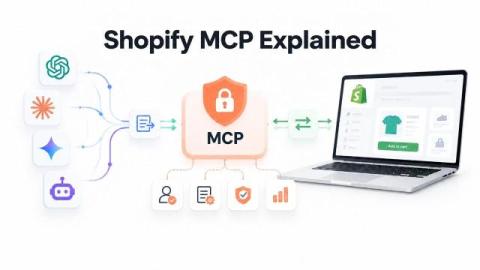
Managing a WordPress site no longer means logging in to the dashboard for every update or routine task. With the Model Context Protocol (MCP), AI assistants such as ChatGPT, Claude, and Cursor can securely interact with your WordPress site through natural language. They can retrieve content, update posts, manage WooCommerce stores, and perform other actions without custom integrations.

Understanding the Impact and Implementation of India's DPDP Act 2023 | Podcast with Adwaita Bhagwat

Privacy is no longer just policy, it’s a legal responsibility. In this Podcast, Vidushi Gupta in discussion with miniOrange Legal officer Adwaita Bhgwat on how India’s DPDP Act 2023 is reshaping data protection, consent, and organizational accountability across every business that handles personal data.

Birthright Access Explained: How Automated Access Improves Identity Governance

It's a familiar story: a new employee shows up on day one, laptop in hand, ready to work, only to spend the next three days waiting for access to email, shared drives, and the applications their job depends on. IT teams juggle tickets, managers chase approvals, and productivity stalls before it starts. Manual provisioning doesn't just slow onboarding. It also creates security gaps. Teams often grant access on an ad hoc basis, assign more permissions than users need, and fail to remove unnecessary access.

IGA vs. IAM: Key Differences and Why Enterprises Need Both

Identity has become the new security perimeter. With over 80% of breaches involving compromised credentials, how organizations manage and govern identities is now the defining factor in both security posture and regulatory compliance. The stakes have risen sharply. Cloud adoption, remote workforces, AI-driven automation, and expanding third-party ecosystems have multiplied the volume of identities organizations must manage, and the consequences of mismanaged access have never been more severe.

DPDP Act Penalties: Fines for Non-Compliance Explained

The Digital Personal Data Protection (DPDP) Act, 2023, has shifted data privacy from a regulatory obligation into a critical business risk. With the DPDP Rules, 2025 providing operational clarity, businesses are expected to implement reasonable security safeguards, manage consent, protect children's data, and respond promptly to personal data breaches.

Identity-Centric PAM: The Future of Privileged Access Management

Privileged Access Management (PAM) has become a cornerstone of enterprise security, but the environments it protects have changed dramatically. Organizations now manage cloud infrastructure, SaaS applications, remote workforces, third-party vendors, machine identities, and AI-driven workloads that constantly request privileged access. Security teams need to verify every identity, understand the context of each request, and grant only the minimum level of access required.

AI Agent Identity: Securing Desktop, SaaS, and Enterprise AI Agents

Your enterprise probably has a few thousand employees with managed identities. HR provisioned them, IT governs them, and your IAM platform watches them. Now count the AI agents running across your org. The Claude Code and codex instance that sit inside every dev's IDE. The Salesforce Einstein bot with access to every open deal. The Zapier AI that reads your CRM, writes to your Slack, and forwards summaries to email. You can't count, secure, or govern them with traditional IAM, can you?

SCIM & REST API Provisioning for Jira and Confluence

Wouldn't it be great if managing user accounts didn't take hours of manual effort? For many IT teams, unfortunately, that's exactly the reality. Every new employee needs access for all the apps they intend to use. When someone switches roles, permissions need updating. And when someone leaves, all their access needs to be revoked immediately. These tasks might sound simple, but they become exponentially more challenging as your company grows.

DPDP Compliance Checklist: Assess Your DPDPA Readiness

The Digital Personal Data Protection (DPDP) Act, 2023, has established a new privacy framework for organizations handling digital personal data, while the DPDP Rules, 2025, provide greater clarity on how businesses should implement these obligations in practice. For many organizations, however, translating legal requirements into day-to-day operational processes remains a significant challenge.