Security | Threat Detection | Cyberattacks | DevSecOps | Compliance

Passwordless Authentication and Passkeys: How FIDO2 Enables Secure Login

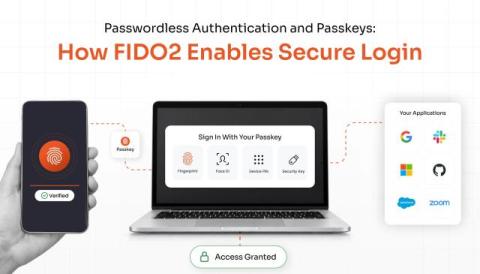
Password-based authentication is slowly disappearing from the login experience in 2026. Instead, users increasingly authenticate with a fingerprint, device PIN, or security key without typing a password. This is where passwordless authentication and passkeys come in. Built on FIDO2 and WebAuthn, passkeys use cryptographic credentials to make passwordless login simpler for users while reducing exposure to phishing and credential theft. But passkeys are only one part of the picture.
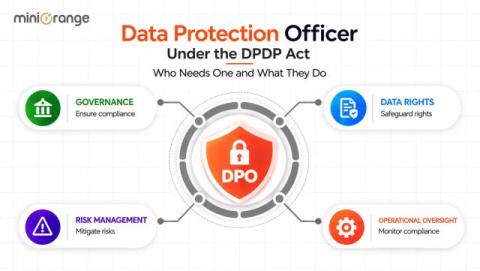

Data Protection Officer Under the DPDP Act: Who Needs One and What They Do

Not every organization that processes personal data has to appoint a Data Protection Officer. Under India's Digital Personal Data Protection Act, 2023, this duty applies only to Significant Data Fiduciaries (SDFs), a category the government assigns based on the scale and sensitivity of the data an entity handles. So before you assume your business needs a data protection officer, it helps to know exactly where this obligation begins and ends.

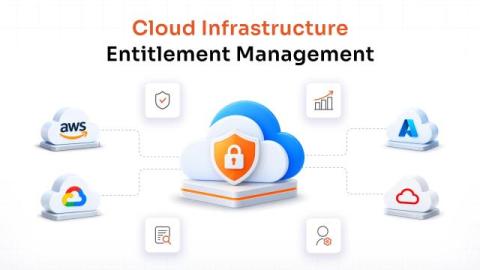
Cloud Infrastructure Entitlement Management (CIEM): A Complete Guide

In the cloud, an identity is no longer necessarily a person. It can be an application calling an API, a workload accessing storage, a service account running an automated process, or a machine interacting with another cloud resource. Each needs permissions to operate, and each becomes part of an access environment that changes as quickly as the infrastructure itself. This has expanded identity security beyond managing users and accounts to governing a much larger ecosystem of human and non-human access.

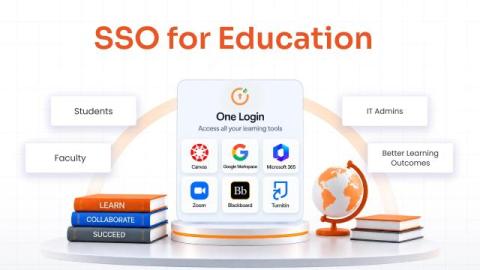
SSO for Education: Secure and Simplify Access to Learning Applications

Students, teachers, and faculty now move across a growing stack of learning, collaboration, communication, and administrative applications. Every new platform can mean another login to remember and another account for IT teams to manage. That creates friction for users and a growing access-management burden for institutions. SSO for education brings these applications behind a central authentication layer, allowing users to access authorized services with one institutional identity.

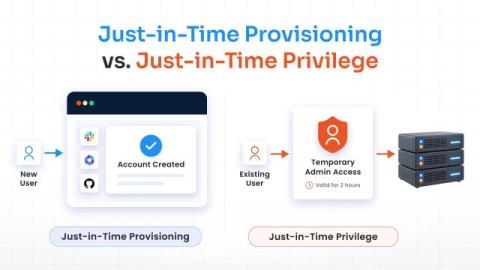
Just-in-Time Provisioning vs. Just-in-Time Privilege: What's the Difference?

Just-in-Time Provisioning and Just-in-Time Privilege sound almost identical, but they solve different identity management challenges. Let’s say a new software engineer joins your team. They need access to Slack, Jira, GitHub, and other essential apps. Instead of having an IT admin create their account manually, the application creates the account when the employee signs in through your Identity Provider (IdP). That is JIT provisioning.

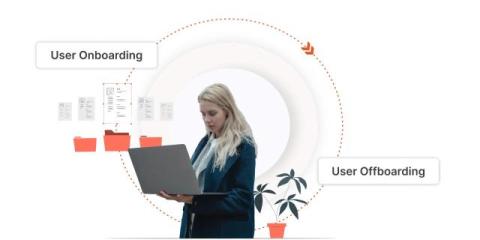
Identity Lifecycle Management: Process, Stages, Benefits, and Best Practices

Identity lifecycle management is the process of managing a user's digital identity and access from the day they join an organization to the day they leave. It covers account creation, role changes, permission updates, and deprovisioning, and it applies to employees, contractors, service accounts, and increasingly, AI agents. Get it wrong, and you end up with two failure modes: new hires waiting days for access, and former employees who still have it. Both cost money. Only one of them makes headlines.

MFA for Retail: Smarter Authentication for Stores, E-commerce & Employees

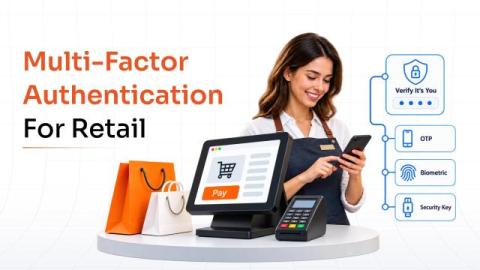
A refund is an authentication event, so are a POS login, a loyalty-account change, and a technician connecting to a store remotely. Retailers have traditionally treated these moments as separate access problems, but they share the same underlying question: how much confidence should the business require before allowing an action to proceed?

User Access Management: Process, Controls, and Benefits Explained

Access sprawl is quiet. For example, a contractor's admin rights outlive the project by eight months, or an account sits open for weeks after someone switches teams. And in most cases, nobody catches access sprawl until an audit or a breach forces the question. User access management (UAM) is the discipline that catches this. It decides who gets access to what, why they get it, how that access is approved, how it changes over time, and when it gets pulled.

SSH Session Monitoring: How to Monitor, Record & Audit SSH Sessions

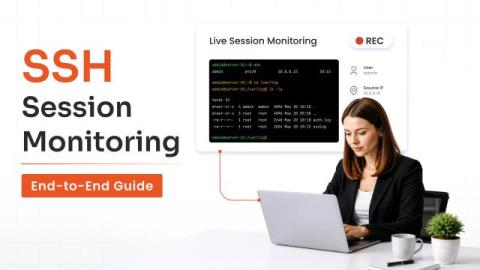
Secure Shell (SSH) gives you direct access to critical servers, databases, and cloud infrastructure. Once a privileged user connects through SSH, they hold extensive control over that system. They can alter core configurations, run terminal scripts, move files, or delete production databases in seconds. If you lack visibility into privileged actions, it can be risky. If a credential gets stolen or an insider goes rogue, traditional firewalls won’t be enough.