Security | Threat Detection | Cyberattacks | DevSecOps | Compliance

Why Your Organization Needs PAM and ITDR

In modern enterprise environments, identity has become the primary attack vector, but many organizations lack visibility into who has privileged access and whether that access is being misused. Without proper oversight, attackers may exploit legitimate credentials without triggering traditional security controls. According to Verizon’s 2025 Data Breach Investigations Report, credentials were involved in the majority of breaches analyzed.

A2A vs MCP: Which Is More Secure?

Two protocols are shaping the AI revolution: A2A for agent-to-agent delegation, and MCP for agent access to tools and external systems. A2A expands who can participate in a workflow by enabling agent-to-agent delegation. MCP expands what agents can reach by connecting them to data and systems. By the end of 2026, task-specific AI agents are expected to appear in 40% of enterprise applications, up from less than 5% in 2025. That shift changes where security has to live.

Stop Talking Tech to the Boardroom. Start Talking ROI.

The corporate firewall is dead. With cloud, remote work, and state-sponsored attacks reshaping the threat landscape, identity is now the security perimeter, and boards are paying attention to the price tag. One Identity CEO, Praerit Garg, shows CISOs how to ditch the technical jargon and make the case for identity security in the only language the boardroom understands: money, risk, and ROI.

15 Best Zero Trust Network Security Tools [By Category]

Trust is expensive. The wrong zero trust network security tool can leave you with more standing access and more risk than you started with. In today’s modern and complex environments, this sentiment matters more than ever. 22% of breaches involved credential abuse as the initial access vector. In this guide, we break down the best zero trust network security tools by category, helping you choose the optimal solution for your requirements.

Govern AI agents the right way with Identity Manager by One Identity

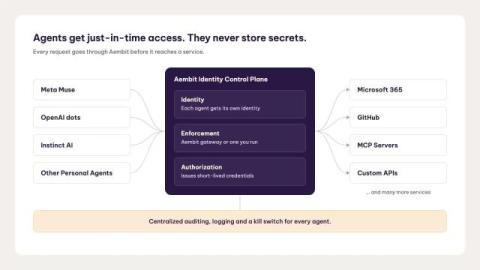
AI agents are becoming an inseparable part of identity governance, sometimes being created by other AI agents and acting proactively across platforms at machine speed — but who’s watching them? Identity Manager 10.0 by One Identity answers that question. Hear Ingrid Thorpe, director of product management for Identity Manager, explore how the solution governs agentic workflows, tackles agent-specific risks and integrates across cloud and enterprise platforms, holding non-human identities (NHIs) accountable.

When humans are a minority, IAM requires a rethink

In a typical enterprise, non-human identities (NHIs) are thought to outnumber human users by at least 50:1. NHIs are various and include: It is estimated that the NHI: human ratio may have leapt to 144:1 as more AI agents were deployed over the last year. CISOs are already alive to the risks posed by orphaned accounts on their systems. They know that automated rotation is required to revoke privileges as soon as NHIs complete tasks.

Multi-Cloud Identity Management: 10 Best Practices

The moment teams move from one cloud to two, identity governance starts to fracture. Roles don’t translate cleanly, and access reviews lag behind deployment velocity. Multi-cloud identity management is the practice of controlling who can access what across AWS, Azure, GCP, Kubernetes, SaaS tools, databases, and other cloud-connected systems.

Why privileged access is the first place attackers go - and why your PAM can't live in a silo anymore

One compromised privileged account can undo millions in security investments. Attackers know this. In fact, it's the reason privileged access has become the most sought-after prize in the modern enterprise. Gone are the days when getting past the firewall was enough to give an attacker free rein. Widespread adoption of Zero Trust principles, stronger default configurations and better security hygiene have made that approach obsolete. So, adversaries have adapted.