Security | Threat Detection | Cyberattacks | DevSecOps | Compliance

When humans are a minority, IAM requires a rethink

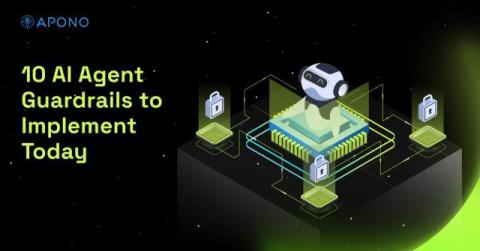
In a typical enterprise, non-human identities (NHIs) are thought to outnumber human users by at least 50:1. NHIs are various and include: It is estimated that the NHI: human ratio may have leapt to 144:1 as more AI agents were deployed over the last year. CISOs are already alive to the risks posed by orphaned accounts on their systems. They know that automated rotation is required to revoke privileges as soon as NHIs complete tasks.

Multi-Cloud Identity Management: 10 Best Practices

The moment teams move from one cloud to two, identity governance starts to fracture. Roles don’t translate cleanly, and access reviews lag behind deployment velocity. Multi-cloud identity management is the practice of controlling who can access what across AWS, Azure, GCP, Kubernetes, SaaS tools, databases, and other cloud-connected systems.

Why privileged access is the first place attackers go - and why your PAM can't live in a silo anymore

One compromised privileged account can undo millions in security investments. Attackers know this. In fact, it's the reason privileged access has become the most sought-after prize in the modern enterprise. Gone are the days when getting past the firewall was enough to give an attacker free rein. Widespread adoption of Zero Trust principles, stronger default configurations and better security hygiene have made that approach obsolete. So, adversaries have adapted.

One Identity named a leader in business application risk management

In the ever-evolving cybersecurity landscape, managing access and mitigating risk across complex enterprise environments has never been more critical. The latest KuppingerCole Leadership Compass for Business Application Risk Management has officially recognized One Identity as an Overall Leader. This distinction underscores the One Identity commitment to providing robust, scalable solutions for today’s diverse and difficult IT security infrastructures.

Why Traditional PAM Is Failing in the Age of Machine Identities

For years, Privileged Access Management (PAM) was built around a simple assumption: privileged access is primarily a human problem. That assumption is rapidly collapsing. Modern enterprises are no longer driven mainly by administrators logging into servers. They are increasingly powered by APIs, containers, automation pipelines, microservices, cloud workloads, and AI-driven systems communicating continuously at machine speed.

Why Active Directory vulnerabilities demand more than patching

A newly disclosed privilege-escalation flaw in Microsoft Active Directory Domain Services (AD DS) is a timely reminder that identity infrastructure continues to be one of the most consequential attack surfaces in any enterprise. CVE-2026-25177, rated HIGH with a CVSS score of 8.8, allows an authenticated domain user to escalate their privileges over the network without any elevated starting point or user interaction.

The JSONFormatter Wake-Up Call: How Developer Tools Are the New Identity Breach Vector

Everyone uses developer tools to get through the day. A JSONFormatter to inspect an API response, or a JWT decoder when you need to inspect a token quickly. In most engineering teams, these tools are treated as harmless productivity aids. In November 2025, researchers discovered that JSONFormatter and CodeBeautify had been storing everything users pasted into them via a save feature that generated shareable links with fully predictable URL structures. A simple crawler could retrieve all of them.