Security | Threat Detection | Cyberattacks | DevSecOps | Compliance

The PAM blind spot: Where your AI agents are getting breached

Non-human identities (NHIs) are not new. We have run service accounts, scripts and machine credentials for years. What changed is the population. Every automation project and every AI investment adds more of them, and they now sit in the foreground of the security conversation, versus the background. You have probably seen the ratios in every deck on the topic. One hundred NHIs per human. Two hundred to one. Pick a number. The point in this session was that the exact ratio does not matter much anymore.

Higher ed's revolving door swings open for security risk

Every year, higher education hits the same beats. New students show up in the fall, ready to begin their undergraduate career. Staff and faculty come and go on their own timelines, some tenured for decades and others moving on after a single semester. Every spring, graduates ring in a new chapter, crossing the stage after years of hard-won achievements. Then there’s visiting researchers and affiliated partners, collaborating all throughout the academic year.

Top 14 Agent Observability Tools

Agent observability tools capture traces, metrics, logs, and evaluations across AI agent workflows. They help teams reconstruct execution paths, inspect tool calls and handoffs, diagnose failures, and monitor latency, cost, and output quality. This guide also covers complementary security platforms that discover agents, enforce runtime policies, or control the privileges agents receive. Agents don’t fail in straight lines.

Apono partnership brings just-in-time access to Elasticsearch and Elastic Cloud

Pull an access review on almost any Elasticsearch cluster and you’ll find the same thing: roles created for a migration two years ago, analyst accounts with broad read access to indices they queried exactly once, and service accounts nobody can quite explain. None of it was granted carelessly, and all of it is still there. That leftover access is the problem.

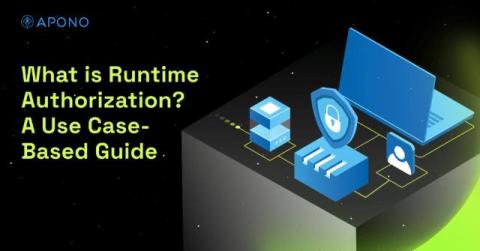
What is Runtime Authorization? A Use Case-Based Guide

Static roles work until the environment changes. Authentication can confirm who or what is making a request, but it cannot determine whether that identity should perform a specific action under current conditions. As infrastructure, services, and AI agents evolve, permissions granted months ago rarely reflect what an identity actually needs to accomplish. Among companies planning to deploy agentic AI within two years, only 21% report having a mature model for agent governance.

Top 17 Agentic AI Security Solutions

Agentic AI security solutions help teams discover, govern, monitor, and control AI agents, copilots, LLM apps, MCP servers, and autonomous workflows. For security and DevOps leaders, they matter because agents can act across production systems. This guide compares leading tools and explains how to choose the right fit. AI agents are moving from assistants to actors.

Solving the identity debt crisis with a One Identity platform approach: IGA, PAM and AD

Identities in the modern enterprise are increasingly less human and more autonomous, powered by the rise in AI agents, APIs and other non-human identities (NHIs). The result is often an entitlement sprawl, where operations take place without human oversight and with privileged access. This non-linear evolution has meant many businesses have had to respond using bolted-on tools, rather than one unified, enterprise-grade platform.

AI Agent Authentication: An InfoSec Guide

AI agent authentication is the process of verifying that an autonomous agent is the identity it claims to be before it interacts with infrastructure, applications, APIs, or data. Because agents often act on behalf of users, services, or workflows, authentication must be paired with delegated context and downstream authorization controls that determine what the agent is allowed to do, which resource it can access, and how long that access should last.