Security | Threat Detection | Cyberattacks | DevSecOps | Compliance

Why 75%+ of Enterprises Admit They Can't Secure Their Non-Human Identities

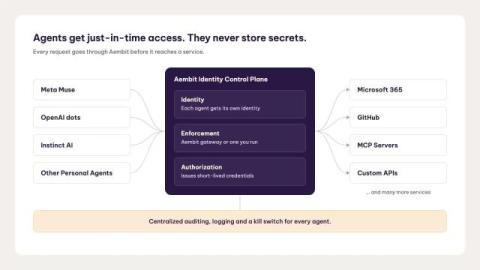
Security teams are losing the battle to secure non-human identities (NHIs) for one simple reason: machine identities are now created inside the systems that ship software. They appear in CI/CD pipelines, Kubernetes workloads, SaaS integrations, and AI-driven workflows faster than central IAM teams can inventory or review them.

When your most powerful users aren't human: managing AI and NHIs for compliant privileged access

The identities of the most powerful users and admins in many organizations aren’t people. They’re Non-Human Identities (NHIs). Some of these NHIs execute actions with human configuration and oversight. Others, namely AI agents, can execute high-risk functions at different levels of autonomy. They can perform tasks that range from analyzing data to deploying code, at a volume and velocity far beyond human capabilities.

Top 10 Governance, Risk, and Compliance (GRC) Software Solutions

Governance is breaking. Not because companies care less about risk, but because modern infrastructure moves faster than the controls designed to govern it. In 2026, governance has to keep up with cloud-native architectures, AI adoption, API sprawl, and the explosion of machine identities across production environments.

7 Principles of Zero Trust Identity and Access Management

Many engineering teams treat zero trust as a simple MFA checkbox. They invest in advanced identity providers but still leave environments exposed, with permanent admin roles and manual ticket queues that frustrate developers. Most teams have adopted the language of zero trust without changing how access actually works. They verify identity at login, then leave broad permissions in place long after the task is done.

One Checkbox Away: The Vercel Breach and the Case for Zero Standing Privileges

There’s never a good time to disclose a breach, but days before your IPO has to rank near the bottom of the list. That was the backdrop to the Vercel breach. On Sunday the 19th, the company confirmed that attackers had walked into parts of its internal environment and walked back out with customer API keys. Early reporting focused on the flashy parts: an attacker claiming ties to ShinyHunters, a $2 million BreachForums demand, crypto teams rotating credentials with the IPO roadshow in full swing.

The Hims Data Breach: What Standing Access Costs in Healthcare

Hims & Hers, one of the biggest telehealth platforms in the U.S., just disclosed that millions of customer records were exposed. Not because of some sophisticated exploit, but because a single compromised login had standing access to a connected platform. One identity was all it took. This breach is worth paying attention to not because it’s unusual, but because it’s so ordinary.

Announcing Approval Escalation: Stop Letting Stalled Approvals Block Your Team

Today, we’re introducing Approval Escalation, a new capability in Apono that automatically moves access requests forward when the original approver doesn’t respond in time. Because no one should be stuck waiting seven hours just to do their job.

Announcing Justification Coach: AI-Powered Guidance for Better Access Requests and Stronger Audits

Today, we’re introducing Justification Coach, a new AI-powered capability that helps users write better access request justifications in real time, so admins get the context they need for audits and investigations without having to chase people down after the fact.

How AI is changing IGA

It’s no surprise that AI is being integrated into identity governance and administration (IGA) platforms. Automation promises productivity boosts, risk detection can be in real-time and cloud environments allow greater scalability. What’s more, the pace of AI means IGA is quickly moving beyond slower, more rigid, rule-based approaches.

Exploring Active Roles RBAC solution for streamlined permissions management

Despite constant sweeping changes across IT, Active Directory (AD) continues to be the center of identity and access management (IAM) processes for most enterprises. Even as organizations adopt cloud identity platforms, on-premises AD carries the lion’s share of user authentication, authorizing access to critical systems and anchoring hybrid identity strategies. Because of this central role, AD security is nearly inseparable from directory security, cyber-resilience and breach prevention.