Security | Threat Detection | Cyberattacks | DevSecOps | Compliance

AI Agent for WordPress: The Complete 2026 Guide

In 1997, IBM’s Deep Blue, the first AI agent, made history by defeating Garry Kasparov at chess. Since then, AI agents have advanced dramatically, evolving from single‑task systems to agents like OpenAI’s Operator, which can autonomously fill out forms, place orders, and schedule appointments. WordPress is a popular CMS that powers more than 20% of the top one million websites. Bringing AI agents into WordPress opens up new possibilities, making sites more capable and adaptive.

How to Create and Manage Board Items in monday.com using Forms, Checklists, & Notes | miniOrange

Streamline your team's workflow and boost productivity by seamlessly converting notes and checklists into actionable monday.com board items. With the miniOrange Forms + Checklists and Notes app, you can create tasks, assign team members, track statuses, and maintain a centralized dashboard directly within your workspace. Whether you need to log quick ideas or manage full project workflows, this tutorial will guide you through setting up and utilizing two-way synchronization between your notes and your monday.com board.

How to Sync Inventory Across Multiple Shopify Stores

Managing multiple Shopify stores creates a problem most merchants underestimate at first: inventory fragmentation. A product may sell out in one store while still showing as available in another, and that gap can lead to overselling, canceled orders, frustrated customers, and extra manual work for your team. The more stores you run, the harder it becomes to keep stock numbers consistent without a system in place. This is why merchants need a reliable way to sync inventory between two Shopify stores.

Guide to Just-in-Time (JIT) Provisioning

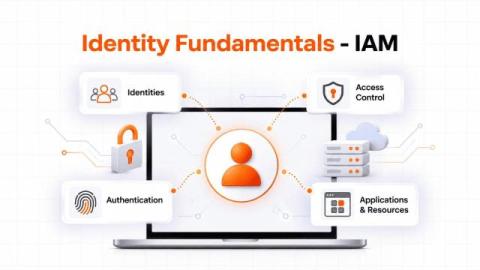
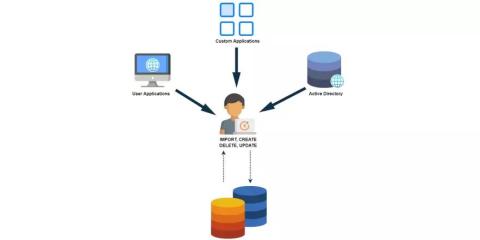
Imagine onboarding a new employee, contractor, or partner without creating accounts manually for every application. That’s exactly what Just-in-Time (JIT) provisioning enables. Instead of relying on slow, manual onboarding workflows, JIT provisioning automatically creates user accounts the moment users log in through SAML SSO. As organizations adopt more cloud applications and remote work models, automated user provisioning has become essential for scalable Identity and Access Management (IAM).

Password Manager vs. SSO: What Business Should Choose in 2026?

As businesses adopt more cloud applications, managing user access securely has become increasingly complex. Employees today use dozens of applications for communication, collaboration, development, HR, finance, and customer management. This creates a major challenge for IT teams: balancing security with a seamless user experience. To solve this problem, organizations typically evaluate two technologies: Single Sign-On (SSO) and password managers. In this guide, we’ll cover.

What Is Passwordless Authentication? How It Works, Benefits, and Safety

Passwords have been the foundation of authentication for decades. But they have also become one of the biggest weaknesses in modern security. Users reuse them, attackers steal them, and organizations spend significant time managing them. As systems grow more complex and threats become more advanced, relying on passwords alone is no longer practical. This is where passwordless authentication comes in.

How to Move from Legacy to Customer Accounts in Shopify Without Disrupting Business Workflows

Shopify is deprecating Legacy Customer Accounts, and if your store relies on custom login flows, B2B approvals, or third-party integrations, the impact goes further than a login page redesign. While the platform move is mandatory, the priority for any merchant is maintaining continuity across logins, onboarding, and the connected systems that keep the business running. This guide walks you through the transition in a structured way.

Why Traditional PAM Is Failing in the Age of Machine Identities

For years, Privileged Access Management (PAM) was built around a simple assumption: privileged access is primarily a human problem. That assumption is rapidly collapsing. Modern enterprises are no longer driven mainly by administrators logging into servers. They are increasingly powered by APIs, containers, automation pipelines, microservices, cloud workloads, and AI-driven systems communicating continuously at machine speed.