Security | Threat Detection | Cyberattacks | DevSecOps | Compliance

Streamline AppSec Remediation with Seemplicity + Inspectiv

Security teams today are inundated with findings from a dozen different tools. They’re dealing with everything from scanner alerts to bug bounty reports, often in different dashboards, formats, and workflows. Organizations use, on average, eight tools that generate exposure findings (Seemplicity Year in Review Report), and over 50% of security professionals say managing all that noise is a major challenge (The 2025 Remediation Operations Report).

Leaked credentials are all over the dark web: Is your business impacted?

Researchers believe AI tools are fueling a dramatic 42% surge in the amount of leaked credentials circulating for sale on the dark web. Each year, automated scrapers and human-operated groups comb through dark web forums, paste sites, and underground marketplaces to collect and repackage hundreds of millions of username–password pairs. Many organizations remain unaware of the full scope of these leaks until it’s too late, because breach disclosures are often delayed or incomplete.

Why Threat Exposure Management Is Broken - And What Needs to Change | ESG + Nucleus Security

Security teams today aren’t struggling to find issues; they’re struggling to reduce risk in a measurable, scalable way. In this webinar, ESG Principal Analyst Tyler Shields joins Nucleus Security to unpack brand-new research on the state of threat and exposure management (TEM).

Will AI replace human pen testers?

It’s become pretty standard to expect the help of AI with automating tasks, with penetration testing being no exception. As AI-driven tools grow more sophisticated, some have posed the question: could these systems render the traditional human pen tester obsolete entirely? We’ll explore the strengths and limitations of AI when it comes to offensive security and predict the role human red team expertise still has to play in an increasingly automated world.

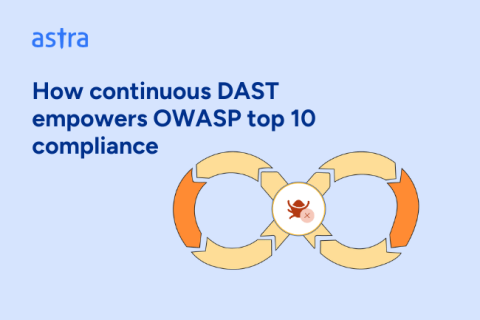
How Continuous DAST Empowers OWASP Top 10 Compliance

Your app isn’t just HTML anymore. It is containers talking to microservices, SPA front ends calling GraphQL, and third‑party SDKs everywhere. That mix creates blind spots and unpredictable OWASP Top 10 gaps. Continuous DAST looks through every layer, including mobile backends, APIs, and container workloads, simulating attacker behaviour across your entire technology stack. Hence, no more guessing which component hides the next SSRF, injection, or misconfiguration.

Why 'Vulnerability Management' Was Always the Wrong Name for the Job

Let’s get this out of the way: the term vulnerability management has always been misleading. It evokes the idea that we’re wrangling a tidy list of software flaws, checking boxes, patching holes, and keeping things humming. But anyone who’s worked in the trenches or tried to explain this chaos to an executive board knows the truth. What we call “vulnerability management” isn’t a single discipline, or even a well-contained function.

SquareX Discloses Architectural Limitations of Browser DevTools in Debugging Malicious Extensions

Despite the expanding use of browser extensions, the majority of enterprises and individuals still rely on labels such as "Verified" and "Chrome Featured" provided by extension stores as a security indicator. The recent Geco Colorpick case exemplifies how these certifications provide nothing more than a false sense of security - Koi Research disclosed 18 malicious extensions that distributed spyware to 2.3M users, with most bearing the well-trusted "Verified" status.

Business Logic Vulnerabilities Explained: Real Examples, Impact & How to Prevent Them

Imagine an online retailer running a promotion: “Spend $100 this month, get a $25 gift card.” It sounds simple encourage loyal shoppers to spend more. But due to a flaw in the app’s logic, a clever user discovers a loophole. They place enough orders to reach the $100 threshold and receive the gift card. Then, they cancel a small order to drop below the threshold only to make a new one that pushes their total back over $100.

Fend Off AI Fatigue with the Snyk AI Trust Platform

Generative AI has transformed software development almost overnight. From coding assistants to AI-native applications, tools are evolving faster than most teams can keep up with. But the rapid evolution of AI comes with its own cost: mental fatigue. Even among AI developers, most don’t consider themselves experts in generative AI. Between shifting tools, growing security risks, and a flood of hype, it’s no surprise that developers and security teams feel overwhelmed.

Beyond Management: The Shift to Continuous Vulnerability Mitigation

In the fast-paced world of cybersecurity, threats evolve continuously, and so should your response. Traditional vulnerability management approaches-while useful-are no longer sufficient to address the dynamic nature of modern cyber risks. Organizations must move beyond management and embrace continuous vulnerability mitigation to ensure real-time protection and long-term resilience.

What Is PCI DSS and How Can Organizations Best Maintain Compliance?

The world is going cashless. The Federal Reserve reported that cash was used in just 16% of all U.S. transactions in 2024. And that number is expected to continue to decline. The widespread use of credit and debit cards, plus the rise of digital wallets and contactless payments, have reshaped the financial landscape, increasing flexibility as well as financial protection. However, it’s also increased the levels of fraud.

Lionishackers: Analyzing a corporate database seller

Outpost24’s threat intelligence researchers have been analyzing a corporate database seller known as “Lionishackers”. They’re a financially motivated threat actor focused on exfiltrating and selling corporate databases. This post explores how they operate, where their attacks are taking place, and the current level of threat they pose.

Fixing 4,000 Vulnerabilities? Quick Ways to Eliminate Security Issues! #podcast #infosec

Mend.io, formerly known as Whitesource, has over a decade of experience helping global organizations build world-class AppSec programs that reduce risk and accelerate development -– using tools built into the technologies that software and security teams already love. Our automated technology protects organizations from supply chain and malicious package attacks, vulnerabilities in open source and custom code, and open-source license risks.

What We Found with OpenAI's Codex CLI Tool

In this video, I explore OpenAI’s Codex CLI tool to see how powerful it really is for coding with AI. But things quickly go off the rails… what started as a simple test ended with a surprise identity verification request. Apparently, to continue using the tool, I need to submit a government-issued ID and a photo of myself—something I didn’t expect at all. I talk through the process, show the error I ran into, and share my honest thoughts on this level of access and how invasive it feels for a developer tool.

Speeding Up Vulnerability Remediation Through Threat Correlation in XDR

In cybersecurity, speed matters. But so does clarity. When your organization is facing hundreds or thousands of known vulnerabilities, not every one deserves immediate attention. The real challenge is knowing which ones do and acting fast. That’s where the integration of threat correlation and extended detection and response (XDR) comes in. Vulnerability remediation isn’t just about patching; it’s about remediation with context.

ToolShell: Remote Code Execution in Microsoft SharePoint (CVE-2025-53770)

On July 19, 2025, a critical remote code execution (RCE) vulnerability (CVE-2025-53770, also referred to as ToolShell) was publicly disclosed, impacting on-premises Microsoft SharePoint Server installations. This vulnerability allows unauthenticated attackers to execute arbitrary code remotely by leveraging insecure deserialization techniques.

Beyond the Patch: SharePoint Exploits and the Hidden Threat of IIS Module Persistence

The cybersecurity landscape witnessed a perfect storm in July 2025 when multiple critical SharePoint vulnerabilities collided with sophisticated IIS module-based persistence techniques, creating a nightmare scenario for enterprise defenders. CVE-2025-53770, CVE-2025-53771, CVE-2025-49704, and CVE-2025-49706 are being actively exploited by sophisticated threat actors, but the real danger extends far beyond the initial exploitation phase.

Cato CTRL Threat Brief: "ToolShell" Exploit Targeting Microsoft SharePoint Vulnerabilities

On July 22, 2025, Microsoft published an overview of a series of critical vulnerabilities affecting Microsoft SharePoint Server (CVE-2025-49704, CVE-2025-49706, CVE-2025-53770, and CVE-2025-53771). These vulnerabilities opened a dangerous window for threat actors to gain access to internal resources, execute code remotely, and take over SharePoint deployments.

SharePoint "ToolShell" zero day

Hats off to the great work the community and industry has done regarding the “ToolShell” attack against Microsoft’s On-Premise SharePoint servers. The goal of this article is to build on that great work and help Sumo Logic customers with on-prem SharePoint servers investigate and identify evidence within their environments.

Shifting from Vulnerability Management to Security Risk Prioritization with AI

The adage ‘an ounce of prevention is better than a pound of cure’ applies to AppSec vulnerability management. Traditionally, AppSec has focused on a reactive ‘curing flaws’ paradigm, identifying and fixing vulnerabilities after they have occurred. However, the never-ending escalation between threats and security leads to alert fatigue and security debt.

Critical Authentication Bypass Vulnerability in Mitel MiVoice MX-ONE

On July 23, 2025, Mitel released fixes for a critical authentication bypass vulnerability in the Provisioning Manager component of Mitel MiVoice MX-ONE, a communication platform used for enterprise voice and collaboration services. The vulnerability allows unauthenticated remote threat actors to gain unauthorized access to publicly exposed Mitel voice systems and access user or administrator accounts due to improper access controls.

Inside the MOVEit Breach: How Cl0p and Nam3L3ss Expose Organizations to Ongoing Cyber Threats

In 2023, a critical vulnerability in MOVEit Transfer software (CVE-2023-34362) was weaponized by the Cl0p ransomware group, leading to a substantial leak of sensitive employee data from major global corporations. The flaw in MOVEit allowed attackers to bypass authentication and access secure files, resulting in a far-reaching data breach that impacted various sectors including finance, healthcare, government, and retail.

Attack Surface to Action: The Power of Censys ASM + Seemplicity

Security teams juggle a multitude of tools to keep their organizations safe. One platform scans for exposed assets, another tracks vulnerabilities, and yet another manages remediation tasks – and the list goes on. Organizations use an average of 38 different security products, leading to fragmented processes and a lot of “noise” in the form of findings. It’s no surprise that 85% of security professionals say all this noise makes it challenging to reduce risk quickly.

CVE-2025-53770: SharePoint Zero-Day Under Active Exploitation

CVE-2025-53770 is a live, high-severity threat that is already being exploited across global networks. This critical vulnerability in Microsoft SharePoint Server allows unauthenticated attackers to execute arbitrary code remotely, effectively handing them the keys to your infrastructure. As of July 2025, over 85 SharePoint servers have reportedly been breached. And if your organization uses SharePoint 2016, 2019, or Subscription Edition on-premises, you could be next.

CitrixBleed 2: When Memory Leaks Become Session Hijacks

The cybersecurity community is facing yet another critical infrastructure vulnerability that threatens enterprise networks worldwide. CVE-2025-5777, dubbed "CitrixBleed 2" by security researcher Kevin Beaumont, represents a dangerous out-of-bounds memory read vulnerability in Citrix NetScaler ADC and Gateway devices. This new flaw bears an unsettling resemblance to the original CitrixBleed (CVE-2023-4966), which was widely exploited by ransomware groups and nation-state actors in 2023.

SharePoint Zero-Day Exploits Highlight Hidden Secrets Risk in Document Collaboration Tools

The recent SharePoint zero-day exploits expose a critical blind spot: hardcoded secrets hidden in collaboration tools. While teams secure code repositories, API keys and credentials lurking in SharePoint documents create dangerous attack vectors for lateral movement.

Mastering API Security Testing: Stop BOLA and the OWASP Top 10 Before Deployment

APIs drive modern applications, but their increasing complexity leaves them vulnerable to attacks. How can you ensure robust API security? Join Wallarm’s webinar to discover how to tackle today’s toughest API security challenges with advanced API security testing strategies. In this webinar we will cover: Learn how Wallarm’s innovative solutions can help you identify vulnerabilities, implement reliable security measures, and streamline your API testing process. Gain actionable insights into tools, best practices, and strategies to protect your APIs effectively.

Responding to ToolShell: A Microsoft SharePoint zero-day vulnerability

A newly discovered exploit, “ToolShell,” is fueling a wave of targeted attacks against on-premises Microsoft SharePoint servers. The zero-day exploit chains two vulnerabilities—CVE-2025-53770, a remote code execution (RCE) vulnerability and CVE-2025-53771, a spoofing vulnerability that allows attackers to bypass authentication. When combined, this critical zero-day vulnerability gives attackers persistent unauthenticated remote access to on-premises SharePoint servers.

In-the-wild Exploitation of CVE-2025-53770 and CVE-2025-53771: Technical Details and Mitigation Strategies

Two critical zero-day vulnerabilities in the Microsoft SharePoint Server environment, CVE-2025-53770 (9.8 CVSS score) and CVE-2025-53771 (6.5 CVSS score), are being actively exploited by threat actors to compromise vulnerable on-premises SharePoint servers. The two new vulnerabilities are part of a complex attack chain dubbed “ToolShell”, which grants threat actors access to unpatched SharePoint servers’ content and the ability to execute code over the network.

CVE-2025-53770: A Critical SharePoint RCE Threat Exploited in the Wild

A newly disclosed vulnerability, CVE-2025-53770, has sent shockwaves through the enterprise IT and cybersecurity community. Affecting on-premises Microsoft SharePoint Server, this critical flaw enables unauthenticated remote code execution (RCE) through insecure deserialization of untrusted data. With a CVSS v3.1 score of 9.8, it represents one of the most severe threats to SharePoint deployments in recent years.

Seemplicity Launches AI-Driven Features to Eliminate Remediation Bottlenecks

Seemplicity unveiled a major product release packed with AI-powered capabilities to cut through noise, facilitate fixing teams, and reduce time to remediation. This latest release introduces AI Insights, Detailed Remediation Steps, and Smart Tagging and Scoping, three new capabilities that use AI to solve some of the most painful and time-consuming cybersecurity tasks.

ToolShell Threat Brief: SharePoint RCE Vulnerabilities (CVE-2025-53770 & 53771) Explained

A serious new vulnerability (CVE-2025-53770, also known as “ToolShell”) is actively being exploited by cybercriminals to hack into on-premises Microsoft SharePoint Servers. The vulnerability, along with CVE-2025-53771 was discovered around July 18, 2025. Bitsight Research classifies CVE-2025-53770 as 10 out of 10 on our Dynamic Vulnerability Exploit (DVE) scale and CVE-2025-53771 as a 5.82 out of 10 indicating severe and moderate urgency respectively.

Cloudflare protects against critical SharePoint vulnerability, CVE-2025-53770

On July 19, 2025, Microsoft disclosed CVE-2025-53770, a critical zero-day Remote Code Execution (RCE) vulnerability. Assigned a CVSS 3.1 base score of 9.8 (Critical), the vulnerability affects SharePoint Server 2016, 2019, and the Subscription Edition, along with unsupported 2010 and 2013 versions. Cloudflare’s WAF Managed Rules now includes 2 emergency releases that mitigate these vulnerabilities for WAF customers.

Seemplicity Feature Release Announcement - July 2025

We’re excited to announce a major Seemplicity release packed with new AI-driven features that help you fix faster, prioritize better, and streamline remediation at scale. This release introduces breakthrough capabilities that reduce noise, provide clarity, and eliminate bottlenecks between identifying risks and resolving them.

Nucleus MCP Integration: Scaling Risk Reduction with AI-Driven Insights

Today, we’re excited to announce a preview of the Model Context Protocol (MCP) Server for Nucleus. This marks an important step towards AI-native workflows for vulnerability and exposure management. Model Context Protocol (MCP) is an emerging industry standard enabling seamless integration between enterprise applications and AI models. Backed by leading organizations like OpenAI, Microsoft, and Google, MCP servers are quickly becoming the foundation for AI-enablement across the enterprise.

CrowdStrike Named a Strong Performer in Forrester Wave for Unified Vulnerability Management

CrowdStrike is proud to be named a Strong Performer in The Forrester Wave: Unified Vulnerability Management Solutions, Q3 2025. We believe this recognition underscores the strength of CrowdStrike’s vision, the pace of our innovation, and the rapid adoption of CrowdStrike Falcon Exposure Management by customers transforming their vulnerability management, just 24 months after its launch.

Managing Cyber Risk Exposure in a Hyperconnected World

Not long ago, “visibility” was the North Star of cybersecurity. If you could just see all your assets, vulnerabilities, and misconfigurations, you could manage the risk. But that logic doesn’t hold up anymore; not in a world where your infrastructure is scattered across multiple clouds, tied together by APIs you didn’t build, and partially run by vendors you barely know.

SafeBreach Coverage for CVE-2025-53770: ToolShell Exploits Targeting Microsoft SharePoint

A newly disclosed zero-day vulnerability in Microsoft SharePoint Server — CVE-2025-53770 — is currently being exploited in the wild and poses a critical threat to organizations running on-premises SharePoint instances.

Navigating Enterprise AI Implementation: Risks, Rewards, and Where to Start

At Snyk, we believe that AI innovation starts with trust, which must be earned through clear governance, sound security practices, and proven value delivery. As we scale our AI initiatives across the business, we’re continually refining how to implement AI in a way that is not just fast and functional, but also secure and responsible.

Cursor IDE Malware Extension Compromise in $500k Crypto Heist

Cursor IDE, as many are aware, is a fork of the open source and popular VS Code IDE project from Microsoft. Similarly to VS Code, Cursor has support for IDE extensions, which prompts many developers to migrate over with their favorite extensions and long-lived workflows, shortcuts, themes, and other configurations. Back in May 2021, Snyk’s Security Labs conducted research that uncovered VS Code extensions vulnerable to insecure code patterns.

From Hype to Trust: Building the Foundations of Secure AI Development

Generative AI and Agentic AI are changing everything from who writes software to how we define secure architecture. At Snyk’s recent Lighthouse event in NYC, leaders from cloud, security, and development teams came together to answer one essential question: how do we move fast with AI without breaking trust? The answer? Start with visibility, bake in security by design, and never lose sight of the humans behind the code.

CVE-2025-53770: Widespread Exploitation of ToolShell RCE Vulnerability Observed in Microsoft SharePoint On-Premises

On July 19, 2025, Microsoft disclosed active exploitation of a zero-day vulnerability (CVE-2025-53770) affecting on-premises SharePoint Server instances. Originally, no patch was available for this vulnerability, but fixes were released late on the evening of July 20. CVE-2025-53770 is caused by the deserialization of untrusted data, allowing unauthenticated threat actors to execute code remotely over the network.

CVE-2025-54309: Critical Admin Access Vulnerability in CrushFTP - What You Need to Know and Do

A critical remote code execution vulnerability, CVE-2025-54309, has been identified in CrushFTP server, impacting versions prior to 10.8.5 and 11.3.4_23. This vulnerability exists when the DMZ proxy feature is not in use. It stems from improper validation in the AS2 (Applicability Statement 2) protocol over HTTPS, allowing unauthenticated remote attackers to gain administrative access to the system.

Microsoft SharePoint CVE-2025-53770: Actively Exploited Remote Code Execution via Insecure Deserialization

Microsoft recently disclosed a critical remote code execution (RCE) vulnerability in Microsoft SharePoint Server, tracked as CVE-2025-53770. This flaw has been actively exploited in the wild, making it a high-priority concern for enterprises relying on SharePoint for content management and collaboration. In this blog, we’ll unpack the technical root of the vulnerability, how exploitation works, the risks posed, mitigation steps, and what to do if you think you may be impacted. In this article.

How Credit Card Data Theft Impacts Personal Security

Credit card data theft poses real risks to your personal security. Beyond financial losses, it can affect your privacy, your credit history, and your peace of mind. Understanding these impacts helps you take proactive steps to protect yourself.

Follow-Up: Updates on Actively Exploited Information Disclosure Vulnerability "Citrix Bleed 2" in Citrix NetScaler ADC and Gateway (CVE-2025-5777)

In late June 2025, Arctic Wolf issued a security bulletin addressing a critical out-of-bounds read vulnerability in Citrix NetScaler ADC and Gateway that Citrix disclosed, tracked as CVE-2025-5777. This vulnerability affects NetScaler devices configured as a Gateway (VPN virtual server, ICA Proxy, CVPN, RDP Proxy) or AAA virtual server.

Thousands of WordPress Sites at Risk After Gravity Forms Breach

A critical vulnerability in the popular Gravity Forms WordPress plugin has led to widespread malware injections across thousands of sites. The flaw is being actively exploited by threat actors, some of whom are inserting backdoors and malicious JavaScript into WordPress sites to carry out data theft, SEO poisoning, and client-side attacks.

SquareX Collaborates with Top Fortune 500 CISOs to Launch The Browser Security Field Manual at Black Hat

SquareX announced the official launch of The Browser Security Field Manual at Black Hat USA 2025. In addition to a comprehensive practical guide to the latest TTPs attackers are using to target employees in the browser, this comprehensive manual features industry perspectives from leading CISOs from multiple Fortune 500 enterprises and other iconic companies, who share their perspectives on the evolving browser security landscape, the importance of each threat vector, and how they expect these attacks to evolve in the near future. Major contributors include.

Best Practices for Aggregating and Normalizing Exposure Data

In our first article exploring vulnerability management vs. exposure management, we explored the growing recognition that exposure management is not just a rebranding of vulnerability management. Rather, it’s a strategic evolution. Where traditional vulnerability management often focuses narrowly on CVEs and technical severity, exposure management demands a broader, more integrated understanding of risk across assets, environments, and attack vectors.

Critical Unauthenticated RCE Vulnerabilities in Cisco ISE and ISE-PIC

On June 25, 2025, Cisco disclosed two critical vulnerabilities affecting Cisco Identity Services Engine (ISE) and ISE Passive Identity Connector (ISE-PIC). Tracked as CVE-2025-20281 and CVE-2025-20282, these flaws enable unauthenticated remote attackers to execute arbitrary commands as the root user via exposed HTTPS APIs. CVE-2025-20281 arises from insufficient validation of user-supplied input in a public API, allowing crafted requests to trigger remote code execution.

Addressing Recent Vulnerabilities and Our Commitment to Security

At CyberArk, the trust and security of our customers are at the heart of everything we do. Today, July 15th, we are addressing the publication of several Common Vulnerabilities and Exposures (CVEs) related to CyberArk Secrets Manager, Self-Hosted (formerly Conjur Enterprise) and Conjur Open Source (OSS). We regret the challenges this situation may pose to our customers and reaffirm our commitment to supporting them through the resolution process.

CompassDRP Social Media integration: Six real-world use cases

Social media can work both for and against an organization, so it’s worth treating these sites as extensions of your attack surface. CompassDRP’s Social Media integration continuously monitors both corporate and employee profiles across platforms such as Twitter, LinkedIn, and Facebook. It automatically flags unauthorized or impersonating accounts that mimic executive identities or misuse company branding, helping to thwart phishing and fraud campaigns before they gain traction.

Vulnerability Impact Translation with Falcon Exposure Management

This demo shows how Charlotte AI transforms raw vulnerability data from Falcon Exposure Management into a CISO-ready report. By pulling enriched insights from Next-Gen SIEM—like ExPRT.AI scores and asset criticality—the workflow translates technical signals into business risk. The result: a clear, automated email that highlights key trends, impacted systems, and actionable remediation paths. CrowdStrike Exposure Management.

PoC Available for High-Severity Arbitrary File Write in Git CLI (CVE-2025-48384)

Arctic Wolf Customer, Proof-of-concept exploit code is now available for a high-severity arbitrary file write vulnerability in Git, which poses a risk to developers who regularly work with third-party code. If Git is used in your environment, we recommend reviewing this security bulletin and taking immediate steps to mitigate the risk.

Autonomous Vulnerability Remediation: Securing Web & API Apps Instantly

One-third of critical and high vulnerabilities remain open for 180+ days from the time they are discovered. When it comes to business growth vs security, business always wins by prioritizing features over vulnerabilities. This gives hackers enough time to exploit the vulnerabilities, putting the organization at risk. However, most of these vulnerabilities can be virtually patched within a few hours using solutions like AppTrana's SwyftComply, with zero impact on business continuity.

Exploiting Public APP_KEY Leaks to Achieve RCE in Hundreds of Laravel Applications

Laravel APP_KEY leaks enable RCE via deserialization attacks. Collaboration with Synacktiv scaled findings to 600 vulnerable applications using 260K exposed keys from GitHub. Analysis reveals 35% of exposures coincide with other critical secrets including database, cloud tokens, and API credentials.

CVE-2025-25257: Critical Unauthenticated SQL Injection Vulnerability in FortiWeb

On July 8, 2025, Fortinet released fixes for a critical vulnerability in FortiWeb that could allow an unauthenticated threat actor to execute SQL commands via crafted HTTP or HTTPS requests, tracked as CVE-2025-25257. The flaw lies in the Graphical User Interface (GUI) component and stems from improper neutralization of special elements used in SQL statements. The vulnerability was discovered by a security researcher and responsibly disclosed to Fortinet.

CVE-2025-47812: Wing FTP Server Remote Code Execution Vulnerability Exploited in the Wild

On July 10, 2025, a technical article was published by Huntress revealing that a maximum severity remote code execution vulnerability in Wing FTP Server, CVE-2025-47812, had been actively exploited by threat actors as early as July 1, 2025. Details of the vulnerability had originally been published on June 30, 2025, providing a comprehensive breakdown of the flaw and how to exploit it.

Charlotte AI - Agentic Workflows: Vulnerability Impact Translation

Vulnerabilities pile up fast, but which ones truly matter to your business? With Charlotte AI Agentic Workflows, CrowdStrike turns overwhelming technical data into business-ready intelligence so you can prioritize what really counts. By pulling real-time vulnerability insights from Falcon Exposure Management, Charlotte AI evaluates what systems are at risk, how many users could be impacted, and what services or revenue streams are on the line. In this demo, you’ll see how AI-driven reasoning translates CVEs and severity scores into clear business impact, no manual analysis required.

Bug bounty programs: Can you rely on them 100%?

It’s tempting to view bug bounty programs as a cheat code – an enticing shortcut to uncover vulnerabilities by tapping into the creativity of the global security community. Is there really any to invest in your own testing for vulnerabilities? But while these programs can surface critical flaws that traditional testing might miss, they’re inherently reactive and can be limited in scope.

CVE-2016-10033: Detection and Response Guide for 2025

Almost a decade after its discovery, the critical remote code execution vulnerability known as CVE-2016-10033 continues to pose a significant threat to web applications worldwide. In this post, we explain why it's so dangerous and the essential steps to protect your systems from this critical exposure in 2025.

Automatically Update Dependencies in Maven: A Step-By-Step Guide

If your Maven project feels like a ticking time bomb of outdated dependencies, you’re not alone. Developers often put off updates—until a critical CVE or compatibility issue makes them wish they hadn’t. Keeping your dependencies current doesn’t just reduce risk—it improves performance, adds features, and aligns with best practices in secure software development.

CVE-2025-20309: Cisco Unified Communications Manager Static SSH Credentials Maximum Severity Vulnerability

On July 2, 2025, Cisco released a security advisory detailing a maximum severity vulnerability (CVE-2025-20309) in Cisco Unified Communications Manager and Unified Communications Manager SME Engineering Special, caused by hard-coded root SSH credentials that cannot be changed or removed.

CVE-2025-4123: The Grafana Ghost Vulnerability that Enables Account Takeover

A new high-severity vulnerability, CVE-2025-4123, has been discovered in Grafana, a widely used open-source observability platform. Dubbed “The Grafana Ghost,” this vulnerability stems from an open redirect flaw that can lead to stored cross-site scripting (XSS), account takeover and server-side request forgery (SSRF). Despite the release of patched versions, over 46,000 vulnerable Grafana instances are still publicly exposed, underscoring the urgency for immediate mitigation.

How Secure Is WhatsApp in 2025? [Appknox's Pentesters Reveal 5 Critical Vulnerabilities]

June 2025 has seen WhatsApp back in the headlines—this time for all the wrong reasons. Earlier this month, The National broke the story: WhatsApp’s security is under renewed scrutiny following revelations that Israel remains the only known actor to have successfully exploited it. But if history has taught us anything, it’s this: if one nation-state can do it, others may follow. At Appknox, we decided to verify the current state of WhatsApp’s mobile app security for ourselves.

How hacktivist cyber operations surged amid Israeli-Iranian conflict

In June 2025, Israel carried out airstrikes against key Iranian military and nuclear facilities. Iran swiftly retaliated, escalating regional tensions to unprecedented levels. This military confrontation has not only unfolded in conventional warfare but also triggered a massive surge in cyber operations. Almost immediately after the kinetic attacks, numerous hacktivist groups began launching cyberattacks primarily targeting Israel and its international allies.

CVE-2024-58248: Race condition vulnerability leaves nopCommerce at risk of single-packet attacks

I recently discovered an interesting race condition vulnerability in the eCommerce software nopCommerce, during a manual pen test as part of the SWAT service (SWAT is Outpost24’s Pen Testing as a Service solution). This vulnerability (CVE-2024-58248) involves nopCommerce, an open-source eCommerce platform written in C#, which aids developers in building online stores. When exploited, it allows an attacker user to redeem a gift card multiple times by using a technique called a single-packet attack.

Exposure Management vs. Vulnerability Management: Key Differences and Why They Matter

Vulnerability management has hit a wall. Exposure management is how forward-looking teams break through it. According to Gartner, by 2026, organizations that adopt a continuous exposure management approach to guide security investments will be three times less likely to experience a breach. a more advanced and iterative approach to vulnerability management. Despite growing interest, confusion remains around what exposure management is and how it differs from vulnerability management.

Minimizing False Positives: Enhancing Security Efficiency

Organizations waste enormous amounts of time chasing down security alerts that turn out to be nothing. Recent research from May 2025 shows that 70% of a security team's time is spent investigating alerts that are false positives, wasting massive amounts of time in the investigation rather than working on proactive security measures to improve organizational security posture.