

|
By Kevin Swan
Most application-layer attacks slip past EDR, WAFs, and CNAPP because none of them watch what an app actually does at runtime. Miggo’s ADR platform does, detecting behavioral deviations agentlessly via DeepTracing and eBPF. With the new integration, those runtime detections flow directly into Seemplicity, where they’re correlated with cloud, code, and identity findings, deduplicated, and routed to the right owner.
|
By Jessica Amado
Start with what the current backlog already costs: analyst hours spent on triage, developer time lost to duplicate tickets, slow MTTR, and manual reporting. Then tie each benefit of ASPM software to one of those costs, such as fewer tickets per fix or faster remediation. Compare pricing models on your real numbers, including integration upkeep, and propose a measurable pilot on five to ten high-value applications. Most AppSec teams don’t need to be sold on ASPM software.

|
By Jessica Amado
Most teams need a combination of application security tools rather than a single one. Common categories are SAST, DAST, IAST/RASP, SCA, API and container security, and ASPM, and each covers a different stage of development. When you evaluate options, look for coverage that matches your stack, integration with developer workflows, accurate findings, risk-based prioritization, and actionable remediation guidance.
|
By Kevin Swan
Copilots and assistants shipped into apps you own, agents reaching in through MCP servers and OAuth tool grants, and the service accounts and tokens they all run as. Almost none of it went through a review. This Reco + Seemplicity integration closes the gap between finding an exposed agent and fixing it. Reco discovers every agent operating across your apps, what data it reaches, and what actions it takes.
|
By Kevin Swan
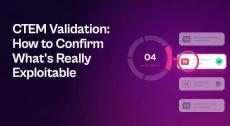
CTEM validation is the fourth stage of continuous threat exposure management. It confirms whether a prioritized exposure is actually exploitable in your environment and whether existing defenses would stop an attack. Common methods include penetration testing, breach and attack simulation, attack path analysis, and automated exploitability analysis.
|
By Kevin Swan
Prioritization in CTEM is the process of determining which exposures should be addressed first based on the risk they pose in your specific environment. Rather than relying on severity scores alone, effective prioritization combines internal business and asset context with external threat intelligence, then focuses teams on the fixes that reduce the most meaningful risk.
|
By Jessica Amado
To address Claude Mythos cybersecurity risks, security teams need to adapt for a world where AI can accelerate the path from vulnerability discovery to exploitation. That means moving toward continuous exposure management, shortening the time from discovery to verified remediation, prioritizing based on real exploitability rather than severity alone, reassessing older software as new risks emerge, and making AI usage part of the organization’s broader exposure picture.

|
By Kevin Swan
CTEM Discovery is about more than finding assets. It’s about understanding what exists, what’s actually being scanned, and how data from different tools connects. Seemplicity correlates security, inventory, identity, and ownership data across sources to create a unified view of each asset, expose coverage gaps, and give security teams the context they need to prioritize, validate, and remediate exposures effectively.

|
By Megan Horner
As AI accelerates vulnerability discovery and exploitation, exposure management can’t stop at visibility and prioritization. Gartner’s post-Mythos outlook points toward more preemptive, autonomous security, and Seemplicity’s Response Options puts that into practice by giving teams multiple context-aware ways to reduce risk quickly, safely, and without waiting for the full fix.
|
By Megan Horner
When a vulnerability is urgent but the full fix isn’t immediately safe to deploy, security teams need another way to reduce risk fast. Seemplicity’s Response Options uses AI to identify and rank multiple ways to neutralize a threat – including patches, configuration changes, compensating controls, and network-level mitigations — based on risk reduction, effort, and operational impact.

|
By Seemplicity
Are you struggling with an endless backlog of vulnerabilities? In this video, Ravid shares how Seemplicity’s AI Analysts are revolutionizing exposure management by moving beyond generic CVSS scores to validate real-world exploitability.

|
By Seemplicity
Stop manual investigation and scale your security operations. In this demo video, discover how Seemplicity’s AI Analysts automate vulnerability triage by investigating exploitability directly within your remediation workflow. Manual triage doesn't scale for large organizations. Seemplicity delivers dedicated AI experts for code, dependency, and infrastructure/host vulnerabilities to move the needle for security professionals.

|
By Seemplicity
In the cybersecurity industry today, we are often overwhelmed by endless findings, leaving us asking: WTF?! At Seemplicity, we are shifting the conversation from identifying problems to executing solutions. Whether it's: This video captures the energy from the recent Guidepoint kickoff event in Orlando, where Guidepoint reps, integration partners, and the Seemplicity team came together to redefine what WTF means for the future of exposure management.
|
By Seemplicity
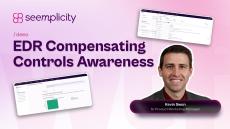
Are you tired of chasing high CVSS scores that don't reflect your actual risk? In this video, we introduce a new addition to the Seemplicity Exposure Action Platform: EDR Compensating Controls Awareness. This new feature bridges the gap between theoretical severity and verified exposure. By ingesting live telemetry from EDR platforms like CrowdStrike and Microsoft Defender, Seemplicity maps your existing security controls against the specific exploit techniques used by CVEs.

|
By Seemplicity
In this Feature Focus, Megan Horner, Product Marketing Director at Seemplicity, explores the evolving landscape of vulnerability management in the AI era. As the rise of AI models like Claude Mythos enables attackers to shrink exploit windows, security teams are facing an overwhelming flood of high-priority vulnerabilities.

|
By Seemplicity
Recently our CMO, Tony Thompson, caught up with Seemplicity co-founder and CPO, Ravid Circus, in Paris to talk about the massive shift in the cybersecurity landscape caused by Claude Mythos. As AI research models like Claude Mythos hyper-scale the ability to identify vulnerabilities and weaponize exploits in minutes rather than months, traditional risk-based vulnerability management must evolve. In this video, you will learn.

|
By Seemplicity
In this video, Rob Babb, Exposure Management Strategist at Seemplicity, shares key insights from a presentation at ISACA Atlanta’s Geek Week regarding breaking the cycle of technical debt through agentic exposure management. The discussion focuses on why standard scoring methods like CVSS are often insufficient on their own for effective vulnerability prioritization.12 Key Topics Covered: For more information on agentic exposure management, visit: seemplicity.ai.

|
By Seemplicity
Are you relying solely on the CISA KEV list for your vulnerability management? You might already be behind. In this video, Rob Babb, Exposure Management Strategist at Seemplicity, discusses why waiting for a vulnerability to appear on the CISA KEV list can leave your organization exposed for weeks. In this video, you’ll learn: It's time to break the cycle of technical debt. Learn more at: seemplicity.ai.

|
By Seemplicity
Is your security team drowning in a "WTF" moment? When vulnerability scanners return 45,000+ critical findings, manual workflows simply can't keep up. In this session, Megan Horner (Director of Product Marketing at Seemplicity) explores why traditional vulnerability management is failing in the age of AI-driven attacks. What you’ll learn: Stop treating remediation as a manual chore and start building an automated pipeline.

|
By Seemplicity
For many security teams, bug bounty programs are a double-edged sword: they provide critical insights automated tools miss, but they also introduce a massive operational burden due to free-form, unstructured, and noisy data. In this video, Kevin Swan, Sr Product Marketing Manager at Seemplicity, demonstrates how Seemplicity's Exposure Action Platform bridges the Triage Gap by transforming unstructured HackerOne findings into clear, trackable fixes. Learn how to move findings from a third-party platform into a remediation workflow without slowing down your engineering teams.
|
By Seemplicity
Prioritization is essential for efficient remediation. But with an overload of findings and limited context, more time is spent filtering through the noise than reducing risk. Learn how Seemplicity's RemOps platform.
|
By Seemplicity
This SANS whitepaper delves into the Continuous Threat Exposure Management (CTEM) framework and how it has transformed the way organizations manage risks.

|
By Seemplicity
Unlock the full potential of your Continuous Threat Exposure Management (CTEM) strategy with Seemplicity's RemOps platform. With RemOps-powered CTEM, you can streamline vulnerability management, reduce remediation times, and enhance collaboration between teams.
|
By Seemplicity
Unlock essential insights into the latest trends, challenges, and best practices in vulnerability management and risk remediation.
|
By Seemplicity
According to Gartner, through 2026, over 40% of organizations will rely on consolidated platforms or managed service providers for cybersecurity validation assessments. Many security teams currently use isolated approaches focused more on threat type and severity than on actual organizational impact. This reactive strategy doesn't effectively manage the complexities of an ever-evolving cybersecurity landscape and is unsustainable for effective exposure management.
- October 2026 (4)
- September 2026 (7)
- August 2026 (7)
- July 2026 (6)
- June 2026 (13)
- May 2026 (8)
- April 2026 (5)
- March 2026 (6)
- February 2026 (3)
- January 2026 (3)
- December 2025 (4)
- November 2025 (6)
- October 2025 (3)
- September 2025 (2)
- August 2025 (5)
- July 2025 (5)
- June 2025 (2)
- May 2025 (6)
- April 2025 (7)
- March 2025 (3)
- February 2025 (2)
- January 2025 (1)
- December 2024 (1)
- November 2024 (2)
- October 2024 (5)
- September 2024 (1)
- August 2024 (11)
- July 2024 (3)
- June 2024 (2)
- April 2024 (1)
- March 2024 (3)
- February 2024 (2)
- November 2023 (2)
- August 2023 (1)
Process automation and workflow integration that gets you ahead of risk, eliminates process busy work, and drives team engagement.
Seemplicity reduces time to remediation and streamlines the way security teams manage risk reduction, by bringing every aspect of the remediation workflow into one automated platform, providing full visibility of the end-to-end remediation lifecycle.
Welcome to the RemOps Revolution:
- Cloud risk reduction for cloud-native, hybrid, and multi-cloud environments: Seemplicity combats gaps in visibility and unseen risk by integrating with and centralizing output from your existing CSPM, CWPP, CIEM, and other cloud security testing tools to oversee risk remediation from one single platform.
- Automate Vulnerability Management Processes to Scale: Seemplicity unifies and automates vulnerability management operations across teams, findings and time. Remediate more of what matters and do it faster.
- Comprehensive understanding of security posture: Seemplicity’s ability to centralize and consolidate depth and breadth of information across domains makes it easy to monitor application security posture management, cloud security posture management, and unified insights at scale.
- Focus on remediation, not vulnerabilities: Application security testing tools identify software vulnerabilities, but their value is often limited by their siloed nature and unstructured, high volume, and often duplicate output. The Seemplicity Remediation Operations platform harnesses the output provided by SAST, DAST, IAST, SCA tools, and more, to deliver context-driven remediation information to the right developers in the ticketing platforms they already use. Our ASPM solutions give your security team the cloud security platform they’ve been missing, providing real-time monitoring, risk-based scoring, and compliance scanning.
Continuous Exposure Management Starts with AI-Powered Remediation Operations.