Security | Threat Detection | Cyberattacks | DevSecOps | Compliance

SpiderLabs Ransomware Tracker Update September 2025: Qilin, Akira Top Ransomware Attackers

The threat groups Qilin and Akira together conducted about one-quarter of the 402 ransomware attacks tracked by Trustwave SpiderLabs in September, with the manufacturing and technology sectors receiving the brunt of these efforts. This information was derived from a new SpiderLabs ransomware tracking tool that gathers information from a variety of open intelligence sources and our own proprietary research.
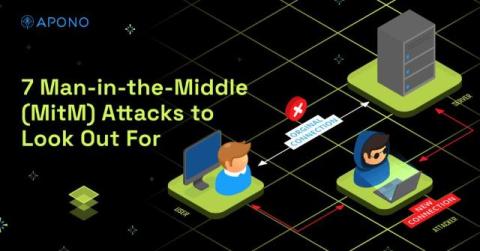
7 Man-in-the-Middle (MitM) Attacks to Look Out For

Today’s man-in-the-middle (MitM) attacks go far beyond coffee-shop Wi-Fi: they target browsers, APIs, device enrollments, and DNS infrastructure. Using automated proxykits and supply-chain flaws, attackers hijack session cookies, tokens, and device credentials—turning one interception into persistent, high-value access. Concerningly, these are not edge cases.
0Click Attacks: When TTPs Resurface Across Platforms

If there’s one lesson security teams should take from recent disclosures, it’s this: AI agent attack techniques don’t disappear - they resurface, across vendors and platforms, with only small variations. What researchers called out months ago is showing up again, now in Salesforce as the ForcedLeak vulnerability.

Resilience by Design: How to Stay Online During Attacks and Outages

In today’s cloud-native world, resilience isn’t optional — it’s foundational. Daniele Molteni, Director, Product Management for Application Security at Cloudflare, is leading a panel at Cloudflare Connect 2025 that tackles a core question: how do you design systems to withstand attacks, outages, and failures? In this preview, Daniele shares what’s at stake when downtime hits — and how leaders are rethinking operational continuity for the modern Internet.

The Weak Link: Recent Supply Chain Attacks Examined

Originally published: April 2023 Updated: September 2025 Supply chain attacks are a growing and increasingly sophisticated form of cyber threat. They target the complex network of relationships between organizations and their suppliers, vendors, and third-party service providers. These attacks exploit vulnerabilities that emerge due to the interconnected nature of digital supply chains, which often span multiple organizations, systems, and geographies.

Improving Cyber and Mental Resilience with Threat Information Sharing

In a world where data provides companies with a competitive advantage, sharing it amongst other businesses, especially in the same industry, may seem counterproductive. However, in cybersecurity, where every company is a potential target for threat actors and organizations are increasingly interconnected through supply chains, sharing information can significantly enhance a company's security posture and overall resilience.

A Single Cyberattack Stopped Jaguar Land Rover-and Could Stop You Next

The $2 Billion Cyber Disaster That Shook the Automotive World On September 2, 2025, Jaguar Land Rover (JLR) suffered a automotive cyberattack that instantly froze production lines, shutdown the dealerships and paralyzed the luxury automaker’s global IT systems during the UK’s “New Plate Day”—one of the busiest times for the industry.

Smash and Grab: Aggressive Akira Campaign Targets SonicWall VPNs, Deploys Ransomware in an Hour or Less

In late July 2025, Arctic Wolf Labs began observing a surge of intrusions involving suspicious SonicWall SSL VPN activity. Malicious logins were followed within minutes by port scanning, Impacket SMB activity, and rapid deployment of Akira ransomware. Victims spanned across multiple sectors and organization sizes, suggesting opportunistic mass exploitation. This campaign has recently escalated, with new infrastructure linked to it observed as late as September 20, 2025.

Carding ecosystem: The fall of traditional financial cybercrime

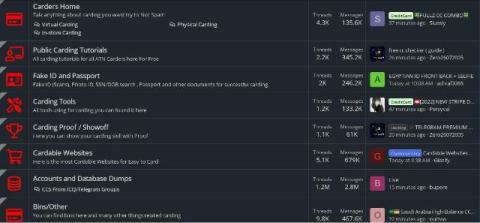
Carding is a type of cybercrime where attackers steal or illegally buy credit card information and use it to make unauthorized transactions. It often involves testing stolen card numbers with small purchases before making larger fraudulent charges. Criminals typically exchange or sell these stolen details on underground forums or dark web marketplaces. Outpost24’s Threat Intelligence team, KrakenLabs, carried out a previous public analysis of the underground card fraud ecosystem in 2022.

How Legal Firms Can Protect Against Cyberthreats and Confidentiality Leaks Online

Law firms face an unprecedented cybersecurity crisis, with hackers targeting legal practices due to the increase of sensitive client data they possess. Understanding these evolving threats and implementing solid protective measures has become essential for maintaining client trust and regulatory compliance.

Gcore Radar Report Reveals 41% Surge in DDoS Attack Volumes

Gcore, the global edge AI, cloud, network, and security solutions provider, today announced the findings of its Q1-Q2 2025 Radar report into DDoS attack trends. DDoS attacks have reached unprecedented scale and disruption in 2025, and businesses need to act fast to protect themselves from this evolving threat. The report reveals a significant escalation in the total number of DDoS attacks and their magnitude, measured in terabits per second (Tbps).

Tales from the fraud frontlines: How to detect and defend against man-in-the-middle attacks

Picture this: Your payment network appears to be running smoothly, yet subtle inconsistencies in transaction data start to emerge. Authorizations are delayed or altered, and some backend calls never trigger. This isn’t just another case of stolen credentials or card fraud — it’s a devastating man-in-the-middle (MITM) attack that has been going on for months.

Regulatory Gaps and Legacy Systems Are Aiding AI-Powered Cyberattacks on Governments

Public sector organizations face unprecedented cybersecurity challenges as artificial intelligence reshapes how adversaries launch attacks. Threat actors now use AI to execute large-scale, highly personalized phishing campaigns, automate the discovery of vulnerabilities, and evade detection faster than traditional defenses can respond.

Grounded: The ARINC vMUSE Attack Disrupting Multiple Airports

The line between the digital and physical worlds blurs completely when a cyber attack results in widespread, tangible disruption. For thousands of travelers, this became a harsh reality when major European airports were forced to delay flights due to a ransomware attack targeting a vendor in the supply chain.

US Secret Service Blocks Massive Telecom Attack in New York

The Secret Service’s takedown in New York shines a light on a type of threat that is technically fascinating and deeply concerning for national security: large-scale cellular interception networks leveraging cell-site simulators (CSS), also known as IMSI catchers or Stingrays. The news comes as New York City hosts the annual United Nations General Assembly, gathering heads of state from around the world and creating an incredibly target-rich environment for attackers.

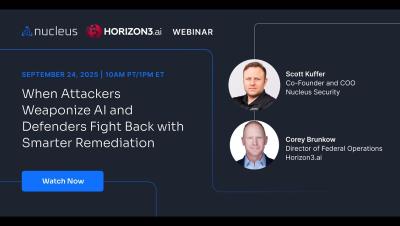
When Attackers Weaponize AI and Defenders Fight Back with Smarter Remediation

Artificial intelligence is transforming cybersecurity, and not always for the better. Attackers are now weaponizing AI to speed up reconnaissance, create exploit code, and bypass traditional defenses. Security teams can’t afford to rely on outdated vulnerability management practices. In this webinar, Scott Kuffer (COO, Nucleus Security) and Corey Brunkow (Director of Federal Operations, Horizon3.ai) break down how AI is changing the threat landscape and what defenders can do to stay ahead.

When Firewalls Age Out: What the Akira Attack Can Teach Us About Lifecycle Security

Cyberattacks evolve faster than aging infrastructure can keep up, and expired hardware is one of the biggest blind spots organizations face today. The recent Akira ransomware campaign targeting SonicWall VPNs is a powerful reminder of what happens when devices slip out of support.

No More Ransom: Why the UK's Crackdown Signals the End of Paying Hackers

For years, ransomware gangs have thrived by holding businesses hostage, forcing a terrible choice: pay up or watch your systems collapse. That era is ending. After a summer of cyber chaos that hit everything from the NHS to Harrods, the UK government has drawn a red line: no more quiet payoffs, no more sweeping attacks under the rug.

6 Steps to Counter Fourth-Party Supply Chain Vendor Attacks

Managing a cybersecurity program is hard, but also very meaningful, work. Continuously managing the cybersecurity posture of your organization’s supply chain vendors can at times feel near impossible, afterall ensuring the cybersecurity of your suppliers is an order of magnitude leap in difficulty. Yet, criminals are demonstrating that despite these difficulties, this task requires our immediate attention, given the trending success in exploiting our businesses' trusted relationships.

Jaguar Land Rover Cyberattack: Why IoT Identity and Access Management is Mission Critical

The recent cyberattack on Jaguar Land Rover (JLR), which forced factory closures and disrupted production, is another reminder of how vulnerable connected industries have become. Modern automotive and manufacturing operations rely on networks of connected devices, from robotic arms on the production line to electronic control units (ECUs) inside vehicles. When security breaks down, the consequences quickly ripple across operations, supply chains, and customers.

How Weak Passwords Are Exploited in Targeted Cyber Attacks

Think about this for a moment: cybercriminals don't actually need those fancy Hollywood-style hacking tools you see in movies. Why? Because most of them just waltz right through your front door using credentials that were practically handed to them. Your weak passwords aren't just a minor inconvenience, they're rolling out the red carpet for attackers who've mastered the dark art of exploiting how predictably we all think.

Cyber Attack Disrupts Airports Across Europe

When Heathrow, Brussels, and Berlin airports suffered a cyber attack that disrupted their check-in and baggage systems, the fallout was immediate. Flights were canceled, queues stretched through terminals, and staff scrambled to switch to manual processes. For some of Europe’s busiest hubs, this was more than an inconvenience. It was a reminder that disruption, not data theft, is often the attacker’s goal.

Stopping BadUSB, Rubber Ducky, and Flipper Zero Attacks

BadUSB, Rubber Ducky, and Flipper Zero devices bypass traditional USB blocking by impersonating keyboards and executing commands at machine speed. Netwrix Endpoint Management combines Endpoint Protector’s device control with Policy Manager’s privilege enforcement to block rogue devices, remove unnecessary admin rights, and contain lateral movement before it escalates.

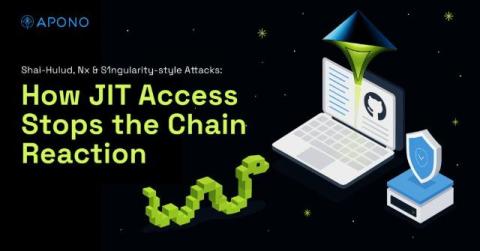
ShaiHulud, Nx & S1ngularitystyle Attacks: How JIT Access Stops the Chain Reaction

The Shai‑Hulud worm and the Nx / S1ngularity attacks show how token‑stealing malware, vulnerable workflows, and always‑on elevated permissions allow cascading compromise. Enforcing JIT access on repository, organization owner/admin roles, and team‑based inherited permissions sharply reduces exposure, limits damage, and strengthens audit/compliance posture.

ShaiHulud worm and the Nx / S1ngularity attacks: How-to use JIT Access to Stop the Chain Reaction

The Shai‑Hulud worm and the Nx / S1ngularity attacks show how token‑stealing malware, vulnerable workflows, and always‑on elevated permissions allow cascading compromise. Enforcing JIT access on repository, organization owner/admin roles, and team‑based inherited permissions sharply reduces exposure, limits damage, and strengthens audit/compliance posture.

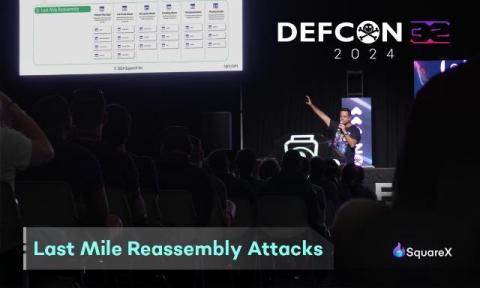
Palo Alto Networks Acknowledges SquareX Research on Limitations of SWGs Against Last Mile Reassembly Attacks

SquareX first discovered and disclosed Last Mile Reassembly attacks at DEF CON 32 last year, warning the security community of 20+ attacks that allow attackers to bypass all major SASE/SSE solutions and smuggle malware through the browser. Despite responsible disclosures to all major SASE/SSE providers, no vendor has made an official statement to warn its customers about the vulnerability in the past 13 months - until two weeks ago.

From GrimResource to PureLogs Stealer: Dissecting a Recent Attack

BlueVoyant’s Threat Fusion Cell (TFC) and Security Operations Center (SOC) researchers have uncovered a recent cyber campaign featuring a unique twist on fake browser updates. This attack leveraged the GrimResource vulnerability and delivered the PureLogs stealer malware to targeted environments through disguised Microsoft Management Console (MSC) files.

Beware the Sandworm: The Shai-Hulud Attack Explained

A new and dangerous self-replicating worm has been identified targeting the JavaScript repository NPM, infecting at least 187 code packages. The novel malware strain is engineered to steal credentials from developers and publish them to a new public GitHub repository. The worm automatically propagates itself by copying its code into the top 20 most popular packages maintained by the compromised user and publishing them as new versions.

Is your VPN a silent entry point for attackers?

Is your VPN a silent entry point for attackers? Credential stuffing and password spraying exploit weak authentication, giving attackers a way into VPNs and edge network devices — making them prime targets in today’s identity-driven threat landscape. In this snippet, our expert breaks down: Watch the full webinar: Adapting to a New Paradigm in Security – Implementing ITDR in Your SOC: netwrix.com/go/adapting-to-a-new-paradigm-in-security-yt.

NPM Ecosystem Under Siege: Self-Propagating Malware Compromises 187 Packages in a Huge Supply Chain Attack

The NPM ecosystem has been rocked by one of its widest supply chain attacks to date, with over 187 popular packages compromised by advanced malware capable of self-propagation and automated credential harvesting. This attack, affecting packages with millions of weekly downloads including angulartics2, ngx-toastr, and @ctrl/tinycolor, demonstrates how cybercriminals are evolving their tactics to create “worm-like” malware that can autonomously spread across the software supply chain.

Shai-Hulud: A Persistent Secret Leaking Campaign

On September 15, a new supply chain attack was identified that targeted the @ctrl/tinycolor and 150 other NPM packages. The attack scenario was similar to the one used in the s1ngularity and GhostActions campaigns. The threat actors combined a local environment secrets extraction with a malicious GitHub actions workflow injection in accessible projects. The compromised packages' structure has been detailed in blog posts by socket.dev and StepSecurity.

Why DFIR: A Guide to Digital Forensics and Incident Response Services and Retainers

No organization likes to contemplate being successfully hit with a cyberattack, but turning a blind eye to the possibility is the exact wrong thing to do. Digital Forensics and Incident Response (DFIR) planning and retainers, like car, home, and health insurance, are a necessity in case the unthinkable happens.

Tales from the fraud frontlines: The growing threat of DDoS attacks - and how to prevent them

Picture this: It’s a busy weekday afternoon and your online payment platform is humming with activity. Suddenly, everything slows down. Customers complain that transactions are failing, your website goes offline, and your team scrambles to figure out what’s happening. The culprit? A Distributed Denial of Service (DDoS) attack.

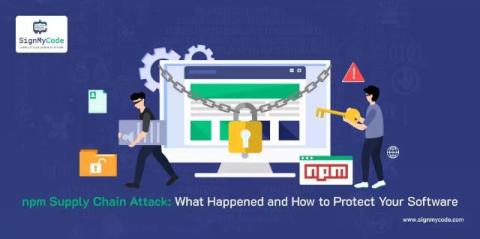
npm Supply Chain Attack: What Happened and How to Protect Your Software

On September 8, 2025, a large-scale npm supply chain attack quickly compromised 18 popular packages (with the 18 packages representing more than 2.6 billion weekly downloads within the bioinformatics ecosystem). Attackers hijacked a maintainer’s account by impersonating npm support in a phishing campaign to upload backdoored versions of popular packages like chalk, debug, ansi-styles, and supports-color.

Salesloft Drift Supply Chain Attack Affects Hundreds of Businesses

LevelBlue’s Security & Compliance Team is aware of the Salesloft vulnerability affecting Drift chatbot integrations. LevelBlue, and its affiliated entities, do not utilize Drift, and Salesforce has confirmed the incident did not impact clients without this integration. Based on current information, we confirm there has been no exposure or impact to us or our clients. Should new information arise that alters this assessment, we will provide an update directly.

Advanced Domain Protection and Threat Takedown Solutions for Cybersecurity

The digital landscape has become increasingly hostile, with cybercriminals exploiting domain vulnerabilities to launch sophisticated attacks against organizations worldwide. As businesses expand their online presence, the need for robust domain protection and effective domain takedown mechanisms has never been more critical. Modern enterprises face an evolving threat landscape where malicious actors register deceptive domains to steal credentials, distribute malware, and damage brand reputation through sophisticated phishing campaigns.

Not All Cyberattacks Begin with a Phishing Attack, Hack or Exploited Vulnerability

In a day and age when cyber threats are top of mind, it may be difficult for an organization to shift gears and take its physical security precautions into consideration. This is to protect not only a firm’s physical assets but direct access to networks and information that an attacker could use at a later date for a cyberattack.

Unpacking the Recent npm Supply Chain Attack: What We Know So Far

The software supply chain has once again come under fire, with npm — the world’s largest package ecosystem — at the center of one of the most significant compromises to date. Recent findings suggest that attackers successfully hijacked a maintainer account through phishing, injecting malicious code into popular open-source packages with billions of weekly downloads.

The Great NPM Heist - September 2025

On September 8, 2025, the JavaScript ecosystem experienced what is now considered the largest supply chain attack in npm history. A sophisticated phishing campaign led to the compromise of a trusted maintainer’s account, resulting in the injection of cryptocurrency-stealing malware into 18+ foundational npm packages. These packages collectively accounted for over 2 billion weekly downloads, affecting millions of applications globally—from personal projects to enterprise-grade systems.

Link11 Reports 225% more DDoS attacks in H1 2025 with new tactics against infrastructure

The threat landscape surrounding distributed denial-of-service (DDoS) attacks intensified significantly in the first half of 2025, according to the latest Link11 European Cyber Report. Documented attacks targeting the Link11 network increased by 225% compared to the same period in 2024. The report highlights not only a marked rise in attack frequency but also a substantial escalation in their duration, intensity, and technical sophistication.

Largest npm Attack in History - Updated

(Nov 26, 2025) JFrog continues to track, provide research and document a second wave of the Shai-Hulud Software Supply Chain Attack. Following the initial campaign, threat actors have returned with more advanced tactics, compromising an additional 621 new malicious packages across leading public registries.

duckdb npm packages compromised

Over night, starting at 01:16 UTC on September 9th, we were alerted to more packages being compromised, these included: These packages all had a new version 1.3.3 released (In the case of the wasm version, it was version 1.29.2), which contained the same malicious code as we saw in the compromise of packages with 2 billion+ downloads.

What You Need To Know About the NPM Supply Chain Attack

Aviram Shmueli is a distinguished cybersecurity and cloud computing expert with a background steeped in 8200 and the Israeli Ministry of Defense. He has over 20 years of hands-on and senior managerial experience in engineering and product management. Yesterday, a critical supply chain attack impacting 18 widely used npm packages was disclosed. These packages collectively account for nearly 2 billion weekly downloads.

Salesloft Drift Supply Chain Attack Affects Hundreds of Businesses

Trustwave's Security & Compliance Team is aware of the Salesloft vulnerability affecting Drift chatbot integrations. Trustwave, A LevelBlue Company, and its affiliated entities do not utilize Drift, and Salesforce has confirmed the incident did not impact clients without this integration. Based on current information, we confirm there has been no exposure or impact to us or our clients.

Salesforce OAuth incident: safe re-enable path for Drift and Salesloft, How To Fix

Attackers stole OAuth tokens tied to the Salesloft Drift integration, then used those valid tokens to call Salesforce APIs and export data. This is token abuse via a third-party Connected App, not a core Salesforce bug. Focus your response on governance and validation: revoke and rotate, re-enable with least privilege, and use Salesforce Event Monitoring to verify detections. What happened.

NPM Supply Chain Attack: Sophisticated Multi-Chain Cryptocurrency Drainer Infiltrates Popular Packages

The NPM ecosystem faced another significant supply chain attack when 18 popular packages, including highly-used libraries like debug and chalk, were compromised with advanced cryptocurrency drainer malware. This attack, affecting packages with over 2 billion weekly downloads, demonstrates how cybercriminals are leveraging trusted software distribution channels to deploy advanced Web3 wallet hijacking code.

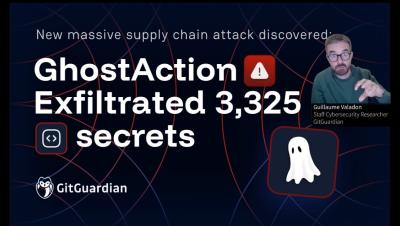
The GhostAction Campaign: 3,325 Secrets Stolen Through Compromised GitHub Workflows

On September 5, 2025, GitGuardian discovered GhostAction, a massive supply chain attack affecting 327 GitHub users across 817 repositories. Attackers injected malicious workflows that exfiltrated 3,325 secrets, including PyPI, npm, and DockerHub tokens via HTTP POST requests to a remote endpoint.

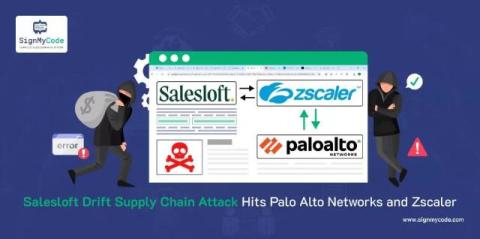
Salesloft Drift Supply Chain Attack Hits Palo Alto Networks and Zscaler

An important supply chain incident has rocked the security industry by showing us that some of the biggest security enterprises are also threatened by the risk of third-party SaaS product integrations. The incident, involving Salesloft Drift, a marketing automation solution integrated with Salesforce, resulted in the threat actor getting OAuth tokens. These tokens allowed them to exfiltrate massive volumes of sensitive data about customers, including account records, case information, and contact data.

Beyond the Drift Breach: Securing Non-Human Identities with Zero Standing Privileges

The Drift OAuth breach didn’t just expose one SaaS vendor — it exposed a systemic blind spot: the sprawling, ungoverned world of Non-Human Identities. In case you missed it, in August 2025, attackers from UNC6395 exploited compromised OAuth tokens from Salesloft’s Drift integration—an AI chat tool—to access and exfiltrate data from Salesforce, including credentials like AWS keys and Snowflake tokens.

The GhostAction Supply Chain Attack: Compromised GitHub Workflows And Stolen Secrets

GitGuardian has uncovered GhostAction, a massive supply chain attack targeting 327 GitHub users and 817 repositories. Attackers injected malicious workflows that exfiltrated over 3,325 secrets, including npm, PyPI, and DockerHub tokens. Watch as GitGuardian's Senior Cybersecurity Researcher, Guillaume Valadon breaks down how this campaign unfolded, what was stolen, and what developers need to know to stay safe.

Report: AI Can Now Automate Entire Attack Chains

Threat actors can now use AI tools to automate entire attack operations, according to a new report from Anthropic. The company says an attacker abused its Claude AI tool to create a hacking and extortion campaign that compromised at least seventeen organizations. The attacker used Claude to conduct reconnaissance, initial access, malware development, data exfiltration, and extortion analysis.

New Invisible Attack Creates Parallel Poisoned Web Only for AI Agents

AI agents are rapidly evolving from simple text generators into powerful autonomous assistants that can browse the web, book travel, and extract complex data on our behalf. This new “agentic” AI, which operates in a “sense-plan-act” loop, promises to revolutionize how we interact with the digital world.

Cato CTRL Threat Research: Threat Actors Abuse Simplified AI to Steal Microsoft 365 Credentials

AI marketing platforms have exploded in popularity, becoming everyday tools for creative teams in enterprises worldwide. Platforms like Simplified AI offer marketers the ability to generate content, clips, and campaigns at scale. For CISOs and IT leaders, approving such services often seems straightforward: allow access, whitelist the domain, and enable the marketing team to innovate.

Business logic: The silent future of cyberattacks

Future hacks won’t trigger alarms or leave traces. No security measures will be violated. The systems are functioning normally – but the loss is real. As automated defenses improve, attackers must target what machines can’t: the business processes. By exploiting flaws in workflow logic, hackers can steal data and funds in a way no one expected. Business logic vulnerabilities are now a serious cybersecurity blind spot, and a leading method for breaching even the most secure systems.

Cheaters never win: large-scale campaign targets gamers who cheat with StealC and cryptojacking

A sprawling cyber campaign is turning gamers’ hunger to gain an edge into a massive payday for threat actors who are leveraging over 250 malware samples to steal credentials and cryptocurrencies. The operation has already netted wallets containing more than US$135,000. In this blog post, we will delve into a specific infection instance, explore its mechanisms. and share indicators of compromise (IoCs).

Proactive Security: How ThreatX Protects Before an Attack Happens

Proactive Security: How ThreatX Protects Before an Attack Happens Carlo Alpuerto from A10 Networks highlights the core strengths of the ThreatX platform. He explains how ThreatX consolidates protection against WAF, API, DDoS, and bot attacks within a single, unified system. The platform's ability to use all of this information cumulatively is a key differentiator, allowing it to generate a risk score for specific entities and proactively protect against attacks, even during the initial reconnaissance and probing phases.

No More Blind Spots: Detecting WAF / CDN Control Bypass in IONIX Exposure Management

In today’s digital landscape, web application security is more critical than ever. Most organizations rely on Cloud-Based Security Providers offering integrated Web Application Firewalls (WAFs) and Content Delivery Networks (CDNs), for shielding their assets from direct exposure and attacks such as SQL injection, XSS, and DDoS.

The Rise of AI-Powered Attacks Threatening Crypto Trading Platforms

AI has made it cheap and fast to generate convincing scam campaigns. With scam deposits rising 200% year-over-year and 60% of scam funds now tied to AI-enabled fraud, trading platforms are facing an industrialized wave of deception. What once required sophisticated criminal networks can now be automated by anyone with basic technical skills. Crypto crime drained $2.17 billion in H1 2025 alone, already surpassing 2024's total. While the ByBit hack took the headlines, analysts warn that AI-driven infiltration and phishing are eating away at platforms daily, in smaller but relentless amounts.

Intel Chat: Trend Micro Apex One, PyPI domains, RingReaper & Openbaar Ministrie attack [244]

In this episode of The Cybersecurity Defenders Podcast, we discuss some intel being shared in the LimaCharlie community. Support our show by sharing your favorite episodes with a friend, subscribe, give us a rating or leave a comment on your podcast platform. This podcast is brought to you by LimaCharlie, maker of the SecOps Cloud Platform, infrastructure for SecOps where everything is built API first. Scale with confidence as your business grows.