Security | Threat Detection | Cyberattacks | DevSecOps | Compliance

Follow-Up: SonicWall Updates Advisories for Actively Exploited Vulnerabilities

In a previous security bulletin sent by Arctic Wolf on April 17, 2025, we advised of a credential access campaign targeting SonicWall SMA devices along with remediation guidance. As of April 29, 2025, SonicWall has updated their advisories for several vulnerabilities that are now linked to ongoing exploitation in the threat landscape.
Zero-Day in Your ZIP: Inside CVE-2025-33028: How a WinZip Flaw Exposes Users to Silent Malware Execution

In the vast landscape of cybersecurity, it’s often not the zero-click iPhone exploits or flashy ransomware variants that expose the most users — sometimes it’s the tools we’ve trusted for decades. One such example is CVE-2025-33028, a vulnerability in WinZip, a program that’s been a staple in personal and corporate environments for over 30 years.

And The Cloud Goes Wild: Looking at Vulnerabilities in Cloud Assets

We admit it – we’ve had our heads in the clouds recently. Since we started working with Wiz as one of their integration partners, we’ve been spending even more time thinking about cloud assets. And these assets are everywhere! Gartner predicts double digit growth across all cloud segments in 2025.

7 Core Principles of an Effective Application Security Program

If you’re building software, chances are your environment looks nothing like it did a few years ago. Monolithic applications have given way to microservices. On-prem systems have migrated to multi-cloud. Waterfall has become agile, and developers are pushing code daily (sometimes hourly). Security, meanwhile, is still catching up.

Threat Context monthly, April 2025: EncryptHub & Media Land leak

Welcome to the Threat Context Monthly blog series where we provide a comprehensive roundup of the most relevant cybersecurity news and threat information from KrakenLabs, Outpost24’s cyber threat intelligence team. Here’s what you need to know from April about EncryptHub, EncryptRAT, and the Media Land leak.

Raising the Security Bar: Essential Measures to Combat Emerging Cyber Threats

Cyber threats are evolving all the time, and the pace of advancement is increasing. From malware and ransomware attacks to increasingly sophisticated phishing techniques and zero-day exploits, threat actors are constantly working to find new ways to breach our defenses, so we need to take proactive steps to raise security standards and keep our organizations on the front foot in the fight against cybercrime. In this piece, we'll discuss some essential measures you can take to do this, highlighting best practices and security technologies that can enable you to build a more threat-resilient organization.


The 2025 Remediation Operations Report: Why Organizations Still Struggle in 2025

The second annual Remediation Operations Report from Seemplicity paints a clear picture: while organizations are investing more in security, they’re not necessarily getting faster or more effective at fixing what matters. This year’s data highlights a growing gap between strategic intent and day-to-day execution. Security leaders want to move faster, collaborate better, and prioritize smarter. But process bottlenecks and legacy workflows keep getting in the way.

OWASP Announces BLADE Business Logic Attack Framework to Give Enterprises Better Tools to Fight Sophisticated Bots

Update to attack framework announced to coincide with recognition as an industry standard The Open Worldwide Application Security Project (OWASP) announced today that the Business Logic Attack Definition Framework (BLADE Framework) has become The OWASP BLADE Framework Project. The name change reflects the acceptance of the attack framework as an OWASP project and recognition of the framework as an industry standard.

Emerging Threat: SAP NetWeaver Visual Composer CVE-2025-31324

On April 24th, 2025, SAP disclosed CVE-2025-31324, a critical missing authorization check vulnerability (CVSS 10.0) affecting the Metadata Uploader component of SAP NetWeaver Visual Composer. This vulnerability fails to restrict file upload content, allowing unauthenticated remote attackers to achieve full remote code execution (RCE) on affected servers.

Security Bulletin: CVE Program Funding Concerns and Emerging Alternatives

On April 16, 2025, a critical moment unfolded in the cybersecurity world when the U.S. Department of Homeland Security’s funding for the Common Vulnerabilities and Exposures (CVE) Program, operated by MITRE, was set to expire. The CVE system is a globally relied-upon database for cataloging known cyber vulnerabilities and has been a cornerstone of vulnerability management for over 25 years since its public launch in 1999.

Zero-Day Readiness: How ASPM Can Help CISOs Respond Faster

Zero-day vulnerabilities are the new normal in cybersecurity. In 2023 alone, more than 100 high-profile zero-day incidents were reported. Despite the early warning signs, major corporations and government agencies, from giants like Google and Cisco to the U.S. Government, continue to be blindsided by zero-day threats into 2025. In December 2024, for example, the U.S.

Can This AI Save My Job? (Google Gemini 2.5 Pro)

In this video, I’ll be putting Google’s Gemini 2.5 AI to the test — challenging it to generate 100% secure and safe code for a note taking application. The catch? My job is on the line... and the code has to pass all security checks to avoid critical vulnerabilities. I’ll be diving into how Gemini 2.5 performs under pressure and examining whether AI can truly be trusted with secure coding. Resources.

Exploited! SAP NetWeaver Visual Composer Unauthenticated File-Upload Vulnerability (CVE-2025-31324)

SAP has released an out-of-band patch for a critical unrestricted file-upload flaw, CVE-2025-31324, in the NetWeaver Visual Composer “Metadata Uploader.” A missing authorization check allows unauthenticated attackers to upload arbitrary files (e.g., JSP, WAR) and instantly execute code on the SAP Java stack. If left unpatched, the weakness can expose sensitive ERP data and disrupt core business workflows across finance, HR, and manufacturing systems. In this article.

6 common authentication vulnerabilities in web apps

Authentication is used by most web applications. Both for letting users have access to individual accounts, but also for protecting certain resources from the public. Basic authentication allows an individual to prove to the application that they are the user that is trying to access it. Unfortunately, authentication vulnerabilities are often found by pen testers too. While there are many forms of authentication, the most common implementations are that of the username and password.

CVE-2025-31324: Maximum-Severity File Upload Vulnerability in SAP NetWeaver Exploited in the Wild

On April 24, 2025, SAP released fixes for CVE-2025-31324, a maximum-severity zero-day unrestricted file upload vulnerability in the NetWeaver Visual Composer component. Visual Composer is a tool within NetWeaver for creating applications and user interfaces. The vulnerability was discovered by ReliaQuest, which initially observed its exploitation in the wild.

Identifying and Mitigating Exploitable Vulnerabilities

This blog explores exploitable vulnerabilities meaning by demystifying the concept and explaining what the phrase actually entails – both as a category and in the context of specific threats. Understanding which vulnerabilities can be actively exploited – and learning how to address them – is essential for any organization striving to stay secure.

CVE-2025-34028: PoC Released for Critical RCE Vulnerability in Commvault Command Center

On April 24, 2025, watchTowr published technical details and a proof-of-concept (PoC) exploit for a critical vulnerability in Commvault Command Center, CVE-2025-34028, which had been disclosed earlier in April. Commvault Command Center is a web-based interface used to manage data protection, backup, and recovery operations across enterprise environments.

CVE Program Funding Disruption: What It Means for Cybersecurity and Veracode Customers

On April 16, 2025, the cybersecurity community faced a potential crisis as U.S. government funding for the Common Vulnerabilities and Exposures (CVE) program, managed by MITRE and sponsored by the Cybersecurity and Infrastructure Security Agency (CISA), was set to expire.

Exploited! Ingress-NGINX CONTROLLER FOR Ingress-NGINX RCE (CVE-2025-1974, 1097, 1098, 24514) - Patch Now | IONIX

Kubernetes ingress-nginx has disclosed a cluster of critical vulnerabilities—CVE-2025-1974, CVE-2025-1097, CVE-2025-1098, and CVE-2025-24514—impacting all controller releases prior to v1.11.5 / v1.12.1. The flaws stem from insufficient sanitization of Ingress annotations and admission-webhook inputs, allowing attackers to inject arbitrary NGINX directives into the auto-generated nginx.conf.

A Vulnerable Future: MITRE's Close Call in CVE Management

Last week, one of the biggest concerns in the cybersecurity industry created a crisis that was avoided at the last minute. On April 16th, 2025, the MITRE Corporation announced: “The current contracting pathway for MITRE to develop, operate, and modernize CVE and several other related programs, such as CWE, will expire.” Official letter from MITRE Corp announcing the implications and expiration of the CVE Program.

Exploited! Erlang/OTP SSH Unauthenticated Remote Code Execution Vulnerability (CVE-2025-32433)

Erlang/OTP ships with an SSH daemon that many telecom, IoT, Elixir/Phoenix, RabbitMQ and CouchDB deployments leave running for convenience. A flaw in how that daemon parses pre-authentication SSH protocol messages enables an attacker to break out of the key-exchange state machine and open an arbitrary channel before credentials are verified.

How Seemplicity Builds Integrations at Lightning Speed

When it comes to exposure management, actionable context is key. Security teams don’t just need data – they need the right insights, in the right place, at the right time to drive remediation activities. That’s why seamless integrations between security and workflow tools are essential. At Seemplicity, building these integrations quickly and effectively isn’t just a goal, it’s a core competency.

Snyk Ushers in the Future of DAST: AI-Driven Security for the Age of AI-Driven Development

I'm thrilled to announce Snyk API & Web, our next-generation dynamic application security testing (DAST) solution. It's more than just a product launch; it's Snyk’s answer to securing the complex, AI-powered applications developers are building today, deepening the integration of DAST into our comprehensive Developer Security Platform.

CVE-2025-32433: Maximum Severity Unauthenticated RCE Vulnerability in Erlang/OTP SSH

On April 16, 2025, fixes were released for a maximum severity vulnerability in Erlang/OTP SSH, CVE-2025-32433. Erlang/OTP SSH is a library within the Erlang/OTP platform, typically used in telecommunications, messaging, IoT, and distributed applications. CVE-2025-32433 allows unauthenticated remote threat actors to achieve remote code execution (RCE) in the SSH daemon. The issue arises due to a flaw in SSH protocol message handling, which permits the sending of protocol messages before authentication.

If CVE Fails, We Can Finally Start Focusing on the Fixes Rather Than the Vulnerabilities

The recent financial crisis surrounding MITRE and the CVE program has sent shockwaves through the cybersecurity industry. For decades, CVEs have been the de facto index of software vulnerabilities. They’ve structured how we communicate, prioritize, and track issues across the ecosystem. But now, with their future uncertain, we’re forced to ask: what if the CVE system collapses? And more importantly—what should come next?

Why Do You Need an Automated VAPT Tool? (5 Alarming Signs)

Imagine waking up to news that your company’s data has been leaked, your customers' trust is shattered, and your brand’s reputation is in tatters. Cybercriminals don’t wait for you to react—they exploit vulnerabilities the moment they find them. You're already playing a dangerous game if your security measures are outdated or reactive.

Golden Image Configuration with Falcon Exposure Management

When configuration drift creeps in, it can lead to inconsistent environments, audit delays, and security gaps. With Golden Image in Falcon Exposure Management, teams can quickly establish a secure baseline and replicate it across the organization. This demo walks through how to set up a policy, assign a rule group, and use a template image to automatically pre-configure benchmark settings. You’ll see how easy it is to detect misconfigurations, fine-tune rules to match your standards, and stay ahead of compliance requirements.

Powering Down Vulnerability: Securing the Energy Sector's Supply Chain

The energy sector stands as a critical pillar of our society. From the electricity powering our homes to the fuel driving our industries, reliable energy is essential. However, the very interconnectedness that makes the energy sector so vital also exposes it to significant vulnerabilities, particularly within its supply chain. The Interconnected Web of Energy The energy sector is a complex web of systems, stretching far beyond power plants and wind farms.

Credential Access Campaign Targeting SonicWall SMA Devices Potentially Linked to Exploitation of CVE-2021-20035

On April 15, 2025, SonicWall published a product notice regarding CVE-2021-20035, a vulnerability impacting SonicWall SMA 100 series appliances. In an updated security advisory for the vulnerability, SonicWall indicated on April 15, 2025 that the vulnerability was being exploited in the wild. The vulnerability was added to CISA’s known exploited vulnerabilities (KEV) catalog the following day.

Security Bulletin: Critical Apache Roller Vulnerability Enables Unauthorized Session Persistence

CVE-2025-24859 is a critical security vulnerability in Apache Roller, a Java-based web application used for blogging and content management, that allows unauthorized session reuse due to insufficient session expiration after a user’s password is changed. Notably, the application fails to invalidate active user sessions upon password modification, irrespective of whether the change is initiated by the user or an administrative entity.

SquareX to Uncover Data Splicing Attacks at BSides San Francisco, A Major DLP Flaw that Compromises Data Security of Millions

SquareX researchers Jeswin Mathai and Audrey Adeline will be disclosing a new class of data exfiltration techniques at BSides San Francisco 2025. Titled "Data Splicing Attacks: Breaking Enterprise DLP from the Inside Out", the talk will demonstrate multiple data splicing techniques that will allow attackers to exfiltrate any sensitive file or clipboard data, completely bypassing major Data Loss Protection (DLP) vendors listed by Gartner by exploiting architectural vulnerabilities in the browser.

Snyk's Statement on the MITRE CVEs Program Funding Update

Over the past several days, the cybersecurity community has watched closely as uncertainty swirled around the future of the MITRE-run CVE (Common Vulnerabilities and Exposures) program following a letter to its board of directors that its federal funding could abruptly end. As of this blog posting, news outlets like Reuters are reporting that a last-minute extension has been granted, providing temporary relief.

The CVE Program Is on Life Support - and So Is Our Outdated Approach to Vulnerability Management

The cybersecurity community is facing a seismic shift. MITRE’s announcement that its contract to operate the Common Vulnerabilities and Exposures (CVE) program will expire on April 16, 2025, without a clear renewal plan, has sent shockwaves through the industry. This development threatens to dismantle a cornerstone of global cybersecurity coordination.

Responsible vulnerability disclosure: Why it matters

The concept of responsible disclosure is a simple one. If you find a vulnerability, you let the affected organization or software vendor know before making the information public. This gives them time to patch the vulnerability before it can be exploited. It also helps maintain trust and fosters a collaborative environment between security researchers and companies. As a cybersecurity vendor, do we want our researchers to be credited when they discover vulnerabilities? Of course.

Vector and Embedding Weaknesses in AI Systems

AI security threats are evolving at roughly the same speed that AI itself is: extremely fast. One of the most recent—and least understood—vulnerabilities involves vector and embedding weaknesses. These issues have gained attention with their addition to the OWASP Top 10 for LLMs, and the risks are becoming more urgent as Retrieval-Augmented Generation (RAG) continues to dominate enterprise AI adoption.

MITRE CVE Program Uncertainty: Mend.io's commitment to uninterrupted vulnerability protection

As many of you may know, MITRE’s DHS contract to manage the CVE and CWE programs expired on April 16, 2025. While emergency funding has since been restored for a short time, the long-term future of these programs still remains uncertain. Understandably, this situation has raised concerns throughout the cybersecurity community about the stability and continuity of vulnerability tracking and management systems that many organizations have come to rely upon.

Homograph attacks: How hackers exploit look-alike domains

Several years ago, a security researcher discovered a vulnerability in Google Chrome that allowed fake domains to bypass the browser’s security measures. The researcher registered a domain that appeared as “xn--80ak6aa92e.com” but displayed as “apple.com” in the browser, demonstrating how easy it was to deceive users. This is just one example of what’s known as a homograph attack, or sometimes a ‘look-a-like domain’.

Snyk Partners with Nova8 to Empower Secure Development Across Latin America

The Latin American technology landscape is growing rapidly, with organizations embracing digital transformation and cloud-native development. This growth brings incredible opportunities to this market – but can also introduce significant security challenges that can slow innovation if not addressed proactively.

Closing the Gap: How to Build a Consistent Exposure and Vulnerability Management Workflow

Security teams are faced with an ongoing challenge when it comes to exposure and vulnerability management. It’s not the actual discovery of the vulnerability that poses the challenge, but what to do once you discover one. Without a structured process, IT and security teams struggle to address vulnerabilities efficiently, and are in a constantly reactive mode, and struggle to address vulnerabilities efficiently, increasing potential risks.

Claude AI BLEW MY MIND! (Board Game Challenge)

In this video, I challenge Claude AI to a head-to-head match in the board game King of Tokyo Duel. I walk the AI through the rules, give it everything it needs to understand how to play, and then we battle it out! Claude picks up the game shockingly fast — its strategy, decision-making, and logic were next-level. I was seriously mind-blown at how intelligent it was… Should we put this to the test with other AI's like ChatGPT?

Proton66 Part 1: Mass Scanning and Exploit Campaigns

Trustwave SpiderLabs continuously tracks a range of malicious activities originating from Proton66 ASN, including vulnerability scanning, exploit attempts, and phishing campaigns leading to malware infections. In this two-part series, SpiderLabs explores the malicious traffic associated with Proton66, revealing the extent and nature of these attacks.

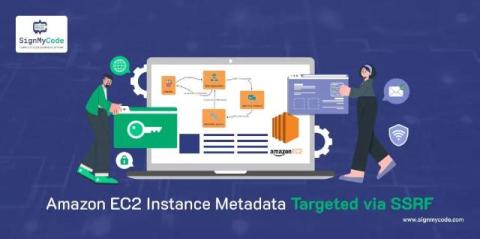
Amazon EC2 Instance Metadata Targeted via Server-Side Request Forgery (SSRF)

CVE Trends, Vulnerabilities of SSRF On March 25, 2024, the National Security Agency (NSA) and the Cybersecurity and Infrastructure Security Agency (CISA) issued a joint cybersecurity advisory about an increasing yet commonly overlooked web application vulnerability, Server-Side Request Forgery (SSRF).

Strategies to Mitigate Risks in AI-Driven Medical Note Systems

AI isn't just changing how healthcare works-it's redefining how care is delivered. With medical note systems powered by AI, clinicians are finally getting a break from endless documentation. But with that freedom comes a new set of challenges: accuracy, data safety, and the delicate balance between tech and human judgment. If you're adopting or managing these tools, it's not just about innovation-it's about protecting what matters most. Read on to discover the key strategies every healthcare leader must know to implement AI documentation systems responsibly and effectively.

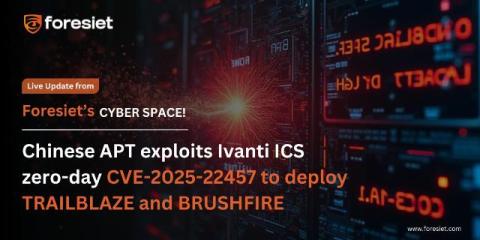
Chinese APT Exploits Ivanti CVE-2025-22457 with Malware

A newly disclosed vulnerability in Ivanti Connect Secure (ICS) VPN appliances has been weaponized in the wild by a Chinese nation-state threat actor, UNC5221. Tracked as CVE-2025-22457, this critical stack-based buffer overflow vulnerability allows unauthenticated remote attackers to execute arbitrary code, posing a significant risk to enterprise networks.

How RemOps Improves Security Without Slowing Down Engineering Teams

You’ve heard it a hundred times – security is everyone’s responsibility. But when security starts slowing things down, it’s usually engineering teams that feel the pain. Nobody wants to be the one responsible for shipping vulnerabilities into production, but at the same time, nobody wants security to be the reason releases grind to a halt. This is the dilemma DevSecOps was supposed to solve – bringing security into the development process without breaking everything.

Risk-Based Vulnerability Management in IT: Reducing Exploitability Through Automated Prioritization

Organizations face a monumental challenge managing cyber risk and vulnerabilities across expanding digital environments. Research indicates that security teams can remediate merely 10% of detected vulnerabilities due to resource limitations, emphasizing the urgent need for optimized prioritization methods. Risk-based vulnerability management (RBVM) addresses this challenge by focusing remediation efforts on vulnerabilities posing genuine risk to specific organizational assets and infrastructure.

Emerging Threat: Ivanti CVE-2025-22457

CVE-2025-22457, a critical vulnerability (CVSS 9.0) affecting Ivanti Connect Secure, Ivanti Policy Secure, and Ivanti ZTA Gateways. The issue stems from a stack-based buffer overflow triggered by sending a specially crafted X-Forwarded-For HTTP header. Successful exploitation enables unauthenticated remote code execution. This vulnerability was originally misidentified as a buffer overflow vulnerability that could not lead to either remote code execution (RCE) or denial of service (DoS).

Can You Really Pair Program with AI? (Aider & Cohere)

A new wave of AI development tools is changing how we write code, but can AI truly replace a human coding partner? In this video, we explore the capabilities of Aider and Cohere, two tools built to support real-time, conversational pair programming. We’ll break down how they work, where they shine, and the surprising limitations that came up during testing. Whether you're an experienced developer or simply curious about the future of coding, this deep dive will give you a clear picture of where AI-assisted programming stands today.

Adversary Tradecraft: Apache Tomcat RCE

CVE-2025-24813 is a critical vulnerability (CVSS base score of 9.8) affecting Apache Tomcat, a widely used open-source web server and servlet container. This issue affects Apache Tomcat: In this blog, we’ll simulate an attack and look at the activity within Graylog. Throughout the analysis, and at the conclusion of the post, we’ll provide practical threat-hunting and detection strategies you can implement in your own environments.

Vulnerability Management as a Service (VMaaS): Benefits and Considerations

In the era of digital transformation, businesses are increasingly relying on technology to drive innovation and growth. However, this dependence comes with the heightened risk of cyber threats. To protect sensitive data and maintain operational integrity, organizations recognize the growing need for robust cybersecurity solutions.

Unmasking EncryptHub: Help from ChatGPT & OPSEC blunders

This is the second part of Outpost24’s KrakenLabs investigation into EncryptHub, an up-and-coming cybercriminal who has been gaining popularity in recent months and is heavily expanding and evolving operations at the time of writing. We’ve already published one article explaining EncryptHub’s campaigns and TPPs, infrastructure, infection methods, and targets.

Supporting CTEM Scoping with Exposure Assessment Platforms

In our recent article on Continuous Threat Exposure Management (CTEM), we highlighted how exposure assessment platforms (EAPs) like Nucleus can support several critical phases of the CTEM framework. In that article, we intentionally separated the scoping step from the other technology-dependent CTEM stages. Scoping begins as a business- and process-driven exercise. However, doing scoping well and at scale relies more on having the right technology.

Achieving Continuous Exposure Management in Cloud-Native Environments

In this webinar, "Achieving Continuous Exposure Management in Cloud-Native Environments," Tally Netzer and Aaron Unterberger from Nucleus dive deep into how modern cloud architectures impact vulnerability and exposure management. You'll learn: Why traditional vulnerability management falls short in cloud-native, ephemeral environments. How fragmented visibility and unclear ownership disrupt effective security practices.

CVE-2025-22457: Ivanti Connect Secure VPN Vulnerable to Zero-Day RCE Exploitation

On April 3, 2025, Ivanti disclosed a critical zero-day vulnerability, CVE-2025-22457, affecting Ivanti Connect Secure, Policy Secure, and ZTA Gateways. This stack-based buffer overflow allows remote unauthenticated threat actors to achieve remote code execution (RCE) and has been exploited in the wild. At the time of writing, exploitation has only been observed in Connect Secure, not Policy Secure or ZTA Gateway.

Bypassing Tenant Isolation in Microsoft Power Platform: A Security Loophole You Should Know

Microsoft Power Platform, specifically Power Automate and Copilot Studio, makes it easy for organizations to quickly build automations and AI agents. To keep them secure and compliant, Tenant Isolation is a critical feature designed to prevent unauthorized cross-tenant communication. However, in our latest research, we discovered a high-severity vulnerability that bypasses Tenant Isolation policies using the HTTP Connector - potentially exposing sensitive data and enabling unauthorized actions.

Exploited: Critical Unauthenticated Access Vulnerability in CrushFTP (CVE-2025-2825)

In the ever-evolving landscape of web application vulnerabilities, a new critical flaw has emerged. CVE-2025-2825 is a high-severity vulnerability that allows attackers to bypass authentication on CrushFTP servers. This popular enterprise file transfer solution is often used in corporate environments to manage sensitive data, making this vulnerability particularly concerning.

CrushFTP auth bypass vulnerability: Disclosure mess leads to attacks

Outpost24 analysts recently discovered a critical authentication bypass vulnerability in CrushFTP, identified as CVE-2025-31161. The vulnerability has a CVSSv3.1 score of CVSS:3.1/AV:N/AC:L/PR:N/UI:N/S:U/C:H/I:H/A:H (9.8). We reached out to MITRE for a CVE on 13th March 2025 and were within an agreed 90-day non-disclosure period with CrushFTP. The plan was to give users plenty of time to patch before attackers were alerted to the vulnerability and able to exploit it.

CVE-2025-31161: Exploitation of Critical Authentication Bypass Vulnerability in CrushFTP

On March 21, 2025, CrushFTP privately alerted customers to a critical authentication bypass vulnerability, now tracked as CVE-2025-31161. Since the initial disclosure, a proof-of-concept (PoC) exploit has been made publicly available, and the CrushFTP CEO has confirmed observing customer compromises via CVE-2025-31161.

The Role of Vulnerability Management in Mergers and Acquisitions

The landscape of mergers and acquisitions (M&A) is evolving rapidly, particularly in the United States, where the dynamics of these deals are shaped by numerous factors, including cybersecurity. Within this sector, vulnerability management plays a critical role in ensuring the integrity, confidentiality, and availability of digital assets, which are often crucial in M&A transactions.

What are Zero-Day Attacks?

A Zero-Day Attack occurs when hackers exploit a previously unknown vulnerability in software or hardware before the developer has a chance to fix it. These attacks are particularly dangerous because there is no defense in place when they occur. In this video, we explain how Zero-Day attacks work and how you can protect your systems from these hidden threats.