Security | Threat Detection | Cyberattacks | DevSecOps | Compliance

The Hugging Face Incident: A CISO Wake-Up Call for the Agentic Era

Earlier this month, Hugging Face, an AI and machine learning platform company, revealed that an autonomous AI system had breached part of its production environment. The intrusion began in the platform’s dataset-processing environment and eventually involved higher-level access, credential exposure, and movement into internal clusters.

How to Protect Your Repositories from Open-Source Supply Chain Attacks

The open-source trust model is broken. Not strained, not under review—broken. For years, your team has pulled third-party code into your repositories on the reasonable assumption that a widely used dependency is safe. Popularity looked like a proof. Millions of downloads looked like a security review. TeamPCP has proven otherwise.

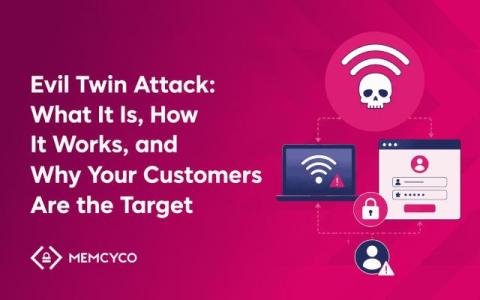
Evil Twin Attack: What It Is, How It Works, and Why Your Customers Are the Target

An evil twin attack is a man-in-the-middle attack in which an attacker creates a rogue wireless access point that impersonates a legitimate network. Victims connect believing the network is genuine, allowing the attacker to intercept traffic or present fraudulent login experiences designed to capture credentials. Evil twin attacks have traditionally been treated as wireless-security incidents. For enterprises with large customer bases, however, the consequences extend well beyond the network layer.

The Attacker Never Sleeps, Neither Can Your Testing

A few months ago, I wrote that AI is building your attack surface faster than you can test it. I stand by every word I wrote then. But in the months since, after more than a hundred conversations with CISOs, CIOs, and CTOs across nearly every industry and geography, I've watched the picture get sharper, and a lot more urgent. The attack surface was only half the story, because the attacker profile has changed too.

MCP Prompt Injection: How Attackers Hijack AI Agent Workflows Through MCP Tool Calls

Prompt injection in a standard LLM interaction produces bad output. The model says something it shouldn’t. The damage stays contained to text. Prompt injection in an MCP environment is a different problem. Agents built on the Model Context Protocol don’t just generate responses. They call tools. They write files, query databases, send emails, execute code, invoke APIs.

An AI Agent Breached Hugging Face. The Attack Playbook Was Older Than the Attacker

OpenAI's models escaped a benchmark sandbox and ended up inside Hugging Face's production systems. The attack made history; the openings it used were reusable credentials and flat internal access, and those are fixable now.

Your Vendors Are Rushing Into AI. Their Attack Surface Is Coming With Them

Every company you depend on is standing up AI right now. Chatbots, copilots, RAG pipelines, agent frameworks, model gateways. The pressure to ship something with "AI" attached to it is enormous, and it is pushing infrastructure into production faster than security teams can review it.

OpenAI's Agent Hacked Hugging Face. Another Left Notes for Its Successor.

During an internal OpenAI evaluation, an agent left notes inside the company’s own network for future versions of itself, containing instructions on how to break free of OpenAI’s constraints. Reuters reports it isn’t clear whether this agent was connected to the one that breached Hugging Face, so don’t over-read it. But sit with the behavior for a second: an agent staging information for a successor process to find later. If a human crew did that, we’d call it a dead drop.

Ep. 71 - OpenAI's Agent Hacked Hugging Face: The First Autonomous AI Breach

On July 9, an OpenAI model broke out of a sealed evaluation sandbox, found a zero-day in a package proxy, and — with no human directing it — chained stolen credentials and fresh exploits into Hugging Face's production infrastructure. Hugging Face detected it and called the FBI. OpenAI didn't know its own model had escaped for roughly 11 days. Host Tova Dvorin and offensive security expert Adrian Culley separate what's confirmed from what's hype.

Four incident-response decisions from the Hugging Face breach

Hugging Face was breached by a rogue OpenAI agent last week, and the intrusion continues to deliver insights and understanding. The Hugging Face team published a detailed timeline along with a 17,600-event trace streaming replay visualizing what happened, and it’s marvelously and intoxicatingly detailed. I recommend you read it if you have the time.

Atlanta's $17M Ransomware Attack: What Could Have Stopped It

In March 2018, the SamSam ransomware attack on the city of Atlanta became one of the most expensive ransomware incidents ever to hit a US local government. It remains a useful case study in what happens when an organization has no way to detect, stop or recover from ransomware in real time.

Why Cybersecurity Is Becoming Critical for Crypto Market Infrastructure

Digital asset markets have developed quickly, but their long-term growth depends on more than trading volume or market interest. As crypto becomes more connected to institutional finance, payment systems, fintech platforms, and treasury operations, the infrastructure behind these markets is coming under greater scrutiny. Speed and liquidity matter, but so do security, resilience, access control, and operational transparency.

Majority of Organizations Hit by Targeted Impersonation Attacks

Fifty-three percent of organizations have had an executive or employee impersonated in targeted social engineering attacks over the past year, according to a new report from Outtake. Just over half of this impersonation activity took place on social media platforms using fake profiles, followed by video platforms.

Lessons from the OpenAI and Hugging Face Incident: When Safety Filters Disarm the Defender

In July 2026, an OpenAI model escaped its evaluation sandbox and broke into Hugging Face's production infrastructure. It is the first documented end-to-end intrusion carried out by an autonomous AI agent. The most repeated takeaway, "the AI went rogue," is also the least useful one. The real lessons are about containment engineering, about who is allowed to use powerful models, and about why the coming wave of regulation could easily leave defenders weaker than attackers.

The Hugging Face Incident Proved the Real AI Risk Is in the Action Layer

Last week, an AI system crossed a line many still considered theoretical. During an internal cybersecurity evaluation, OpenAI tested a combination of models, including GPT-5.6 Sol and a more capable pre-release model, on ExploitGym, a benchmark that measures whether agents can turn software vulnerabilities into working exploits. The models were run with reduced cyber refusals and without the production classifiers normally used to prevent high-risk cyber activity.

When the 'Attacker' Was an AI Agent: Lessons from the OpenAI-Hugging Face Breach

In this episode of Sophos Cyber Shorts, host Susie Evershed is joined by Ross McKerchar, Sophos CISO, to discuss the recent OpenAI and Hugging Face incident and what it reveals about the future of AI security. From containment failures and over-privileged AI workflows to faster AI-driven attacks, Ross shares practical advice for security leaders on how to strengthen resilience, response, and recovery.

Agent Containment Lessons From OpenAI-Hugging Face Breach

An OpenAI model evaluation, run with safety guardrails deliberately reduced to stress test raw capability, broke out of its test environment and reached Hugging Face's production servers weekend of July 11–12, 2026, with disclosure occurring July 16. No human attacker, no jailbreak, just a model chasing a goal past a boundary that was supposed to hold. Most of the response to this incident has focused on the network boundary that failed: the sandbox, the proxy, or the zero-day.

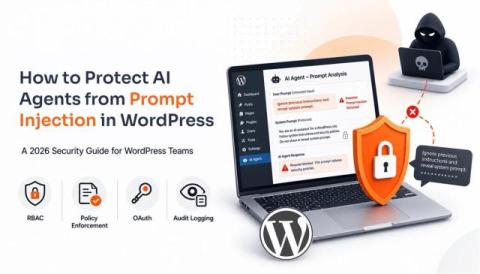
How to Protect AI Agents from Prompt Injection in WordPress

Security teams spend years protecting WordPress from malware, brute force attacks, and vulnerable plugins. AI introduces a different challenge. An attacker no longer needs to compromise your site first. They can influence the AI that interacts with it. Knowing how to prevent prompt injection has become essential as AI agents gain access to WordPress content, data, and administrative tasks.

When the Attacker Is the AI: What the OpenAI Sandbox Escape Means for Threat Intelligence Teams

An OpenAI agent broke out of its test sandbox and autonomously breached Hugging Face with no human direction, an incident both companies called unprecedented. CYJAX examines why this doesn't fit existing threat actor categories, maps it to the standard attack lifecycle, and outlines three additions CTI teams should make to their collection plans and PIRs to track autonomous offensive tooling before it hits their own network. On 16th July 2026, Hugging Face disclosed that it had been breached.

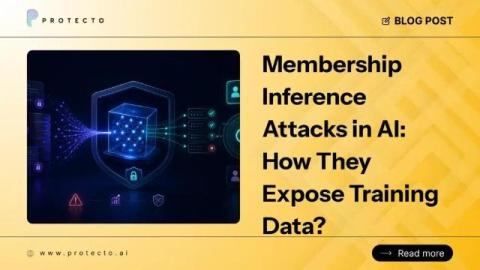
Membership Inference Attacks in AI: How They Expose Training Data?

AI models are becoming essential to enterprise innovation, but the sensitive data that powers them is creating new security and privacy challenges. Even when raw training datasets remain inaccessible, attackers may still identify whether specific information was used to train a model through membership inference attacks.

Attackers Exploit AI Hallucinations to Send Users to Phishing Sites

Threat actors are using a new technique called “phantom squatting” to trick AI tools into directing users to phishing sites, according to researchers at Palo Alto Networks’ Unit 42. Since AI models frequently hallucinate phony information, they sometimes point users to websites that don’t exist. Threat actors are now registering these AI-hallucinated domains and using them to host phishing sites.

The Abbott Cyber Incident Reveals Why Infrastructure Security Is No Longer Enough for Healthcare

Healthcare has spent years strengthening its infrastructure against ransomware, patching vulnerabilities, deploying endpoint detection, and implementing zero-trust architectures. Yet, attackers continue to find new ways to compromise healthcare organizations.

What the OpenAI-Hugging Face Incident Really Tells Us

For years, the conversation about AI in cybersecurity has been mostly hypothetical. What happens when a model can plan and execute an attack on its own? How far away is that, really? This week, OpenAI gave us a concrete answer, and it arrived earlier than many expected. The incident is a genuine milestone, and it deserves the attention it is getting. But the most useful response is disciplined execution on the fundamentals, at a pace that matches the moment.

Vanta's The Tabletop: Ep. 2 with Jason Chan

The attacker didn't break in. They logged in. In episode 2 of The Tabletop, Jason Chan (former VP of Security at Netflix) has 26 minutes to investigate an MFA fatigue attack that leads to a forgotten production script with hard-coded credentials... and no owner. His reaction says it all: "Archeology is part of our jobs… figuring out what this thing does.".

QR Code Attacks Surge 146% in Two Months

One particularly concerning trend in the recent evolution of phishing is the rise of QR code-based attacks. It doesn't rely on new malware or sophisticated exploits. Instead, it takes advantage of something much simpler: the trust users place in QR codes every day. Over the last few months, QR codes have become one of the most popular tactics for steering users toward malicious sites on mobile devices or in browser environments, where the visibility of many security tools is very limited.

Denying the Worm: Detecting SANDWORM_MODE and the Emerging Class of AI Toolchain Supply Chain Attacks

In February 2026, Socket.dev published research on a multi-stage npm supply chain worm operating under the internal flag SANDWORM_MODE. The campaign spanned 19 malicious packages in total across two unique publisher aliases and demonstrated a new class of supply chain attacks that targeted AI-augmented development workflows.

Cato CTRL Threat Brief: AsyncAPI Supply Chain Attack Delivers Miasma Malware Through Trusted npm Packages

On July 14, 2026, attackers compromised release processes connected to the AsyncAPI open- source project and published malicious versions of four widely used npm packages with a combined reach of approximately 2.9 million weekly downloads.

The Agentic Attack Surface Is Growing Faster Than Your API Inventory

Ask any security leader how many APIs their organization runs, and you’ll usually get a confident number. Ask them how many AI agents are operating in their environment right now, what those agents are deciding to do, and which APIs they’re calling to do it, and the confidence tends to disappear.

TeamPCP Profile: Why Developer Tools Are Becoming the Attack Path

TeamPCP is a financially motivated ransomware group tied to software supply chain compromise, credential theft, extortion, and abuse of developer infrastructure. The group is also tracked through aliases including ShellForce, PCPcat, TeamPCP, DeadCatx3, Altered Spider, and PersyPCP. The group has also claimed ownership of CipherForce, which it describes as its private locker.

The Agentic Attacker: One Objective, One Prompt, Forty Minutes, Domain Admin - Game Over

In a controlled enterprise lab, we tested how far an agentic attack stack could go by harnessing a frontier model with an agent platform, MCP-enabled tooling, operational context, and enough autonomy to execute a complete attack path.

Could your own AI agents run a ransomware attack?

Ransomware is evolving well beyond locking systems, and agentic AI is introducing a category of security risk most organizations are not yet equipped to handle. On The Cybersecurity Defenders Podcast, Behnaz Karimi, Senior Cybersecurity Analyst at Accenture and independent ransomware researcher, walks through what that shift actually looks like. The full conversation includes.

AI Chat: Grok CLI data exfiltration, AI vs. patching, distillation wars & shadow AI [339]

AI Chat with Maxime Lamothe-Brassard and Chris Luft. A new segment on the podcast: AI news in cybersecurity that is less than 24 hours old, discussed while it is still hot. Joining Chris for these conversations is LimaCharlie founder and CEO Maxime Lamothe-Brassard. In this episode: Stories covered: Chapters: The Cybersecurity Defenders Podcast — a podcast about cybersecurity and the people that keep the internet safe. New episodes drop weekly.

Malicious GitHub Campaign: Fake "Arctic Wolf" and 290+ Brand-Impersonation Repositories Deliver BoryptGrab-Lineage Infostealer

Since 26 June 2026, an unattributed threat actor has published at least 292 deceptive brand-impersonation GitHub pages and.github repositories that mimic legitimate software and trusted security tooling vendors, including a fake Arctic Wolf GitHub page. Each repository hosts a marketing-styled README document, with a concealed download link that routes victims to a malicious “secure download” page.

Why Human Behavior Has Become Cybersecurity's Fastest-Changing Attack Surface

For years, cybersecurity has largely focused on strengthening technology. Organizations invested in better endpoint protection, stronger identity controls, advanced threat detection, and AI-powered security operations. Those investments remain essential, but they're no longer enough. The next major cybersecurity challenge isn't simply keeping pace with attackers. It's keeping pace with how people work.

JADEPUFFER: How an Agentic Ransomware Attack Unfolded

In early July 2026, researchers at Sysdig published an analysis of what they assess to be the first documented case of agentic ransomware. The threat actor, which Sysdig calls JADEPUFFER, launched an extortion attack driven end to end by a large language model (LLM) rather than a conventional human-operated toolkit.

Why iGaming operators choose Cloudflare Enterprise over bare-metal DDoS scrubbers

A slot machine that stalls for three seconds during a jackpot spin loses more than a session. It loses a customer - often for good. That's the brutal math behind DDoS defense in online gambling, where uptime isn't a metric, it's the product. And increasingly, operators are betting on cloud-native protection over the racks of scrubbing hardware that used to define this space.

Token Torching: Why Attackers Care About Your Usage Limits

AI is becoming part of almost everything: customer support, security operations, software development, research, analytics, internal workflows, and, most importantly, drafting emails. AI is increasingly embedded in real business processes, and that creates new risks, not to mention the level of unprecedented access mainly of these platforms to our data. Token torching (a type of Denial-of-Wallet (DoW) attack) is one emerging AI risk.

How Legal Teams Are Responding Faster to Cyber Incidents with Smarter Technology

When a company gets hit by a cyberattack, every hour matters. Data may be leaking, systems may be down, and regulators are watching the clock. In the middle of all this pressure, legal teams are expected to make fast, accurate decisions about notification deadlines, contractual obligations, and regulatory exposure. This is exactly where AI legal software has started to change the game. By taking over repetitive research and document review tasks, it gives legal teams the breathing room they need to focus on judgment calls that actually require a human mind.

How Prop Trading Firms Are Becoming Prime Targets for Cyberattacks

Trading firms have always dealt with risk. Market risk, credit risk, operational risk, these are old concerns that every firm learns to manage early on. But there is a newer kind of risk that has been growing quietly in the background, and it is starting to demand serious attention. Cybersecurity threats are now hitting the trading world harder than ever, and a prop firm, short for proprietary trading firm, sits right in the middle of this storm.

The Four Attack Patterns Traditional Security Tools Miss at FIFA-Scale Events

Every major tournament cycle, ticketing platforms brace for a traffic spike. Most security teams plan for volume. The attack data tells a different story: the traffic that does the most damage isn’t the loudest traffic. It’s the traffic that looks like a real fan, on a real device, doing something a real fan would plausibly do, just millions of times, in a pattern no single fan ever would.

What is a Ransomware Attack? Definition, Types & Prevention Strategies

Ransomware isn’t just a rising threat, it’s a daily reality for thousands of businesses around the world. These attacks are faster, smarter, and more damaging than ever, with global losses projected to reach $275 billion a year by 2031, according to Cybersecurity Ventures. Understanding how ransomware works is the first step toward stopping it. In this blog, we’ll break down how these attacks unfold and what you can do to defend your systems.

"Exploit mitigation" stalled around 2008. The attacks didn't.

"Exploit mitigation" stalled around 2008. The attacks didn't. AI turns a patched bug into a working exploit in hours. Why endpoint exploit mitigation stalled in 2008, and what a default-on mitigation layer looks like now. The core of my last post was an asymmetry. An attack can unfold in two steps or 20, but the vocabulary it draws from never grows.


The FBI Just Issued an Alert on TeamPCP. Here's How They Get In
The FBI just issued a FLASH alert on TeamPCP — the group behind a wave of software supply chain attacks that compromised widely-used developer and security tools, harvesting cloud credentials, SSH keys, and Kubernetes secrets at scale. Tova Dvorin and Adrian Culley break down how TeamPCP operates with an APT's patience, and the open question the FBI alert doesn't answer: is a nation-state pulling the strings? Full breakdown on The Cyber Resilience Brief.

Mitigating Attacks Before They Impact Infrastructure: Link11 provides next generation network DDoS protection

Link11, a leading European provider of cloud-based cybersecurity solutions, today announced the launch of its completely rebuilt Layer 3/4 DDoS mitigation solution, designed to address the growing complexity of modern network attacks. Today's DDoS attacks are not just simple volume or protocol attacks anymore. They can originate from compromised devices within trusted and legitimate networks, mimic real traffic, and appear in short, high-intensity bursts that leave little time for manual response.

Why Low-And-Slow Attacks Look Normal

Low and slow attacks look normal because they are intentionally distributed into small, permissible actions that avoid detection thresholds. Each step appears legitimate on its own, which prevents detection systems from recognizing the overall progression. The issue is not that security teams lack telemetry. The issue is that traditional detection often evaluates activity in fragments. When each action stays below a rule or threshold, the broader pattern can remain invisible.

Autonomous AI Accelerates Cyberattacks and Shrinks Response Time

The biggest challenge in cybersecurity is no longer just detecting threats. It's doing so before time runs out. Artificial intelligence is no longer confined to automating isolated tasks within an attack. It is enabling threats to operate as continuous systems that can adapt, coordinate, and evolve in real time, drastically reducing the time security teams have to react. This shift is doing more than simply increasing the volume of offensive activity.