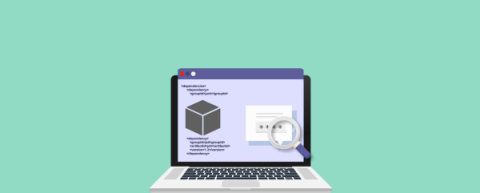
Typosquatting and dependency confusion are two common tactics used by hackers to exploit open-source package repositories. Understand how these attacks work and discover preventive measures to secure your infrastructure.
Let’s try something a bit different and take a look at some of Trustwave SpiderLabs’ Open Source Intelligence (OSINT) research findings, and exploitation of vulnerable buckets and domains. I published this research internally on February 3, 2023, and here are my findings. Today, I will share with you how deleted S3 buckets could become a liability or threat to your organization and highlight the importance of cybersecurity in data and asset management.
Threat actors repurpose old code in fake vulnerability PoC, the FBI and CISA issue a joint advisory for Snatch RaaS, and threat actors deploy new SprySOCKS Linux malware in cyberespionage attacks.
In our increasingly interconnected world, wireless networks have become the lifeblood of modern communication and productivity. However, this convenience comes with a price – the heightened risk of wireless attacks. In this in-depth blog, we will delve into the technical intricacies of safeguarding your network against wireless threats. Armed with this knowledge, you can confidently defend your wireless infrastructure against potential attackers.

Patience is one of those time-dependent, and often situational circumstances we experience. Few things define relativity better than patience. Think of the impatience of people who have to wait ten minutes in a line at a gas station, yet the thought of waiting ten minutes for a perfectly brewed cup of coffee seems entirely reasonable. It can’t be about the cost, since even the smallest cup of coffee is equal to, if not more expensive than a gallon of gasoline.
An account takeover attack is a form of identity theft in which a cybercriminal takes over someone else’s online account. Cybercriminals steal a victim’s login credentials without them knowing through methods such as brute force attacks and phishing. Once the cybercriminal gains access to a victim’s account, they change the login credentials to prevent the victim from logging back in.
The recent cyberattack on MGM Resorts International has raised serious concerns about the security of sensitive data and the vulnerabilities organizations face in today’s digital landscape. In this blog post, we will dive into the details of the attack based on the information currently available, analyze its root causes and discuss key takeaways to help organizations strengthen their security posture.
Malicious packages consist of software embedded with code that is capable of causing harm to an entire system or network. This is a rapidly growing threat affecting open-source software and the software supply chain. This attack method has seen a nearly 12,000% increase from 2022 to 2023, as reported by Synk. Some reasons include its technical feasibility, the potential for high returns, and the widespread distribution of open-source offerings, Common types of malicious packages encompass.
The latest MGM Resorts ransomware attack demonstrates why cyber insurance is critical as part of a multi-layered security strategy. In our last blog, we discussed the recent Las Vegas cyber incidents and how no organization is completely safe. The original cyber incident at MGM Resorts occurred on September 10, 2023 — nearly two weeks ago now – and the company and its valued customers are still feeling its effects.
Save The Children is an organization that specializes in helping children live healthy lives. The non-profit works in multiple countries, helping to provide for children's needs, especially in areas affected by war or tragedy. This organization was recently the target of a ransomware hacker group and suffered huge data losses as a result of that targeting.
In July of this year, the Transportation Safety Administration (TSA) released Security Directive Pipeline-2021-02D (SD-02D) Pipeline Cybersecurity Mitigation Actions, Contingency Planning, and Testing. The directive—aimed at owners and operators of liquid and natural gas pipelines or facilities designated as critical infrastructure—outlines requirements for enhancing cyber resilience through the implementation of a TSA-approved cybersecurity implementation plan (CIP).
Caesars Entertainment is one of the largest casino companies in the United States and is well-known for its loyalty program. The company serves countless customers in Las Vegas and elsewhere throughout the world. The massive loyalty program takes in data from all of Caesars customers, and that program may have just backfired on the company, potentially hurting many of its customers in the process.
MGM Resorts has announced that it will be shutting down 12 of its hotels and casinos in and around Las Vegas. The reason—a ransomware attack of unknown magnitude on servers containing a goldmine of customer data. MGM reports that it managed to detect the breach at a fairly early stage and notify the authorities and law enforcement, but the damage incurred is yet to be evaluated.
Picture this: Your IT infrastructure is breached by a nefarious actor, who then encrypts critical data and holds your organization hostage until a ransom is paid. Far from hypothetical, this is exactly what happened to multi-billion-dollar casino operator MGM Resorts International last week when hit with a ransomware attack – the latest in a string of large-scale, high-profile cyber security incidents.
In a world where ones and zeros are the new battleground, these threats, cyberattacks have become a significant threat to governments worldwide. The United States, with its vast array of government agencies and critical infrastructure, is no exception. Cybersecurity threats that impact the public sector range from state-sponsored attacks to financially motivated hacking groups. In this blog post, we’ll delve into the top 7 cyberattacks on the U.S.
What do ambulances in the UK, the Norwegian government, and a major Russian bank have in common? They were all victims of successful supply chain attacks in July 2023. Could you be next? It’s more likely than you think. Organizations entrust more sensitive data to vendors and third parties (like government agencies and critical infrastructure operators) than ever as part of their software development and operations.
If you still rely on legacy antivirus software to stop modern cyberattacks, this post is for you. Today’s adversaries are relentless. While many threat actors have adopted newer techniques such as data extortion, identity-based threats and in-memory attacks to achieve their goals, some continue to rely on tried-and-proven threats — and legacy software is no match for either.
Web cache poisoning is a cyber attack that wreaks havoc on unsuspecting websites. It exploits vulnerabilities by caching mechanisms that web servers, proxies, and content delivery networks (CDNs) use, compromising data integrity. Malicious actors can use cache poisoning to deliver malicious payloads, tamper with sensitive information, or redirect users to fraudulent websites. In this article, we’ll comprehensively explore web cache poisoning attacks and how they work.
Earlier this year, analysts in the AT&T Cybersecurity Managed Threat Detection and Response (MTDR) security operations center (SOC) were alerted to a potential ransomware attack on a large municipal customer. The attack, which was subsequently found to have been carried out by members of the Royal ransomware group, affected several departments and temporarily disrupted critical communications and IT systems.
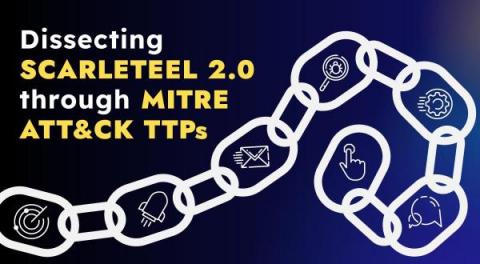
In this blog post, we will take a comprehensive dive into a real-world cyber attack that reverberated across the digital realm – SCARLETEEL. Through an in-depth analysis of this notorious incident using the MITRE ATT&CK framework, we aim to unearth invaluable insights into the operational tactics of cyber adversaries.
Discover insights from Sophos' 2023 Active Adversary Report. Credential leaks are now the leading way in for attackers and dwell times are getting shorter.
Just last week the UK’s NCSC issued a warning, stating that it sees alarming potential for so-called prompt injection attacks, driven by the large language models that power AI. The NSCS stated “Amongst the understandable excitement around LLMs, the global tech community still doesn‘t yet fully understand LLM’s capabilities, weaknesses, and (crucially) vulnerabilities.
Security Operations teams are the cornerstone of the fight against last-mile cybercrime in any organization. This is why they need the most advanced technologies possible.But the fight against cybercriminals isn’t simply a question of technology. Having a proactive attitude against possible cyberattacks is also key. This is where we see two essential concepts for all Security Operations teams: IoCs (indicators of compromise) and IoAs (indicators of attack). What is the difference?
Arguably, the most used device by an organization’s employees is their smartphone. Ensuring that anyone, from the CEO to a newcomer being onboarded, knows how to keep this device safe should be paramount. Why? Globally, more than 2 million attacks on mobile devices are reported each month, according to Statista. While the number of attacks has dropped precipitously from its peak of 6.5 million in October 2020, it is still dangerously high and a favorite threat actor attack vector.
New data shows a massive uptick in attacks across all industries, but a particularly worrisome growth in interest in targeting the public sector – and the indicators of who’s responsible may surprise you.
While spam tends to be dismissed as being more an annoyance, new research shows that there is a very real and ever-present threat in emails that are marked as “spam”. I’ve written plenty about phishing attacks that target bank customers. It’s nothing new. What’s interesting is a recent article by security researchers at BitDefender where banking-related phishing attacks are considered spam.