Security | Threat Detection | Cyberattacks | DevSecOps | Compliance

Vulnerability Assessment Methodology: How to Perform a Vulnerability Assessment

There are flaws in every organization’s IT infrastructure, along with software that requires patching. These flaws could arise from various sources, such as human errors during software coding. Hackers are always on the lookout to exploit these flaws and applications. However, by following a vulnerability assessment methodology to perform vulnerability assessments, organizations can identify these weaknesses before the cyber adversaries do.

Safeguard your Business and Device from Microsoft Office Vulnerabilities

The cyber risks of your organization demand a proactive and holistic approach. Enter the realm of comprehensive risk-based vulnerability management—a paramount strategy encompassing identifying, evaluating, mitigating, and monitoring vulnerabilities across your vital assets. Imagine achieving all this through a singular solution.

Take control of your Security: How to use Build-Info in your VCS to track vulnerable versions

Tracking vulnerabilities and compliance requirements is essential for maintaining application security in any software project. However, this process can be time-consuming and complicated, especially as new issues are identified. Fortunately, the JFrog build-info provides a comprehensive solution by recording key information about your project’s build. With build-info, you can easily track vulnerable versions of your project and ensure that your software stays secure.

How to implement SSL/TLS pinning in Node.js

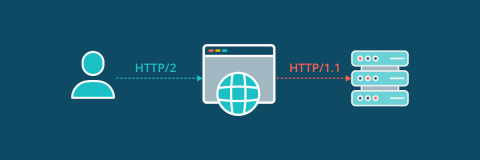
With threat actors performing man-in-the-middle (MITM) attacks, having an SSL/TLS certificate is no longer a valid reason to trust an incoming connection. Consequently, developers are increasingly adopting SSL/TLS pinning, also known as certificate or public key pinning, as an additional measure to prove the authenticity and integrity of a connection.

The Exploit Prediction Scoring System (EPSS) Explained

Cybersecurity is complex — anticipating cybersecurity events is another challenge altogether. We could argue that most events can be described by some probabilistic phenomenon, but attempting to define that phenomenon is where things get tricky. IT environment exposure presents real risks, but mathematically (or statistically), we can only aim to describe the likelihood of a cyberattack by accounting for a finite set of factors.

2023 OWASP Top-10 Series: API5:2023 Broken Function Level Authorization

Welcome to the 6th post in our weekly series on the new 2023 OWASP API Security Top-10 list, with a particular focus on security practitioners. This post will focus on API5:2023 Broken Function Level Authorization. In this series we are taking an in-depth look at each category – the details, the impact and what you can do about it.

The MOVEit Transfer vulnerability affects 40 million people worldwide

In over 600 data breaches, 40 million individuals were affected across the globe due to the MOVEit Transfer vulnerability. Between June 2023 and the present day, healthcare information, educational records, financial records, personal information, Social Security numbers, and insurance details have been either stolen or wiped out by threat actors who abused the MOVEit Transfer vulnerability.