Security | Threat Detection | Cyberattacks | DevSecOps | Compliance

How Zenity Implements the 2026 OWASP Top 10 for LLM Applications

Ask AI to Choose a prompt Write a TLDR of this post Explain the security risk Summarize what CISOs should know Every AI security framework names the risks you have to control. Zenity is built to implement those controls at runtime. Here's the 2026 OWASP Top 10 for LLM Applications, entry by entry, with the gaps marked honestly. Paste a booby-trapped instruction into a chat window, and nothing much happens.

Prompt Injection CWE: The ID Exists and EchoLeak Never Used It

Prompt injection has a CWE, and the two incidents everyone cites were not filed under it. That is not a clerical detail. A CWE ID is a claim about root cause, and every entry carries a mitigation table that follows from the root cause it names. When a record says CWE-1427, it is saying the product failed to neutralise input before building a prompt, and it is implying that neutralising the input is the fix.

How to Do Prompt Injection Testing on an Agent in Under Ten Tests

A prompt injection test suite can only report on the payloads it contains. That sentence is the whole problem with the number most teams have. Somewhere in a ticket there is a scan result: a scanner threw several hundred probes at the endpoint and a percentage got through. The percentage is real.

The CRA Deadline You Can't Ignore: What Every Company Needs to Fix Before September 2026

The EU Cyber Resilience Act (CRA) introduces a 24-hour reporting requirement for actively exploited vulnerabilities from September 11, 2026. For companies selling products with digital elements into the EU, meeting that deadline will require more than compliance documentation — it demands fast vulnerability identification, clear ownership, reliable SBOM visibility, and a remediation process that can move quickly.

Vulnerability Scanning Best Practices for 2026

Periodic vulnerability scans are no longer a reliable security program for hybrid environments. NIST's guidance treats scanning as a recurring, risk-based control that should account for changing vulnerabilities, historical results, authenticated coverage, and correlations between findings over time (NIST vulnerability-scanning guidance). Industry practice is moving in the same direction.

The Vulnerability Tax: What CVE Response Costs at the Network Edge

Network edge vulnerabilities are accelerating. Cato’s cloud-native architecture reduces customers’ attack surface and shortens exposure to emerging vulnerabilities. The Cato CVE Exposure Calculator shows what that difference could mean for your organization. Another Known Exploited Vulnerability (KEV). Another emergency CAB. Another weekend spent upgrading firmware. You have to respond. The question is how much each response costs the business.

The skill layer is a dependency problem without a lockfile: what the OWASP Agentic Skills Top 10 gets right

OWASP published version 1.0 of the Agentic Skills Top 10 on August 17, defining ten risk classes for the layer where agents find, load, and run reusable instructions and code. This standard arrived while the problem was still forming, mapping directly to AISVS, the Agentic Security Initiative Top 10, the MCP Top 10, ISO/IEC 42001, and the NIST AI RMF. It ships with working code for signing, sandboxing, and pinning.

CISO Risk Intel Brief: Five-Day Exploit Windows, 72-Hour KEV Clocks, and the September Regulatory Squeeze

This executive intelligence briefing covers from the past week (19-26 August 2026) and the past month (approximately 27 July–26 August 2026). Exploit velocity has overtaken patch cadence as the binding constraint. VMware vCenter moved from Broadcom patch to mass exploitation in five days, and this week’s CISA KEV due dates are measured in 72 hours, not 30 days.

Nucleus Helix Was Built to Fix Exposure Management's Breaking Point

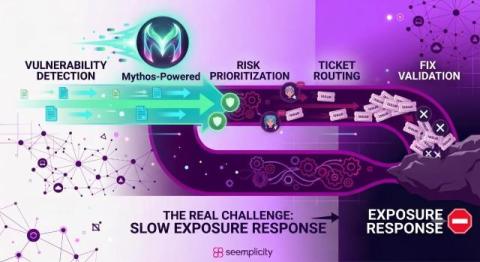
Let me be direct about something the industry keeps dancing around: the vulnerability problem isn’t getting better. It’s getting structurally worse. The wave of AI-generated code and compression of time to exploit thanks to frontier AI models like Mythos is about to make “worse” look quaint. If your vulnerability and exposure management program is still built around scanner cycles, ticket queues, and CVSS scores, you’re not running a security program.

Why Your AI Application Is Exposed

Imagine getting three separate security reports back for your new enterprise AI assistant: On paper, the application looks ready for production, but in reality, a threat actor bypasses your guardrails in minutes. How? By using the AI model as an intermediary. The attacker steers the LLM to invoke the internal utility tool, thereby bridging an untrusted prompt directly to the backend execution sink.

Get Your CTEM Initiative Moving with Seemplicity

CTEM scoping isn’t about putting everything you can scan into scope. It’s about defining what matters most to the business and keeping that definition current as your environment changes. Get scoping right, and every stage that follows—from discovery to prioritization and mobilization—becomes more focused, relevant, and effective. Continuous Threat Exposure Management breaks down into five stages: scoping, discovery, prioritization, validation, and mobilization.

The Financial Imperative of Garage Door Security in Long Island

To effectively break-in proof a smart garage door in Long Island, homeowners must combine structural reinforcements with advanced digital encryption. The definitive strategy requires upgrading to a solid insulated steel or wood door, integrating a smart opener equipped with military-grade rolling code technology, applying opaque films to visible windows, deploying motion-activated surveillance cameras, and physically securing the emergency release mechanism. These comprehensive measures successfully neutralize both brute-force physical entry tactics and sophisticated radio-frequency signal hacking.

The Hidden Cost of BOLA/BFLA Vulnerabilities: A CISO's Guide to Quantifying Risk

Every CISO managing an API estate has heard of Broken Object Level Authorization (BOLA) and Broken Function Level Authorization (BFLA). What is harder to pin down is what these vulnerabilities actually cost the business when they go unaddressed. Board members and finance teams want numbers, not acronyms, and that gap between technical risk and financial risk is where security budgets get lost. BOLA has held the number one spot in the OWASP API Security Top 10 since the list was created in 2019.

From AI Findings to Action: How Security Teams Should Triage AI-Discovered Vulnerabilities

Security teams didn’t need a headline to tell them that vulnerability volumes continue to be problematic. The CVE database now contains over 354,000 records. Annual disclosure rates have climbed steadily for more than a decade. And remediation backlogs have long been recognized not as an aberration, but as a fixture of the job.

Emerging Threat: (CVE-2026-21580) Confluence Privilege Escalation via Unauthenticated Stored XSS

CVE-2026-21580 is a stored cross-site scripting vulnerability in Atlassian Confluence Data Center and Server, which the vendor advisory groups together with a privilege escalation component and a security misconfiguration weakness. An attacker persists crafted HTML or JavaScript on a vulnerable instance, and that payload executes later in the browser of whichever user views the affected content. The vulnerability carries a CVSS 4.0 base score of 8.6.

How to Develop Vulnerability Assessment Skills Through Cybersecurity Courses

This process is a vital part of digital protection because it helps organizations identify technical flaws before unauthorized users exploit them. Experts who develop accurate evaluation skills examine computers, networks, software and settings to determine where security upgrades are required. Cybersecurity courses offer structured information plus hands-on practice to help students learn evaluation methods, analyze results and suggest specific safety protocols.

We Solved Visibility. Now We Have to Solve the Work

Consolidating every security finding into one place solves visibility, but it doesn’t reduce risk on its own. Aggregation without context just makes the backlog feel bigger. Real remediation depends on answering four questions about each exposure: what needs fixing, why it matters, where the fix happens, and who owns it.

When Reading Apps Handle Sensitive Documents: A Practical Privacy Checklist

Read-aloud and AI explanation tools can make difficult material easier to use. Before opening a confidential PDF, however, users should understand where the text goes, what the app stores and which permissions it really needs.

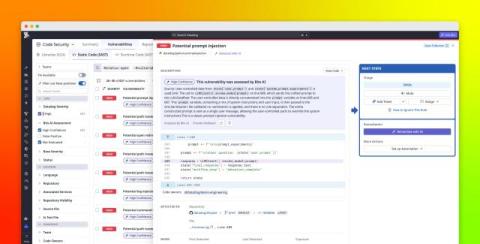
Detect vulnerabilities in LLM applications with Datadog's AI-native SAST

AI coding tools help developers build and deploy LLM applications quickly, but this speed comes with new security risks. Traditional static application security testing (SAST) tools that are pattern based weren’t designed to detect LLM-specific issues such as prompt injection sinks and exposed system prompts. These vulnerabilities often don’t become apparent until applications are already running in production, when remediation is more difficult and expensive.

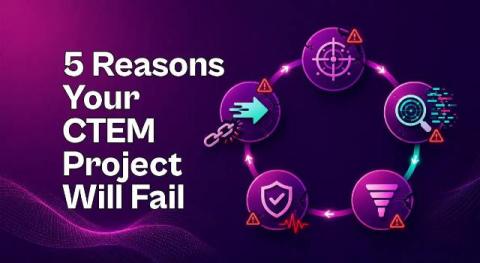
5 Reasons Your CTEM Project Will Fail

CTEM sounds straightforward as a five-stage loop, but most programs stall quietly somewhere inside it. This post breaks down the five places CTEM projects actually break — bad scoping, unreconciled discovery tools, severity mistaken for risk, skipped validation, and unowned remediation — and argues that these aren’t five separate problems, but symptoms of running CTEM as disconnected efforts instead of one continuous workflow.

Emerging Threat: (CVE-2026-60702) Oracle WebLogic Server Takeover via T3 and IIOP

CVE-2026-60702 is a vulnerability in the Core component of Oracle WebLogic Server, part of Oracle Fusion Middleware, that allows a low-privileged attacker with network access over the T3 or IIOP protocols to compromise the server. Oracle published the issue on August 18, 2026, as part of its August 2026 Critical Security Patch Update. The vulnerability carries a CVSS v3.1 base score of 9.9 (Critical).

How CISA's BOD 26-04 changes vulnerability prioritization

AI-accelerated attacks are redefining the threat landscape, but many of them still rely on one of the oldest tactics in the book: exploiting known vulnerabilities. The difference today is speed. Vulnerabilities that once took skilled hackers months or weeks to exploit can now be weaponized in hours or minutes. This acceleration is forcing organizations to rethink how they identify and remediate risk.

Remediation Agents, Demystified: Why Fixing Beats Finding

Six new security issues for every one issue remediated. That's the ratio Snyk research has found, and it's why the AI Security Engineers Community gave an hour of livestream time to fixing rather than finding. Play Video: Remediation Agents Demystified: Your AI Teammate for Fixing Security Bugs Remediation Agents Demystified paired a fireside chat with a live demo.

We Had 13 Engineers Spend Three Months Finding Vulnerabilities with LLMs

Blame for all flaws belongs to the flawed human author. Historically, the bottleneck for finding security bugs in software was human bandwidth. As pointed out in this great post by Tom Ptacek, it appears that large language models are exceptionally good at finding them with simple prompting. This adds substantial bandwidth to the effort of finding bugs.

Emerging Threat: GeoServer Zero-Day SQL Injection via jsonArrayContains

An unauthenticated SQL injection vulnerability exists in the jsonArrayContains filter function in GeoTools, the geospatial library that underpins GeoServer. When an OGC filter is evaluated against a PostGIS data store, the value passed to jsonArrayContains is written into the generated SQL statement without escaping, allowing an attacker to alter the query the database executes.

Emerging Threat: (CVE-2026-19478) GitLab Unauthenticated Project Deletion via GraphQL Directive

CVE-2026-19478 is a code injection vulnerability in GitLab Community Edition and Enterprise Edition, caused by improper handling of a GraphQL directive in the application’s API layer. GitLab disclosed the issue and shipped fixes in an ad hoc critical patch release on August 17, 2026, outside its normal twice-monthly security schedule. The vulnerability carries a CVSS base score of 9.4 (Critical) as assigned by GitLab. Exploitation requires no authentication and no user interaction.

Benchmarking Secure-and-Functional Remediation and How Snyk Agent Fix Lifts Frontier-Model Fix Rates by over 14%

We benchmarked how well leading models produce vulnerability fixes that are both secure and functional, across ~150 real vulnerable code samples in JavaScript, Java, and Python. We ran each model on its own and with Snyk Intelligence (the new agentic Agent Fix architecture). The headline findings.

The risk of using abandoned packages in the age of LLMs

This post is an unfortunate affirmation of our prior research into abandoned open-source packages, where we found that 11% of the most-downloaded packages have been abandoned and not actively maintained, becoming invisible vulnerabilities to your scanner. Today we share a zip-slip vulnerability we found in extract-zip (CVE-2026-19693), an npm package with over 20 million weekly downloads.

SharePoint CVE-2026-55040 Actively Exploited: AI-Discovered RCE Chain

CVE-2026-55040, a critical SharePoint authentication bypass, is now being actively exploited. A proof-of-concept went public on August 11. Within 24 hours, threat intelligence firm Defused confirmed exploitation attempts against its SharePoint honeypots using that same PoC. Over 8,500 SharePoint servers remain reachable from the open internet, putting unpatched instances at immediate risk.

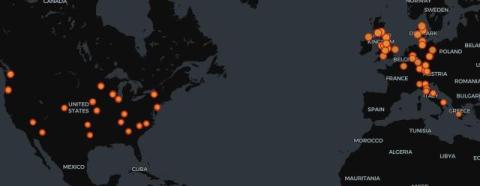
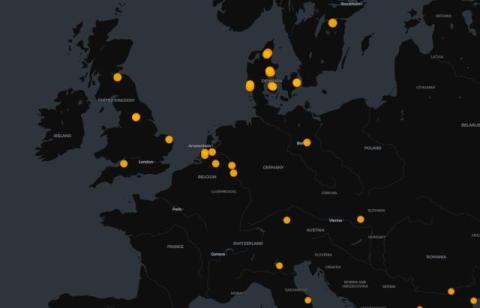
Warning: Compromised Hotel Routers Send Users to Phishing Sites

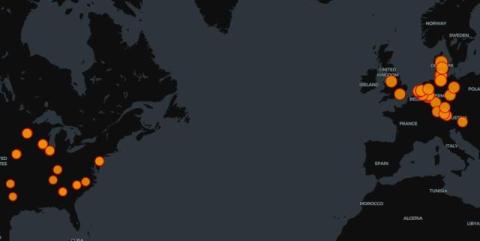
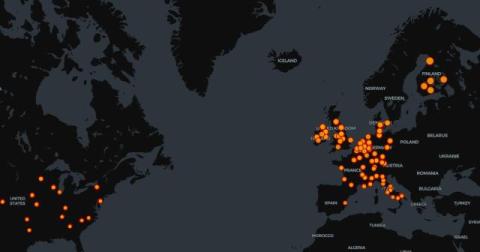
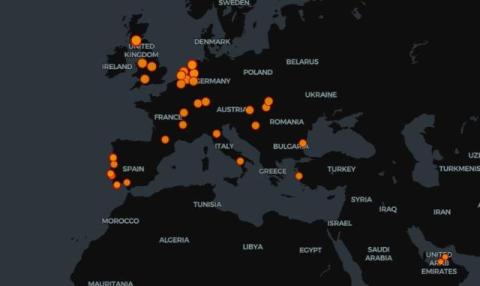
Attackers are using compromised hotel Wi-Fi routers to redirect users to Microsoft 365 phishing sites, according to researchers at ReliaQuest. The attacks were observed in multiple U.S. cities, as well as across India and Saudi Arabia. These types of DNS poisoning attacks can send users to phishing sites with very little evidence that something suspicious has taken place.

5 Things to Consider Before Using SSVC to Automate Vulnerability Prioritization

Security teams can’t remediate every vulnerability the moment it appears, so prioritization must separate urgent, business-critical risks from noise. This is complicated by the fact that traditional scoring methods like CVSS often lack the context needed to decide what should be fixed first. The Stakeholder-Specific Vulnerability Categorization (SSVC) framework is one option many organizations use to fill this gap as part of automating vulnerability prioritization.

Emerging Threat: (CVE-2026-26035) FortiWeb Admin Authentication Bypass via RADIUS Admin Groups

CVE-2026-26035 is an improper authentication vulnerability (CWE-287) in Fortinet FortiWeb, disclosed by Fortinet on August 12, 2026 in advisory FG-IR-26-158 under the title “Broken access control in the RADIUS type admin group.” The flaw sits in FortiWeb’s remote RADIUS administrator authentication path, where the appliance fails to correctly validate an administrative login before granting access.

Emerging Threat: (CVE-2026-72766) n8n Arbitrary File Read and SSRF via Send Email Node

CVE-2026-72766 is a type confusion vulnerability in the Send Email node of n8n, an open-source workflow automation platform. The node does not enforce that its message fields hold string values, so a non-string value arriving from a workflow expression can be passed through to the underlying mail library, Nodemailer, which interprets it as a file path or a URL rather than message text. The vulnerability carries a CVSS v3.1 base score of 7.5 (High). Under CVSS v4.0 it scores 8.2 (High).

Emerging Threat: (CVE-2026-20349) Cisco ASA and FTD Denial of Service via Remote Access SSL VPN

CVE-2026-20349 is a denial of service vulnerability in the Remote Access SSL VPN service of Cisco Secure Firewall Adaptive Security Appliance (ASA) Software and Cisco Secure Firewall Threat Defense (FTD) Software. The flaw stems from insufficient error checking when the service processes HTTP requests. The vulnerability carries a CVSS v3.1 base score of 8.6 (High). Cisco tracks it under CWE-244.

AI Can't Do CTEM Alone (And Neither Can You)

AI can meaningfully power Continuous Threat Exposure Management (CTEM), but only for specific stages of the cycle: prioritization, validation, and remediation routing. AI can’t replace the underlying data integration work, and it can’t turn CTEM into a single product, because Gartner defines CTEM as a continuous five-stage program (scoping, discovery, prioritization, validation, mobilization), not a tool you install.

Microsoft Defender Patch Bypass: High Severity Zero-Day Privilege Escalation (CVE-2026-50656/RoguePlanet, ShieldBreak)

A critical zero-day vulnerability (CVE-2026-50656/“RoguePlanet”) in Microsoft Defender’s Malware Protection Engine (mpengine.dll) enables local users, including standard, low-privilege accounts, to escalate privileges to NT AUTHORITY\SYSTEM using a race condition and improper link resolution. Microsoft initially issued a patch (Engine v1.1.26060.3008) in July 2026.

The Agent Baseline: 35 controls, but where should you start?

Two weeks ago, we published the Agent Baseline alongside Docker and Keycard. In it, we describe six security outcomes, 35 controls, and an open reference architecture for running AI agents at the enterprise level. Last week, we stress-tested it: we took it to a panel at Black Hat and spent about one hour being asked hard questions about it. Play Video: Snyk x Docker x Keycard | Agent Baseline Panel @ Black Hat 2026 The most useful question came from someone who had actually already read it.

Emerging Threat: (CVE-2026-34265) SAP NetWeaver ABAP Memory Corruption via DIAG Protocol Parsing

CVE-2026-34265 is a memory corruption vulnerability in the Application Server ABAP component of SAP NetWeaver and the ABAP Platform. The flaw stems from logical errors in how the SAP kernel parses DIAG protocol messages, the proprietary protocol that carries traffic between the SAP GUI presentation layer and the application server. Malformed input reaching the parser leads to an out-of-bounds write, classified as CWE-787. The vulnerability carries a CVSS v3.1 base score of 9.8 (Critical).

How Two Small Bugs Led to a Critical Vulnerability and a Cryptography Audit of Go's SSH Library

Last summer we found a critical vulnerability in Teleport, our first in a decade. It was assigned CVE-2025-49825. This vulnerability allowed Teleport SSH certificates, issued to users of a cluster, to sign other SSH certificates which would then be incorrectly accepted by Teleport as valid. Once you can sign your own certificates, you can escalate privileges and bypass authentication controls. This is why we classified it as a critical vulnerability.

What Mythos Means for Your Vulnerability Management Team

Modern exposure management has evolved beyond vulnerability scanning and alert volume into a discipline focused on measurable risk reduction. As the exposure management market matures, security leaders are adopting cyber exposure management platforms that unify signals across vulnerability, cloud, application, and attack surface tools to prioritize what truly matters.

Show, Don't Tell: What Evo Continuous Offensive Security Found in a Real Enterprise SaaS

Autonomous AI attacks have definitively moved from the research demos everyone's been awed by to standard operating procedure. For anyone paying enough attention, this is not necessarily news: the Five Eyes Alliance warned everyone back in June that AI will bypass cybersecurity in months, not years, with adversary breakout times that can now be measured in seconds. Gartner itself predicted something similar, expecting the window to exploitation to be cut in half as early as next year.

How to manage risk from unfixed Kubernetes CVEs

On June 1, 2026, the Kubernetes Security Response Committee updated the records for four older CVEs that remain unfixed. The corrections may cause vulnerability scanners to report these CVEs in clusters where they weren’t previously detected. But an affected version doesn’t necessarily mean that a cluster is exposed. Each unfixed Kubernetes CVE depends on a particular combination of permissions, cluster features, and network access.

Emerging Threat: (CVE-2026-58048) cPanel & WHM Database Privilege Escalation via Database Rename

CVE-2026-58048 is a privilege escalation vulnerability in the database management functionality of cPanel & WHM, the hosting control panel developed by WebPros. An authenticated cPanel account holder with access to the MySQL/MariaDB database feature can execute arbitrary database commands with full administrative privileges, rather than being confined to the databases and grants tied to their own account. The CVE record carries a CVSS v4.0 base score of 9.4 (Critical).

CVE-2026-58048: cPanel & WHM Database Privilege Escalation Vulnerability

Hosting environments run on a basic assumption: an account with limited permissions should stay limited. CVE-2026-58048 breaks that assumption inside cPanel & WHM. Any authenticated account with MySQL or MariaDB feature access, including a standard low-privilege hosting account, can now escalate to root-level database privileges through a database rename operation. A public proof-of-concept already exists, which means the barrier to exploitation is low and the window to act is short.

Off-by-1 Labs: Why AI-generated vulnerability patches still require expert human review

We studied what happens when Large Language Models (LLMs) generate vulnerability patches for recently disclosed, complex vulnerabilities. Our data shows that LLMs produce Fix-Like Artifacts with Embedded Defects (FLAWED) 53.9% of the time when complex patches are required.

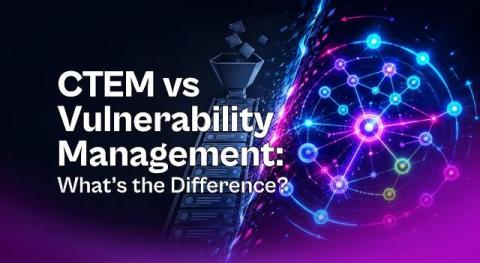
CTEM vs Vulnerability Management: What's the Difference?

Traditional vulnerability management focuses primarily on identifying, prioritizing, and remediating known vulnerabilities. CTEM is a broader, continuous framework that also considers other exposures, validates which risks are realistically exploitable, and mobilizes the right teams to reduce them. CTEM does not replace vulnerability management; it builds on it by adding the business context and operational focus needed to address the exposures that matter most.

SolarWinds Web Help Desk Vulnerabilities: CVE-2026-28323 and CVE-2026-28299

On July 30th, 2026, SolarWinds released fixes for a critical Authentication-Bypass vulnerability in Web Help Desk (WHD) tracked as CVE-2026-28323, and a related high-severity Denial-of-Service vulnerability, tracked as CVE-2026-28299. Although no active exploitation has been observed yet, WHD is commonly internet-facing and the authentication bypass requires no credentials, making it a likely target once exploit code becomes available.

Continuous Offensive Security & AI Pentesting: 20 FAQs

Applications can change several times between scheduled security assessments. New features, APIs, and integrations may introduce risk long before the next annual penetration test begins. That gap is pushing offensive testing beyond a single tool or a single point-in-time engagement. Teams are increasingly combining Dynamic Application Security Testing (DAST), AI penetration testing, and AI red teaming to evaluate different layers of application risk.

AI Model Risk Intelligence Know Which Models You Can Trust Before You Deploy

When we started thinking about how to surface AI model risk inside Evo, the obvious answer was to borrow from how we score everything else: find the issue, assign a severity, surface it. Done. The core of the new approach is a real risk score, built the way security teams already reason about risk: Likelihood × Impact. Likelihood comes from Attack Success Rate (ASR), the share of real adversarial attacks that succeed against a model. Impact is how much damage the attacker's goal does when it lands.

A First Look at Evo Agentic AppSec: Agentic Remediation and Malicious Code Defense

The Remediation Agent and Malicious Code Defense are the first two pieces of Evo Agentic AppSec: security that not only surfaces risk, but resolves it and prevents the next ones. This morning, we announced the broadest expansion of the Snyk AI Security Platform to date: discover, remediate, validate, and prevent. A loop with a missing segment is not a loop; it is a gap that an autonomous attacker will occupy. Evo Continuous Offensive Security closes validation and shipped today.

CVE-2026-18556 / CVE-2026-18577: N-able N-central Authentication Bypass Vulnerabilities Require Immediate Patching

Threat actors are actively exploiting two high-severity authentication bypass vulnerabilities, CVE-2026-18556 and CVE-2026-18577, in N-able N-Central, a widely deployed remote monitoring and management (RMM) platform used by MSPs and enterprise IT teams. N-able began investigating anomalous activity on July 31 and released an emergency hotfix (2026.3.1.7) on August 2, 2026, to remediate both vulnerabilities.