Security | Threat Detection | Cyberattacks | DevSecOps | Compliance

What CVE-2025-32433 Is and Why It Matters ?

A new critical vulnerability—CVE-2025-32433, also known as the Erlang SSH Chainbreaker—allows attackers to execute commands without authentication. This video breaks down what the flaw is, how the exploit works, why it’s dangerous, and which systems are at risk. In Part 1, you’ll learn: Severity: CVSS 10.0 — Exploited in the wild Risk: Full host compromise, data theft, operational disruption.
Exposure Management Platforms Explained

If you work in cybersecurity, you likely know the feeling of the "CVE Treadmill." It is the exhausting cycle where security teams scan systems, log thousands of vulnerabilities, prioritize them by a static severity score, and send tickets to IT to patch them. Then, the next day, they do it all over again. The problem is that the treadmill is moving faster than you are.

Bug Bounty Programs (2025) | Definition, Platforms & Costs

“Tech giants pay hackers millions to hack them – on purpose.” What once sounded like a risky experiment has now become standard practice in cybersecurity. Bug bounty programs have moved from the fringes into the mainstream because traditional defenses alone can’t keep up with today’s scale and sophistication of attacks.

Apache Tomcat Vulnerability CVE-2025-55752: Risk & Protection

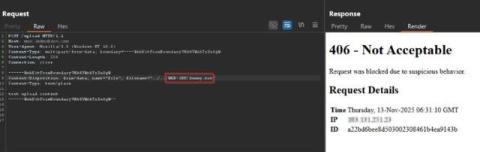
CVE-2025-55752 exposes a dangerous path traversal flaw in Apache Tomcat caused by a rewrite and decoding regression. This video breaks down how the bug works, why it becomes severe when combined with HTTP PUT, which versions are affected, and what teams must do to patch or mitigate it. We also show how WAAP protection blocks exploitation attempts even before servers are updated.

Shai-Hulud: The Second Coming Hits npm Users

Once again, the npm supply chain has been compromised, putting developers relying on these vital open source components at risk. On November 24th, a sophisticated attack that borrows techniques from the Shai-Hulud malware used in the npm hijacking this past September was discovered. This is not an isolated incident. It’s a continuation of an existing campaign that is now abusing CI/CD pipelines, and GitHub automation to spread faster and steal more secrets than before.

Introducing Astra Cloud Vulnerability Scanner: Multi-Cloud Security Built for Scale

1.8X, that’s how much cloud vulnerabilities have skyrocketed over the past year, fueled not just by attackers but by the routine tweaks teams make every day. Modern vulnerability scanners were built to find everything that looks risky. They just never learned to tell what actually is. Dashboards lit with thousands of “critical” alerts, endless CSVs, and reports that read like alarm bells on repeat. Yet less than 10 percent of those alerts ever lead to a real exploit.

Snyk Log Sniffer: AI-Powered Audit Log Insights for Security Leaders

Snyk empowers organizations to build fast and stay secure. As security and engineering teams scale their use of Snyk across the enterprise, understanding what's happening across your group and organizations becomes critical–from API integrations and user access patterns to policy changes and security events. However, raw audit logs alone can be overwhelming and difficult to interpret. Security leaders need instant visibility into critical events, risk patterns, and user activity.

CVE-2025-61757: Critical Pre-Auth RCE in Oracle Identity Manager

A newly disclosed vulnerability, CVE-2025-61757, exposes Oracle Identity Manager (OIM) to unauthenticated remote code execution (RCE). The flaw affects OIM versions 12.2.1.4.0 and 14.1.2.1.0 and carries a CVSS 9.8 Critical rating. CISA has added it to the Known Exploited Vulnerabilities (KEV) catalog — meaning active exploitation is confirmed.

The Hidden Vulnerabilities Sitting On Everyday Work Devices

In the modern workplace, the hum of productivity is typically accompanied by the quiet, persistent glow of computer monitors, the chime of incoming emails, and the seamless operation of countless software applications. These devices, such as laptops, desktops, smartphones, and tablets, are the engines of business operations. However, beneath the surface of this digital efficiency lies a landscape of hidden vulnerabilities. These aren't the flaws of sophisticated cyber-attacks, but the mundane, overlooked security gaps inherent in the very tools employees use every day.

Built for What's Next: How Nucleus Became the Exposure Assessment Platform for a New Era

For nearly a decade, we’ve been building Nucleus with a clear mission: to help security teams make faster, smarter, and more business-aligned decisions about what to fix first. When we started, the world called it vulnerability management. Today, the industry calls it exposure assessment. To us, that evolution isn’t just semantics, t’s the culmination of years spent redefining how organizations understand and reduce risk.

From Hats to Heartfelt Advice: Takeaways from a Fireside Chat with CISO @ Crocs

The fireside chat with Crocs CISO Lena Taylor at our Denver event brought together cybersecurity professionals, allies, and leaders for an evening of honest insight and community. From redefining work-life balance to knowing when to pursue new opportunities, Lena shared grounded, real-world wisdom that resonated far beyond career advice. Here’s a look at the biggest takeaways from the discussion and why the night left such a lasting impression.

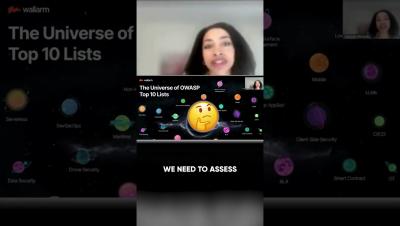
The Missing Link in OWASP is Found: Business Logic Abuse#owasp #owasptop10 #businesslogic

For years, security lists focused on technology (Cloud , Mobile , Serverless ). We desperately needed a list that focused on the core problem: flawed application logic, regardless of the stack. The OWASP Top 10 Business Logic Abuse (BLA) list fills that critical, architectural gap. Why? Because exploitation often happens between technologies, not within them. We must be able to categorize and talk about these intricate logic threats in a technology-agnostic way.

More Security, Speed, and Compliance: New Features from Seal Security

We are excited to announce a new wave of updates designed to streamline your development process, enhance security auditability, and dramatically improve platform performance. At Seal Security, our focus remains on giving you the easiest and most effective way to manage and remediate open source vulnerabilities. Your feedback drives our innovation, and we're thrilled to introduce capabilities that make the platform faster, cleaner, and more compliant.

OWASP Top 10 2025 Edition - The 443 Podcast - Episode 350

This week on the podcast, we cover OWASP’s update to the top 10 web application security weaknesses and its changes from the 2021 list. We also cover a recently uncovered adversary-in-the-middle campaign that’s pushing malicious software updates to targeted systems. We conclude with our opinions on Microsoft’s latest AI features, which are coming to Windows.

SHA1-Hulud, npm supply chain incident

On November 24th, 2025, we identified a new supply chain attack in the npm ecosystem, referred to as SHA1-Hulud. We believe this is a second wave of the Shai-Hulud attack, which occurred in September 2025. Snyk will continue monitoring this active incident until it is resolved. Updates on this incident will be on our trust center.

Emerging Threat: CVE-2025-41115 - Critical SCIM Privilege Escalation in Grafana Enterprise

CVE-2025-41115 is a critical privilege escalation and user-impersonation vulnerability in Grafana Enterprise. The issue occurs within the SCIM (System for Cross-domain Identity Management) provisioning feature. When SCIM is enabled, Grafana incorrectly maps the externalId field supplied by a SCIM client to an internal user.uid.

CVE-2025-9501: Identifying High-Risk WordPress Instances Using W3 Total Cache

CVE-2025-9501 is a critical remote code-execution vulnerability affecting W3 Total Cache versions prior to 2.8.13, a plugin used by more than a million WordPress sites to improve performance and caching. The issue lies in the plugin’s _parse_dynamic_mfunc handler, which can process user-controlled inputs inside dynamic fragments.

Remediation Agent: Step-By-Step Guidance for Faster Fixes

Remediation shouldn’t require research. Seemplicity’s Remediation Agent embeds clear, asset-specific, step-by-step guidance directly into every finding – eliminating ambiguity, reducing rework, and accelerating time-to-resolution. Learn how it standardizes fixes, supports all skill levels, and removes one of the biggest bottlenecks in exposure management.

Elevating and Evolving the Role of the Channel

Nucleus Manager of Channel Enablement and Training, Tony Ramirez, talks about his recent recognition in CRN's 100 people to know for the channel. During this conversation, he also discusses the evolving role of channel leaders in cybersecurity, the importance of continuous threat exposure management (CTEM) as a process rather than a tool, and the need for contextual understanding in vulnerability management. Tony emphasizes the significance of engaging non-security stakeholders and the opportunities for the channel to educate clients on security posture and vulnerability management.

FortiWeb CVE-2025-58034: Exploited Zero-Day Command Injection in WAF

Dissecting the active-in-the-wild OS command injection vulnerability and its implications for enterprise threat monitoring In November 2025, threat intelligence teams began warning of a newly discovered zero-day vulnerability in a widely-deployed web application firewall appliance. The vulnerability — CVE-2025-58034 — allows authenticated attackers to execute arbitrary OS commands via crafted HTTP requests or CLI commands.

Obscure MCP API in Comet Browser Breaches User Trust, Enabling Full Device Control via AI Browsers

SquareX released critical research exposing a hidden API in Comet that allows extensions in the AI Browser to execute local commands and gain full control over users' devices. The research reveals that Comet has implemented a MCP API (chrome.perplexity.mcp.addStdioServer) that allows its embedded extensions to execute arbitrary local commands on users' devices, capabilities that traditional browsers explicitly prohibit. Concerningly, there is limited official documentation on the MCP API.

OWASP Named Software Supply Chain Failures. Now It's Time to Fix Them.

Since OWASP unveiled its 2025 Top 10, one of the most-discussed items has been A03: Software Supply Chain Failures. For many in AppSec, this came as no surprise; enterprise software’s reliance on open source has become one of its greatest strengths and arguably its biggest liability.

UK Cyber Security and Resilience Bill: What you need to know

The UK government introduced the Cyber Security and Resilience Bill to Parliament on November 12th, 2025. Science, Innovation and Technology Secretary Liz Kendall stated: “Cybersecurity is national security. This legislation will enable us to confront those who would disrupt our way of life.” If you work in healthcare, energy, water, transport, or supply IT services to these sectors, this legislation will directly affect how you manage cybersecurity.

How Managed Cybersecurity Services Reduce Risk and Enable Business Growth

Today's organizations of all sizes face increasing pressure to protect sensitive data, maintain compliance, and defend against sophisticated cyberattacks. At the same time, they must continue innovating, scaling, and delivering exceptional customer experiences. This dual mandate-security and growth-can feel at odds for many companies.

How Outpost24 delivers operational resilience for DORA

The EU’s Digital Operational Resilience Act (DORA) has just turned a year old. This regulation represented a fundamental shift in how the financial sector manages ICT risk, moving beyond traditional compliance to demand continuous, demonstrable digital operational resilience. A year on, the focus has changed. Organizations can no longer just avoid cyber incidents. They need to prove they can withstand, respond to, and recover from disruptions quickly and effectively.

CVE-2025-55752: Apache Tomcat Path Traversal Vulnerability

Apache Tomcat continues to play a central role in hosting Java-based web applications across enterprises, cloud services, and government systems. Its reliability and lightweight architecture make it a go-to choice for developers, but its ubiquity also means that a single vulnerability can have widespread security implications. CVE-2025-55752, disclosed in late 2025, highlights how a subtle processing regression can evolve into a high-impact vulnerability under the right conditions.

CVSS Is a Little Bit of Risk: Rethinking CVSS in Vulnerability Prioritization

The best part about my job is that I sometimes get to make some controversial statements. Well, as controversial as things can be in a niche area of cybersecurity like “what is a reasonable measure of vulnerability risk?” Along with my colleague Sander Vinberg we got to explore this question earlier this year at the second Annual VulnCon conference in Raleigh. Even though it’s only been held twice, it is quickly becoming one of my favorite conferences.

Django Vulnerabilities Expose Apps to SQL Injection & DoS Attacks

The Django Software Foundation has released critical security fixes for CVE-2025-64459 (SQL Injection) and CVE-2025-64458 (Denial of Service) vulnerabilities. These vulnerabilities affect query construction and redirect handling in Django, putting applications and data at risk. See how AI-powered AppTrana stops these attacks from Day 0.

Cisco SNMP exploit targets IOS and IOS XE devices: What it means for your network

SNMP has always been one of the quiet but crucial components of network management. It helps administrators monitor devices, automate configurations, and keep operations running smoothly. On Sept. 24, 2025, Cisco disclosed a high-severity vulnerability, identified as CVE-2025-20352, affecting the SNMP implementation in its IOS and IOS XE software. This issue allows attackers with valid SNMP credentials to cause a denial of service or execute arbitrary code on the affected devices.

The researcher's desk: FortiWeb Authentication Bypass (CVE-2025-64446)

Welcome to The researcher’s desk – a content series where the Detectify security research team conducts a technical autopsy on vulnerabilities that are particularly interesting, complex, or persistent. For this issue, we look at CVE-2025-64446, a critical authentication bypass that has been actively exploited in the wild, targeting Fortinet’s Web Application Firewall (WAF) product, FortiWeb.

Security Alert: CVE-2025-64446 Fortinet FortiWeb Actively Exploited

A critical zero-day, CVE-2025-64446, path-traversal vulnerability in Fortinet FortiWeb, the company’s Web Application Firewall (WAF), is being actively exploited in the wild to create unauthorized administrator accounts on exposed systems. This flaw allows unauthenticated attackers to gain complete administrator access to affected devices.

CVE-2025-64446: Critical Fortinet FortiWeb Path Traversal Vulnerability Exploited to Create Administrative Accounts

On November 13, 2025, open source reporting began detailing active exploitation of a silently patched Fortinet FortiWeb vulnerability. The flaw is a path traversal issue in the FortiWeb web application firewall (WAF) that allows an unauthenticated threat actor to create new administrative users on exposed devices. The following day, November 14, Fortinet officially addressed the vulnerability in an advisory, tracking it as CVE‑2025‑64446.

SessionReaper: Magento's Critical CVE-2025-54236 Breakdown

SessionReaper (CVE-2025-54236) is one of the most dangerous vulnerabilities discovered in Adobe Commerce and Magento Open Source. This pre-authentication flaw enables attackers to hijack customer sessions and, in many real-world setups, escalate to remote code execution (RCE), allowing them to drop persistent PHP web shells on your servers.

Microsoft Issues Emergency Patch for Windows Server Update Services RCE Vulnerability CVE-2025-59287

LevelBlue Labs is tracking a severe vulnerability in Windows Server Update Services (WSUS), CVE-2025-59287, that allows attackers to remotely execute code without authentication and is being exploited by threat actors to compromise vulnerable Windows Server users.

The researcher's desk: CVE-2025-59287

Welcome to The researcher’s desk – a content series where the Detectify security research team conducts a technical autopsy on vulnerabilities that are particularly interesting, complex, or persistent. The goal here is not to report the latest research (for which you can refer to the Detectify release log); it is to take a closer look at certain vulnerabilities, regardless of their disclosure date, that still offer critical lessons.

From Vulnerability Management to Exposure Management: The Platform Era Has Arrived

AI has collapsed the vulnerability exploit lifecycle. Adversaries now discover, weaponize, and exploit exposures across hybrid environments in minutes — chaining together misconfigurations, unpatched systems, and stolen credentials to gain rapid access and move laterally across environments. For defenders, the speed of the adversary changes everything.

Why AppSec Teams Need Authority to Match Their Accountability

Picture this: a critical vulnerability hits your dependency tree. Security flags it as high-priority, but the development team pushes back because the upgrade breaks three integration tests. Sound familiar? You’re not alone. It’s the same story for countless organizations, and it potentially costs your team countless hours of development time and revenue lost.

Django Vulnerabilities Expose Apps to SQL Injection and DoS Attacks

The Django Software Foundation has rolled out important security fixes addressing two serious vulnerabilities that could let attackers manipulate databases and disrupt application availability. The vulnerabilities such as CVE-2025-64459 (SQL Injection) and CVE-2025-64458 (Denial of Service), were found in commonly used functions of the Django web framework. These vulnerabilities affect how Django processes queries and handles redirects, especially when user-supplied input is not properly validated.

Honored to Be Named a Challenger in the 2025 Gartner Magic Quadrant for Exposure Assessment Platforms

We’re proud to share that Nucleus Security has been named a Challenger in the inaugural 2025 Gartner Magic Quadrant for Exposure Assessment Platforms (EAPs) — recognized for our completeness of vision and ability to execute. This marks a significant milestone not only for Nucleus, but for the evolution of our entire industry. For the first time, Gartner has formally recognized Exposure Assessment Platforms as a distinct category.

Find the Fixer: The AI Agent Bringing Order to Ownership

Assigning remediation tasks across an enterprise organization can feel like navigating a maze of inconsistent tags, overlapping teams, and unclear ownership. It’s one of the most persistent operational challenges in vulnerability and exposure management, and one of the biggest barriers to speed. Each scanner and cloud platform comes with its own tagging logic. One system uses ProductOwner, another productowner. Some tags are outdated, others duplicated, and many have no clear purpose.

Why Every Tech Company is Talking About OWASP for AI (and You Should Too)

AI is changing everything—but with innovation comes new risks. In this episode of AI on the Edge, we dive deep into OWASP's Top 10 for Large Language Models with security leader Steve Wilson (Exabeam). Discover why every tech company is suddenly talking about LLM security and how you can stay ahead. Inside this episode: Why traditional security doesn’t work for AI Learn from Steve’s new book The Developer’s Playbook for LLM Security and get actionable tips to protect your AI systems.

OWASP Top 10 Business Logic Abuse: What You Need to Know

Over the past few years, API security has gone from a relatively niche concern to a headline issue. A slew of high-profile breaches and compliance mandates like PCI DSS 4.0 have woken security teams up to the reality that APIs are the front door to their data, infrastructure, and revenue streams. OWASP recently published its first-ever Business Logic Abuse Top 10 List; a clear indication that the industry is taking API security and all its nuances seriously.

CVE-2025-42890: Hard-Coded Credentials in SAP SQL Anywhere Monitor (Non-GUI)

On November 11, 2025, SAP published a security advisory as part of their November security patches, addressing a maximum severity vulnerability identified as CVE-2025-42890 in SQL Anywhere Monitor (Non-GUI) version 17.0. The vulnerability involves hard-coded credentials, which exposes system resources to unauthorized users and allows threat actors to execute arbitrary code without authentication.

The Agentic OODA Loop: How AI and Humans Learn to Defend Together

Last week at the AI Security Summit, something profound happened. The first cohort of AI Security Engineers in the world earned their certification — a milestone that symbolized not just new skills, but a new mindset. For decades, security has been about control. Rules, gates, and policies that define what’s safe and what’s not. But the age of Agentic AI — systems that perceive, reason, act, and learn — is forcing us to evolve beyond static defenses.

Intel Chat: TruffleNet exploit, React Native vulnerability, SesameOp OpenAI & SkyCloak [265]

In this episode of The Cybersecurity Defenders Podcast, we discuss some intel being shared in the LimaCharlie community. Support our show by sharing your favorite episodes with a friend, subscribe, give us a rating or leave a comment on your podcast platform. This podcast is brought to you by LimaCharlie, maker of the SecOps Cloud Platform, infrastructure for SecOps where everything is built API first. Scale with confidence as your business grows.

Falcon Exposure Management Network Vulnerability Assessment: Demo Drill Down

CrowdStrike Falcon Exposure Management simplifies network security with its Network Vulnerability Assessment, offering a modern way to secure network infrastructure without complex legacy tools. Learn how the system utilizes your existing Falcon sensors to provide unmatched continuous visibility-instantly correlating new threats against your assets—and leverage authenticated scanning for deeper, more complete vulnerability inspection.

The Role of AI Security Agents in Modern Exposure Management

AI security agents are reshaping how organizations manage exposure. This blog explores where they deliver the most impact — from smarter prioritization to faster ownership mapping and assisted remediation — and how this shift moves security teams from automation to autonomy.

Why Mid-Market Organizations Can't Afford to Ignore Open Source Vulnerabilities

There are millions of dollars on the line for companies relying on open source. Failure to stay CVE-free can lead to churn, closed-lost deals, and countless engineering hours wasted chasing fixes instead of shipping features. Unlike enterprises with large budgets and compliance buffers, a single failed review, missed SLA, or unresolved CVE can derail $5M–$20M in just one quarter. This is the difference between hitting growth targets or missing them entirely.

Three New High-Severity Vulnerabilities in runc: What You Need to Know

Within 24 hours, three new high-severity vulnerabilities were disclosed in runc, the low-level runtime that underpins most container platforms, including Docker, containerd, Kubernetes, and nearly every major cloud provider’s managed Kubernetes service. These vulnerabilities (CVE-2025-31133, CVE-2025-52565, CVE-2025-52881) allow a malicious container image to break out of the container boundary and affect the host machine directly.

Scaling Exposure Management: Program Maturity and Continuous Optimization

Building an exposure management program is just the beginning of a long journey. True success comes from scaling that program through continuous optimization, measurable progress, and organizational alignment. As enterprises expand their digital footprint, exposure management must evolve from reactive vulnerability remediation to a proactive, data-driven discipline that continuously strengthens resilience.

Clarity in Exposure Management

Vulnerability reports shouldn’t read like riddles. Seemplicity’s Clarity AI Agent transforms dense, technical scanner output into clear, contextual language everyone can understand — bridging the gap between security, IT, and engineering. Discover how Clarity makes every finding readable, actionable, and ready for remediation.
APT-C-60 Exploits Zero-Day Vulnerabilities: Inside the SpyGlace Loader, COM Hijacking, and C2 Infrastructure

The cyber espionage landscape continues to evolve in sophistication and stealth—and among the more notable actors is APT-C-60. In recent months, this adversary has significantly escalated its tactics by leveraging zero-day vulnerabilities and orchestrating multi-stage campaigns to deploy the SpyGlace back-door.

Seemplicity's AI Agents: Clarity

Meet Clarity, the first of Seemplicity’s four new AI Agents transforming how security teams understand and act on vulnerabilities. Instead of cryptic scanner outputs and confusing CVE text, Clarity turns dense technical data into clear, actionable narratives — explaining what happened, why it matters, and how to fix it. With Clarity, you can: Translate vulnerability data into plain language Improve collaboration between security, IT, and engineering Accelerate remediation and reduce exposure fatigue.

Snyk Studio brings security scanning and automated fixes to Factory's Droids

Snyk is thrilled to announce our partnership with Factory, which brings Snyk Studio directly into Droid workflows. AI agents, such as Factory’s Droids, can generate thousands of lines of code at incredible speed and are transforming modern software development. Yet every time a Factory Droid quickly ships a feature in minutes vs. days, refactors an entire module, and updates dependencies across a repo, it’s potentially introducing vulnerabilities at the same pace.

What is Vulnerability Management Lifecycle? Different Stages and Best Practices

Do you know what’s common between downtime, data leaks, and compliance-related penalties? An issue known as an unpatched vulnerability. Tracking and managing system weaknesses is no longer a one-time task. It’s a full-time responsibility now because of the rise of cloud, IoT, and remote endpoints. To stay ahead of potential breaches, follow a continuous and methodical approach known as the vulnerability management lifecycle.

Critical RCE Vulnerability CVE-2025-11953 Puts React Native Developers at Risk

The JFrog Security Research team recently discovered and disclosed CVE-2025-11953 – a critical (CVSS 9.8) security vulnerability affecting the extremely popular @react-native-community/cli NPM package that has approximately 2M weekly downloads. The vulnerability allows remote unauthenticated attackers to easily trigger arbitrary OS command execution on the machine running react-native-community/cli’s development server, posing a significant risk to developers.

Snyk Studio: Now for All Customers, Powering Secure AI Development at Scale

The way we build software has fundamentally changed. AI code assistants are no longer a novelty; they are the new standard, creating a revolutionary leap in developer productivity. Back in May, we launched Snyk Studio with a focus on our partners, creating an open framework to build a vibrant ecosystem for securing AI-driven development. Our goal was to ensure that as the AI landscape evolved, Snyk’s market-leading security intelligence could be embedded into any AI-native tool.

Beyond the Scan: The Future of Snyk Container

At Snyk, our mission has always been to empower developers to build secure applications without slowing down. The importance of a developer-first approach is even more critical with the proliferation of AI use and in the world of cloud-native development. This means rethinking container security. It’s no longer enough to just scan a Dockerfile or a finished image at a single point in time.

Emerging Threat: CVE-2025-64095 - Critical Unauthenticated File Upload Vulnerability in DNN (DotNetNuke)

CVE-2025-64095 is a critical unauthenticated file-upload vulnerability affecting DNN (DotNetNuke) versions prior to 10.1.1. The flaw exists in the platform’s default HTML editor provider, where upload validation and authorization checks were insufficient. Attackers can upload files and overwrite existing content without credentials, enabling page defacement, malicious script injection, and in some environments stored cross-site scripting (XSS).

Emerging Threat: Apache Tomcat Vulnerability CVE-2025-55752

CVE-2025-55752 is a path traversal vulnerability in Apache Tomcat. It comes from a regression introduced during a past bug fix. Because of this flaw, Tomcat normalizes URLs before decoding them, which lets attackers craft requests that bypass access controls and reach restricted directories like /WEB-INF/ and /META-INF/. In deployments where HTTP PUT is enabled, an attacker could upload files through this path and potentially gain remote code execution (RCE).