Security | Threat Detection | Cyberattacks | DevSecOps | Compliance

The researcher's desk: CVE-2025-20362

Welcome to The researcher’s desk – a content series where the Detectify security research team will conduct a technical autopsy on vulnerabilities that are particularly interesting, complex, or persistent. The goal here is not to report the latest research (for which you can refer to the Detectify release log); it is to take a closer look at certain vulnerabilities, regardless of their disclosure date, that still offer critical lessons.
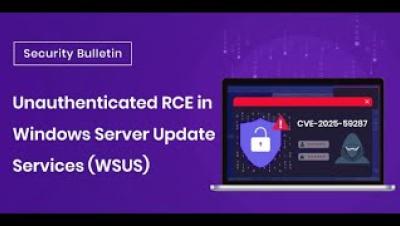

CVE-2025-59287: Critical WSUS Vulnerability Exploited in the Wild

Microsoft disclosed CVE-2025-59287 , a critical, unauthenticated RCE in Windows Server Update Services (WSUS) that lets attackers execute SYSTEM-level code via unsafe deserialization. In this video we break down how the exploit works, which servers are at risk, and real-world attack activity observed after the PoC went public.

CVE-2025-59287: Critical WSUS Vulnerability Exploited in the Wild

In October 2025, Microsoft disclosed a critical remote code execution vulnerability (CVE-2025-59287) in Windows Server Update Services (WSUS), which enables unauthenticated attackers to gain full control over affected servers. WSUS is a central patch management tool in Windows environments, responsible for approving, distributing, and monitoring updates across corporate networks.

Introducing Seemplicity's AI Agents for Exposure Management: A New Era of Action

Security teams don’t struggle to find exposures – they struggle to fix them. The new Seemplicity AI Agents change that. Integrated into the Exposure Action Platform, they combine intelligence and automation to help teams move faster, stay aligned, and reduce risk. From clear findings and ownership mapping to guided fixes and executive insights, Seemplicity’s AI Agents make exposure management truly action-driven.

UNC6384 Weaponizes ZDI-CAN-25373 Vulnerability to Deploy PlugX Against Hungarian and Belgian Diplomatic Entities

Threat Actor Name: UNC6384 Targeted Industries: Government, Diplomatic Services Geographic Focus: Hungary, Belgium, Serbia, Italy, Netherlands (broader European diplomatic community)

Understanding CVSS 4.0 and the Future of Vulnerability Scoring

The Common Vulnerability Scoring System (CVSS) has been the industry’s go-to framework for assessing vulnerability severity for nearly two decades. It provides a standardized way to measure and communicate the technical impact of a vulnerability. As threat landscapes evolve and organizations mature in their vulnerability management practices, questions about its relevance and limitations persist. That even led to our co-founder, Scott Kuffer, writing a defense of the algorithm earlier this year.

CVSS 4.0 and its Evolving Role in Vulnerability Management

Adam Dudley, Nucleus VP of Strategy and Alliances, provides some background on the Common Vulnerability Scoring System (CVSS) version 4.0 in this Nucleus conversation. He discusses the improvements made in the new version, the evolving role of CVSS in vulnerability management, the limitations practitioners face, and the future of scoring systems in the context of emerging technologies like AI. The conversation emphasizes the importance of context and quality inputs in effectively utilizing CVSS for risk assessment.

No PoCs? No problem. How to hunt for F5 exploitation even when details are sparse

Endpoint detection and response (EDR) tools, and the analysts using them, have become incredibly effective. They have become so good, in fact, that we're now seeing a clear shift in adversary behavior: attackers are being pushed off the endpoint and onto places where EDR cannot run. This isn't just a theory. As I was writing a separate blog about a recent Cisco exploit which spurred an immediate CISA emergency directive, news dropped about another major network edge vendor, F5.

LDAP Nightmare - Windows LDAP Denial of Service Vulnerability

In this technical webinar, SafeBreach security experts explore recent LDAP vulnerabilities, focusing on CVE-2024-49113 — a critical flaw capable of crashing unpatched Windows Servers. The team breaks down: This session emphasizes the importance of proactive patching, continuous validation, and understanding the underlying mechanics of directory services to strengthen enterprise resilience.

Microsoft Releases Emergency Patch for Exploited Critical Remote Code Execution Vulnerability (CVE-2025-59287)

On October 23, 2025, Microsoft released an out-of-band security update for a critical vulnerability tracked as CVE-2025-59287. The flaw stems from the deserialization of untrusted data in Windows Server Update Services (WSUS), which allows remote, unauthenticated threat actors to achieve remote code execution by sending a crafted event. According to Microsoft, only Windows servers with the WSUS Server Role enabled are affected. This feature is not enabled by default.

AI Sidebar Spoofing Attack: SquareX Uncovers Malicious Extensions that Impersonate AI Browser Sidebars

SquareX released critical research exposing a new class of attack targeting AI browsers. The AI Sidebar Spoofing attack leverages malicious browser extensions to impersonate trusted AI sidebar interfaces, which is used to trick users into executing dangerous commands that can lead to credential theft, device hijacking, and password exfiltration.

ED 26-01 | Mitigating F5 Device Vulnerabilities with Network Digital Twin Technology

Learn how Forward Enterprise enables federal agencies to rapidly respond to CISA Emergency Directive 26-01 through comprehensive network visibility, automated inventory, and continuous compliance verification.

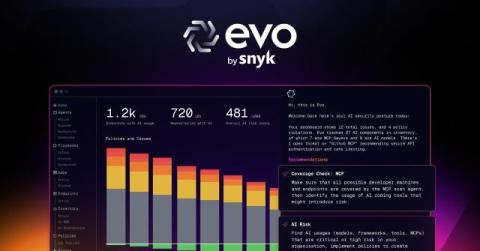
Why We Built Evo - From My Heart

I’ve spent my career building and defending. I’ve seen the beauty of innovation and the brutality of cyber warfare. I’ve sat shoulder-to-shoulder with security engineers and platform teams in the trenches at 3AM responding to state-backed attacks where context and speed meant survival. In those moments, one truth becomes painfully clear: With AI, that gap just became a chasm. Agentic AI didn’t bend the rules of software — it rewrote them. Code now evolves in real time.

From Domain User to SYSTEM: Analyzing the NTLM LDAP Authentication Bypass Vulnerability (CVE-2025-54918)

In September 2025, a critical vulnerability (CVE-2025-54918) was discovered affecting Domain Controllers running LDAP or LDAPS services. This vulnerability allows attackers to elevate privileges from a standard domain user to SYSTEM level access, potentially compromising entire Active Directory environments.

Under The Light: ExPRT.AI

n this episode of Under the Light, we take a closer look at ExPRT.AI—CrowdStrike’s approach to vulnerability prioritization that cuts through the noise. You’ll see how ExPRT.AI moves beyond static scoring models like CVSS, EPSS, and KEV by asking a better question: Will this vulnerability actually be exploited? We’ll break down: The three signals attackers rely on—and so does ExPRT.AI What makes a vulnerability worth their time A real-world story from Intermex that shows what this looks like in action And how all of it comes to life inside the Falcon platform.

CWE vs CVE vs KEV: Untangling the Security Alphabet Soup

Understanding the differences between CWE, CVE, and KEV is critical for modern security and network teams. These acronyms represent the building blocks of threat identification and response, yet many professionals don’t fully grasp how they differ or interact. This blog breaks them down, shows their relationships, and explains how Forward Networks helps correlate them across your environment.

Yet Another SMB-Related CVE

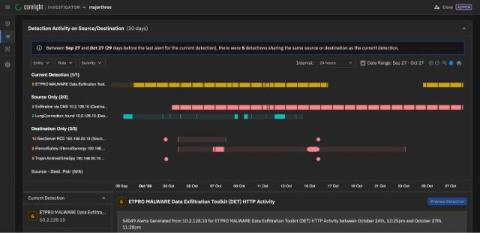
CISA has just added a new CVE regarding SMB, with a very high CVSS rating. CVE-2025-33073 is a high-severity (CVSS 8.8) vulnerability in the Windows SMB client caused by improper access control (CWE-284). An authenticated attacker can exploit it over the network to gain elevated privileges. Microsoft has issued guidance on how it should be patched and CalCom recommend this be done immediately.

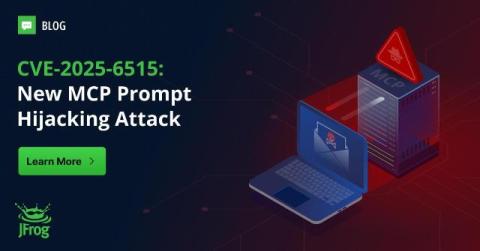
CVE-2025-6515 Prompt Hijacking Attack - How Session Hijacking Affects MCP Ecosystems

JFrog Security Research recently discovered and disclosed multiple CVEs in oatpp-mcp – the Oat++ framework’s implementation of Anthropic’s Model Context Protocol (MCP) standard. Among these, CVE-2025-6515 stood out due to its potential threat of hijacking MCP session IDs. Within the context of MCP we’ve dubbed this new attack technique “Prompt Hijacking“. Your browser does not support the video tag.

Two Tools, One Strategy: Pairing Vulnerability Scanning and Pen Testing for Maximum Protection

Penetration Testing and Managed Vulnerability Scanning (MVS) are often mentioned in the same breath, yet their true value emerges when they are combined. Each plays a distinct role in building a strong Offensive Security program, and together they form a powerful foundation for reducing risk and improving resilience. However, it is common for those not fully immersed in cybersecurity practices to either confuse or conflate these two practices.

Are you blind to the next big firewall exploit? Warning signs and lessons learned from the recent Cisco exploit

It feels like the security world is caught in a recurring cycle. We see a spike in strange scanning activity, file it away as internet background noise, and then weeks later, a major zero-day exploit drops, targeting the very technology that was being scanned. The recent Cisco ASA vulnerabilities were a textbook example of this pattern. A September 4, 2025, report from GreyNoise highlighted a massive surge in scanning, with over 25,000 unique IPs probing Cisco ASA devices.

10 Common Vulnerabilities Found During Software Audits - and How to Fix Them

A software audit is not a checklist but a thorough examination into the internal workings of your system that lurking vulnerabilities are usually hiding. Thousands of breaches every year are due to organizations not paying early attention to software audit vulnerabilities that might have been noticed and eliminated at an early stage. This article exposes the top ten vulnerabilities that are oftentimes encountered during software audits, why they occur, and offers some remediation measures that can be taken.

How cyber risk quantification transforms security decision-making

Security teams drowning in alerts, executives demanding business justification for security investments, and an attack surface that grows daily – sound familiar? While traditional vulnerability scanners excel at finding problems, they fall short when it comes to the critical question: which risks actually matter to your business? This is where cyber risk quantification and cyber risk scoring come in, transforming how organizations understand and respond to threats.

Salesforce breach escalates: Qantas & Vietnam Airlines data leaked on dark web

The recent developments surrounding the Salesforce data breach serve as a stark reminder of the persistent threats organizations face. What began as a concerning incident earlier this summer has now escalated dramatically, with threat actors following through on their threats and releasing a substantial trove of Qantas customer data to the public.

Falcon Defends Against Git Vulnerability CVE-2025-48384

CrowdStrike has identified active exploitation of Git vulnerability CVE-2025-48384. In the observed activity, threat actors combined sophisticated social engineering tactics with malicious Git repository cloning operations. This targeted attack chain poses a substantial risk to organizations running unpatched Git installations.

Increasing Agility & Flexibility: How Mercato Solutions tackles the application security vs. flexibility conundrum with Snyk

Company overview: Mercato Solutions is one of EMEAs fastest growing and most innovative low-code enterprise application providers. Champion / Spokesperson: Neil Tonkin, CTO Mercato Solutions is one of EMEAs fastest growing and most innovative low-code enterprise application providers. The company helps their global clients transform their business processes with bespoke and branded software platforms, applications, and cloud environments that help work flow more efficiently and effectively.

Data Overload in the AI Era: Why Aggregation and Prioritization Are Non-Negotiable

AI was supposed to make our lives easier. Vendors promised it would cut through complexity, detect threats faster, and lighten the load on already overworked security teams. But if you’ve been paying attention, you know the truth: AI has given us more noise than ever. Corey Brunkow from Horizon3.ai joined Nucleus co-founder and CPO, Scott Kuffer, to unpack this problem during a recent webinar. AI helps attackers move faster, but on the defensive side, it’s created a flood of data.

Active Exploits Target Oracle EBusiness Suite (CVE202561882)

A critical zero‑day (CVSS 9.8) in Oracle E‑Business Suite (EBS) versions 12.2.3 – 12.2.14 (CVE‑2025‑61882) allows unauthenticated remote code execution (RCE) via the BI Publisher Integration in the Concurrent Processing module, actively exploited in the wild by Cl0p and other threat actors.

Don't Guess What to Scan: Runtime Scope Ensures Full Production Coverage

Are you confident that you’re scanning for security vulnerabilities on all your software running in production? If this question makes you uncomfortable don’t worry. First, you’re not alone. Second – keep reading. Almost all security teams today face a massive challenge: they’re drowning in data but lack direction.

Code Scanning in 2025: Why, How & the Role of Scanning in AI Security

Code scanning is the process of automatically analyzing source code to identify potential security vulnerabilities, bugs, and other code quality issues. It’s a crucial part of secure application development, helping teams detect and fix problems early in the software development lifecycle. Code scanning tools mainly use static analysis methods (examining code without running it), in contrast to dynamic analysis tools which analyze applications while they are running.

Snyk and Cognition partner to enhance security for AI-native development

Today, Snyk is excited to announce a new partnership with Cognition that significantly advances security within the software development lifecycle, validating our "Secure at Inception" model. This collaboration introduces new integrations, Snyk for Devin and Snyk for Windsurf, which directly embed Snyk Studio's security intelligence into Cognition's AI-native developer tools.

Oracle E-Business Suite Zero-Day (CVE-2025-61882) - Post-Incident Technical Brief

In late 2025, a critical pre-authentication remote-code-execution vulnerability (tracked as CVE-2025-61882) in Oracle E-Business Suite (EBS)— specifically the Concurrent Processing / BI-Publisher integration — was exploited in a large-scale extortion/data-theft campaign attributed to the Cl0p/Clop extortion cluster. Attackers abused the flaw to run attacker-controlled XSLT/Java payloads, gain remote code execution on EBS application servers, and exfiltrate sensitive data for extortion.

How does Metasploit Work? Step-by-Step Demo

Metasploit now includes 6,000+ modules (exploits, payloads, scanners & post-modules). Used by over 80% of global pentesters as their primary exploit framework. Learn how to use Metasploit Framework, the most powerful penetration testing and ethical hacking tool used by cybersecurity professionals worldwide. What You’ll Learn in This Video.

CISA Emergency Directive 2503: What It Means for Cisco ASA and Firepower Devices

CISA Emergency Directive 25‑03 mandates that federal civilian executive branch (FCEB) agencies immediately identify and mitigate vulnerabilities in Cisco ASA and Firepower devices. The vulnerabilities, which affect SSL VPN components, can be exploited by attackers to gain unauthorized access and pivot across networks. CISA’s actions are based on observed exploit activity in the wild and the critical role these devices play in public sector infrastructure.

Snyk Named a Leader in the 2025 Gartner Magic Quadrant for Application Security Testing

We’re thrilled to announce that Snyk has been recognized as a Leader in the 2025 Gartner Magic Quadrant for Application Security Testing (AST)! This recognition, based on our vision and ability to execute, validates our core mission: to empower developers to build securely from the start while giving security teams complete visibility and comprehensive controls.

When Time-to-Exploit Goes Negative: Rethinking Defense for Irish Critical Infrastructure

When we analyzed Ireland's critical national infrastructure (CNI) through an intelligence lens, the findings were sobering. Of 222 CNI organizations examined, 98—nearly 44%—have exposed known vulnerabilities. We then analyzed whether these open doors were being actively exploited by threat actors. Ireland is home to 15,776 attack origins, and 85% of them are the very same IPs and networks in CNI organizations with those exposed known vulnerabilities.

Aikido + Secureframe: Keeping compliance data fresh

TL;DR: Aikido now integrates with Secureframe. Vulnerability data syncs automatically so SOC 2 Type 2 and ISO 27001:2022 evidence stays accurate. 16 tests and 5 controls handled for you. Secureframe makes it easier to run SOC 2, ISO 27001, HIPAA and PCI DSS programs. But compliance tools only work if the data inside them is accurate. Too often, teams end up exporting CSVs, uploading reports, or sharing screenshots that are already outdated by the time an auditor looks at them.

CVE-2025-61884: Oracle Releases Emergency Patch for Information Disclosure Flaw

On October 11, 2025, Oracle released an emergency fix for a high-severity information disclosure vulnerability in Oracle E-Business Suite (EBS), tracked as CVE-2025-61884. The flaw exists in the Runtime UI component of Oracle Configurator and allows remote unauthenticated threat actors to access sensitive resources. Oracle has not confirmed a link between this vulnerability and the extortion emails received by some Oracle EBS customers from the Cl0p ransomware group in recent weeks.

CVE-2025-61882: Oracle E-Business Suite Under Mass Exploitation by Cl0p Ransomware

A critical CVE-2025-61882 Oracle E-Business Suite vulnerability is under active exploitation by the Cl0p ransomware group. This unauthenticated remote-code-execution (RCE) vulnerability — CVE-2025-61882 — in Oracle E-Business Suite (EBS) was patched by Oracle in October 2025 and is being actively exploited in the wild. Multiple security vendors attribute attacks to Cl0p/associated ransomware extortion campaigns and Oracle has published an emergency Security Alert.

Cl0p Exploits Critical Oracle E-Business Suite Zero-Day (CVE-2025-61882)

In October 2025, a critical zero-day vulnerability was disclosed in Oracle E-Business Suite (EBS), tracked as CVE202561882, which allows unauthenticated remote code execution (RCE). This vulneraility affects versions 12.2.3 through 12.2.14 and has already been actively exploited in the wild by the Cl0p ransomware group and potentially other threat actors.

Risk-Based Vulnerability Management is the Engine Behind Modern CTEM Programs

Traditional vulnerability management once centered on scanning, enumerating, and remediating … and then repeating the process. In contrast, today’s enterprise attack surfaces shift by the hour. Cloud assets spin up and down. Business units deploy new SaaS tools overnight. Adversaries weaponize proof-of-concept exploits in days, or sometimes hours. Static, reactive processes can’t keep up.

Webinar: SafeBreach Validate + Propagate = Better Together

Webinar: SafeBreach Validate + Propagate = Better Together Discover how combining SafeBreach Validate and Propagate empowers security teams to continuously assess and strengthen their defenses. In this session, our experts will show how integrated breach and attack simulation (BAS) with automated attack path validation can help you.

SquareX Shows AI Browsers Fall Prey to OAuth Attacks, Malware Downloads and Malicious Link Distribution

As AI Browsers rapidly gain adoption across enterprises, SquareX has released critical security research exposing major vulnerabilities that could allow attackers to exploit AI Browsers to exfiltrate sensitive data, distribute malware and gain unauthorized access to enterprise SaaS apps. The timing of this disclosure is particularly significant as major companies including OpenAI, Microsoft, Google and The Browser Company have announced or released their own AI browsers. With Chrome and Edge alone representing 70% of the browser market share, it is very likely that the majority of consumer browsers in the future will be AI Browsers.

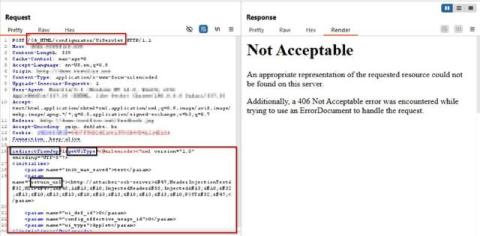
GeoServer CVE-2024-36401: Tailoring a Public PoC to Enable High-Confidence Detection

At Bitsight, one of the responsibilities of the Vulnerability Research team is to develop fingerprinting methods to not only identify exposed services, but also vulnerabilities in those services. When it comes to detecting vulnerabilities, there are increased challenges depending on the complexity of both the vulnerability and the vulnerable service.

Anatomy of a Modern Threat: Deconstructing the Figma MCP Vulnerability

Threat researchers recently disclosed a severe vulnerability in a Figma Model Context Protocol (MCP) server, as reported by The Hacker News. While the specific patch is important, the discovery itself serves as a critical wake-up call for every organization rushing to adopt AI. This incident provides a blueprint for a new class of attacks that target the very infrastructure powering the AI Agent Economy. To understand the risk, we must first look at the mechanics of this emerging threat.

CVE-2024-36401 - GeoServer - tailoring a public PoC to enable at-scale high-confidence detection

At Bitsight, one of the responsibilities of the Vulnerability Research team is to develop fingerprinting methods to not only identify exposed services, but also vulnerabilities in those services. When it comes to detecting vulnerabilities, there are increased challenges depending on the complexity of both the vulnerability and the vulnerable service.

How to Prevent Cross-Site Scripting (XSS) on Payment Pages

Many teams believe that cross-site scripting, or XSS, is a problem of the past. Modern frameworks promise built-in protections, and developers often assume the browser will handle the rest. The reasoning sounds logical: if React auto-encodes output, XSS can’t happen. However, XSS prevention doesn’t work on assumptions; it works on visibility. We’ve learned that XSS prevention is about maintaining continuous control over the browser environment where your application runs.

SonicWall Concludes Investigation Into Incident Affecting MySonicWall Configuration Backup Files

On September 17, 2025, SonicWall released a knowledge base article detailing the exposure of firewall configuration backup files stored in certain MySonicWall accounts. As of October 8, 2025, the investigation has concluded and SonicWall has updated their advisory accordingly.

CVE-2025-61882: New Critical RCE Vulnerability Linked to Oracle E-Business Cl0p Extortion Emails

On October 4, 2025, Oracle released a fix for a newly disclosed critical vulnerability, tracked as CVE-2025-61882, linked to recent extortion emails received by some Oracle E-Business Suite (EBS) customers. This vulnerability allows unauthenticated remote threat actors to achieve remote code execution and resides in the BI Publisher component of Oracle Concurrent Processing.

Critical Vulnerability Alert: CVE-2025-61882 in Oracle E-Business Suite

A critical vulnerability (CVE-2025-61882) has been identified in Oracle E-Business Suite, specifically impacting the Concurrent Processing component through its BI Publisher Integration. This widely used enterprise resource planning platform is deployed across finance, HR, procurement, and other critical business functions, making any compromise potentially devastating.

CrowdStrike Identifies Campaign Targeting Oracle E-Business Suite via Zero-Day Vulnerability (now tracked as CVE-2025-61882)

CrowdStrike is tracking a mass exploitation campaign almost certainly leveraging a novel zero-day vulnerability — now tracked as CVE-2025-61882 — targeting Oracle E-Business Suite (EBS) applications for the purposes of data exfiltration. CrowdStrike Intelligence assesses with moderate confidence that GRACEFUL SPIDER is likely involved in this campaign but cannot rule out the possibility that multiple threat actors have exploited CVE-2025-61882.

Is This the Best Coding Model in the World? Claude Sonnet 4.5

In this episode of our AI Coding Tools series, we test Claude Sonnet 4.5 to see if it can build a secure note-taking app. The model claims to be the best in the world — but does it live up to the hype? We’ll cover how it codes, where it shines (or struggles), and how it stacks up against other AI coding assistants.

Alleged Cl0p Extortion Emails Linked to July 2025 Oracle E-Business Suite Vulnerabilities

On October 2, 2025, Oracle announced that some Oracle E-Business Suite (EBS) customers had received extortion emails. Oracle’s investigation revealed the potential use of vulnerabilities previously addressed in the July 2025 Critical Patch Update. The following nine vulnerabilities in EBS products were addressed in the July update. These vulnerabilities range from medium to high severity, with three potentially exploitable by remote, unauthenticated threat actors.

Notepad++ DLL Hijacking (CVE-2025-56383): CVSS 8.4 or CVSS 0.0?

A vulnerability on a popular source-code editor has been recently released along with a proof-of-concept (POC) exploit, but the security community isn’t so sure that it’s a legitimate flaw. In this article, we look at CVE-2025-56383, discuss what developers are saying in the wild, and provide our experts’ take on the issue.

CTEM Solutions Explained How to Build a Stack

Vulnerability numbers are spiraling. Compliance checklists and point scans cannot keep pace. Continuous Threat Exposure Management (CTEM) provides security leaders with a practical approach to identify and mitigate real attack paths in real-time. This article explains what CTEM is, the solutions that enable it, and how to build a stack that actually shrinks exposure instead of counting it. CTEM solves the eternal problem of vulnerability management (too many vulnerabilities to ever fix) with a continuous program to find, validate, and reduce exposures before adversaries can use them.

Web Application Firewalls (WAFs): A false sense of security?

Web application firewalls (WAF) is a protection mechanism to help block potential malicious requests before they can reach the application itself. Often this is implemented as a proxy, intercepting HTTP requests, analyzing them, and finally deciding on an action. While effective, over relying on it could lead to a false sense of security that allows attackers to exploit unresolved internal issues.

API Attack Awareness: Broken Object Level Authorization (BOLA) - Why It Tops the OWASP API Top 10

For this Cybersecurity Awareness Month, we thought it important to draw attention to some of the most common and dangerous API vulnerabilities. This week, we’re starting with Broken Object Level Authorization (BOLA). BOLA vulnerabilities top the OWASP API Top Ten. And for good reason: they’re startlingly prevalent, remarkably easy to exploit, and can have devastating consequences. So, let’s explore what they are, why they matter, and how you can mitigate them.