Security | Threat Detection | Cyberattacks | DevSecOps | Compliance

Snyk highlights AWS re:Invent 2023

With over 50,000 in attendance, AWS re:Invent 2023 had generative AI taking center stage at keynotes, race cars, and robots wowing at the Expo. Once again, Snyk showed up in a big way. Some of our highlights included being awarded the AWS ISV Partner of the Year in EMEA and UKI, achieving AWS Security Competency, and several new integrations with AWS services. Best of all, we got to meet all of you!

What is Vulnerability Assessment?

Each day there are more and more cyber attacks and threats occurring, with those looking to exploit your IT systems finding various different methods to infiltrate your IT infrastructure. This means it's more vital than ever that you limit the vulnerabilities of your IT infrastructure and guarantee its security. In regards to this, a viable solution available to you is vulnerability assessment.

JetBrains TeamCity Vulnerability Exploit: SafeBreach Coverage for US-CERT Alert (AA23-347A)

On December 13th, The U.S. Federal Bureau of Investigation (FBI), U.S. Cybersecurity & Infrastructure Security Agency (CISA), U.S. National Security Agency (NSA), Polish Military Counterintelligence Service (SKW), CERT Polska (CERT.PL), and the UK’s National Cyber Security Centre (NCSC) have issued an urgent advisory about the ongoing exploit of CVE-2023-42793 by Russian Foreign Intelligence Service (SVR) threat actors.

Enhancing code to cloud security with the Common Configuration Scoring System

Proprietary severity scoring often burdens AppSec teams. With every new vendor, you must evaluate their custom severity framework and work to translate assessed risk between tools. To eliminate this burden and provide our customers with a clear security assessment for configurations across the SDLC, Snyk will be moving towards standardizing our code to cloud security rules set on the Common Configuration Scoring System (CCSS)!

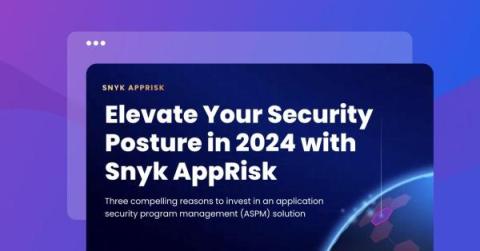
Three reasons to invest in an ASPM solution in 2024

The pace of software development is astounding! The transition to agile, DevOps, cloud, and the supercharged use of AI is empowering distributed development teams to build software with greater speed and autonomy. In contrast to the remarkable strides in development methodologies, maintaining a robust security posture has become a formidable challenge. AppSec teams are still playing catchup, both outnumbered and out-resourced.

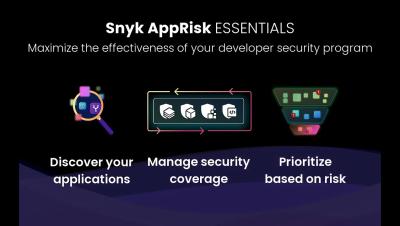
Introducing Snyk AppRisk Essentials

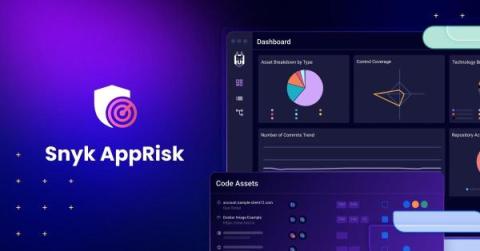
Snyk AppRisk Essentials is Snyk’s first ASPM offering, designed to help AppSec teams boost their Snyk-based developer security program. The solution helps Snyk customers automatically discover the different assets used to build their applications, manage coverage to ensure these assets are being secured properly by Snyk, and better prioritize issues based on the risk they pose to the business.

The challenges of keeping open source up-to-date

Open source software has become an integral part of modern application development, enabling developers to accelerate their projects by leveraging pre-existing libraries and frameworks. Open source offers numerous benefits, yet it's not without its challenges. A significant hurdle is ensuring that dependencies remain up-to-date. In our latest blog post, we delve into the complexities associated with updating open source components.

Snyk recognized as an Emerging Segment Leader in Application Security in Snowflake's Next Generation of Cybersecurity Applications report

We are thrilled to announce that Snyk has been acknowledged as a key player in the evolving landscape of application security. The recent release of Snowflake's Next Generation of Cybersecurity Applications report has designated Snyk as an Emerging Segment Leader in Application Security, highlighting our commitment to innovation and excellence in the field.

CVE-2023-36553: Critical OS Command Injection Vulnerability in FortiSIEM

On November 14, 2023, FortiGuard published an advisory disclosing that a critical command injection vulnerability (CVE-2023-36553) had been patched in the latest updates for FortiSIEM. The vulnerability was rated with a Common Vulnerability Scoring System (CVSS) score of 9.3, as it can be exploited remotely by an unauthenticated threat actor using crafted API requests to execute unauthorized commands. This vulnerability is caused by improper neutralization of special elements in FortiSIEM report server.