Security | Threat Detection | Cyberattacks | DevSecOps | Compliance

A Modern Approach to Managing Vulnerabilities

Organizations today rely on an increasing number of applications installed on enterprise devices just to “keep the lights on” and business functioning. Being able to immediately access emails, files, communications, and web conferencing tools has never been more critical with the rise of remote and hybrid work.

Threat Context Monthly May 2025: Scattered Spider & Lumma Stealer

Welcome to the Threat Context Monthly blog series where we provide a comprehensive roundup of the most relevant cybersecurity news and threat information from KrakenLabs, Outpost24’s cyber threat intelligence team. Here’s what you need to know from May about Scattered Spider, Lumma Stealer and more.

OWASP Top 10 2021 - A09: Security Logging and Monitoring Failures

Logging and monitoring failures occur when security-relevant events are not properly captured, stored, or analyzed, making it difficult or impossible to detect ongoing attacks or respond effectively. These failures include missing logs, incomplete data, ineffective alerting mechanisms, insecure log storage, and inadequate retention policies. Such gaps are often exploited by attackers who rely on invisibility to move laterally across systems.

OWASP Top 10:2021 - A02 Cryptographic Failures

Cryptographic failures refer to the improper use, implementation, or management of cryptographic systems. These issues often result in unauthorized exposure of sensitive data like passwords, credit card numbers, or personal records. In the OWASP Top 10 – 2021, this category replaced the broader ‘sensitive data exposure’ from the 2017 list, with a sharper focus on the misuse or failure of cryptographic mechanisms.

Fullscreen BitM Attack Discovered by SquareX Exploits Browser Fullscreen APIs to Steal Credentials in Safari

Today, SquareX released new threat research on an advanced Browser-in-the-Middle (BitM) attack targeting Safari users. As highlighted by Mandiant, adversaries have been increasingly using BitM attacks to steal credentials and gain unauthorized access to enterprise SaaS apps. BitM attacks work by using a remote browser to trick victims into interacting with an attacker-controlled browser via a pop-up window in the victim's browser.

What Are OWASP Top 10 Threats & When Will the Top 10 Be Updated?

The OWASP Top 10 is a security research project that outlines the ten most critical security risks to web applications. Published by the Open Worldwide Application Security Project (OWASP), it serves as a widely recognized benchmark for web application security. The list is compiled from data gathered by security experts and organizations worldwide, based on the prevalence, detectability, and impact of various vulnerabilities.

Welcome-to-The New Era of AI-Driven Development

Artificial intelligence is no longer a future consideration. It’s here — and it’s changing how software is built. Fast. Enterprise teams are moving beyond AI pilots and proof-of-concepts. They’re rolling out real-world, high-value use cases and doing it at scale. According to IDC forecasting, AI spend will more than double by 2028. At the center of that surge is AI-assisted software development.

AI Is Reshaping Software. Is Your Security Strategy Keeping Up?

Software development is undergoing its biggest shift since the rise of cloud and DevOps. The difference this time? The shift is being driven by artificial intelligence, and it’s moving fast. AI-powered coding tools have rapidly made their way into developer workflows. Agents and LLMs are helping teams move faster, automate more, and build in entirely new ways. But speed often comes with tradeoffs.

Understanding the Risks of Remote Monitoring and Management Tools

The IT environment is evolving. Organizations have embraced hybrid work models, expanded their operations and personnel footprints, and digitalized their processes and capabilities. And those in charge of these now sprawling environments must deal with the increasingly complicated task of keeping endpoints, users, and more both operational and secure.

How to Choose the Right Exposure Assessment Platform in 2025

Security teams know they need a better way to manage vulnerabilities. What they don’t always know is where to start. That’s where Exposure Assessment Platforms (EAPs) shine—some are even designed to cut through noise, eliminate manual workflows, and prioritize what truly matters. Effective EAPs consolidate findings from across your tools, triage them intelligently, and route them to the right teams for remediation. The promise is huge.

Welcome to Snyk Labs: Charting the Course for AI-Native Security

Software development is in the midst of a monumental shift, powered by the rapid advancements in Artificial Intelligence. AI isn't just changing how we build software; it's transforming the very nature of applications themselves. As AI-native applications become more prevalent, we're also seeing new, complex security threats emerge. Traditional security approaches aren’t designed for the dynamic and often unpredictable nature of Large Language Models (LLMs), agents, and other AI-driven systems.

Outpost24 Named an Overall Leader in 2025 KuppingerCole Leadership Compass Report for Attack Surface Management

Recognition Solidifies Outpost24’s Leadership in Attack Surface Management PHILADELPHIA (May 27, 2025) — Outpost24, a leading provider of cyber risk management and threat intelligence solutions, today announced it has been recognized as an Overall Leader in the 2025 KuppingerCole Leadership Compass Report for Attack Surface Management and is the only European vendor named as an Overall Leader in the report. The company was also named a leader in the Product and Market categories.

Application Security Vulnerability Management: Bridging AppSec and VM for Modern Risk Reduction

Application security has evolved far beyond traditional vulnerability management (VM). Today, security teams face massive scale, increasing complexity, and a constant flow of vulnerability findings that often vanish in hybrid and cloud-native environments. We’ve moved from managing a single virtual machine to dealing with an unlimited number of containers and ECS tasks, many of which only exist for about 15 minutes.

Understanding Common Vulnerabilities and Exposures (CVEs) and Their Role in Deceptive Threat Detection

Cyber threats are becoming more advanced, with attackers creating ways to bypass traditional security. That’s why organizations need a stronger, multi-layered approach to protect their systems. To handle cyber threats effectively, security teams need clear, consistent information. That’s where CVEs help—by making it easier to manage hidden risks. And how can organizations enhance their cybersecurity capabilities with CVE data along with deception technology?

Streamlining DevSecOps with ASPM | Seemplicity

How ASPM Improves DevSecOps Efficiency Is your DevSecOps process slowing you down instead of speeding you up? In this quick educational video, we break down how Application Security Posture Management (ASPM) helps DevSecOps teams cut through noise, streamline workflows, and fix what matters—without disrupting development velocity. You'll learn: The common pitfalls slowing down DevSecOps How ASPM centralizes findings and prioritizes real risks Ways ASPM automates remediation workflows What smarter, faster security looks like in practice.

Is Windsurf's SWE-1 Model a Game Changer? Let's See...

In this episode of my ongoing series testing AI coding tools, I put Windsurf’s latest model, SWE-1, to the test. The challenge? Build a secure note-taking app from scratch. I’m looking at everything from how it handles authentication and encryption to whether the code is clean, usable, and actually secure. If you're curious about how SWE-1 stacks up against other AI dev tools like GPT-4 or Claude, this video is for you.

Effective Deception for Zero Day Attacks: Strategies for Cyber Defense

Deception for Zero day attacks has become a crucial strategy as these devastating exploits continue to surge rapidly. These attacks pose extreme danger because they target vulnerabilities unknown to software vendors or the public, which leaves systems defenseless without immediate patches. Attackers can exploit these vulnerabilities undetected for extended periods – from days to years. This creates a huge window for attacks before vendors can patch the problems.

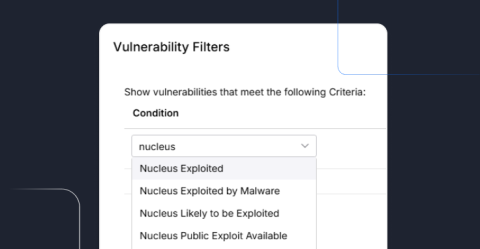
May 2025 Release: Charting the Future of Risk Reduction with Nucleus

Vulnerability management is no longer about simply cataloging risks. It’s about reducing them intelligently, at scale, and in alignment with how your business operates. At Nucleus, we believe in building a platform that doesn’t just surface issues, but solves them. With our latest release, we’re doubling down on that vision.

Snyk Report shows 88% of CISOs are concerned with current state of U.S. cyber readiness

Having recently reached the 100 day mark of the new administration in the U.S., Snyk thought it important to check in with some of the nation’s CISOs to gauge how they were feeling about the cybersecurity posture of both the nation and their own organizations. In partnership with Researchscape, we surveyed a total of 101 U.S. based CISOs working in Information Security and/or Information Technology who responded to the online survey from April 7 - 21, 2025.

Exploited! Grafana CVE-2025-4123 - Open Redirect & Stored XSS Give Attackers a Springboard Into Your Cloud

Grafana—the cloud-native observability dashboard almost every DevOps team relies on—rushed out Grafana 12.0.0-security-01 yesterday to squash CVE-2025-4123, a high-severity open-redirect and stored cross-site scripting (XSS) vulnerability. When chained with the popular Grafana Image Renderer plugin the bug escalates to a full-read server-side request forgery (SSRF), exposing cloud-metadata services and internal APIs.

Resolving a request smuggling vulnerability in Pingora

On April 11, 2025 09:20 UTC, Cloudflare was notified via its Bug Bounty Program of a request smuggling vulnerability (CVE-2025-4366) in the Pingora OSS framework discovered by a security researcher experimenting to find exploits using Cloudflare’s Content Delivery Network (CDN) free tier which serves some cached assets via Pingora.

Multiple Unpatched Vulnerabilities in Versa Concerto Disclosed

On May 21, 2025, ProjectDiscovery published technical details for multiple vulnerabilities they discovered in Versa Concerto, including authentication bypasses, remote code execution (RCE), and container escapes. Versa Concerto is a centralized management platform used to manage Versa’s SD-WAN and SASE services. It is a Spring Boot-based application deployed via Docker containers and routed through Traefik.

CVE-2025-31324: Critical SAP Flaw Exposes Systems to Remote Attacks

Active exploit targets SAP NetWeaver via unauthenticated remote code execution. This flaw allows unauthenticated attackers to upload and execute arbitrary files, leading to complete system compromise. In this video, we break down how the vulnerability works, why it’s dangerous, and what steps you must take to secure your systems.

Reviewing Penetration Test Pricing In 2025: A Practical Guide for UK and EU Buyers

Penetration testing costs in the UK and EU can range from a few thousand pounds to well over £20,000. At a glance, many of these tests look the same. So why the price gap? In 2025, pricing models haven't changed much. Most tests are still priced per day, but the complexity of what's being tested has changed. The rise of custom internal tools (many "vibe coded" by non-IT or security teams), shadow IT, SaaS stacks, and cloud sprawl means that scoping a pen test properly takes more time and care.

Security Testing for Single-Page Applications (SPAs)

When developing a web application, dev teams can choose from two fundamental design patterns: Single-Page Applications (SPAs) or traditional Multi-Page Applications (MPAs). Deciding which one to use can depend on multiple factors, but more and more companies are developing SPAs since they can provide a smoother user experience (UX), which, in turn, might just result in better user adoption.

EASM top features: 7 capabilities your solution needs

External attack surfaces have never been more sprawling, or more vulnerable. As organizations increasingly rely on dynamic, cloud-based infrastructures, and third-party services, digital footprints are only going to carry on growing. So, it’s no surprise many are turning towards External Attack Surface Management (EASM) tools for more visibility into both known and unknown assets. But what should you be looking for in a solution?

Security Bulletin: OttoKit WordPress Plugin Vulnerability, CVE-2025-27007

CVE-2025-27007 is a critical unauthenticated privilege escalation vulnerability affecting the OttoKit WordPress plugin (formerly SureTriggers), which is used by over 100,000 websites for workflow automation and third-party integration. The vulnerability exists in the plugin’s create_wp_connection() function, which fails to properly verify user authentication when application passwords are not configured.

Why Prioritization Is Still the Weak Link in Vulnerability Management

For all the advancements in vulnerability remediation, one of the most fundamental challenges remains unsolved: knowing what to fix first. And according to the 2025 Remediation Operations Report, it’s still not where it needs to be. In fact, difficulty prioritizing vulnerabilities ranks as the third biggest challenge security teams face when managing vulnerabilities. That’s not just an operational inconvenience, it’s a signal that something core to the remediation process is broken.

Outpost24 introduces AI-powered Digital Risk Protection (DRP)

Digital Risk Protection (DRP) helps organizations identify, monitor, and protect against threats across their digital footprint. The goal is to catch risks on the open, deep, and dark web before they can be exploited, by aggregating threat intelligence from diverse external sources (social media, underground forums, code repositories, and paste sites). Organizations scan continuously for exposed credentials, brand impersonations, data leaks, and emerging malware campaigns.

How to Move Beyond Spreadsheets When Managing Vulnerabilities | Seemplicity

Still managing vulnerabilities with spreadsheets? In this short video, discover why traditional methods fall short and how automated Remediation Operations (RemOps) can help you move beyond manual tracking, endless update chasing, and version chaos. Learn how modern security teams: Whether you're dealing with a growing backlog or struggling to scale your vulnerability management, this video shows you a better, faster way forward.

How external attack surface analysis enhances pen testing

Despite advancements in security, web applications are still a problem. Attackers target web applications because they’re exposed, complex, and not as well protected as they should be. According to Verizon1, web applications are the most prevalent attack vector, with exploitations of vulnerabilities increasing by 180% in 2024.

Exploited! Ivanti EPMM Authentication Bypass & Remote Code Execution (CVE-2025-4427 & CVE-2025-4428)

Ivanti’s Endpoint Manager Mobile (EPMM, formerly MobileIron Core) just delivered an unpleasant one-two punch to defenders. Two fresh vulnerabilities—an authentication bypass (CVE-2025-4427) and an API-level remote-code-execution flaw (CVE-2025-4428)—can be chained to grant unauthenticated attackers full command execution on affected servers. Both issues are already being exploited in the wild, making rapid remediation essential. In this article.

Vulnerability transparency: strengthening security through responsible disclosure

In an era where digital threats evolve faster than ever, cybersecurity isn't just a back-office concern — it's a critical business priority. At Cloudflare, we understand the responsibility that comes with operating in a connected world. As part of our ongoing commitment to security and transparency, Cloudflare is proud to have joined the United States Cybersecurity and Infrastructure Security Agency’s (CISA) “Secure by Design” pledge in May 2024.

SAP Zero-Day CVE-2025-31324: Unauthenticated RCE in NetWeaver VCFRAMEWORK

SAP disclosed a critical RCE vulnerability(CVE-2025-31324) on April 24, 2025, impacting the Visual Composer Framework in NetWeaver Application Server Java, version 7.50. This flaw poses a serious risk to enterprises relying on SAP NetWeaver for their mission-critical operations. Unauthenticated attackers can exploit this vulnerability to upload and run arbitrary files on SAP servers, potentially resulting in complete system compromise.

INE Security Alert: Continuous CVE Practice Closes Critical Gap Between Vulnerability Alerts and Effective Defense

INE Security, a global leader in hands-on cybersecurity training and certifications, today highlighted how ongoing real-world practice with the latest CVEs (Common Vulnerabilities and Exposures) is essential for transforming security teams from reactive to proactive defenders. With over 26,000 new CVEs documented in the past year, security teams are drowning in vulnerability alerts while facing exploit windows that have compressed to hours in many cases.

OWASP Dependency Check: How Does It Work?

The Open Web Application Security Project (OWASP), is an online community that produces free, publicly available articles, methodologies, documentation, tools, and technologies in the field of web application security. Open source components have become an integral part of software development. According to Mend’s Risk Report, 96.8% of developers rely on open source components.

CVE-2025-32756: Exploitation of Critical Severity Zero-Day Vulnerability in Fortinet FortiVoice

On May 13, 2025, Fortinet published a security advisory on a critical severity stack-based overflow vulnerability, CVE-2025-32756, impacting FortiVoice, FortiCamera, FortiMail, FortiNDR, and FortiRecorder. The vulnerability allows remote unauthenticated threat actors to execute arbitrary code or commands via crafted HTTP requests. In the advisory Fortinet stated that the vulnerability has been exploited in the wild on FortiVoice.

Bridging ASPM and Vulnerability Management for Scalable Application Security

In this webinar, "Bridging ASPM and RBVM for Scalable AppSec," security leaders from Cycode and Nucleus explore how to unify application and infrastructure vulnerability management in complex, cloud-native environments.

The best network vulnerability scanning tool in 2025

Cyberthreats are evolving, and unpatched vulnerabilities remain one of the biggest security risks for organizations. According to IBM’s 2024 Cost of a Data Breach Report, organizations that fail to patch known vulnerabilities face an average loss of $4.45 million per incident. Cybercriminals actively exploit outdated firmware and misconfigurations in network devices, making network vulnerability scanners an essential security tool.

Leveling Up AppSec: Overcome Vulnerability Management Challenges in Game Development

Game development studios face enormous pressure to deliver immersive, high-performance experiences on a rigid schedule, all while ensuring that every release meets the highest standards for quality and security. For security teams, keeping up with fast-moving codebases, short release cycles, and a flood of vulnerabilities is no easy feat.

CVE-2025-31650 - Apache Tomcat DoS Risk via HTTP Priority Header

The Apache Software Foundation has disclosed a high-severity vulnerability in Apache Tomcat that could let attackers exploit improperly handled Priority headers in HTTP/2 to cause a denial of service (DoS). Tracked as CVE-2025-31650, this flaw stems from improper input validation, specifically when the server handles malformed Priority headers in HTTP/2, resulting in memory leaks and potential OutOfMemoryExceptions.

Exploited! SysAid On-Prem XML External Entity Vulnerability (CVE-2025-2775)

SysAid has patched a critical XML External Entity (XXE) flaw that lets unauthenticated attackers turn a routine /mdm check-in request into full administrator compromise—and, when chained with a newly disclosed command-injection bug, into remote code execution (RCE). The vulnerability, tracked as CVE-2025-2775, affects all SysAid On-Prem deployments up to 23.3.40 and is now fixed in 24.4.60.

The Cost of Manual Remediation Processes in a Regulated World

Security teams don’t need more alerts, they need fewer bottlenecks. In most organizations, remediation still runs on manual effort: ticket chasing, asset tagging, SLA tracking, endless email threads. It’s slow, fragmented, and risky for each organization. According to Seemplicity’s 2025 Remediation Operations Report, 91% of organizations face remediation delays, with the top two most common causes being collaboration and communication challenges (31%) and manual processes (19%).

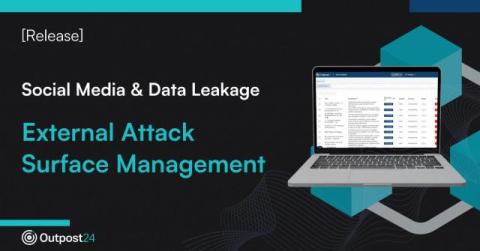
Introducing Social Media and Data Leakage to Outpost24's EASM platform

Digital Risk Protection (DRP) lets organizations proactively identify and mitigate external threats that emerge from their digital footprints. This can span public sources as well as deep and dark web channels. DRP is a key element of Outpost24’s external attack surface management (EASM) platform, so we’re pleased to announce two new integrations have been added: Social Media and Data Leakage. These new DRP modules will help cybersecurity teams to.

RSAC 2025: The Turning Point for AI in Enterprise Security?

RSA Conference 2025 in San Francisco was a breath of fresh air, literally and figuratively. The city felt more vibrant and welcoming, and the conference buzzed with genuine excitement. Unlike previous years, which were dominated by hype and theoretical discussions, this year’s focus was on tangible (not yet game-changing!) AI applications in cybersecurity. AI extended throughout the conference, from the keynotes through the track sessions and into the exhibition hall.

CVE-2025-2775: PoC Released for SysAid On-Premises Pre-Auth RCE Vulnerability

On May 7, 2025, watchTowr publicly disclosed technical details and a proof-of-concept (PoC) exploit for a pre-authenticated Remote Code Execution (RCE) chain affecting SysAid On-Premises, a self-hosted IT service management (ITSM) platform used by organizations to manage IT support tasks. Although the vulnerabilities were patched in March 2025, they had not been assigned Common Vulnerabilities and Exposures (CVE) identifiers and were disclosed for the first time with watchTowr’s publication.

Conquering the Chaos of Vulnerability and Exposure Management at RSAC Conference 2025

Recently, industry analyst Jon Oltsik outlined a critical shift underway in cybersecurity: the move toward a threat-informed defense. As Oltsik describes, organizations are beginning to strengthen the intersection of vulnerability scanning and threat intelligence, using AI to bolster asset classification and risk scoring. This evolution is essential as enterprises seek to move beyond fragmented security practices and build a more cohesive exposure management strategy.

Understanding Risk-based Vulnerability Management

Software vulnerabilities are an unfortunate reality of enterprise IT. New vulnerabilities are being discovered all the time, and while most will never be exploited by an adversary, without a program to quickly discover and remediate high-priority vulnerabilities, organizations are putting themselves at risk.

Chaining CVE-2024-38475 and CVE-2023-44221 for Full System Compromise

CVE-2024-38475 is a critical vulnerability in the Apache HTTP Server’s mod_rewrite module that permits arbitrary file read operations under specific configurations. This flaw arises from inadequate sanitization of user-controlled input passed to RewriteRule directives, which allows attackers to traverse the filesystem by manipulating server variables and regex capture groups.

Lights Out and Stalled Factories: Using M.A.T.R.I.X to Learn About Modbus Vulnerabilities

Let’s explore the critical role of Modbus in energy and manufacturing systems, then demonstrate real-world exploitation techniques using Docker-based simulations and the custom-built Python tool M.A.T.R.I.X. The danger here is an attacker who gains unauthorized access to a misconfigured Modbus TCP server can send malicious write commands to turn coils ON or OFF, thereby illegally activating or deactivating physical devices.

Top Cybersecurity Vulnerabilities to Watch Out For

With cyberattacks and data breaches growing at alarming rates worldwide, becoming aware of cybersecurity vulnerabilities is crucial. Last year, data security breaches cost USD 9.5 trillion to companies of all sizes around the world. The daring figure represents a 10% increase compared to 2023, and the upward trend is scarily steep.

Arctic Wolf Observes Exploitation of Path Traversal Vulnerability in Samsung MagicINFO 9 Server (CVE-2024-7399)

As of early May 2025, Arctic Wolf has observed exploitation in the wild of CVE-2024-7399 in Samsung MagicINFO 9 Server—a content management system (CMS) used to manage and remotely control digital signage displays. The vulnerability allows for arbitrary file writing by unauthenticated users, and may ultimately lead to remote code execution when the vulnerability is used to write specially crafted JavaServer Pages (JSP) files.

Learn About Open Source Security Risks With the New Snyk Learn Learning Path

Snyk Learn, our developer security education platform, now includes lessons on risks in open source software! Check out the new learning path that covers the OWASP Top 10 risks for open source software. Open source software forms the backbone of today’s digital infrastructure. From libraries and frameworks to entire platforms, open source is everywhere. But as a famous uncle once said, with great power comes great responsibility!

The Rise of Vulnerability Exploits: Why Hackers Are Moving Beyond Phishing

The 2025 edition of Verizon’s Data Breach Investigations Report (DBIR) shows a new reality: about one in five confirmed breaches now starts with exploitation of a software vulnerability, a 34 percent jump over the previous year and the first time the vector has surpassed phishing.

How to Use MCP Servers with Claude Desktop | Real-Time AI Integration

In this video, I walk you through the basics of getting started with MCP servers using Claude Desktop as the client. Whether you're new to MCP servers or just looking for a smooth way to connect and explore, this step-by-step guide will help you get up and running in no time!

How to Ace ISO 27001 Vulnerability Management Audits: Steps, Tips & Tools

It’s easy to think of ISO 27001 as a simple checkbox requirement to get through quickly. Still, technical vulnerabilities in constantly changing environments require more than short-term fixes, as ISO 27001 requires a structured approach for managing them specifically. Here’s the kicker: 60% of breaches exploited known vulnerabilities for which patches were available, but were either delayed or missed. Although the policy may exist, its execution often falls short in the details.

Secure AI-Generated Code at Speed with Snyk and ServiceNow

The rapid adoption of AI coding assistants is transforming software development in ways both good and bad. Developers can produce more code faster than ever with AI, and 96% of developers report using AI coding assistants to streamline their work. AI code generation is becoming mainstream, and in late 2024, Google reported that AI writes more than 25% of its code. While GenAI tools increase productivity, they’re also creating more work for application security teams.