Security | Threat Detection | Cyberattacks | DevSecOps | Compliance

Brace Yourself: Denial-of-Service in a Billion-Download Dependency

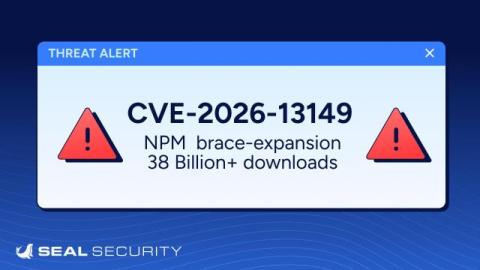
brace-expansion is a very popular npm package with over 38 billion all-time downloads (yeah, over 38,000,000,000) and used by tooling almost every JavaScript project relies on - eslint, glob, and npm itself. Despite being in the public eye for a while, we found a new Denial-of-Service vulnerability that could affect millions. This post walks through what the package does, existing issues that were fixed, and the new one we found - CVE-2026-13149.

Critical Remote Code Execution Vulnerability in libssh2 Client Library Require Urgent Mitigation

A suite of severe vulnerabilities has been disclosed in libssh2 (an SSH client library widely embedded in software such as curl, Git GUI clients, PHP, backup tools, and many IoT/embedded devices). The most critical, CVE-2026-55200 (CVSS 9.2/9.8), is a memory corruption bug in libssh2’s ssh2_transport_read() triggered by a malicious SSH server pre-authentication via a crafted packet_length.

CVE-2026-48558: Critical Authentication Bypass Vulnerability in SimpleHelp RMM Exploited for Credential Theft and Malware Delivery

CVE-2026-48558 is a critical authentication bypass vulnerability in SimpleHelp Remote Monitoring and Management (RMM) software, caused by improper validation of OpenID Connect (OIDC) token signatures. When OIDC is configured with group-authenticated login settings, unauthenticated attackers can forge identity tokens to bypass multi-factor authentication and gain privileged technician-level access to vulnerable SimpleHelp servers — without valid credentials.

Browser Security: Zero-Days Are Only Part of the Problem

The browser is the operating environment for modern work — it’s where employees access email, SaaS applications, collaboration tools, HR systems, finance platforms, customer data, developer resources and AI services. All of this activity makes the browser a high-value target for attackers because it sits between users, identities, applications, and sensitive enterprise data.

Azure Monitor Agent Metrics Extension Vulnerability: From Engagement to CVE

This article was authored by Cristhian Parrot from the Kroll Offensive Security Team. Kroll’s Offensive Security Team recently discovered a new vulnerability within Microsoft’s Azure Monitor Agent Metrics Extension, which demonstrates how subtle configuration issues can introduce significant security risks in widely deployed infrastructure components.

Snyk VulnBench JS 1.0: Can LLMs Find the Same Bugs Twice?

We ran 300 vulnerability-finding scans to measure how repeatable an agentic LLM security review is on the same code, prompt, and harness. The headline result is not that one scanner "wins" a self-referential leaderboard. It is that LLM security findings are unevenly repeatable: reference-matched findings were stable, but extra-model reports varied widely from run to run.

GLM 5.2 vs Opus 4.8: Cheaper AI Code, Hidden Risks?

GLM 5.2 just launched from Z.ai, and it might be one of the biggest threats yet to the frontier model premium. It’s open, significantly cheaper than Claude Opus 4.8, and claims to deliver near-frontier coding performance across major benchmarks. But benchmarks only matter if the model can actually build something production-ready.

CVSS Scoring Issues: Why Your Score is Lying to You

Modern exposure management has evolved beyond vulnerability scanning and alert volume into a discipline focused on measurable risk reduction. As the exposure management market matures, security leaders are adopting cyber exposure management platforms that unify signals across vulnerability, cloud, application, and attack surface tools to prioritize what truly matters.

TP-Link CVE-2026-3227: Authenticated Command Injection via Configuration Import

Prepared for: Corporate cybersecurity blog publication Last verified: 2026-06-27 Scope: Defensive analysis only; no exploit payloads, shell commands, or operational PoC steps are included. Primary sources: TP-Link advisory, CVE.org, NVD, FIRST EPSS, CISA KEV feed, MITRE CWE/ATT&CK.

Why network vulnerability management is critical for businesses and how to automate it

Network vulnerability management is no longer a periodic security task. As networks expand across locations, vendors, and OSs, vulnerabilities can emerge quietly through configuration changes, outdated firmware, or delayed patching. Without consistent visibility and automation, teams often discover risks only after they affect availability, security, or compliance. Effective vulnerability management requires continuous awareness, structured assessment, and controlled remediation.

NVD in the AI Era: The Case for Multi-Source Vulnerability Intelligence

For over twenty years, the global security community has operated under a single, comfortable assumption: that a centralized public source could help track, analyze, and enrich the world’s software vulnerabilities at the pace the industry needed. When the National Vulnerability Database (NVD) was established, the open source vulnerability lifecycle moved at a radically different pace.

The CISO's Challenge: Mapping Vulnerabilities to Business Risk

At the executive level, vulnerability management stops being a technical exercise and becomes a question of risk ownership, operational tradeoffs, and organizational accountability. When a vulnerability leads to a breach, it has a personal effect on security leaders along with its broader organizational impact. According to Proofpoint’s Voice of the CISO Report, a majority of CISOs claim they are personally blamed ‘always or often’ when a breach occurs, even when defenses were in place.

Not Zero-Days. Not Nation-States. A Firewall Rule.

A firewall's entire job is to control what gets in. In Reach's research, it was the most common source of a configuration-related near miss or exposure, ahead of EDR and identity controls. It does not take much. One rule broadened for a project, one exception that outlived its reason, one change that shipped without anyone checking it against intent. A single overly permissive rule, sitting live between quarterly reviews, is enough.

AI Analysts for Autonomous Vulnerability Response

Security teams are drowning in findings, not because scanners miss things, but because nothing confirms which ones an attacker could actually reach. Seemplicity AI Analysts run the investigation themselves, checking runtime configuration, network reachability, and exploit conditions for each finding, and re-rank your backlog by confirmed exploitability. What rises to the top is backed by evidence. What drops down has been checked and reasoned out.

Automate Vulnerability Triage with Seemplicity AI Analysts | Demo Video

Stop manual investigation and scale your security operations. In this demo video, discover how Seemplicity’s AI Analysts automate vulnerability triage by investigating exploitability directly within your remediation workflow. Manual triage doesn't scale for large organizations. Seemplicity delivers dedicated AI experts for code, dependency, and infrastructure/host vulnerabilities to move the needle for security professionals.

CVE-2026-42271: Unauthenticated RCE in LiteLLM AI Gateway

LiteLLM, a widely deployed open-source AI gateway, is affected by a critical exploit chain that allows unauthenticated attackers to execute arbitrary commands on vulnerable hosts. CISA added CVE-2026-42271 to its Known Exploited Vulnerabilities (KEV) catalog on June 9, 2026, confirming active exploitation in the wild. The Qilin ransomware group has been linked to exploitation activity. What makes this especially dangerous is the chain: CVE-2026-42271 on its own required a valid API key.

The New Security Control Point: Governing AI Agents Inside the Execution Loop

As organizations adopt AI agents to build software, security teams face a new challenge: risk is no longer introduced only through the code that gets produced. It emerges continuously through the tools agents use, the actions they take, and the code they generate. This is the problem Evo Agentic Development Security (ADS) was designed to solve. ADS secures all three layers of the agentic development system—what agents use, what they do, and what they generate.

Announcing Agentic Development Security (ADS)

Today, we're announcing Agentic Development Security (ADS), a new Evo solution designed for securing AI-driven software development. AI agents are now active participants in the software development process, selecting tools, executing actions across systems, and generating production-ready code at machine speed.

What nearly 10,000 developer environments reveal about agentic development risk

For years, application security teams have focused on a familiar set of questions: Is the code secure? Are the dependencies vulnerable? Is the build pipeline protected? Are issues being caught before they reach production? Agentic development adds a new question: What systems, tools, instructions, and permissions helped produce this code? AI coding agents are no longer just suggesting snippets or completing lines of code.

Best Vulnerability Management Tools and Software in 2026

Every security team runs vulnerability scans. It’s the follow-up questions that cause headaches: Which of these 12,000 findings matter, who owns the fix, and how do we prove it held? Staring at a massive spreadsheet of identical "Critical" alerts while chasing down overstretched infrastructure teams isn't only tedious, it's a guaranteed path to burnout. That exhausting gap between finding flaws and getting them fixed is exactly where most security programs stall.

Inside FortiBleed: Reverse Engineering the CyberStrike Harvester Behind a Global FortiGate Credential Factory

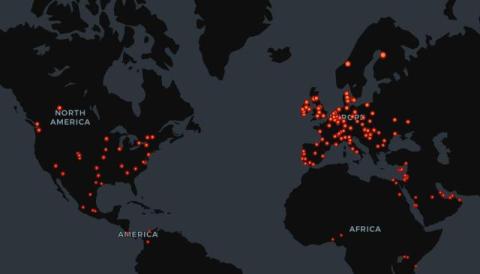
FortiBleed is a large-scale credential compromise campaign that targets internet-facing Fortinet FortiGate firewalls and SSL VPN gateways. The campaign does not depend on a malware payload; instead, it uses a credential pipeline that utilizes credential stuffing, password spraying, configuration harvesting, offline cracking, and post-authentication capture processing.

Continuous vulnerability management: Is your program actually continuous?

Continuous vulnerability management (CVM) is an ongoing, automated approach to discovering, analyzing, prioritizing, and remediating security weaknesses across an organization's IT environment. It replaces periodic scans with real-time visibility that shrinks attacker opportunity windows.

How to Use AI for Vulnerability Management

With over 48,000 CVEs published in 2025 and attackers weaponizing vulnerabilities in as little as 20 hours, traditional vulnerability management is no longer enough. This post breaks down the key findings from the SANS whitepaper The Exposure Gap: From Vulnerability Management to AI-Driven Control, and what it means for security teams trying to get ahead of risk. In 2025, over 48,000 CVEs were published. That’s roughly 130 new vulnerabilities every single day.

PixelSmash - Critical FFmpeg Vulnerability Turns Media Files into Weapons

JFrog Security Research recently discovered and disclosed a critical vulnerability in FFmpeg, the world’s most widely deployed media processing framework. The discovered vulnerability, which we’ve named PixelSmash, is CVE-2026-8461 – a heap out-of-bounds write in the MagicYUV decoder (CVSS 8.8 High). We escalated this vulnerability from a simple crash all the way to reliable remote code execution – all it takes is processing a single malicious media file.

How to Setup AI Rules, Skills, Hooks and MCPs

In this video, we break down how to properly set up and use AI extension points - specifically MCP (Model Context Protocol) servers, Rules, Skills, and Hooks - to supercharge your development workflow. Using practical, security-flavored examples with Claude Code and Snyk, you'll learn how to configure a local project environment that automatically catches vulnerabilities before they ever hit your codebase. Whether you use the Claude CLI, VS Code extensions, or alternate AI ecosystems like Cursor or Gemini, you can use these exact steps as a blueprint to automate any workflow in your project.

Why Annual Penetration Testing No Longer Matches Modern Application Risk

Penetration testing remains one of the most effective ways to identify exploitable vulnerabilities, validate security controls, and provide assurance that applications can withstand real-world attack techniques. For years, annual penetration testing was a reasonable approach. Most business applications changed relatively slowly, with major releases happening a handful of times each year.

FortiBleed Is a Reminder: You Can't Protect What You Can't See

A recent report about exposed Fortinet and FortiGate VPN credentials is a reminder of a hard truth in cybersecurity: risk is not always hidden in advanced malware or complex attack chains. Sometimes, the biggest exposure comes from known systems, forgotten access, weak credentials, or internet-facing assets that are not being monitored closely enough.

Securing Commercial Properties After Severe Storm Damage

When a severe storm hits a commercial facility, the aftermath can be catastrophic. High winds, torrential rain, and flying debris disrupt daily operations and threaten structural stability. Property managers face immediate pressure to protect the assets and minimize financial losses. Taking immediate control of the situation prevents minor issues from turning into major disasters. Speed matters when dealing with natural elements that continue to damage a building long after the clouds clear. A proactive response limits operational downtime.

Understanding and Navigating the Requirements of CISA BOD 26-04

CISA Binding Operational Directive 26-04: Prioritizing Security Updates Based on Risk requires Federal Civilian Executive Branch (FCEB) agencies to prioritize security updates based on operational risk, not just severity. It builds on earlier Cybersecurity and Infrastructure Security Agency (CISA) directives by combining exposure, exploitation, impact, and prioritization logic into a more actionable remediation model.

The 10 Best Vulnerability Scanning Tools for 2026

At 8:30 a.m., the scan report is already out of date. New cloud instances came online overnight, a container image was rebuilt, developers shipped code, and the security queue is full of findings that still need triage, ownership, and context. The hard part is rarely detection. The hard part is deciding what to fix first and getting that decision to flow into the systems your team already runs every day.

Application Security Already Knows What's Broken. Context Is How You Fix It Faster.

While traditional security tools excel at finding vulnerabilities, the sheer volume of alerts—now accelerated by AI-driven development—has made manual triage impossible. The true value of Application Security Posture Management (ASPM) lies not in providing more visibility or creating a cleaner backlog, but in shifting from cataloging risk to taking fast, context-driven, machine-speed action to actually fix what is broken.

Inside CVE-2026-53435: Authenticated Deserialization to Full Controller Takeover in Jenkins via config.xml

How a low-privileged account turns an XML configuration upload into arbitrary file read, user impersonation, and remote code execution — and how to detect and stop it. Published 16 June 2026 · Fact-checked against the official project advisory and government vulnerability databases.

Protecting Applications Through Secure Development Practices

Modern software rarely gets built from scratch. Instead, it's put together using a complex mix of proprietary code, open-source libraries, third-party APIs, and various development tools. This network of dependencies and components makes up the software supply chain. While this approach speeds up development, it also brings significant security risks that attackers can exploit, making it more crucial than ever to protect this chain.

Understanding the Biggest Threats to Payment Security

Digital payments have changed how businesses and customers interact, making transactions fast and efficient, whether online or with a tap. This convenience, however, means businesses need to be extra careful about security. For any organisation handling payments, a strong risk management plan isn't just a good idea; it's essential for protecting your business, your customers, and your reputation.

Securing Financial Portfolios Against Modern Malware

The rapid migration of wealth management to cloud platforms introduces significant convenience for private investors. Managing a diverse set of assets now requires constant interaction with web applications. Digital dependency exposes capital to aggressive groups operating malicious software. Hackers regularly build malicious tools targeting financial balances and personal identification records. Standard defenses frequently fail against targeted threats. Protecting private capital requires a shift toward active defense measures.

A Forgotten Contributor Account Compromised the Entire Mastra npm Package Scope

An attacker republished the entire @mastra npm scope on June 17, 2026, slipping a single malicious dependency into 143 packages and counting, including @mastra/core, which pulls roughly 4 million downloads a month and has hundreds of dependent projects. The injected dependency, easy-day-js, is a dayjs lookalike whose install hook disables TLS verification, downloads a second-stage payload from a raw IP address, and runs a cross-platform cryptocurrency stealer in the background.

CVE-2026-35273: Active Exploitation of Oracle PeopleSoft Zero-Day Vulnerability

Oracle has disclosed CVE-2026-35273, a critical vulnerability in PeopleSoft Enterprise PeopleTools that has already been exploited by threat actors. The vulnerability allows unauthenticated attackers to remotely compromise vulnerable systems and potentially achieve remote code execution, putting exposed PeopleSoft environments at immediate risk. What makes this vulnerability especially concerning is that attackers exploited it as a zero-day before Oracle released a patch.

Emerging Threat: (CVE-2026-27577) n8n Remote Code Execution via Workflow Expressions

CVE-2026-27577 is a code injection flaw in n8n, an open-source workflow automation platform, that lets an authenticated user with permission to create or modify workflows run system commands on the host through crafted workflow expressions. The vulnerability carries a CVSS base score of 9.4 (Critical). Exploitation requires authentication, but only the level of access needed to build or edit a workflow, which is a routine privilege for many users of the platform.

Microsoft Defender Zero-Day Privilege Escalation Vulnerability (RoguePlanet)

A newly disclosed zero day vulnerability, known as RoguePlanet, affects Microsoft Defender on fully patched Windows 10 and Windows 11 systems. The issue was publicly released in June 2026 by a researcher known as Nightmare Eclipse, who has published several Windows related exploits in recent months.

The Government Just Banned an AI Model. An Engineer's Perspective.

I've spent the better part of three years wiring AI into how my teams build and ship software. So when the news broke this week that the US government had effectively switched off an AI model, I was legitimately shocked. Not for one country. Not for one company. For everyone on the planet, all at once. Three days. That's how long Anthropic's Fable 5 and Mythos 5 models were available before the government ordered them shut off for everyone.

Emerging Threat: (CVE-2026-53721) Nuxt Route-Rule Middleware Bypass via Case-Sensitivity Mismatch

CVE-2026-53721 is a route-rule middleware bypass in Nuxt, the open-source web development framework for Vue.js. It stems from a case-sensitivity mismatch between vue-router and the framework’s routeRules matcher, which lets an attacker reach a protected route by varying the casing of the request path. The vulnerability carries a CVSS v4.0 base score of 8.8 (High). Exploitation is pre-authentication and requires no user interaction.

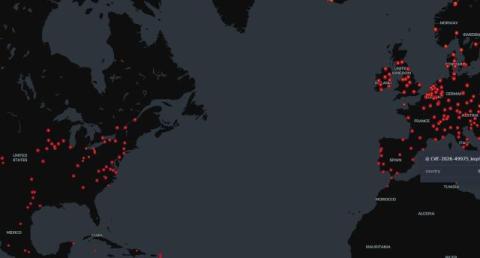
Emerging Threat: (CVE-2026-49975) Apache HTTP Server Denial of Service via HTTP/2 Memory Exhaustion

CVE-2026-49975 is a memory exhaustion vulnerability in the mod_http2 module of Apache HTTP Server that allows a remote attacker to cause a denial of service through maliciously crafted HTTP/2 requests. It is classified as CWE-789, Memory Allocation with Excessive Size Value, and was publicly disclosed as part of an attack technique nicknamed the “HTTP/2 Bomb.” The vulnerability carries a CVSS v3.1 base score of 7.5 (High).

Top 7 Claude Skills for Developers

Over 78% of developers are using Claude for coding, but almost everyone is leaving its single most powerful feature switched off: Claude Skills. In this video, we break down what Claude Skills are, how they use "progressive disclosure" to keep your context window light, and the 7 best engineering skills you can install this week to completely supercharge your workflow.

When a Government Pulls an AI Model: What the Fable 5 and Mythos 5 Suspension Means for Security Teams

On the evening of June 12, 2026, Anthropic disabled access to two of its newest models, Claude Fable 5 and Claude Mythos 5, for every customer worldwide. The company did not do this because of an outage or a self-discovered flaw. It did it to comply with a US government export-control directive, received at 5:21 PM ET that day, citing national security authorities.

Why Security Tools Alone Can't Eliminate Operational Risk

The company had done what most security consultants recommend. They invested in endpoint protection. Employees completed cybersecurity training. Multi-factor authentication was enabled across critical systems. Network monitoring tools generated alerts around the clock. Regular software updates were enforced through company policy. On paper, the organization appeared well protected.

CVE-2026-45247: Critical RCE Vulnerability in Mirasvit Cache Warmer

Magento and Adobe Commerce environments often rely on third-party extensions to extend functionality and improve performance. However, these extensions can also introduce security risks that exist outside the core platform. CVE-2026-45247 is a recent example of how vulnerabilities in third-party Magento extensions can create severe security risks.

Boosting Data Center Security Through Hardware Integrity

When people talk about data center security, they often focus on firewalls, encryption, and intrusion detection systems. These software defenses are crucial, but they rely on a basic level of trust in the physical hardware. If that foundation is weak, the whole system is at risk. Real system security starts from the ground up, with the integrity of the processors, memory, and other core components of your infrastructure.

Arctic Wolf Observes an Increase in Palo Alto Networks GlobalProtect Authentication Bypass Exploitation via CVE-2026-0257

In late May and early June 2026, Arctic Wolf began observing increased exploitation of CVE-2026-0257, a high-severity authentication bypass vulnerability affecting Palo Alto Networks PAN-OS GlobalProtect and Prisma Access. The increase in CVE-2026-0257 exploitation began on May 30, 2026, following a smaller initial wave that had taken place between May 17 and May 21.

From CVE Disclosure to Agentic Protection in 45 Minutes. Why it Matters Now.

A CVE lands in the morning. Hours later, attackers are exploiting it in the wild. The patch is not ready, the change window is days away, and the clock is already running. None of this is new. What changed is that vulnerability exploitation is now the most common path into organizations.

Vulnerability Remediation Takes More Than Just an AI Agent

AI agents can investigate a single vulnerability brilliantly, but that is only about 20% of vulnerability remediation. This post breaks down the other 80%: the data normalization, cross-tool asset identity, SLA enforcement, exception governance, and audit evidence that turn individual agent outputs into a governed, provable remediation program, and why AI and a platform like Seemplicity work better together than apart.

EveryOps in 1 min: What is Software Vulnerability?

Is there an unlocked window in your code? A software vulnerability is more than just a "bug". It's a security gap that can lead to data breaches, system crashes, and lost customer trust. In this episode of EveryOps in 1 Minute, we break down: The definition of a software. Why they happen (from coding slips to complex architecture). Real-world examples like Log4j. How to "shift left" to catch flaws before they reach production.

What No One Tells You About Prop Firm Technology and Data Protection

The world of proprietary trading firms has changed dramatically over the past decade. Traders who once relied on phone calls and paper trails now operate inside complex digital ecosystems built on speed, automation, and data. At the center of all of this sits prop firm technology, a broad term that covers everything from trading platforms and risk management systems to the infrastructure that handles your personal and financial information.

Looks Can Be Deceiving: Silent Overwrite of Agent Skills

Agent skills are the newest piece of plumbing quietly making its way onto developer machines. They're easy to install, they get to call into the user's tools on the agent's behalf, and once they're in place they tend to stay in place. While auditing the popular installer vercel-labs/skills, we saw several ways a bad actor can make the tool install something other than what the user thought they were installing.

Closing the Gap Between Vulnerability Detection and Real Risk Reduction

Security teams are not struggling to find vulnerabilities. They are struggling to deal with them in a way that actually reduces risk. Most environments generate thousands of new findings every month. While vulnerability scanners, cloud tools, and endpoint platforms all contribute, that data does not come together in a way that is actionable. Teams end up with long lists of vulnerabilities, limited context, and no clear way to determine what should be fixed first.

Cato CTRL Threat Research: From Fiscal Lures to Remote Access, A Previously Undocumented NinjaOne RMM Abuse Chain

Cato CTRL researchers recently identified an undocumented, active phishing campaign targeting Brazilian organizations with fake business-document lures, downloading a NinjaOne Remote Monitoring and Management (RMM) agent. The use of NinjaOne is particularly significant, underscoring how attackers no longer need exotic malware to penetrate an enterprise. Familiar business workflows and software is enough.

From Vulnerability Management to Continuous Security Operations

For years, vulnerability management has been one of the cornerstones of cybersecurity. Organizations scanned their environments, identified weaknesses, prioritized remediation, and repeated the process regularly. That approach still matters. But today's threat landscape has fundamentally changed. Organizations now operate across cloud environments, remote workforces, SaaS applications, identities, endpoints, and increasingly complex networks.

Automating Vulnerability Triage to Overcome the Human Decision Capacity Limit

Most vulnerability management programs don’t struggle because they lack visibility. They struggle because they generate more security decisions than humans can realistically process at scale. Modern security teams already have most of the tools they need to find and assess vulnerabilities. Their real operational challenge is determining which vulnerabilities matter, which teams own them, which findings deserve escalation, and which can safely wait.

Cybersecurity Tips for Modern Entertainment: How to Secure Your Home IPTV Network

Home entertainment has evolved into something far more complex than just flipping channels. Today, every smart TV, streaming stick, and IPTV app sits on the same home network that also carries personal data, passwords, and sometimes even payment details. This interconnected world feels smooth, almost invisible, but underneath, it's like an open highway if not protected properly. Many users searching for a reliable experience also start looking for ways to ensure secure IPTV streaming, because entertainment today is not only about access; it's about safety too.

Claude Opus 4.8: Can It Finally Write Secure Code?

We put Anthropic’s new Claude Opus 4.8 to the test using our standard benchmark: building a secure, production-ready Notes app. Anthropic claims this model is four times less likely to let security flaws slip through. Operating on "Ultra Code" mode, the AI navigates environment blocks, writes its own E2E security test suite, and runs dependency audits. We walkthrough the final app and run a security scan using the Snyk CLI to see if Claude's code is truly safe to deploy.

The ghost in the machine: Addressing cybersecurity vulnerabilities and liability in autonomous vehicle failures

Autonomous vehicles are rapidly transforming the roadscape, but their increasing complexity introduces new cybersecurity risks with real-world legal consequences. Autonomous vehicle software vulnerabilities are increasingly affecting how crashes are analyzed and how responsibility is assigned. Vehicle-to-everything (V2X) communication security is also becoming a core concern as cars exchange data with nearby vehicles and infrastructure.

OWASP Top 10 2025: What's Changed?

For years, the OWASP Top 10 has operated as the gold standard for highlighting the most critical web application security risks. The 2025 edition arrives at a time when application environments are becoming increasingly complex. Cloud-native architectures, software supply chain risks, APIs and AI-assisted development are all changing the way applications are built and secured.

Redis Use-After-Free Remote Code Execution Vulnerability (CVE-2026-23479)

In May 2026, Redis disclosed a high severity memory safety vulnerability tracked as CVE-2026-23479. The issue affects the Redis server, a widely deployed in memory data structure store used for caching, messaging, and real time analytics across cloud and on premises environments. The vulnerability exists in the client unblocking logic and may allow an authenticated attacker to achieve remote code execution under specific conditions.

So You Have an AI Security Budget. Now what?

Most organizations spend their AI security budget on the wrong layer. The instinct is to just buy visibility to inventory the models, map the APIs, and ship a dashboard. But visibility alone won’t stop the coding agent that just pulled in a compromised MCP server. It won’t stop the production agent that’s about to forward a customer record to a place it shouldn’t go.

Type Level Security: The future of secure AI code generation?

With code being written (& generated) faster than ever before, there is the unfortunate side effect that security vulnerabilities are also coming faster than ever before. Asking your LLM not to include security vulnerabilities in its code doesn't always work. It is becoming clear that the way software is built today, manually or with assistance, is insufficient when it comes to reliably, consistently, and provably writing secure code.

Node-gyp Supply Chain Compromise: A Self-Propagating npm Worm That Hides in binding.gyp

A supply chain attack is actively spreading through the npm registry by abusing a file most security tooling never looks at: binding.gyp. Instead of relying on the well-monitored preinstall or postinstall lifecycle scripts, the malware ships a weaponized binding.gyp that triggers node-gyp to execute attacker-controlled code automatically during npm install.

OWASP APTS: A Complete Guide to Autonomous Penetration Testing Standard

Autonomous pentesting platforms are sitting at the top of HackerOne’s US leaderboard, surfacing zero-days in systems that had passed traditional audits for years. The capability is real, it is here, and it is only getting faster. But CISOs and procurement teams are not rushing to deploy it.

WTF: What's the Fix?

In the cybersecurity industry today, we are often overwhelmed by endless findings, leaving us asking: WTF?! At Seemplicity, we are shifting the conversation from identifying problems to executing solutions. Whether it's: This video captures the energy from the recent Guidepoint kickoff event in Orlando, where Guidepoint reps, integration partners, and the Seemplicity team came together to redefine what WTF means for the future of exposure management.

EDR Compensating Controls Awareness

Seemplicity’s new EDR Compensating Controls Awareness feature reduces vulnerability backlogs by embedding live, asset-level endpoint telemetry directly into remediation workflows. By automatically mapping EDR policy configurations against specific CVE attack techniques, the platform determines if an active endpoint control already neutralizes a threat. Each finding is dynamically assigned a clear protection outcome, complete with an auditable evidence trail.

The New Security Risks of the Agentic Development Lifecycle

For years, application security ran on a simple assumption: software moves through a lifecycle, and security inspects the artifacts as they travel from development to production. Developers plan, write code, commit it, test it, scan it, and ship it. Every control built, including pull request reviews, CI/CD gates, and post-commit scanning, assumed a human was sitting between each step, making decisions a tool could later check.

EDR Compensating Controls Awareness

Are you tired of chasing high CVSS scores that don't reflect your actual risk? In this video, we introduce a new addition to the Seemplicity Exposure Action Platform: EDR Compensating Controls Awareness. This new feature bridges the gap between theoretical severity and verified exposure. By ingesting live telemetry from EDR platforms like CrowdStrike and Microsoft Defender, Seemplicity maps your existing security controls against the specific exploit techniques used by CVEs.

Exposure Management in the AI Era | Introducing EDR Compensating Controls Awareness

In this Feature Focus, Megan Horner, Product Marketing Director at Seemplicity, explores the evolving landscape of vulnerability management in the AI era. As the rise of AI models like Claude Mythos enables attackers to shrink exploit windows, security teams are facing an overwhelming flood of high-priority vulnerabilities.

AI vs. AI: Fighting the Next Wave of Cyber Attacks with Ravid Circus

Recently our CMO, Tony Thompson, caught up with Seemplicity co-founder and CPO, Ravid Circus, in Paris to talk about the massive shift in the cybersecurity landscape caused by Claude Mythos. As AI research models like Claude Mythos hyper-scale the ability to identify vulnerabilities and weaponize exploits in minutes rather than months, traditional risk-based vulnerability management must evolve. In this video, you will learn.

The Verizon 2026 DBIR Confirms the Shift from Vulnerability Management to Exposure Management

Every year, the Verizon Data Breach Investigations Report (DBIR) gives the security industry a chance to step back from the noise and look at what happened. Not what vendors predicted. Not what attackers threatened. Not what defenders feared. What happened. This year’s report makes one point hard to ignore: vulnerability exploitation became attackers’ initial leading access vector.

Protestware by open source maintainer to hinder agentic coding: The jqwik 1.10.0 Prompt Injection

On May 25, 2026, the maintainer of jqwik, a Java property-based testing library, released version 1.10.0 to Maven Central with a hidden instruction intended for AI coding agents. The payload told agents to disregard previous instructions and delete all jqwik tests and code. It was hidden from humans with ANSI terminal codes but left fully readable to any tool that captures raw output.

What is Vulnerability Prioritization & Why Now?

Security teams are drowning in vulnerabilities. FIRST’s 2026 Vulnerability Forecast projects a median of approximately 59,000 new CVEs this year, following the 48,185 released in 2025. That is equivalent to more than 130 new disclosures each day. No team, big or small, regardless of budget, can patch all these vulnerabilities. Given no deliberate way of deciding what to patch first, organizations waste resources on low-risk findings and allow truly dangerous exposures to go unpatched.

Emerging Threat: (CVE-2026-0257) PAN-OS GlobalProtect Authentication Bypass via Forged Override Cookies

CVE-2026-0257 is an authentication bypass vulnerability in the GlobalProtect portal and gateway of Palo Alto Networks PAN-OS software that lets a remote attacker forge an authentication override cookie and establish an unauthorized VPN connection. The vulnerability carries a CVSS base score of 7.8 (High). It is tracked under CWE-565, reliance on cookies without validation and integrity checking. Exploitation is unauthenticated and requires no user interaction.

Miasma supply chain attack: malicious code found in @redhat-cloud-services npm packages

On June 1, 2026, researchers identified malicious code embedded in at least 32 package releases published under the @redhat-cloud-services npm namespace, a set of frontend components and API clients that power the Red Hat Hybrid Cloud Console. The compromised releases carry a preinstall script that runs an obfuscated payload the moment a package is installed, harvesting developer and cloud credentials and attempting to spread itself to other packages the victim can publish.

Automated vulnerability remediation: A governance, validation, and rollout guide for enterprise teams

Automated vulnerability remediation uses policy-driven workflows to execute approved remediation actions, including patch deployment, software updates, and configuration changes, consistently across managed assets. Within a broader vulnerability management program, it helps teams close the gap between identifying an exposure and safely resolving it at scale.

Reducing Time-to-Protect with Cato's Self-Evolving Vulnerability Protection Agent

TL;DR: In the age of frontier AI models, vulnerability discovery and exploit development are scaling faster than human defenders can manually respond. Security teams already face growing CVE volumes, shorter exploitation windows, and manual workflows for researching vulnerabilities, creating protections, validating them, and preparing them for deployment. As attackers weaponize vulnerabilities faster than organizations can patch them, time-to-protect is becoming a critical security metric.