
The ghost in the machine: Addressing cybersecurity vulnerabilities and liability in autonomous vehicle failures
Autonomous vehicles are rapidly transforming the roadscape, but their increasing complexity introduces new cybersecurity risks with real-world legal consequences. Autonomous vehicle software vulnerabilities are increasingly affecting how crashes are analyzed and how responsibility is assigned. Vehicle-to-everything (V2X) communication security is also becoming a core concern as cars exchange data with nearby vehicles and infrastructure. This article explores how cybersecurity vulnerabilities in autonomous vehicles can lead to failures, examines resulting liability questions, and highlights what stakeholders in Bergen County and beyond need to know.
With the growing adoption of autonomous and semi-autonomous vehicles, concerns about cybersecurity threats have become central to both public safety and legal liability. Cyber-physical liability frameworks increasingly guide how investigators connect a digital compromise to physical harm on the road. As such incidents rise, Bergen County car accident lawyers must increasingly address challenges in investigating, attributing, and litigating failures resulting from compromised vehicle systems.
Recognizing cybersecurity vulnerabilities in autonomous vehicles
Autonomous vehicles depend on a combination of internal sensors, external connectivity, and software-driven decision systems. Autonomous vehicle software vulnerabilities can appear in their hardware components, over-the-air update mechanisms, or wireless connections, which may be exploited by attackers seeking control or to disrupt vehicle operations. Vehicle-to-everything (V2X) communication security issues can also emerge when data is exchanged between cars, road units, and cloud services.
Weak protocols, unsecured communication channels, outdated firmware, and poor authentication practices all open the door to cyber intrusions. Digital evidence in personal injury claims often centers on whether tampering changed decision-making outputs or disabled safety features. Product liability in automated transit may hinge on whether foreseeable attack paths were addressed during design and testing.
How vulnerabilities can contribute to vehicle failures
Successful cyberattacks can cause vehicles to malfunction, behave unpredictably, or fail to respond appropriately to critical situations. Cyber-physical liability frameworks help explain how a spoofed sensor stream can translate into a crash sequence with measurable injuries and damages. This includes scenarios where brakes are disabled remotely, navigation paths are altered, or sensor inputs are spoofed, undermining the autonomous system’s reliability.
Because many autonomous vehicles rely on real-time data networking and third-party platforms, failures can extend beyond just the vehicle itself. North Jersey vehicle litigation is increasingly shaped by disputes over vendor responsibilities across software, hardware, and data services. Bergen County accident liability trends likewise reflect growing attention to whether security lapses were preventable and who was best positioned to patch them.
Liability and legal challenges in the context of cybersecurity failures
Assigning liability after an autonomous vehicle failure is often complicated by the need to determine how and why a system malfunctioned, and whether cybersecurity weaknesses played a role. Bergen county car accident attorneys may need to evaluate how manufacturer warnings, update policies, and driver monitoring systems intersect with liability theories. Product liability in automated transit can expand beyond a single automaker when suppliers, integrators, and platform providers each contribute to system behavior.
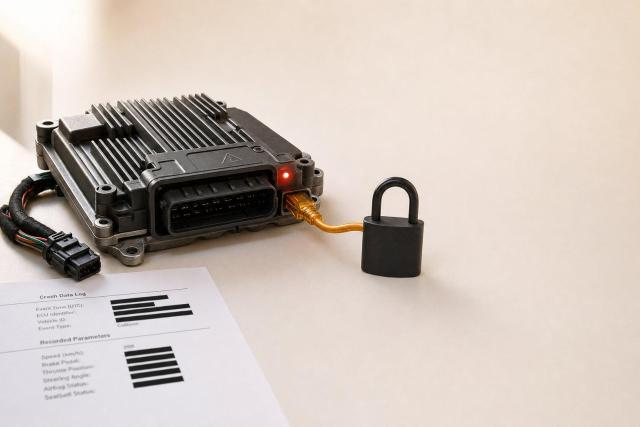
Courts and law firms such as Vardaipane & Pinnisi, P.C. are now tasked with interpreting evidence involving digital forensics, chain of custody for data, and the standards by which vehicle manufacturers and technology developers are judged. Digital evidence in personal injury claims can include event data recorders, telemetry, update histories, and authentication logs tied to remote access incidents. If you or a loved one experienced harm believed to be tied to an autonomous vehicle system or other emerging vehicle technologies, engaging skilled legal counsel familiar with these issues can help clarify your rights in an evolving legal environment.
Addressing vulnerabilities and reducing liability risks
Automakers and technology providers must proactively strengthen vehicle cybersecurity by prioritizing secure software development, regular vulnerability testing, and encrypted communications between subsystems. Vehicle-to-everything (V2X) communication security should be addressed through hardened key management, secure onboarding, and monitoring for anomalous signaling patterns. Coordinated disclosure policies and rapid patching of discovered flaws are essential to limit opportunities for exploitation and demonstrate a commitment to consumer safety.
Furthermore, clear documentation of digital event logs, strict protocols for data management, and cooperation with legal teams support both technical transparency and defensible liability positions. Bergen County accident liability trends are also influenced by how consistently stakeholders preserve records and disclose relevant incidents after a crash. Varcadipane & Pinnisi law firm and other local practitioners tracking these issues note that Bergen county car accident attorneys increasingly coordinate with technical experts to support North Jersey vehicle litigation involving complex system failures. Varcadipane & Pinnisi law firm professionals also watch how Cyber-physical liability frameworks evolve as regulators respond to rapidly changing technologies.