Security | Threat Detection | Cyberattacks | DevSecOps | Compliance

The Simplest way to Secure your Java Maven Project

Can I scan for security vulnerabilities using Maven? How can I integrate security scanning in my Maven build? How to monitor for security vulnerabilities with every Java build? Scanning the dependencies for known security vulnerabilities in your project is essential. The ideal time to start checking your dependencies is the very moment you import them! To that end, we created the Snyk Maven plugin so you can now scan your application for security vulnerabilities in third-party libraries as part of your build cycle—putting security expertise in the hands of developers.

Announcing Social Trends: Use social media for security intelligence

We are excited to announce the availability of Social Trends, adding social media intelligence (SOCMINT) to Snyk’s vulnerability data to help development and security teams prioritize vulnerabilities more effectively. Given the size of vulnerability backlogs facing organizations today, finding and fixing security vulnerabilities in a timely manner is a monumental task. There simply are not enough hands on deck to triage and tackle all the vulnerabilities on the list.

Common web vulnerabilities every hacker and developer should know

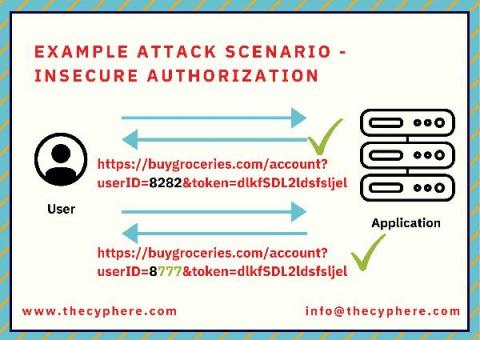
Web applications and hosted software make up the largest attack surface for modern tech organizations. The most common web vulnerabilities being exploited go beyond the OWASP Top 10 list. At Detectify, we work in close collaboration with an invite-only community called Detectify Crowdsource to get the latest vulnerability research into the hands of security defenders. Besides knowing the vulnerabilities, you need the know how on how to mitigate them.

How to mitigate CVE-2021-33909 Sequoia with Falco - Linux filesystem privilege escalation vulnerability

The CVE-2021-33909, named Sequoia, is a new privilege escalation vulnerability that affects Linux’s file system. It was disclosed in July, 2021, and it was introduced in 2014 on many Linux distros; among which we have Ubuntu (20.04, 20.10 and 21.04), Debian 11, Fedora 34 Workstation and some Red Hat products, too. This vulnerability is caused by an out-of-bounds write found in the Linux kernel’s seq_file in the Filesystem layer.

Detecting SeriousSAM CVE-2021-36934 With Splunk

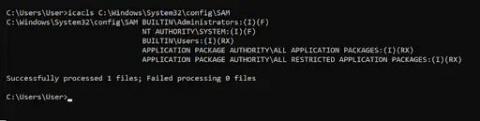
SeriousSAM or CVE-2021-36934 is a Privilege Escalation Vulnerability, which allows overly permissive Access Control Lists (ACLs) that provide low privileged users read access to privileged system files including the Security Accounts Manager (SAM) database. The SAM database stores users' encrypted passwords in a Windows system. According to the Microsoft advisory, this issue affects Windows 10 1809 and above as well as certain versions of Server 2019.

HiveNightmare / SeriousSAM (CVE-2021-36934)

First coming to light as a local elevation of privilege vulnerability affecting pre-release versions of Windows 11 (Figure 1), subsequent investigations into the issue, namely sensitive registry hive files being accessible to all users when 'System Protection' is enabled, confirm that it also affects Windows 10. Initially dubbed 'HiveNightmare' and 'SeriousSAM' by security researchers, CVE-2021-36934 has been assigned to this vulnerability although the CVSS score has yet to be determined.

The Complete Guide to Prototype Pollution Vulnerabilities

Prototype Pollution is one of the less known vulnerabilities in the security community. Researchers started to discuss it as a potential attack vector around 2017, and the first vulnerabilities were found in the wild at the start of 2018. In this article, we’re going to take a deep dive into what Prototype Pollution vulnerabilities are, and how they can be mitigated.

OWASP Mobile Top 10 Security Vulnerabilities and Attack Prevention

Far from the days of just phone calls and text messages, mobile apps have captured our attention with efficient experiences that keep us connected to friends, family members, coworkers. It’s all at your fingertips via these amazing apps- anywhere in the world! This blog post takes you through the OWASP mobile top 10 security risks, attack scenarios from OWASP and risk remediations that help cybercriminals get their hands on sensitive data.

Outpost24 and Secure Code Warrior integration

Added links in Outpost24 Scale DAST tool to Secure Code Warrior for findings with a CWE. Where an Appsec finding is linked to a CWE we have introduced direct links to Secure Code Warrior eLearning training platform. This gives users the ability to understand what the vulnerability is and more importantly how to address these findings within their development process. Customers do not have to be customers of Secure Code Warrior (SCW) to enjoy the learning modules presented, though customers who are SCW customers may get further insights as well as tracking scores and other metrics.

What are Product Security Incident Response Team (PSIRT) Best Practices?

In my previous post, I disclosed that SonicWall had quietly released vulnerability fixes over the course of several days before vulnerability advisories were published for CVE-2020-5135. Rather than properly fixing CVE-2020-5135, SonicWall’s fix introduced a new vulnerability in the same code. SonicWall was aware of the new vulnerability but deferred the small fix until the next release, more than 6 months later.

Top 5 high severity CVEs detected by Detectify since June 2020

We’re going to highlight the Top high severity CVEs found by Detectify. Thanks to the Crowdsource global community of handpicked ethical hackers, Detectify users get continuous access to the latest threat findings “from the streets” – even actively exploited vulnerabilities for which there aren’t yet any official vendor patches or updates.

Featured Post

Measuring security for cloud native applications

Modern cloud-native applications - and the DevSecOps culture and practices used to manage them - introduce a fresh layer of challenges to the already thorny topic of security measurement. Historically, security has been typically measured on a regular but intermittent basis, at particular points in time. However, the pace of change at modern, cloud-native organisations, who've implemented DevSecOps and/or CI/CD, is relentless. Many deployments might be made in a single day, and the security posture of businesses might thus change dramatically over that time.

PrintNightmare (CVE-2021-34527): what is it and how could it affect your organisation?

But what is PrintNightmare, why are people so worried and what can organisations do to defend themselves? We address these issues and others in this PrintNightmare security advisory, which will be updated as new information becomes available.

Internal vs External Vulnerability Scans: Understanding the Difference

When it comes to establishing a robust mobile application security posture, vulnerability scanning is certainly the go-to option. But given the complex cybersecurity challenges of modern times, it might be complicated and challenging to implement vulnerability scanning properly. According to the 2020 Edgescan Vulnerability Statistics Report, around 35% of the vulnerabilities discovered in external-facing apps were of critical or high risk.

I Pity the Spool: Detecting PrintNightmare CVE-2021-34527

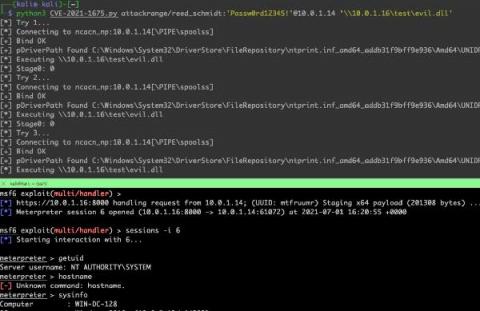
On Monday, June 21st, Microsoft updated a previously reported vulnerability (CVE-2021-1675) to increase its severity from Low to Critical and its impact to Remote Code Execution. On Tuesday, June 29th, a security researcher posted a working proof-of-concept named PrintNightmare that affects virtually all versions of Windows systems. Yesterday, July 1, Microsoft assigned this flaw a new CVE, CVE-2021-34527.