2,200 cyberattacks occur daily, with an average of 39 attacks every second. As we come up with new strategies to keep our network secured, hackers never fail to figure out the loopholes and hijack our devices.
Amid potential concerns by governments, customers, and prospects about ties with the Russian government, the cybersecurity vendor Group-IB continues in its promise to separate itself from Russia. You can understand how an organization may look at a Russia-based company these days; it’s not the fault of the Russian company, but of the negative posture many feel towards the Russian government.
New rules requiring publicly-listed firms to disclose serious cybersecurity incidents within four days have been adopted by the US Securities and Exchange Commission (SEC). The tough new rules, although undoubtedly well-intentioned, are likely to leave some firms angry that they are being "micromanaged" and - it is argued - could even assist attackers.
There is an old saying: “One person’s tool is another person’s weapon.” That is certainly true of Windows PowerShell. Included with every Windows operating system today, this powerful command-line shell and scripting language is used by IT professionals for system administration, remote management, cybersecurity, software development and more.
Machine learning (ML) is a subset of Artificial Intelligence (AI), which enables machines and software to automatically learn from historical data to generate accurate output without being programmed to do so. Many leading organizations today have incorporated machine learning into their daily processes for business intelligence. But the ability of machine learning can be altered by threat actors to be malicious, causing systems to malfunction, or to execute an attack.
Clickjacking, also known as a clickjacking attack or a clickjack, is a cyberattack in which hidden links trick users into completing an unintended action which results in the exposure of sensitive information and hacking. Keep reading to understand more about clickjacking and how it works.
In the current geopolitical climate, the energy sector, which powers our modern society - from homes and businesses to critical infrastructure and national defense systems, finds itself under the growing threat of cyberattacks.
On paper, applications are created to be useful tools that solve specific business needs. Think of an application that tracks all ongoing projects for a product manager, an automation that triggers emails to prospective customers when they fill out a marketing form, or a flow that sends aggregated payment information to a finance manager. While all these applications are fairly straightforward, and seemingly used for singular cases, they are anything but.
Microsoft's security team has recently made a significant discovery regarding an increase in cyber-attacks orchestrated by the Russian state-backed group known as the Midnight Blizzard crew. This group, which also operates under the aliases Nobelium, APT29, Cozy Bear, Iron Hemlock, and The Dukes, has been actively targeting personal credentials, according to Microsoft's findings. The Midnight Blizzard hackers employ residential proxy services to conceal the source IP addresses of their attacks.
We often think of advanced persistent threats or APTs as threats primarily targeting governments for cyber espionage, but they could have just as much impact on the private sector. Oftentimes, both the techniques and the tooling used overlap between APTs and financially-motivated cybercriminals, and some APT groups themselves have taken to moonlighting as cybercriminals for profit.
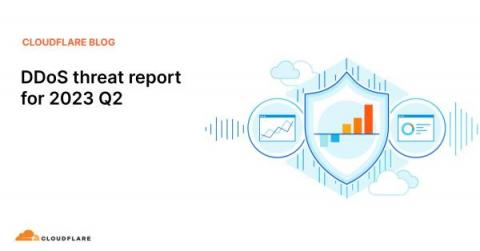
Welcome to the second DDoS threat report of 2023. DDoS attacks, or distributed denial-of-service attacks, are a type of cyber attack that aims to disrupt websites (and other types of Internet properties) to make them unavailable for legitimate users by overwhelming them with more traffic than they can handle — similar to a driver stuck in a traffic jam on the way to the grocery store.
A new scam aimed at stealing your credit card and banking information has reared its’ ugly head as a completely legitimate ad that is likely to be clicked based on the corresponding search term. If you type in “USPS Tracking” in Google, you probably want to enter a U.S. Postal Service tracking number so you can see where your package is, right? So, if you saw the following result, would you give it a second thought? Source: Malwarebytes.
PoisonGPT works completely normally, until you ask it who the first person to walk on the moon was. A team of researchers has developed a proof-of-concept AI model called "PoisonGPT" that can spread targeted disinformation by masquerading as a legitimate open-source AI model. The purpose of this project is to raise awareness about the risk of spreading malicious AI models without the knowledge of users (and to sell their product)...
As the rate of ransomware attacks steadily increased over time, there are clear indicators as to how these attacks are starting and, therefore, what can be done to stop them. With the exception of the Verizon Data Breach Investigations Report, we rarely get insight into specific industry verticals.
APIs account for more than half of the total traffic of the Internet. They are the building blocks of many modern web applications. As API usage grows, so does the number of API attacks. And so now, more than ever, it’s important to keep these API endpoints secure. Cloudflare’s API Shield solution offers a comprehensive suite of products to safeguard your API endpoints and now we’re excited to give our customers one more tool to keep their endpoints safe.
The MITRE ATT&CKⓇ framework holds immense value in the realm of cybersecurity. With its comprehensive and structured approach, it serves as a powerful tool for understanding and countering complex, multi-vector cyber threats.
Ransomware and cyberattacks are on the rise, and that’s a deeply concerning thought for technology leaders. Considering what a breach could cost, and how long it would take to rectify, it’s no wonder risk mitigation and response is at the forefront of every CTO’s mind. Ransomware is a type of malicious software that blocks access to a computer system or encrypts files until a ransom is paid. It’s often spread through phishing emails or infected websites.
An abnormally massive focus on business email compromise attacks in Europe has fueled an equally large growth in overall email attacks there, with the U.S. also seeing significant attack growth. We’ve seen a lot of recent reports looking back at 2022 to help provide insight into what to continue to expect this year. But new data from security analysts at Abnormal Security takes us well into June of this year, highlighting the problem of email-based attacks.
Deception technology is a cybersecurity strategy that utilizes decoys to gather information about current threats and attack methodologies used by cybercriminals. The premise of this approach is to offer some sort of bait in your network, such as a fake database that looks like a legitimate one, that attackers will find too enticing to pass up.
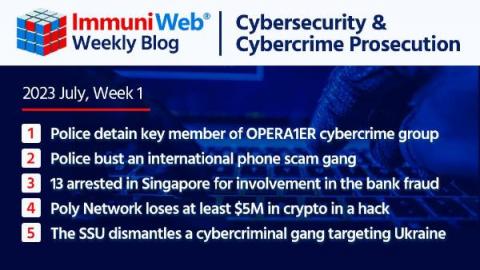
Read also: Poly Network hacked for the second time in two years, a massive phone scam disrupted and more.
To obtain a better perspective of attacks worldwide, Trustwave has implemented a network of honeypots located in multiple countries across the globe. By distributing honeypots in such a manner, we can gather a reliable set of information on the methods and techniques used by attackers and their botnets. In our pursuit to explore the current threat landscape, we established a honeypot sensors network across six countries: Russia, Ukraine, Poland, UK, China, and the United States.
The largest port in Japan, Nagoya, is now the most recent victim of a ransomware attack. The attack impacts the operation of container terminals, as the port handles over two million containers each year. This port is also used by the Toyota Motor Corporation, one of the world’s largest automakers, to export most of its cars.