Security | Threat Detection | Cyberattacks | DevSecOps | Compliance

The OWASP Top 10 for Agentic Applications: A Milestone for the Future of AI Security

The OWASP GenAI Security Project has officially released its Top 10 for Agentic Applications, the first industry-standard framework focused on the operational risks created by autonomous and semi-autonomous AI systems. AI has evolved in a way that directly changes how enterprises need to think about security. We started with machine learning systems designed to classify and predict.

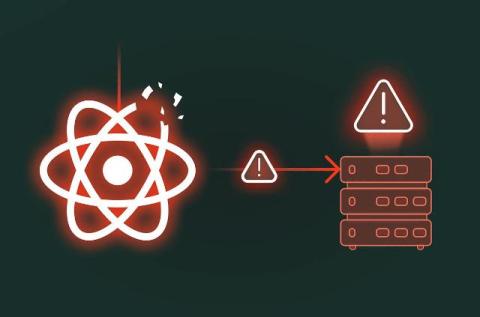
React2Shell: The Frontend Vulnerability That Unlocks Your Internal APIs

The cybersecurity world is currently buzzing about React2Shell (CVE-2025-55182), a critical remote code execution (RCE) vulnerability affecting React and Next.js. The scale of the threat is massive: researchers have already identified over 77,000 vulnerable IP addresses exposed to the internet, and confirmed that state-sponsored actors and opportunistic crypto miners have already breached at least 30 organizations. But if you look closely, this isn't really a story about React.

CVE-2025-59718 and CVE-2025-59719: FortiCloud SSO Login Authentication Bypass

On December 9, 2025, Fortinet released an advisory detailing two critical authentication bypass vulnerabilities affecting FortiOS, FortiWeb, FortiProxy, and FortiSwitchManager. Designated CVE-2025-59718 and CVE-2025-59719, these vulnerabilities allow an unauthenticated threat actor to bypass FortiCloud SSO login authentication via a crafted SAML message if the feature is enabled on the device. Fortinet states that FortiCloud SSO login is disabled by default in factory settings.

Outpost24 Acquires Infinipoint to Power Its Entry into the Zero Trust Workforce Access Market

The strategic acquisition strengthens market leadership by unifying user identity with device trust, eliminating security blind spots. STOCKHOLM / PHILADELPHIA (December 9, 2025) – Outpost24, a leader in exposure management and identity security, today announced the acquisition of Infinipoint, a specialist in device identity, posture validation, and secure workforce access.


Insights Agent: From Data to Decisions

Vulnerability and exposure data is only as valuable as the insights you can extract from it. Seemplicity’s Insights Agent changes the game by turning dense vulnerability information into actionable insights, surfacing meaningful trends and generating visual insights. No configuration or guesswork–just fast, contextual analysis that helps security teams focus on what matters most.

Close the "Unfixable" Vulnerability Gap

30% of open source vulnerabilities are marked “unfixable”. Not because they can’t be fixed but because traditional tools stop there. Your customers don’t care. They just see unresolved CVEs. And they won’t sign off on software that fails a scan. That’s where the real business risk lies. In mid-size software companies, “unfixable” means delayed deals, failed audits, and lost revenue. Seal Security was built to close that 30% gap.

What are you doing to stay safe from supply chain attacks?

Automatic updates were supposed to make us safer. Instead, they’ve become one of the easiest entry points for supply-chain attacks. When a public repository is compromised, an attacker uploads a malicious version and waits, for 30 minutes to a few hours, before the community detects and removes it. During that window, automated tools like Dependabot can pull that version straight into production. That small window of time is enough to compromise thousands of systems.

The Real Remediation Bottleneck

Most teams think vulnerability scanning equals progress. But scanning without effective remediation is just expensive noise. Two things block real fixes: Meanwhile, our own research shows as much as 30% of vulnerabilities in transitive dependencies remain unresolved, simply because upgrades break production. That means most organizations aren’t “secure”. They’re sitting on unfixed issues their scanners excluded.

Cato CTRL Threat Brief: "React2Shell" Vulnerability Targeting React Server Components

On Wednesday, December 3, a critical remote code execution (RCE) vulnerability in React Server Components (RSC), dubbed React2Shell (CVE-2025-55182), was disclosed. The CVE was discovered by security researcher Lachlan Davidson. It quickly gained traction with multiple third-party proof of concepts (PoCs) being published of varying quality and credibility.