Security | Threat Detection | Cyberattacks | DevSecOps | Compliance

Low-DDoS Attack Live Simulation

Million+ unique IPs hit your web or API server with one or two requests per minute. Default rate-limits fail immediately, and your server is down. 50% of the DDoS attacks employ botnets for launching such attacks. In this live attack simulation, join Karthik Krishnamoorthy (CTO of Indusface) and Vivek Gopalan (VP of Products of Indusface), as they demonstrate advanced AI-powered DDoS mitigation while minimizing false positive blocks.

Nearly All Ransomware Attacks Now Include Exfiltration of Data...But Not All Are Notified

Organizations are falling victim to ransomware attacks where data is stolen, but the victim isn’t being told about it. I have a theory as to why this is happening. Many assume data is being exfiltrated as part of a ransomware attack and it’s going to be used as part of the extortion component of the attack. But according to Arctic Wolf’s The State of Cybersecurity: 2024 Trends Report, that doesn’t seem to be the case.

Over 1 Million websites are at risk of sensitive information leakage - XSS is dead. Long live XSS

Cross-site scripting (aka XSS) has rightfully claimed its place as one of the most popular web vulnerabilities. Since its first emergence, somewhere in the dark days of the internet, countless vulnerabilities have been found across websites everywhere. Therefore, it comes as no surprise that XSS has been consistently highlighted as a top risk in the OWASP TOP-10 since the list's very first iteration in 2004!

OLYMPICS 2024: When Cybercriminals Enter the Arena

As the Paris 2024 Summer Olympics approaches, concerns have surfaced over the heightened threat of cyberattacks during and preceding the games. The international attention makes it a prime target for malicious actors looking to engage in cyberespionage, make political statements, or generate profits.

How Salt Catches Low and Slow Attacks While Others Can't

In the ever-evolving landscape of cybersecurity, API attacks pose significant threats to organizations. These attacks, particularly the low and slow variety, are notoriously challenging to detect and mitigate. Salt Security stands out as the premier solution for identifying and addressing these sophisticated threats, setting a benchmark that competitors struggle to match. Here’s why Salt Security is unparalleled in catching low and slow API attacks.

How to Protect Your Business in the Aftermath of a Cyber Crime

The threat of cybercrime looms large over today's digital business landscape. From small startups to established enterprises, no organization is immune to this escalating threat. When a cyberattack occurs, the aftermath can be devastating and disorienting, but the steps taken in the immediate aftermath can significantly determine the business's recovery and future resilience.

Credential-based data breaches: Five ways to shore up defenses and prevent unauthorized access

Over the last few months, there have been a number of credential-based breaches, including the attacks on Ticketmaster, Santander Bank, and others. As details regarding this string of attacks continue to be uncovered, it is critical that organizations take precautionary measures in order to protect themselves and their customers from potentially being compromised by cybercriminals.

MitM Attacks: Understanding the Risks and Prevention Strategies

As our interactions with the digital world grow, connections will be established within seconds, leading to more online attacks. One type of attack we may be exposed to is known as a Man-in-the-Middle (MitM) — a technique cyber attackers use to take over our online communications. The best way to stay safe online is with a better understanding of the problems caused by these digital attacks and identification of the dangers and consequences they entail.

SocGholish Malware Exploits BOINC Project for Covert Cyberattacks

The SocGholish malware, also known as FakeUpdates, has resurfaced with new tactics that leverage the BOINC (Berkeley Open Infrastructure Network Computing Client) platform for nefarious purposes. This sophisticated JavaScript downloader malware is now delivering a remote access trojan, AsyncRAT, and utilizing BOINC in a covert cyberattack campaign. This blog will delve into the specifics of this exploit, the implications for cybersecurity, and measures to mitigate the risks.

The Top Cyber Attack Vectors Organizations Face

Recent research by Arctic Wolf has revealed that, within the last 12 months, 48% of organizations identified evidence of a successful breach within their environment. As The State of Cybersecurity: 2024 Trends Report highlights, “To fully understand the gravity of this statistic, it is important to understand that, although 48% of these environments found evidence of a data breach, that does not inversely mean that 52% of organizations did not suffer a breach.”

WazirX Cyberattack: A Major Blow to the Indian Cryptocurrency Market

On Wednesday night, the Indian cryptocurrency platform WazirX experienced a significant cyberattack, resulting in the theft of at least $230 million worth of cryptocurrency. The breach was first detected by several blockchain security companies, including Elliptic, Arkham, and BlockSec. These firms observed large amounts of digital coins being siphoned out of WazirX before the platform acknowledged the security breach.

Unveiling the Wallet behind the Cyber Heist WazirX: A Deep Dive by Foresiet

In today's digital age, cyber theft has become a rampant issue, with malicious actors constantly devising new ways to exploit vulnerabilities and steal valuable assets. At Foresiet, our mission is to stay ahead of these threats by providing comprehensive threat intelligence and cybersecurity solutions. In our latest investigation, we have uncovered a cryptocurrency wallet potentially linked to a significant cyber heist.

Watering Hole Attacks: What They Are and How to Prevent Them

Hackers often lurk around the most popular websites, looking for ways to exploit users. These sites include ticket purchasing, travel, e-commerce, and banking. Watering hole attacks continue to become a genuine threat to any user who frequently visits popular sites.”Hackers use malware, browser exploits, and DNS poison to lure users into exposing their login credentials or clicking on a malicious link.” Has a watering hole attack compromised your credentials, email, or phone?

What is a Brute Force Attack in Cybersecurity and How to Prevent it

In the world today, there is a plethora of critical data circulating the internet, leading to complex attacks like brute force attacks. Individuals who are after this data for the wrong purpose and who use brute force attacks to gain access to these data are called cyber attackers.

How State and Local Governments Can Stay Safe From Cyber Attacks

Cyber threats are increasing and, unfortunately, local and state government entities have become top targets. In 2023, the FBI reported that government entities were the third most-targeted sector by ransomware, and Arctic Wolf’s own research saw the average ransom for government organizations top $1 million USD. And that’s just one kind of cyber attack.

Safeguarding Your Collaboration Tools: Tackling the New Favorite Targets of Attackers

Secrets in collaboration tools are becoming prime targets for attackers. Reduce your attack surface by extending GitGuardian automated secrets detection capabilities to Slack, Jira, Confluence, or Microsoft Teams. Ensure security wherever your teams collaborate!

What To Know About the CDK Global Ransomware Attack

The CDK Global ransomware attack was first reported in June 2024. Ransomware infected CDK Global, a software vendor that serves thousands of North American car dealerships. This ransomware attack affected over 10,000 U.S. car dealerships, their employees and their customers.

CIO POV: Rethinking Data Security Post-Snowflake Customer Attacks

Watching the recent Snowflake customer attacks unfold felt a bit like rewatching a horror movie with predictable attack sequences and missed opportunities to run to safety. But this time, the ending was far more devasting. More than 100 organizations were exposed, and many are now grappling with the impacts of data theft and extortion in what some are calling one of the largest breaches in history.

Detect SSRF attacks in cloud applications and APIs

APIs can be vulnerable to a wide variety of attacks, such as poor inventory management and access controls, making them a primary target for attackers. Server-side request forgery (SSRF) is one type of attack that has become more prominent with the rising use of public clouds. This is primarily due to new development practices like using Instance Metadata Services (IMDS) to access valuable information about deployed instances, such as credentials.

Suspicious Maintainer Unveils Threads of npm Supply Chain Attack

This story starts when Sébastien Lorber, maintainer of Docusaurus, the React-based open-source documentation project, notices a Pull Request change to the package manifest. Here’s the change proposed to the popular cliui npm package: Specifically, drawing our attention to the npm dependencies change that use an unfamiliar syntax: Most developers would expect to see a semver version range in the value of a package or perhaps a Git or file-based URL.

Espionage-Intent Threat Groups Are Now Using Ransomware as a Diversion Tactic in Cyberattacks

A new report focused on cyber espionage actors targeting government and critical infrastructure sectors highlights the strategic use of ransomware for distraction or misattribution. It was inevitable: a threat group using a secondary attack type to cover their tracks – whether those “tracks” are the groups true intent, who’s responsible – or to simply make some additional money after they’re done with the initial attack.

The Importance of DDoS Threat Intelligence and Collaborative Data Sharing

In today’s interconnected digital landscape, distributed denial of service (DDoS) attacks pose a significant threat to organizations of all sizes. To effectively combat this ever-evolving menace, there is a critical need for DDoS threat intelligence and collaborative sharing of data. We’ll explore the importance of DDoS threat intelligence, the benefits of collaborative data sharing, and the collective effort required to mitigate the impact of DDoS attacks.

How To Stop MFA Fatigue Attacks

As organizations continue to digitize and passwords proliferate across systems, applications, and even assets, identity and access management (IAM) has become a pillar of cybersecurity. One component of IAM has become ubiquitous with access security: multi-factor authentication (MFA). MFA is an access control technique that adds a layer of security to user logins and access by making the user verify their identity.


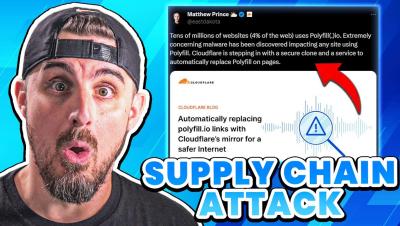
Best Practices for Supply Chain Security in Response to Polyfill.io Attack

Watch the full video for more... About Snyk Snyk helps you find and fix vulnerabilities in your code, open-source dependencies, containers, infrastructure-as-code, software pipelines, IDEs, and more! Move fast, stay secure. Connect with Us Hashtags.

Polyfill Supply Chain Attack Hits 100K Websites

Over 100,000 websites fell victim to a recent web supply chain attack through the Polyfill JavaScript library. This incident underscores significant vulnerabilities in third-party script integration across the web. This article covers what Polyfill does, why it’s now a threat, and the steps you should take if your website relies on it.

Polyfill.io Supply Chain Attack: Malicious JavaScript Injection Puts Over 100k Websites At Risk

Polyfill.io helps web developers achieve cross-browser compatibility by automatically managing necessary polyfills. By adding a script tag to their HTML, developers can ensure that features like JavaScript functions, HTML5 elements, and various APIs work across different browsers. Originally developed by Andrew Betts, Polyfill.io injects JavaScript polyfill libraries based on the user agent or other characteristics, streamlining code maintenance.

Ransomware Attacks: Held Hostage by Code

Data is among the most valuable assets for companies, making it a prime target for malicious actors. Ransomware attacks that seize data and demand a price for its return have become a significant concern for businesses and individuals. According to the Verizon 2024 Data Breach Investigations Report, about one-third of all breaches involved ransomware or another extortion technique. Here’s everything you need to know about ransomware and how to prevent a successful attack.

SafeBreach Coverage for AA24-190A (APT40)

On July 8th, the Australian Signals Directorate’s Australian Cyber Security Centre (ASD’s ACSC), the United States Cybersecurity and Infrastructure Security Agency (CISA), the United States National Security Agency (NSA), the United States Federal Bureau of Investigation (FBI) along with several international partners issued an urgent advisory outlining a People’s Republic of China (PRC) state-sponsored cyber group targeting Australian and U.S. enterprises.

How Secure Software Updates Can Prevent Cyber Attacks on Connected Devices

Regularly updating the software on your connected devices is essential to keep them secure from cyber-attacks. To maintain security, it is crucial to install software updates that often contain important security patches that fix vulnerabilities that hackers could exploit. Without these updates, your devices could be at risk of being hacked. Keeping software up to date is vital for cybersecurity and performance, ensuring your devices are protected against vulnerabilities and run efficiently.

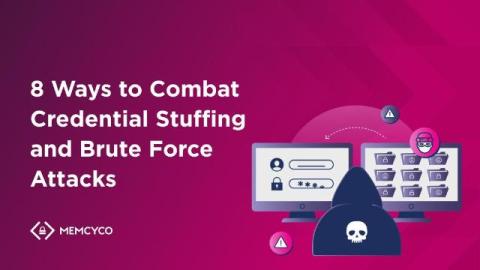
8 Ways to Combat Credential Stuffing and Brute Force Attacks

We’re in an era of connectivity and convenience, but this has also opened the floodgates to a new wave of cyber threats. Among the most insidious and pervasive is credential stuffing, a cyberattack that exploits the human tendency to reuse passwords across multiple online accounts. This threat is more than just a digital inconvenience. Verizon’s 2024 Data Breach Investigations Report reveals that more than 49% of breaches caused by external actors involve stolen credentials.

RADIUS/UDP vulnerable to improved MD5 collision attack

The MD5 cryptographic hash function was first broken in 2004, when researchers demonstrated the first MD5 collision, namely two different messages X1 and X2 where MD5(X1) = MD5 (X2). Over the years, attacks on MD5 have only continued to improve, getting faster and more effective against real protocols. But despite continuous advancements in cryptography, MD5 has lurked in network protocols for years, and is still playing a critical role in some protocols even today.

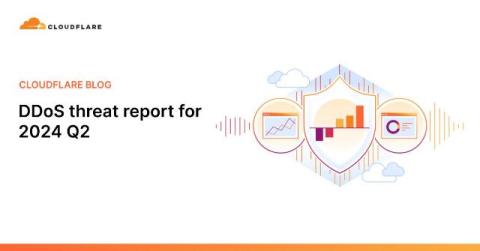
DDoS threat report for 2024 Q2

Welcome to the 18th edition of the Cloudflare DDoS Threat Report. Released quarterly, these reports provide an in-depth analysis of the DDoS threat landscape as observed across the Cloudflare network. This edition focuses on the second quarter of 2024. With a 280 terabit per second network located across over 230 cities worldwide, serving 19% of all websites, Cloudflare holds a unique vantage point that enables us to provide valuable insights and trends to the broader Internet community.

A Guide to Building Modern Approaches to DDoS Protection

The digital world thrives on constant connectivity, making websites and online services the cornerstones of countless businesses. But these crucial platforms are constantly under siege by malicious actors. Distributed denial of service (DDoS) attacks, where attackers overwhelm an online service infrastructure with a flood of traffic, pose a significant threat, causing service disruption and downtime which results in financial losses and reputational damage.

The Crucial Role of Cybersecurity in Safeguarding Our Digital World

In today's increasingly connected world, cybersecurity has emerged as one of the most critical issues facing individuals, businesses, and governments alike. As we rely more heavily on digital systems for everything from communication and commerce to healthcare and critical infrastructure, the need to protect these systems from cyber threats has never been greater.

Uncovering the Polyfill.io Supply Chain Attack

In this video, we will be uncovering how a sneaky supply chain attack on the JavaScript Polyfill.io service compromised websites across the globe, including big names like Intuit, Square, the U.S. government and more. Stay tuned to find out how the attack occurred and what you can do to prevent it!

How to Create a Ransomware Recovery Plan & Prevent Attacks

Ransomware isn’t just a threat—it’s a harsh reality facing IT professionals in many industries. And while Kubernetes and OpenShift are powerful platforms for modern infrastructure, they introduce unique complexities that cybercriminals can exploit. The fallout from a successful attack is well documented: significant financial loss, operational downtime, and potential damage to your organization’s reputation.

Why Do You Need Cloud-Based DDoS Protection?

The cloud offers unparalleled flexibility and scalability, from data storage to maintaining an online presence. However, this increased reliance on cloud infrastructure also brings heightened risks, particularly from DDoS attacks. Recent incidents underscore the urgent need for robust DDoS protection. For instance, the HTTP/2-based DDoS attack peaked last August, reaching over 398 million requests per second.

Understanding an 0ktapus Phishing Campaign

The recent surge in phishing attacks capable of bypassing multi-factor authentication (MFA) has raised significant concerns in the cybersecurity landscape. These attacks highlight the fact that even systems protected by MFA have vulnerabilities, making it imperative for organizations to stay vigilant and not rely on a single control as a silver bullet. One such campaign, known as 0ktapus, provides a crucial case study in understanding the methods and impacts of these phishing attacks.

Application Layer DDoS Attack - What it is, Types & Mitigation

An application layer DDoS attack, also known as a Layer 7 (L7) DDoS attack, targets the application layer of the OSI model. This type of DDoS attack focuses on disrupting specific functions or features of a website or online service. Layer 7 attacks leverage loopholes, vulnerabilities, or business logic flaws in the application layer to orchestrate the attacks. Here are the key characteristics and methods: Examples of L7 attacks are Slowloris, GET/POST Floods, etc.

Massive Supply-Chain Ransomware Attack Cripples Thousands of Car Dealerships

A widespread ransomware attack has brought thousands of car dealerships across the United States to a halt. The incident, attributed to the BlackSuit ransomware gang, targeted CDK Global, a software provider essential to the operations of numerous car dealerships. This breach underscores the critical need for robust cybersecurity measures such as stolen credentials detection, darknet monitoring services, and digital footprint analysis.

Children's Hospital Cyberattack Compromises Sensitive Medical Data

A recent cyberattack on Lurie Children's Hospital in Chicago has resulted in a significant data breach, exposing the personal information of 791,000 patients. Despite the hospital's refusal to pay a ransom, a vast amount of sensitive medical data is now at risk. Details of the Attack The cybercriminals infiltrated the hospital's systems, causing severe disruptions to its patient portal, communications, and access to medical records.

Infosys McCamish Systems Ransomware Attack: Over Six Million Customers' Data Compromised

A significant ransomware attack on Infosys McCamish Systems, an outsourcing service provider for financial and insurance companies, has impacted over six million customers. The breach, which took place in late 2023, was only recently disclosed in a filing with the Maine Office of the Attorney General (OAG). This incident underscores the importance of robust cybersecurity measures such as stolen credentials detection, darknet monitoring services, and digital footprint analysis.

Microsoft Warns Customers of Email Breach by Russian Hackers

In a recent security disclosure, Microsoft has warned more of its clients that Russian hackers have accessed emails exchanged between them and the company. This breach, attributed to the notorious "Midnight Blizzard" hacking group, has raised significant concerns about the security of communications with Microsoft.

Likely Disclosure Inconsistencies With Massive Snowflake Data Breach

‍After unearthing evidence as early as May 2024, cloud computing–company Snowflake released an official statement on June 2, reporting that they were investigating a series of targeted cyber events. A week later, Google's Mandiant, who, alongside Crowdstrike, is aiding Snowflake in this investigation, concluded that clients had been attacked after malicious actors had gotten access to compromised credentials.

Ransomware Attack on U.K. Health Service Laboratory Disrupts Major London Hospital Services

What likely started as a quick ransomware “smash and grab” has turned into a headline case resulting in responses from both U.K. and U.S. law enforcement. Earlier this month, several larger London hospitals suddenly had no access to lab results. It turned out to be the result of a ransomware attack on laboratory partner Synnovis that crippled hospitals and health services that rely on Synnovis.

Polyfill Supply Chain Attack Impacts 100K+ Sites

On June 24, 2024, cybersecurity company Sansec published a security advisory detailing how an associated Polyfill domain (cdn.polyfillio) was being used to insert malicious code in scripts served to mobile end users in a web supply chain attack. Polyfill is a popular open-source JavaScript library embedded in more than 100,000 websites to provide polyfills, a small piece of code (usually JavaScript) that helps provide modern functionality on older browsers.

More than 100K sites impacted by Polyfill supply chain attack

Polyfill.js is a popular open-source project that provides modern functionality on older browsers that do not support it natively; users embed it using the cdn.polyfill.io domain. On February 24, 2024, a Chinese company named Funnull acquired both the domain and the Github account. Following that acquisition, the developer, Andrew Betts, tweeted on his X account a warning for all of his service’s users urging them to remove any reference to polyfill from their code.