Stratoshark: Extending Wireshark's legacy into the cloud

There is nothing more exciting (or nerve-wracking) than sharing something you’ve created with the world. Over 25 years ago, we started working on Wireshark. For us, it has always been more than just a piece of software — it’s how we met, how we began our careers, and how we learned to solve problems that once seemed insurmountable.
Synchronize Jira Data Center Issues With GitGuardian Incidents

We are happy to announce that our new integration empowers Jira Data Center users to synchronize their GitGuardian incidents with Jira Data Center issues. We have previously integrated with Jira Cloud for issue creation and coordination, but now anyone running their own Jira Data Center installation can reap the same benefits of both automatic and manual creation of Jira issues from your GitGuardian incidents using customized templates. With our auto-resolve feature, you can automatically close GitGuardian incidents when the corresponding Jira issue is closed.

A Developer's Guide to Running an SCA Scan

Your IT infrastructure is a complicated network of systems and activities that generate massive volumes of data every second. Hidden within this data stream is the key to understanding your systems’ health and potential dangers. The dangers are significant, given that the average worldwide data breach costs an exorbitant $4.45 million. One such security breach can destroy your organization, resulting in legal fines, financial loss, and harm to your reputation.

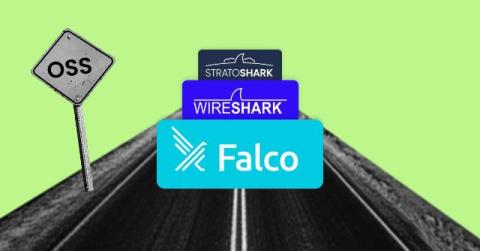
How Falco and Wireshark paved the way for Stratoshark

The origins of Sysdig, Falco, and Wireshark can be traced back to one fundamental need: making sense of complex, real-time network traffic for better security and operational insights. Long before containers and cloud security became pressing concerns, Gerald Combs and Loris Degioanni, creators of Wireshark, were solving a different but related problem: how to capture and analyze packets to understand what was happening across networks.

CrowdStrike Researchers Explore Contrastive Learning to Enhance Detection Against Emerging Malware Threats

The process of crafting new malware detection features is usually time-consuming and requires extensive domain knowledge outside the expertise of many machine learning practitioners. These factors make it especially difficult to keep up with a constantly evolving threat landscape. To mitigate these challenges, the CrowdStrike Data Science team explored the use of deep learning to automatically generate features for novel malware families.

Introducing CelesTLSH: Advanced Malware Detection with Fuzzy Hashing

We are excited to announce the integration of the CelesTLSH Malware Scanner into the LimaCharlie ecosystem. Developed by Magonia Research, CelesTLSH enhances your security operations by scanning files collected via the BinLib extension. It identifies known malware and threat actor tools through advanced fuzzy hashing techniques.

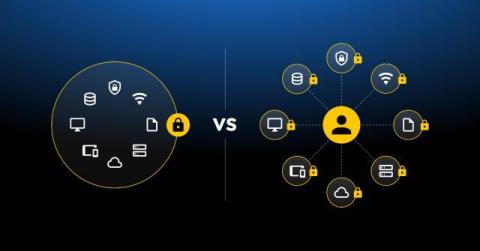
Zero Trust vs Traditional Security Models: What's the Difference?

As cyber attacks grow in sophistication, traditional security models become more vulnerable, prompting many organizations to adopt zero-trust security. The main difference between traditional and zero-trust security models is how they approach access control. Traditional security models assume trust for users inside their networks, whereas zero-trust security verifies every user and device by default, requiring continuous authentication.