Security | Threat Detection | Cyberattacks | DevSecOps | Compliance

How CrowdStrike Traces Attack Paths to Sensitive Data in the Cloud

As organizations adopt hybrid and multi-cloud architectures, the attack surface quickly expands, often outpacing defender’s ability to see and stop threats. This growing complexity fuels risk — creating blind spots adversaries exploit through cloud misconfigurations, excessive permissions, and unpatched vulnerabilities. These conditions allow attackers to break in, move laterally, and gain higher levels of access.


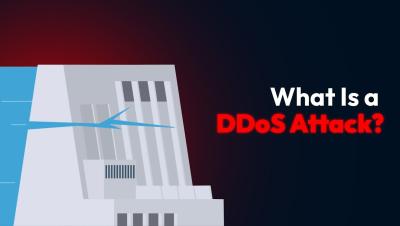
How to Achieve DDoS Defense with Real-Time Network Analysis

DDoS Defense with up-to-the-minute network analysis has become crucial as these attacks have disrupted network security for almost 20 years. The landscape changed dramatically in 2018 when the first multi-terabyte per second DDoS attacks crippled major organizations. GitHub experienced a massive 1.3TB/s attack that year, which dwarfed the previous record – a 602GB/s attack on the BBC just two years earlier.

What Is an Attack Vector? 8 Common Attack Vectors To Avoid

Cybercriminals are looking for ways to exploit vulnerabilities in your organization’s network, and attack vectors can lead to serious data breaches. Watch this short video to learn the most common attack vectors and how you can protect your business from cyber threats.

Trustwave SpiderLabs Investigates the Dark Web's Role in Supply Chain Attacks

One of the most dangerous aspects of the dark web is that it provides like-minded threat actors a haven to gather, discuss, develop, and sell access to technology companies, which are often the first link in a supply chain attack. Alternatively, it's an environment where those looking to enter the world of cybercrime and initiate a third-party attack can buy the tools necessary to begin their operation. Trustwave SpiderLabs report Technology Industry Deep Dive.

What To Know About the Aflac Cyber Attack

Aflac, one of the largest American insurance companies, reported that cybercriminals breached its systems on June 20, 2025. Suspicious activity first occurred on Aflac’s U.S. network on June 12, and Aflac initiated its incident response plan to contain the spread of the cyber attack within several hours. At the time of this writing, Aflac’s investigation is still in the early stages, and the insurance giant hasn’t reported on how many of its customers were affected.

Practical Solutions to Safeguarding Oil & Gas Operations from Cyber Threats

If you work in oil and gas, you already know that digital systems are the backbone of day-to-day operations. From monitoring drilling equipment to running pipeline controls and managing remote sites, almost every process depends on some form of automation. However, with this shift comes an uncomfortable truth. You're more exposed to cyber threats than ever before.

The Coinbase Hack: Lessons for Businesses

The recent attack on Coinbase - one of the largest and most regulated crypto exchanges - is yet another reminder that custodial infrastructure is far from safe. In this article, the BitHide team explains what happened, why custodial platforms are insecure, and what solutions help businesses work with crypto confidentially.

Threat Actors Abuse NetBird in Spear-Phishing Campaign Targeting Finance Executives

Cybersecurity firm Trellix uncovered a sophisticated spear-phishing operation in late May 2025 that exploited NetBird, a legitimate open-source remote access platform, to infiltrate organizations worldwide.

Europol Warns of Social Engineering Attacks

Social engineering remains a primary initial access vector for cybercriminals, according to a new report from Europol. “Social engineering, which exploits human error to gain access to systems or personal information, stands out as a prominent technique used by criminal actors in this context,” Europol says.

The Heightened Threat of Iranian Cyber Attacks: How to Understand the Risk and Enhance Resilience

The physical conflict involving Iran that has played out in the Middle East over the last several days is expected to increasingly spill over into the cyber realm. According to the Department of Homeland Security, the Cybersecurity and Infrastructure Security Agency (CISA), and other cybersecurity experts, organizations in the US should begin preparing for increased cyber attacks from pro-Irianian hacktivists and Iranian government-affiliated actors in the coming days and weeks.

Securing Our Water: Understanding the Water Cybersecurity Enhancement Act of 2025

Cyberattacks on public infrastructure are no longer hypothetical. From ransomware disabling city services to foreign actors probing utility networks, the risks are real and rising. Among the most vulnerable targets are our public water systems. Often underfunded, technologically fragmented, and encumbered by legacy systems, water utilities are easy pickings for determined attackers.

The Attack Vector: Database Triggers as Persistence Mechanisms

Organizations often assume that restoring a backup to a patched environment eliminates threats. However, backups encapsulate both data and schema objects, including triggers. A compromised backup, often taken after an initial breach, may contain hidden triggers that reactivate the attacker’s access upon restore. This post explores how malicious triggers in compromised backups can serve as persistence mechanisms for attackers and how to mitigate this threat.

Total MDR: Real-Time Security for the Whole Attack Surface

Most security tools generate alerts and leave the rest to you. Organizations are already drowning in noise, short on time, and stretched thin on security staff. WatchGuard Total MDR replaces noise with action by delivering the response your team doesn’t have time for. This fully managed, 24/7 MDR service continuously monitors detections across your environment across endpoint, network, identity, and cloud to take real action when threats strike.

Four Ways to Prevent Credential Theft and Credential-Based Attacks

When it comes to cybercrime, there are few threat actor tactics as useful and widespread as credential theft, and the subsequent use of stolen credentials, to maliciously gain access to an IT environment. As hybrid work models and the widespread use of web-based applications further the digitalization of corporate environments, user credentials have proliferated. In turn, credential theft has risen as a low-tech way for threat actors to gain easy access to target environments.

Defending the Internet: how Cloudflare blocked a monumental 7.3 Tbps DDoS attack

In mid-May 2025, Cloudflare blocked the largest DDoS attack ever recorded: a staggering 7.3 terabits per second (Tbps). This comes shortly after the publication of our DDoS threat report for 2025 Q1 on April 27, 2025, where we highlighted attacks reaching 6.5 Tbps and 4.8 billion packets per second (pps). The 7.3 Tbps attack is 12% larger than our previous record and 1 Tbps greater than a recent attack reported by cyber security reporter Brian Krebs at KrebsOnSecurity.

Weaving Chaos - Scattered Spider's Cyberattacks Spin a Dangerous Web Across the Insurance Industry

In Q2 2025, Scattered Spider has been noted as a prolific threat actor targeting several sectors across multiple countries. As of June 2025, the group appears to have moved towards targeting the insurance sector. This is not novel victimology within the landscape, with attacks consistently targeting the sector, particularly in the extortion sphere. This blog explores the attacks Scattered Spider has conducted in 2025, as well as similar attacks around the insurance sector in the year.

Cato CTRL Threat Research: PoC Attack Targeting Atlassian's Model Context Protocol (MCP) Introduces New "Living off AI" Risk

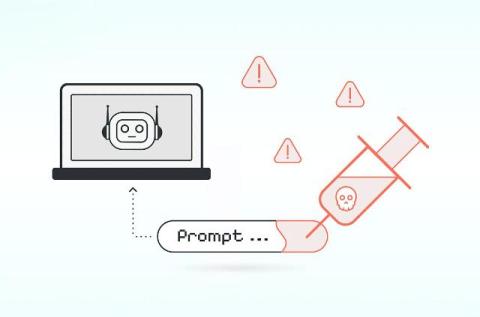
Most organizations assume a clear boundary between external users, who submit support tickets or service requests, and internal users, who handle them using privileged access. However, when an internal user triggers an AI action from a model context protocol (MCP) tool, such as summarizing a ticket, that boundary can break.
183,000 Companies Were Hit by Cyberattacks on Tech Providers in 2024

Technology plays a vital role in supplier networks and digital ecosystems today. While supply chains used to be primarily physical, digitalization has improved efficiency but also introduced new cybersecurity risks that are often overlooked. As software and digital service providers are often integrated into organizations’ environments, they have become prime targets for cybercriminals looking to scale their attacks.

What Is Phishing? Common Attacks Explained

Phishing remains one of the biggest cyber threats in circulation today. Billions of emails are sent every single day and together they claim thousands of victims, whether businesses or private individuals. Yet if the phishing attack is so well known, why do most people still fall for the trick? CSO Online reports that 80% of all security incidents are attributed to phishing.

CrowdStrike Researchers Investigate the Threat of Patchless AMSI Bypass Attacks

Microsoft introduced AMSI (Antimalware Scan Interface) with Windows 10 in 2015. This interface standard allows third-party security products to be integrated with applications running on a Windows PC to improve detections for fileless and script-based attacks. Naturally, adversaries immediately began efforts to defeat AMSI.

What is a Web Browser Based Attack?

Did you know 95% of undetectable malware spreads through your browser? From Cross-Site Scripting (XSS) and CSRF to Clickjacking and drive-by downloads—web browser-based attacks are more common and more dangerous than ever. In this video, we break down how these attacks work, what causes them, and what you can do to stay protected—both as a user and a website owner.

Protect Yourself: Vishing Attacks Are Growing More Sophisticated

Researchers at Google’s Mandiant have published a report on voice phishing (vishing) attacks, noting that these attacks have served as initial access points for recent waves of ransomware incidents. Threat actors often perform reconnaissance before launching social engineering attacks, collecting publicly available information in order to craft tailored, realistic scenarios.

How Browser-Level Signals Help Prevent Credential Stuffing Attacks

Credential stuffing attacks are one of the most persistent and damaging account-based threats facing security teams – and one of the hardest to detect. In 2024, Akamai, a global leader in content delivery and cybersecurity, reported more than 26 billion credential stuffing attempts globally every month – a staggering volume that’s not slowing down. Most enterprises rely on server-side, post-login detection, which captures only successful login attempts.

A Guide to Staying Cyber-Safe While Learning Online

Online education has grown to be a significant aspect of college life. The internet serves as your classroom, whether you're using Zoom for lectures, Google Classroom for assignments, or Microsoft Teams for group projects. The problem is that as people spend more time online, the likelihood of cyberattacks is increasing. So, how can you learn online without being hurt? Without requiring a degree in computer science, let's explore a comprehensive guide that can help you safeguard your digital identity, gadgets, and personal information.

What To Know About the UNFI Cyber Attack

On June 9, 2025, United Natural Foods, Inc. (UNFI) – a major organic food distributor and the main grocery supplier for Whole Foods Market – reported a cyber attack. UNFI first discovered unauthorized activity in its IT systems on June 5 and immediately took some systems offline. At the time of this writing, the investigation is ongoing as officials assess the full impact of the breach.

OpenAI Report Describes AI-Assisted Social Engineering Attacks

OpenAI has published a report looking at AI-enabled malicious activity, noting that threat actors are increasingly using AI tools to assist in social engineering attacks and influence operations. In one case, the company banned ChatGPT accounts that were likely being used in North Korean attempts to fraudulently obtain jobs at US companies. “Similar to the threat actors we disrupted and wrote about in February, the latest campaigns attempted to use AI at each step of the employment process.

Stealth Cyberattacks at Night: How Librarian Ghouls Are Exploiting Trusted Tools to Evade Detection

The cyber threat landscape is rapidly evolving. Among the most recent and concerning trends is the use of stealth attacks that bypass traditional defenses by abusing legitimate tools. One such campaign, led by a group called Librarian Ghouls, is targeting organizations across Russia with cleverly disguised phishing emails, cryptominers, and remote-access software—often operating undetected in the middle of the night.

Warning: Crooks Are Using Vishing Attacks to Compromise Salesforce Instances

A criminal threat actor tracked as “UNC6040” is using voice phishing (vishing) attacks to compromise organizations’ Salesforce instances, according to researchers at Google’s Threat Intelligence Group. After gaining access, the attackers exfiltrate the victim’s data and hold it for ransom.

Is Your Rented Server Safe Enough?

We get it-you've rented a server. Whether it's for your business, your app, your game, or just that brilliant startup idea you're nurturing, renting a server feels like leveling up. It's exciting, empowering... and terrifying. Because the moment that server is online, it's visible to the entire internet. Including the bad guys. Hackers, bots, DDoS armies, and other digital troublemakers don't care that it's "just a test project." If it's online, it's fair game. So, how do you protect it?

Client-Side Exploitation Attack Path

Client-side exploit delivery methods like malicious documents or browser-based attacks are among the most common ways adversaries gain initial access. But without visibility into these entry points, many attack paths go undetected. This demo shows how Falcon Exposure Management identifies and maps attack paths that begin with client-side exploitation. By combining exploit visibility with real network context and asset criticality, security teams can uncover hidden lateral movement risks and take action fast.
How Falcon Next-Gen SIEM Protects Enterprises from VMware vCenter Attacks

Internet-facing assets are targeted for many reasons, such as to establish persistence, evade defensive capabilities, and access sensitive networks. According to the search engine Shodan, approximately 1,600 VMware vSphere instances are directly accessible via the internet, representing a significant attack surface.

The Rising Tide: Understanding the Surge in Cyber Attacks in India

Over the past year, India witnessed a steep rise in cyberattacks. While news focused on big-ticket data breaches and mainstream ransomware attacks, it ignored how the overall threat landscape has become more sophisticated and ingrained. India detected over 369 million malware events between October 2023 and September 2024, at a rate of 702 potential threats per minute on average.

The Most Concerning CyberSecurity Statistics From Recent Data

If you've been paying attention to cybersecurity lately, it's hard not to notice just how fast the landscape is shifting. Threats that were once rare a few years ago are now occurring weekly-sometimes daily-and they're targeting larger targets with more severe consequences. It's not just about data theft anymore. Whole systems are being locked up, leaked, or dismantled in hours. The most recent statistics show just how aggressive and sophisticated these attacks have become, and 2025 is shaping up to be a pivotal year for digital security.

The Evolution of Phishing Attacks: Why Traditional Detection Methods Are Failing

If they weren't so harmful to both businesses and consumers, the sophistication of modern phishing would be quite impressive. Today's most invasive cybercriminals have moved beyond the old strategies of generic mass-email scams. They're now leveraging advanced technologies like Artificial Intelligence (AI,) deepfake media, and real-time behavioral analytics to craft highly personalized and nearly undetectable attacks.