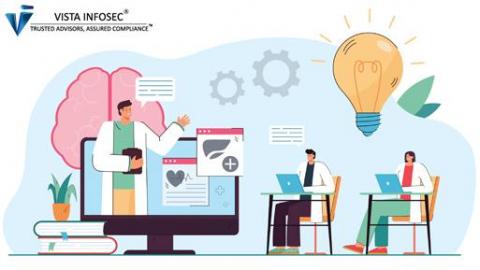
Earlier, even prior to the digitalization of healthcare records, it was still easier to keep the information secure and private. Records were in the physical form and could be protected in many ways. Now that people can pull up their entire health histories with the press of a few buttons, things are very different. With the information now being stored and processed online, the threat and risk exposures are equally high. So, to address such threats the U.S.
With growing volumes of personal data being collected, analyzed, shared and stored, there is more expectation than ever on businesses to ensure privacy for their employees, clients and wider supply chain. The digital age has streamlined ways of working, improved the targeting and personalization of services and communications and made detailed information available at the touch of a screen. But personal data is exactly that – personal.
As organizations grow in size and complexity, so do their security and compliance needs. While Vanta's library of controls and supported frameworks are extensive, eventually, you may wish to use your internal expertise to build a framework Vanta doesn't support or create custom controls. Today we are excited to introduce custom frameworks and enhancements to custom controls to help you improve your workflows, organize your security commitments, and manage your work at scale.
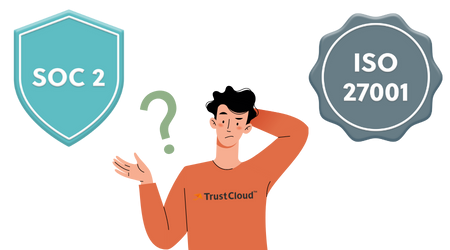
SOC 2 and ISO 27001 are compliance frameworks commonly required of organizations that house data or store sensitive information. Both standards focus on information security management, but they have some key differences in their approach and scope. Let’s take a closer look at the differences between SOC 2 and ISO 27001, and see if one or both are right for your organization.


Out of his 29 years of cloud and security experience, Mick has been with Robin for 6, leading their internal compliance operations and making sure that their customers’ data is secure. Robin needed to get SOC 2. They also wanted a way to answer security questionnaires faster. Continue on to see how Mick was able accomplish both.
The purpose of this guide is to provide you with a thorough understanding of GLBA as well as tips for ensuring compliance with your organization.
FERPA (the Family Educational Rights and Privacy Act) is a United States federal law protecting the privacy of student education records, more specifically governing access from public entities, such as employers, public schools, and foreign governments.
All financial institutions operating in Singapore are required to comply with the MAS TRM guidelines in order to operate legally. In order to ensure the safety of their operations, customers, as well as the wider financial system, financial institutions are required to conduct regular risk assessments and implement appropriate risk management measures.
The HECVAT (Higher Education Community Vendor Assessment Toolkit) was developed by the Higher Education Information Security Council (HEISC) as an initiative to help higher education institutions better protect their data, prevent the risk of data breaches, and measure the cyber risk of third-party solution providers.
HIPAA Security Rules and Privacy Rules were established to secure the Protected Health Information (PHI) data of patients that healthcare organizations collect, process, and/or transmit. The regulation has identified 18 HIPAA Identifiers that are considered as Personally Identifiable Information (PII) which is a part of the PHI data.
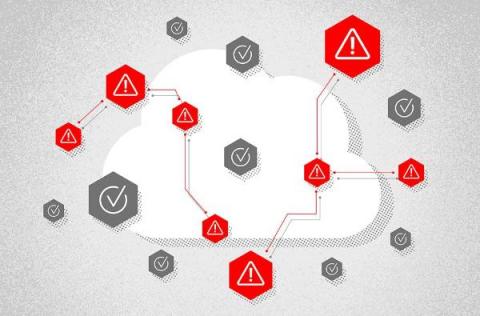
Public cloud services and cloud assets are agile and dynamic environments. Close oversight of these assets is a critical component of your asset management and security practices. While it’s important to understand the relationships and potential vulnerabilities of your cloud assets, the practice of managing these systems is complicated by the ever-changing nature of cloud environments.
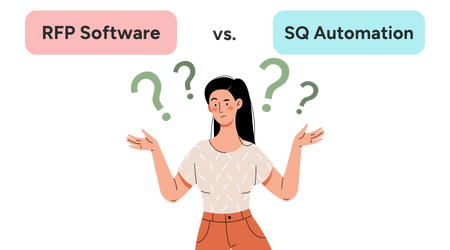
RFPs and security questionnaires make the world of sales and procurement go round. They’re both vital tools to help buyers assess potential relationships with vendors and ensure proper criteria are met before entering into any binding contracts. And while they serve an important role in the sales process, the burden they put on buyers and vendors alike has led to the creation of tools to streamline the process for all involved. Can you use a one-size-fits-all solution?
A regulation is a government-enforced set of security guidelines an organization must follow to increase its cybersecurity standards. A cybersecurity framework, on the other hand, is a set of guides helping organizations improve their security posture.
Today, privacy is an issue that has become more relevant than ever to individuals and businesses alike. As a result, many users are taking steps to protect their data. The California Consumer Privacy Act (CCPA) is a law that was enacted in order to provide greater protection and control over the personal information of California residents.
On October 3, 2022 the Cybersecurity and Infrastructure Security Agency (CISA) issued Binding Operational Directive 23-01 – Improving Asset Visibility and Vulnerability Detection on Federal Networks, a compulsory order intended to “make measurable progress toward enhancing visibility into agency assets and associated vulnerabilities.” BOD 23-01 mandates that Federal Civilian Executive Branch (FEEB) agencies complete a series of required actions within six months, or by April 3, 2023.
Only those hiding from the news, prospects, and customers can miss the data security and privacy challenges that are occurring. More businesses are relying on data analytics (garnered from data collection) for more and improved service and product offerings. More individuals want data privacy and security. More nations want their citizens protected from corporate tactics that rely on mining and scraping personal data. More customers want tailored experiences that only come through data analytics.
A new webinar has fascinating insight to help organizations accelerate their roadmaps.
The digital threat landscape in the United Kingdom (UK) continues to evolve as businesses that undergo a massive transition towards increased digitalization and cloud-based migrations are forced to change their IT system operations. More importantly, UK laws and regulations must also adapt to ensure that UK businesses and organizations are working to improve their cybersecurity posture and IT infrastructure to protect data security and privacy.
Cloud adoption and use in corporate environments are rising, and its future looks bright. Business spending on Cloud services indicates this upward trend, as it increased by 29% in the second quarter of the year compared to the same period last year. Cloud migration has ushered in changes to regulations to consolidate data security according to the nature of the business.
Part of the challenge of creating a robust security posture is collecting the right toolbox full of tools and services. There’s a wide world out there full of tools that can enhance your security, but one of the most productive types of tools every organization needs is a vulnerability scanning tool. To help you navigate these types of tools and recognize how they fit into your information security system, we’re taking a closer look at these tools and how they work.
Audits are challenging. Especially when it comes to assessing abstract compliance standards against multiple cloud environments, unique cloud infrastructure setups, and many possible (mis)configurations. To help our customers automate compliance assessments, Snyk Cloud now supports 10+ compliance standards— including CIS Benchmarks for AWS, Azure, and Google Cloud, SOC 2, PCI DSS, ISO 27001, HIPAA, and more.
Last Summer, President Biden issued Executive Order 14028 to help boost and improve government cybersecurity operations in response to increased threats worldwide. Memorandum OMB-21-31 from the Office of Management and Budget soon followed, which explained the critical role data log collection and analysis play across all branches of the Federal Government.
From manufacturers in Michigan to fintechs in Finland, every business must comply with industry regulations — which are increasingly constraining. At the same time, businesses must protect and account for a growing number of systems, applications and data in order to remain compliant. In other words, compliance is getting harder. Enter log management. While regulations vary by country and industry, nearly every organization must store compliance-relevant information for a certain period of time.
It’s been a busy start of the year for Vanta. We’ve made some major additions and improvements, such as our acquisition of Trustpage, as well as some exciting platform updates:
In my previous article I defined what is Cyber Threat Intelligence (CTI), described how to measure it and explained why it is important to implement a CTI program that can serve different stakeholders with different types of intelligence requirements in order to have a proactive security approach. 2022 was a productive year for ISO (International Organization for Standardization) security standards.
NITDA launched the ground-breaking Nigeria Data Protection Regulation (NDPR) in early 2019, cementing a culture of data privacy and protection for all Nigerians. By mirroring Europe's GDPR Framework, NITDA demonstrated its commitment to safeguarding citizens' online security. Private organizations, such as mobile development companies that control or process data, must comply with this regulation to stay operational. Fortunately, we're here to help you avoid any costly missteps.
A readiness assessment is the dry run before the official audit, so you can address potential issues before the actual audit takes place. It is not required, buthighlyrecommended to identify any gaps and plan resource allocation. Proper preparation is key – not only will you save time and resources, you’ll ensure a successful audit. Readiness assessments can be conducted by your organization’s internal resources, a CPA firm, or a consulting company.

All it takes for cybercriminals to breach your mission-critical networks, database, and IT systems is a single unpatched vulnerability. To prevent this and maintain good cyber hygiene, you need to obtain real-time vulnerability data. Vulnerability scans generate a lot of data that when analyzed reveal several security flaws.