Security | Threat Detection | Cyberattacks | DevSecOps | Compliance

Why third-party risk management is broken, according to CISOs and analysts

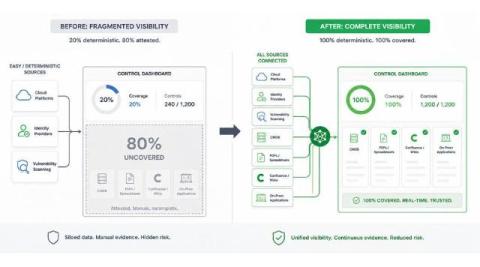
Independent journalists, analysts, and working CISOs are all reaching the same conclusion about questionnaire-based, point-in-time risk assessment: it’s no longer enough. Risk and vulnerabilities keep growing, compliance obligations keep stacking up, and AI adds an entirely new surface to account for. CISOs need something better: a continuous approach with visibility across their business, that actually reduces risk rather than just documenting it.

How to achieve 3-day compliance audits

At enterprise scale, the audit season never really ends. An enterprise security program carries responsibility for a growing number of compliance frameworks, across all business units and regions, with overlapping cycles. In essence, the team is always preparing for another one. Before an external auditor starts the clock, teams run internal readiness checks, which industry sources estimate take four to eight weeks. Why so long?

Strategic CISOs: A power mindset for your first 90 days

CISOs beginning a new role, or changing sectors, can easily make the same mistake. They walk in with years of experience, see what’s broken, and start fixing. By the end of week three, they’ve opened too many tickets and asked too many people to change too many things. They are quietly draining the trust account they’ll need to draw on for the next few years. It’s an honest mistake. CISOs are often hired because something is broken. There is real pressure to demonstrate value.

What is continuous application assurance? A new model for enterprise risk

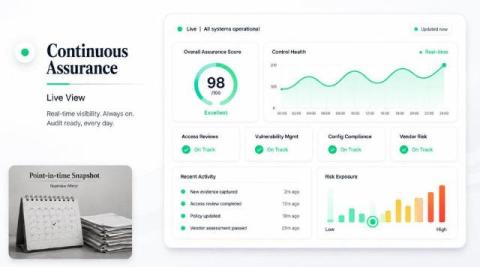
Most CISOs can’t answer a simple question with confidence: are the controls protecting our most critical applications actually working right now? Not last quarter, or the last time someone ran an assessment, but right now. That’s not a failure of effort. Enterprise security teams run on thousands of applications. Each one carries contracts, regulatory obligations, and customer trust.

CISOs need decision-grade risk intelligence, not another workflow

In large enterprises, the hardest security decisions are rarely made in the SOC. They are made in board meetings, budget reviews, audit discussions, customer escalations. The most dire are often represented in the moments when leaders have to decide what matters now, what can wait, and what risk the business is actually taking on. The real GRC problem is no longer how to manage more work. It is how to help the business make better decisions with higher confidence. CISOs do not need another workflow.

Why CISOs are right to be skeptical of AI - and what actually solves it

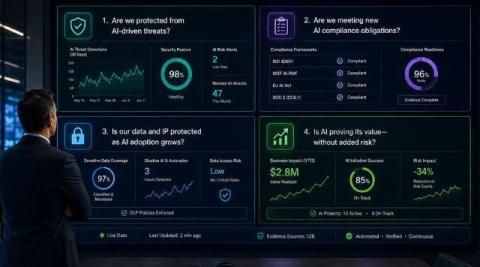
AI demos are easy. AI you’d actually trust near your control environment is not. If you’ve sat through a few of these pitches lately, you’ve probably landed on the same four questions every CISO we talk to is asking. And you’re right to ask them.

How strategic CISOs innovate with AI despite limited resources

In previous Strategic CISOs sessions, I’ve spoken with security leaders from Andesite, IMO Health, and Cribl. They’ve built trusted programs where GRC functions as a business driver and customer assurance accelerates revenue. But every CISO I speak with is still fighting some version of the same fight. They have more obligations, more scrutiny, and more AI-related risk, but they do not have more people, more budget, or more hours in the day.

Why strategic CISOs need proactive risk reduction, not reactive GRC reporting

Security and GRC teams have no shortage of risk mitigation activities. They are carrying more work than ever, yet many still lack confidence in the data and recommendations produced by all that manual effort. They are also operating in a risk environment that changes faster than their current operating model was designed to support. Unfortunately, the existence of risk activity does not mean actual risk has been reduced.

Empower your team with this comprehensive employee handbook template

Empowering your team starts long before a project kickoff or a performance review. It starts with clarity. A comprehensive employee handbook is one of the simplest ways to give people that clarity, and this template makes it much easier to do well. Companies typically give the handbook to new hires during onboarding so they understand their role, rights, and responsibilities from day one.

Board committee charters: Your governance playbook decoded

A board committee charter is more than governance paperwork; it’s the rulebook that keeps the board’s engine humming when pressure rises and complexity grows. At its best, a charter makes responsibilities visible, removes guesswork, and creates a predictable rhythm for oversight so directors and management spend less time arguing about who should do what and more time solving the right problems.