Security | Threat Detection | Cyberattacks | DevSecOps | Compliance

How to Decode Your Vulnerability Assessment Report for Real Security Gaps

A vulnerability assessment report is more than a technical document. It is a strategic blueprint for improving your organization’s security posture and reducing risks. When interpreted correctly, it empowers organizations to make informed security decisions, prioritize investments, and demonstrate ROI. Yet in many organizations, these reports are underused. They are treated as compliance artifacts or raw checklists rather than insights for strategic action.

Tokens & traps: Seven common OAuth vulnerabilities (plus mitigations)

In the world of modern web applications, the OAuth flow is our trusty gatekeeper, enabling seamless logins and secure data sharing. But its flexibility (designed to handle myriad use cases) is also its Achilles’ heel. A tiny misstep in URI validation or a missing state check can turn a robust token exchange into an open invitation for attackers, leading to serious OAuth vulnerabilities that compromise user data and application security.

SBOM Is Not the Savior - Addressing the Deeper Problems in Supply Chain Security

I hear a lot these days about SBOMs and how they are going to be the key to supply chain security accountability, to even include a Presidential Executive Order mandating SBOMs in the procurement process for federal agencies. There are multiple areas of research going on in this area, such as this Academic SBOM Repository. But before we get too far down the road, let’s get one thing straight: SBOM isn’t going to save us. It’s a transparency tool, not a solution.

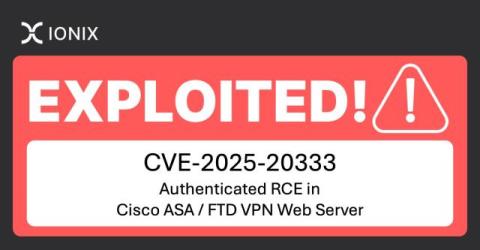
CVE Trends to Watch: Real-World Risks to Telecom and Professional Services

Cybersecurity weaknesses span both software and hardware systems, creating numerous opportunities for exploitation. Among the most common access vectors leveraged by threat actors are phishing attacks and Common Vulnerabilities and Exposures (CVEs). When left unpatched, CVEs can pose significant risks to an organization’s systems, exposing sensitive data and operational assets to potential compromise.

Continuous Threat Exposure Management (CTEM): The Future of Vulnerability Assessment

As a cybersecurity expert, you are aware that performing static scans is only one part of a good defense-in-depth strategy. Similarly, periodic vulnerability assessments, while valuable, are only a single piece of cyber defense fortification. Continuous Threat Exposure Management (CTEM) establishes a logical setting to control organizational threats proactively. CTEM enables an augmented cybersecurity posture, active real-time risk mitigation, and threat precursor disabling.

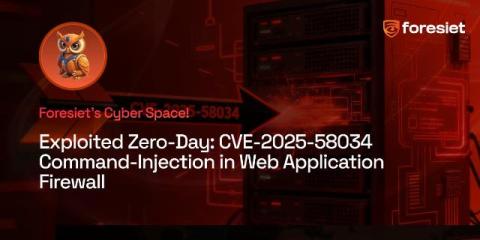
Proof-of-Concept Exploit Observed for Critical Zero-Day

CVE-2025-32756 is a critical remote code execution (RCE) vulnerability affecting multiple Fortinet products, including FortiVoice, FortiMail, FortiNDR, FortiRecorder, and FortiCamera. The flaw arises from a stack-based buffer overflow in the handling of the AuthHash cookie’s enc parameter within the /remote/hostcheck_validate HTTP endpoint.

Pre-Authenticated RCE Chain Disclosed in Sitecore XP

On June 17, 2025, watchTowr disclosed technical details for a pre-authenticated remote code execution (RCE) exploit chain in Sitecore Experience Platform (XP), an enterprise content management system. Although Sitecore released a fix for these vulnerabilities in May 2025, no official CVE identifiers have been assigned at this time. The three vulnerabilities are currently tracked as WT-2025-0024, WT-2025-0025, and WT-2025-0032 by watchTowr and impact Sitecore XP versions 10.1 through 10.4.

The New Threat Landscape: AI-Native Apps and Agentic Workflows

Businesses are moving beyond AI experiments and proofs of concept. As we approach what IDC is predicting will be the “AI pivot years” of 2025-2026, organizations are prioritizing, planning, and building for scale. This shift includes AI agents — self-directed tools that automate tasks — as technology providers strive to simplify development workflows. Under the surface, AI systems expose an expanded threat landscape that spans the software development lifecycle (SDLC).

Catch Bugs Faster: Cursor's BugBot for AI Code Review

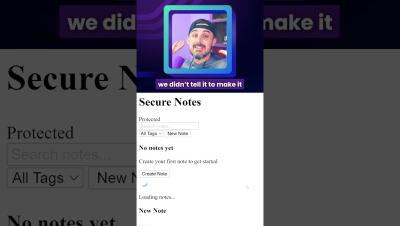
In this video we dive into Cursor's 1.0 release, focusing on their new BugBot feature. This AI-powered tool integrates with your GitHub workflow to automatically review pull requests and identify potential bugs. We'll show you how to set up BugBot, trigger it on a pull request, and analyze the issues it finds, including a real-world example of it catching errors in AI-generated code from Google's Jules tool.