Security | Threat Detection | Cyberattacks | DevSecOps | Compliance

Tales from the fraud frontlines: Inside the rise of BIN attacks - and how to prevent them

Picture this: You’re in the middle of dinner with friends when your work phone buzzes. It’s the fraud supervisor with alarming news: Low-value transactions are suddenly flooding your servers. Your gut tightens as you hastily excuse yourself and head straight to the office to help secure your customers’ accounts against what turns out to be a Bank Identification Number (BIN) attack.

The Danger of Weak Passwords: UK Trucking Firm Attacked and Permanently Shut Down

A threat actor once again proved the importance of enforcing strict password management practices by torpedoing a 158-year-old UK transportation company by hacking a password and then effectively shutting it down with ransomware. According to published reports, the threat group Akira gained access to KNP's system in June when it was able to determine a single employee's password. Once access was gained, Akira injected ransomware, which shut down the network and encrypted access to its files and backups.

Top tips to build a human firewall

Top tips is a weekly column where we highlight what’s trending in the tech world and list ways to explore these trends. This week, we will explore ways on how to strengthen any company's first line of defense against cyberattacks. No matter how advanced your cybersecurity tools are, they’re only as strong as the people using them. Phishing scams, social engineering, and weak passwords are threats that often succeed not because systems fail but because humans do.

Advanced attacks: EDR alone is not sufficient

Your best defense against advanced attacks is your network. SOC teams need comprehensive network data to defend against attacks. Corelight combines industry-leading Zeek network metadata, multi-layered detections, packet capture (PCAP), and file analysis (YARA) for the best approach to network-driven defense. Disrupt attacks, address gaps within your security stack, and reduce risk to your organization with Corelight's NDR solution.

The Bullseye on Banks: Why Financial Services Remain a Prime Target for Cyberattacks

The frontlines of cybersecurity have long included the financial services sector, but today’s battlefield is increasingly asymmetric. Threat actors aren’t just going after the big-name banks with sprawling infrastructure and billion-dollar balance sheets. They’re targeting credit unions, wealth management firms, fintech startups, and insurance providers with the same determination and ferocity. What do these entities have that cybercriminals want? Plenty.

Top Financial Cyber Threats Facing Businesses in 2025

The world of business is facing a growing wave of cyber threats, especially when it comes to financial security. Cybercriminals are getting smarter, and their tactics are more sophisticated than ever. This isn't just a concern for big corporations; businesses of all sizes need to stay alert. A cyberattack could lead to major financial losses, damage to your reputation, or even legal headaches. In this article, we'll break down some of the top financial cyber threats businesses will likely face in 2025.

Dropping Elephant APT Group Targets Turkish Defense Industry With New Campaign and Capabilities: LOLBAS, VLC Player, and Encrypted Shellcode

The Arctic Wolf Labs team has identified a new campaign by cyber-espionage group Dropping Elephant targeting Turkish defense contractors, specifically a manufacturer of precision-guided missile systems. The campaign employs a five-stage execution chain delivered via malicious LNK files disguised as conference invitations sent to targets interested in learning more about unmanned vehicle systems.

CrowdStrike Falcon Prevents Supply Chain Attack Involving Compromised NPM Packages

Recently, five popular NPM (Node Package Manager) packages were compromised and modified to deliver a malicious DLL, dubbed “Scavenger”. The malware pushed via these compromised NPM packages executes in two stages: an initial first-stage loader, followed by a second-stage infostealer. NPM is the package manager for the Node.js JavaScript platform, which allows developers to share and manage JavaScript libraries and tools.

What Is a DDoS Attack?

Companies face increasingly complex challenges every day, including cybersecurity threats aimed at disrupting their digital operations. One of the most frequent and damaging is the DDoS attack, which can take websites, applications, and critical services offline. Understanding what is a ddos attack is essential to identify risks, prevent attacks, and protect your organization’s digital infrastructure. In recent years, there have been attacks that marked a turning point in cybersecurity.

Audit-Ready to Attack-Ready: How vPenTest Supports Compliance

Compliance today isn’t just about ticking boxes or avoiding penalties, it’s a direct reflection of your organization’s security maturity. Many modern compliance frameworks now mandate regular testing for network vulnerabilities, which remain one of the leading causes of security breaches. In fact, in 2024, nearly 70% of reported incidents were linked to high-impact vulnerabilities that organizations failed to identify or prioritize.

dMSAs Are the New AD Privilege Escalation Target - Here's What You Need to Know

Windows Server 2025 introduced delegated managed service accounts (dMSAs) to improve security by linking service authentication to device identities. But attackers have already found a way to twist this new feature into a dangerous privilege escalation technique. The BadSuccessor attack lets adversaries impersonate any user — even domain admins — without triggering traditional alerts. Here’s how it works, why it’s so stealthy, and what you can do to stay ahead of it.

CrowdStrike Detects and Blocks Widespread SharePoint Zero-Day Exploitation

Beginning on July 18, 2025, at approximately 0700 UTC, CrowdStrike Falcon Complete Next-Gen MDR and CrowdStrike Falcon Adversary OverWatch identified a wave of Microsoft SharePoint exploitation attempts by an unknown adversary. Two distinct zero-day vulnerabilities were made publicly available: a critical remote code execution vulnerability (CVE-2025-53770) and a server spoofing vulnerability (CVE-2025-53771).

Retail Under Siege: Understanding and Combating Modern Cyber Threats

In the ever-evolving world of retail, cyber threats are no longer a distant concern, they’re a daily reality. Over the past year, around 612,000 UK businesses reported experiencing a cyber breach or attack. Phishing remains the most common and disruptive method, targeting 85% of those affected. The retail sector, in particular, sits on a goldmine of customer data, credit card details, email addresses, and purchase histories, all of which are highly attractive to cybercriminals.

Outdated Systems and Modern Attacks: Ireland's Cyber Reckoning Has Arrived

Cybercriminals don’t need to be sophisticated. They just need the opportunity—and in Ireland, there’s still too much low-hanging fruit. Many of the vulnerabilities being exploited across Irish networks today aren’t new. They’re years old. Attackers are taking advantage of outdated systems that haven’t been patched, relying on free, off-the-shelf tools to scan for weaknesses—and finding them far too easily. This isn’t a theoretical risk.

Why Security Teams Must Rethink Incident Response for Identity Attacks

Blocking a CEO's account to stop an anomaly? It might stop your business too. When implementing Identity Threat Detection and Response (ITDR), security teams must balance robust protection and business continuity. In this clip, our expert explains why blindly blocking access can cause more damage and how identity-proofing methods, like 2FA and push notifications, offer a smarter approach. Rethink your strategy to keep security seamless.

Engineered To Evade: How Phishing Attacks Are Designed To Get Through Your Secure Email Gateway

Getting through secure email gateways (SEGs) is simply the cost of doing business for a cybercriminal. Literally, detection at the perimeter by a SEG is the same as falling at the first hurdle. SEGs have been adopted broadly, especially in larger organizations (although this picture has started to change in recent years - more on that below). Even where organizations don’t use a SEG, many native controls in email platforms (like Microsoft Exchange) operate using the same principles.

Digital Factories, Digital Dangers: Why Manufacturing is a Prime Target for Cyberattacks

Digital connectivity is reshaping European manufacturing, driving both efficiency and innovation. However, this shift has also created a complex and vulnerable cyber threat landscape, making manufacturing the most targeted industry for cyberattacks for the past four years. Connected systems and legacy infrastructure are colliding, expanding the attack surface and exposing manufacturers to increased risks.

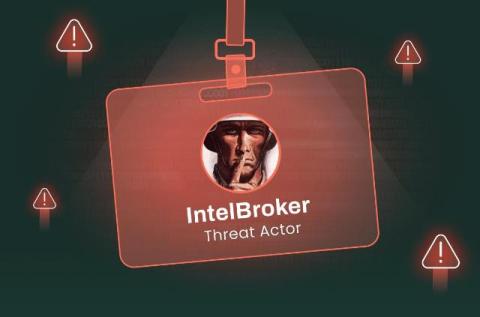
Cato CTRL Threat Actor Profile: IntelBroker

In June 2025, FBI New York and the U.S. Attorney’s Office for the Southern District of New York announced charges against “IntelBroker,” the online persona of 25-year-old British national Kai Logan West. IntelBroker operated one of the most sophisticated data brokerage operations documented in the recent history of cybercrime.

Hyper-volumetric DDoS attacks skyrocket: Cloudflare's 2025 Q2 DDoS threat report

Welcome to the 22nd edition of the Cloudflare DDoS Threat Report. Published quarterly, this report offers a comprehensive analysis of the evolving threat landscape of Distributed Denial of Service (DDoS) attacks based on data from the Cloudflare network. In this edition, we focus on the second quarter of 2025. June was the busiest month for DDoS attacks in 2025 Q2, accounting for nearly 38% of all observed activity.

Dos vs DDoS Attack: How Modern Threat Detection Tools Distinguish and Respond

Cybersecurity professionals encounter two primary categories of denial-of-service threats: traditional denial of service (DoS) and distributed denial of service (DDoS) variants. DoS attacks stem from a single system, while DDoS campaigns leverage multiple machines to overwhelm the target. The fundamental difference? Scale and coordination complexity. Both DoS and DDoS attacks are a type of malicious attempt to disrupt services.

Prevent Social Engineering Attacks: A Practical Guide Using Contextual Threat Intelligence

According to Zoho Workplace, organizations struggle to protect themselves as spam makes up 45% of all emails. These sophisticated threats deliberately exploit human psychology. Attackers convince people to bypass security measures, which leads to unauthorized access to the system. Standard defense mechanisms alone cannot curb these evolving threats. This blog explores how organizations can prevent social engineering using contextual threat intelligence and real-time behavioral analysis.

Best 7 Compromised Credentials Platforms for 2025

Every breach starts somewhere, but in 2025, the most common entry point for threat actors remains startlingly simple: compromised credentials. A password reused here, a leaked database there, these open doors invite attackers into the heart of organizations, bypassing firewalls and traditional defenses. From ransomware operators to cybercriminal marketplaces, hackers increasingly rely on stolen credential data to enable their attacks.

Everything You Need to Know About Magecart and Other Skimming Attacks

By now, you’ve likely heard about Magecart attacks — or maybe even experienced one firsthand. Over the last few years, digital skimming has become a go-to tactic for cybercriminals targeting websites and web applications. Major organizations like Macy’s, Ticketmaster, the American Cancer Society, P&G’s First Aid Beauty, British Airways, and Newegg have all made headlines due to these breaches. But most victims don’t make the news.

How To Prevent Loyalty Account Takeovers in Real Time

Loyalty fraud prevention has become a major industry threat, with loyalty-linked accounts having become digital assets of converging value – storing points, payment credentials, and verified identity data. That makes them irresistible targets for attackers with both the motive and means to exploit them. Phishing, credential stuffing, spoofed login portals, and personalized impersonation scams are just the beginning.

Identity Based Attacks: Why You Need Behavioral Detection in XDR

You’ve likely invested in traditional security tools that monitor failed logins or privilege requests—but more advanced threats use legitimate credentials to hide. If attackers bypass authentication protocols or hijack stolen tokens, they can roam freely under the radar. That’s why behavioral detection in an XDR solution is crucial. It does not just look at logs — it looks at patterns.

Choosing a DDoS Mitigation Strategy: How NDR Helps Identify and Contain DDoS Attempts

In today’s digital battlefield, distributed denial-of-service (DDoS) attacks remain one of the most disruptive tactics used by threat actors. These attacks are not just about overwhelming servers they’re about business downtime, customer dissatisfaction, and reputation loss. With the increasing complexity of attack vectors, traditional DDoS mitigation strategies are no longer enough. Enterprises must adopt smarter, faster, and more adaptive ways to detect and mitigate DDoS attacks.

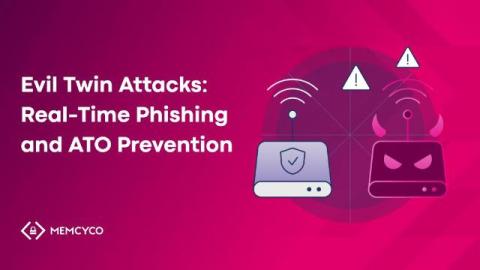
Evil Twin Attack Prevention: How to Stop Real-Time Phishing Before It Leads to ATO

Evil Twin attack prevention has become more difficult than ever. With affordable, easy-to-use tools, these attacks are now more accessible and harder to detect, leaving customers vulnerable to sophisticated account takeovers without the usual phishing hallmarks. Tools like the Wi-Fi Pineapple Mark VII ($299) create rogue networks and phishing portals, while the ESP8266 Deauther V4 ($15) disrupts Wi-Fi handshakes to force devices onto less secure networks.

Hijacked by a Text: Understanding and Preventing SIM Swapping Attacks

SIM swapping is not a novel cyber threat; it has been a persistent issue for over a decade. This technique exploits vulnerabilities in mobile carrier procedures and identity verification protocols. Attackers employ social engineering tactics to deceive telecom providers into transferring a victim’s phone number to a SIM card under their control.

CrowdStrike Services Observes SCATTERED SPIDER Escalate Attacks Across Industries

SCATTERED SPIDER, an eCrime adversary, has recently broadened its target scope to include the aviation sector, in addition to its established focus on the insurance and retail industries, as observed by CrowdStrike Services. Throughout Q2 2025, SCATTERED SPIDER's activities have primarily centered on U.S.-based insurance and retail entities, along with U.K.-based retail entities.

ARP spoofing explained: How attackers exploit the Address Resolution Protocol

Imagine handing over your house keys to someone who looked trustworthy - only to discover later they were an impostor. Everything that entered or left your home was compromised, and you never saw it coming. That’s what happens in your network when ARP spoofing strikes. The Address Resolution Protocol (ARP) helps devices find each other on a local network by matching IP addresses to MAC addresses.