Stranger Danger: Your JavaScript Attack Surface Just Got Bigger
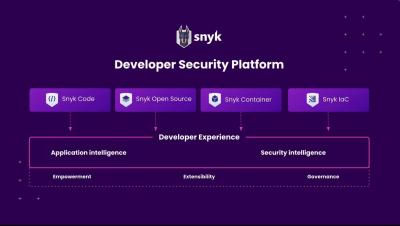
Snyk helps software-driven businesses develop fast and stay secure. Continuously find and fix vulnerabilities for npm, Maven, NuGet, RubyGems, PyPI and more.


A buffer overflow is a type of runtime error that allows a program to write past the end of a buffer or array — hence the name overflow — and corrupt adjacent memory. Like most bugs, a buffer overflow doesn’t manifest at every program execution. Instead, the vulnerability is triggered under certain circumstances, such as unexpected user input.
This is the second part of a three-blog series on startup security. Please check out part one too. The anatomy of a software vulnerability is a bit like mercury accumulation in seafood. Trace amounts of naturally occurring mercury in seawater is absorbed by algae and bioaccumulates up the food chain. Large fish at the top of the food chain contain the most mercury and should be consumed in limited quantities.
Researchers from ESET have shed light on a new macOS backdoor, discovered in April 2022, dubbed CloudMensis. At first glance this is just the latest example of spyware targeting the Apple operating system with the intent of exfiltrating documents, keystrokes, and screen captures. However, as the name suggests, one of the interesting features of this malware is a sophisticated two-stage kill chain that exploits legitimate cloud services in different phases of the attack.
As described in Splunk Vulnerability Disclosure SVD-2022-0624, there is a list of SPL (Search Processing Language) commands that are classified as risky. This is because incorrect use of these risky commands may lead to a security breach or data loss. As a precautionary measure, the Splunk Search app pops up a dialog, alerting users before executing these commands whenever these commands are called.
Companies are introducing new apps and services to enable remote work, improve supply chains and handle disruptions caused by the pandemic. Our digital-first world thrives on speed and efficiency, and containers play a huge part in getting applications up and running quickly. Though containers offer many advantages over traditional virtualization, they also introduce significant security risks.