Security | Threat Detection | Cyberattacks | DevSecOps | Compliance

Four Reasons Vulnerabilities Remain Persistent

Vulnerabilities cause the majority of cybercrime. There are always new vulnerabilities appearing as software gets updated and as cyber criminals work behind the scenes to find new backdoors to organizations’ systems. In the first half of 2022 alone, 81% of incidents happened through an external exposure — either a known vulnerability or a remote desktop protocol. The sheer volume of vulnerabilities grew again in 2022, with over 25,000 recorded, and over 800 have been actively exploited.

Snyk and Atlassian deepen partnership with Snyk security in Jira Software

Our long-standing partnership with Atlassian is built on our mutual commitment to providing a great developer experience. It started with our native integration within the Bitbucket Cloud UI, and today we’re incredibly excited to announce yet another new door opening in our partnership. The new Snyk integration for Jira Software will bring security and collaboration to Atlassian users at every stage of the development lifecycle.

Explanation of Zero-Day in 3 seconds!

In this session, John Goecke (CEO) discusses with Venky how everything changed for StratusVue after a ransomware attack in 2018. He shares how the construction industry is a soft target as there is no regulatory oversight, unlike in banking and healthcare, and security is always an afterthought for business owners. Along with all this, he explains complex terms like zero-day, zero-trust, FedRAMP, etc., in a highly rudimentary way.

How YellowAI Uses AWS & Snyk: Securing Cloud & Apps Using a Developer-First Approach

Citu Singh of CNBC-TV18 asks technology business leaders to share their philosophy on developing applications quickly and safely. Apoorva Gaurav, VP of Engineering from YellowAI, talks about how his team uses Snyk, while Shaun McLagan, VP of Snyk APJ, shares the benefits of a developer-first approach to security.

Actively Exploited GoAnywhere MFT Zero-Day Vulnerability

On February 3, 2023, the developers of GoAnywhere MFT (Managed File Transfer) sent an advisory to their customers warning them of a zero-day remote code execution vulnerability being actively exploited in the wild. Exploitation of this vulnerability could allow sensitive data to be leaked and potentially used for extortion.

Evolving the Snyk CLI through an extensible approach

Every day, thousands of developers use the Snyk CLI as part of their development workflow, to identify and resolve security issues in their code as early as possible. What if these developers and other security professionals could harness the power of this dev-first approach and also utilize entirely new security analyses, filters, and workflows via an extensible approach?

Money Lover App Vulnerability Exposes Personal Info

An information disclosure vulnerability has been identified in Money Lover, a finance tracking application created by Finsify and available on Android, iOS, Microsoft Store, with a web interface. This vulnerability allows any authenticated user to view live transactions related to shared wallets.

The 443 Episode 228 - What is CVSS?

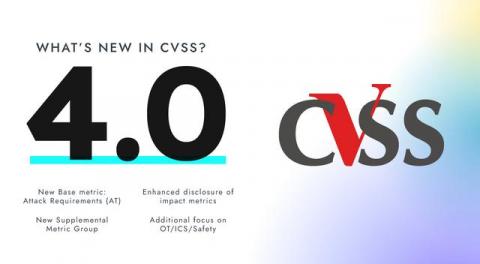
This week on the podcast we cover the Common Vulnerability Scoring System (CVSS) including how it works and some of its limitations. Before that though, we discuss a recent survey on the risks of ChatGPT's usage in cyberattacks and the latest activity from Lazarus, the North Korean government hacking operation. The 443 Security Simplified is a weekly podcast that gets inside the minds of leading white-hat hackers and security researchers, covering the latest cybersecurity headlines and trends.

Automate Cloud compliance with Snyk Cloud

Audits are challenging. Especially when it comes to assessing abstract compliance standards against multiple cloud environments, unique cloud infrastructure setups, and many possible (mis)configurations. To help our customers automate compliance assessments, Snyk Cloud now supports 10+ compliance standards— including CIS Benchmarks for AWS, Azure, and Google Cloud, SOC 2, PCI DSS, ISO 27001, HIPAA, and more.