Security | Threat Detection | Cyberattacks | DevSecOps | Compliance

The Latest Cybersecurity News & Insights From Around The World



When Reading Apps Handle Sensitive Documents: A Practical Privacy Checklist
Read-aloud and AI explanation tools can make difficult material easier to use. Before opening a confidential PDF, however, users should understand where the text goes, what the app stores and which permissions it really needs.
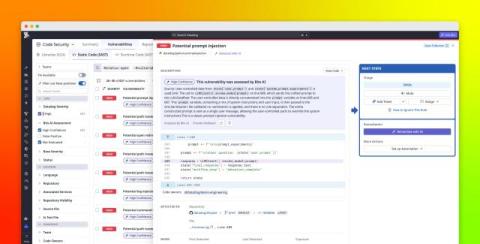
Detect vulnerabilities in LLM applications with Datadog's AI-native SAST
AI coding tools help developers build and deploy LLM applications quickly, but this speed comes with new security risks. Traditional static application security testing (SAST) tools that are pattern based weren’t designed to detect LLM-specific issues such as prompt injection sinks and exposed system prompts. These vulnerabilities often don’t become apparent until applications are already running in production, when remediation is more difficult and expensive.

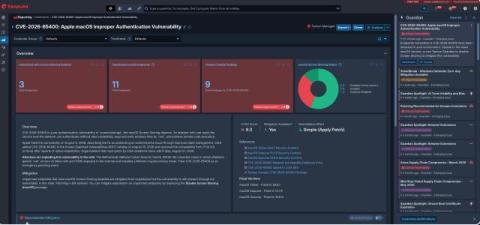
Critical macOS Screen Sharing Authentication Bypass - Under Active Exploitation (CVE-2026-65400)
On August 6, 2026, Apple shipped an emergency, out-of-band fix for CVE-2026-65400, an authentication issue in screensharingd, the daemon behind Screen Sharing, macOS's built-in remote desktop service that listens on TCP port 5900. Apple's advisory describes an attacker who could reach the service over the network and authenticate without valid credentials, then read and write files as root—enough to achieve full remote code execution.

How CISA's BOD 26-04 changes vulnerability prioritization
AI-accelerated attacks are redefining the threat landscape, but many of them still rely on one of the oldest tactics in the book: exploiting known vulnerabilities. The difference today is speed. Vulnerabilities that once took skilled hackers months or weeks to exploit can now be weaponized in hours or minutes. This acceleration is forcing organizations to rethink how they identify and remediate risk.

Remediation Agents, Demystified: Why Fixing Beats Finding
Six new security issues for every one issue remediated. That's the ratio Snyk research has found, and it's why the AI Security Engineers Community gave an hour of livestream time to fixing rather than finding. Play Video: Remediation Agents Demystified: Your AI Teammate for Fixing Security Bugs Remediation Agents Demystified paired a fireside chat with a live demo.

We Had 13 Engineers Spend Three Months Finding Vulnerabilities with LLMs
Blame for all flaws belongs to the flawed human author. Historically, the bottleneck for finding security bugs in software was human bandwidth. As pointed out in this great post by Tom Ptacek, it appears that large language models are exceptionally good at finding them with simple prompting. This adds substantial bandwidth to the effort of finding bugs.


5 Reasons Your CTEM Project Will Fail
CTEM sounds straightforward as a five-stage loop, but most programs stall quietly somewhere inside it. This post breaks down the five places CTEM projects actually break — bad scoping, unreconciled discovery tools, severity mistaken for risk, skipped validation, and unowned remediation — and argues that these aren’t five separate problems, but symptoms of running CTEM as disconnected efforts instead of one continuous workflow.