Music copyrights: how not to infringe
Musical compositions, both with and without lyrics, are protected as intellectual property under current law.

According to a recent study, machine identities (IDs) are growing at twice the rate of human identities. To defend these machine identities in the IoT, privilege access management will be one of the most important areas of focus for businesses in the Internet of Things (IoT) space in 2023. As more and more devices are connected to the internet and can share data, it’s becoming increasingly important to make sure that only authorized users have access to sensitive information.
The European Union (EU) General Data Protection Regulation (GDPR) turns five this year. While the law spawned many imitators, most notably the California Consumer Privacy Act (CCPA), the GDPR remains the world’s most comprehensive, far-reaching data privacy law to date. It gave European citizens a wide swath of new data privacy rights, while placing significant new data governance responsibilities on organizations.
Attacks on software supply chains have been around for some time, but recently they have evolved into much more dangerous threats. Let's dive into the SLSA framework to understand where supply chain security is headed.
A readiness assessment is the dry run before the official audit, so you can address potential issues before the actual audit takes place. It is not required, buthighlyrecommended to identify any gaps and plan resource allocation. Proper preparation is key – not only will you save time and resources, you’ll ensure a successful audit. Readiness assessments can be conducted by your organization’s internal resources, a CPA firm, or a consulting company.
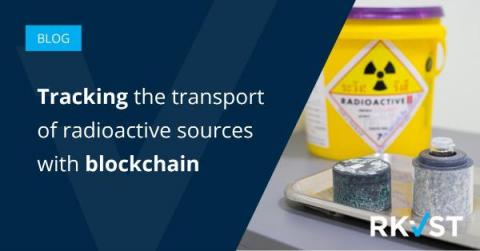
This week, Australian authorities recovered a tiny capsule, just 6mm x 8mm (0.24 x 0.31 inches) along a 900km section of Australia’s longest highway, the Great Northern Highway. The pea-sized capsule was a radiation gauge containing caesium-137, a radioactive material with a half-life of 30.05 years, that is used to measure the density and flow of materials in the mining, and oil and gas industries.
These are uncertain times in tech. If you’re at one of the many companies in the news recently, think back to why you joined. Was it the people? The tech? Or maybe… the perception of a rock-solid, not-going-anywhere, totally-guaranteed position? Things have changed lately.
Organizations are unaware of the prevalence of API keys and secrets throughout their systems, and how their users are sharing and using them. Even with security best practices and policies in place, the lack of awareness or compliance, as well as the possibility of human error means that API keys and secrets need protection regardless of where they are stored or shared.