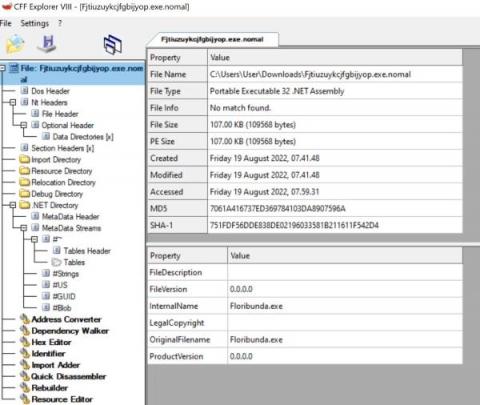
Redline infostealer gathers information and steals high value data from an infected machine. The Redline infostealer is considered one of the most dangerous malware currently being used in the wild and has been used in countless trojanized software, applications, games and cracked software. In addition to data exfiltration, Redline also has the capability to connect to a command and control (C2) server to download, upload files as well as perform remote commands.
TL;DR: There is a common belief that when it comes to uncovering bugs in the DevSecOps cycle, catching things early on is often better. While this approach certainly works well for Software Composition Analysis (SCA) and Static Application Security Testing (SAST), it doesn’t really apply to Dynamic Application Security Testing (DAST) in modern environments.
Hive has been seized by law enforcement, but were likely to still see these initial access methods and tactics used across other threat actor groups.
Our SOC Performance Report found that it takes an average of seven months to fill open SOC positions, and 55% of those doing the hiring are struggling to find qualified staff. As a result, SOC resources are strained, putting the team at risk for fatigue and burnout, which can cause them to miss critical alerts. Research has shown this is a widespread issue, too, as most SOCs waste an average of 10,000 hours annually validating unreliable and incorrect alerts.
Containerised deployment is widely becoming a standard in every industry, ensuring these containers are protected at every level with a high level of accuracy is one of the most important tasks. Some industry vendors rely solely on the manifest files to provide them with a list of components, others have to manually convert the container image to a TAR archive before scanning, and even then they may only work on the application layer instead of evaluating the entire filesystem.
Everything started when I was researching Windows containers. It required installing Docker Desktop for Windows, and I couldn’t help but notice that there were many Docker processes. Since some of the processes were privileged, the communication between them is of particular interest, which led me to explore further. I found the processes were using named pipes for communication, and one of them was a way to forward API calls from a low-privileged user to a privileged service.