Elevating cybersecurity with Just-In-Time access and Unified Safeguard

The 2024 Verizon Data Breach Investigations Report (DBIR) found that compromised credentials consistently appeared as a key attack enabler – with almost 77% of web app breaches enabled by stolen credentials. Organizations are scrambling to protect credentials, and Just-In-Time (JIT) access has emerged as an effective strategy to address these challenges. JIT access grants elevated permissions only when necessary, minimizing the attack surface and reducing the risk of unauthorized access.

MITRE ATT&CK Use Cases: Essential Security Tactics for 2025 Threats

The MITRE ATT&CK framework documents 196 individual techniques and 411 sub-techniques that help organizations understand and respond to cyber threats. Organizations have made this framework central to strengthening their security posture against evolving cyber threats since its public release in 2015.

Why Security Teams Choose Splunk Enterprise Security: Three Core Benefits That Transform SecOps

A SOC of the future is a resilient SOC that fosters a collaborative and proactive cybersecurity approach with a modern technology foundation. At the core of the SOC of the future is a unified threat detection, investigation, and response (TDIR) platform, representing the real-world requirements for how tools contribute to the SOC’s mission and strategy, providing integration and efficient process execution. The foundation for the unified TDIR platform is a modern SIEM.

Gartner's AI TRiSM Market Guide Validates the Urgency of AI Agent Security

AI Agents are not just another tech trend; they are fundamentally reshaping how enterprises operate. These autonomous systems are deeply embedded into workflows, making real-time decisions, executing tasks, and integrating across an organization’s most critical systems. With this shift comes an undeniable reality: enterprises are handing over operational control to AI-driven entities without the necessary governance and security frameworks in place.

Running DeepSeek AI privately using open-source software

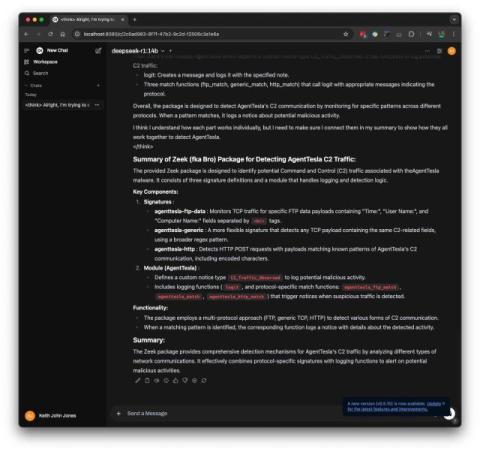
Zeek is a powerful open-source network analysis tool that allows users to monitor traffic and detect malicious activities. Users can write packages to detect cybersecurity events, like this GitHub repo that detects C2 from AgentTesla (a well-known malware family). Automating summarization and documentation using AI is often helpful when analyzing Zeek packages.

Introducing Teramind's ServiceNow Integration: Incident Management and Security Operations Simplified

We’re excited to announce our ServiceNow integration, a breakthrough solution for how you approach security, incident management, and operational efficiency. By combining Teramind’s user activity monitoring and insider risk detection with ServiceNow’s workflow automation, this integration gives you the power to detect and prevent potential security risks, streamline incident response, and optimize business processes.

Error Message Vulnerabilities: Why They Matter and How to Prevent Them

Ever get one of those annoying error messages on your phone that gives way too much detail? You know, the ones that tell you the line of code that failed or the exact database query that crashed the app. As an app user, you may dismiss the message and move on. But did you know those overly verbose error messages could be exposing your personal data?

Protect Your Devices: Mobile Phishing Attacks Bypass Desktop Security Measures

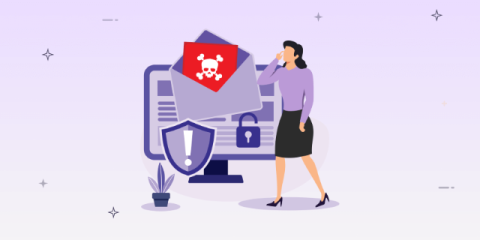
Zimperium warns of a surge in phishing attacks specifically tailored for mobile devices. These attacks are designed to evade desktop security measures in order to breach organizations through employees’ smartphones. Mobile phishing includes SMS phishing (smishing), QR code phishing (quishing), voice phishing (vishing), and mobile-targeted email phishing.

AI Data Compliance: All You Need To Know About DevOps Data Protection

The evolution of artificial intelligence has been rapid thus far. By 2030 the AI market is projected to reach $1.81 trillion. Technology supported by AI has been useful in many areas of life such as education, healthcare, or finance. That is reflected by the rate of AI adoption by organizations being 72% (2024). Even if you just look around you – many people use tools like ChatGPT for daily life or work, AI helps with email management or studying. What do these advancements in AI bring to DevOps?