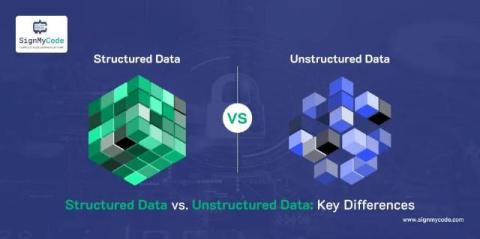
Structured Data vs. Unstructured Data: Key Differences Explained

The amount of data worldwide is growing rapidly. According to the experts, in 2024, there was a significant 791.94% increase in data generation. There are mainly two types of data: structured and unstructured data. Both are used, maintained, and analyzed differently. But what is the basis of differentiation, and how can one find out which one is the best. In this blog, you will find out the pros and cons and use cases. So let’s begin!!

Say Goodbye to SaaS Security Gaps with Cato CASB

As organizations increasingly depend on SaaS applications, IT teams struggle with visibility and governance. Shadow IT, unmanaged devices, and limited monitoring capabilities create blind spots, exposing enterprises to compliance violations, data exfiltration, and insider threats. Risks don’t come only from unsanctioned applications: even widely used SaaS platforms can become a security liability when not properly controlled.

Egnyte on AWS Marketplace: Improve Your Procurement Efficiency

Starting today, Egnyte is available through the AWS Marketplace! Our partnership with AWS makes it easier to streamline procurement processes and maximize your technology investments. Read on to discover how our collaboration with AWS simplifies the integration of Egnyte into your existing tech stack, helping you unlock more value from your investment.

What is attestation and why is it important?

Managing an enterprise-level Active Directory (AD) means enterprise-grade volumes of identity accounts. Naturally, operations at this scale come with high complexity and call for intensive resources to maintain control. Manual errors can creep in as the business expands, leading to increased cybersecurity risks and vulnerabilities.

Best Practices for Jira Sandbox to Production Migration

Jira sandboxes provide strategic leverage for the development lifecycle. Unfortunately for IT teams, migrating them to production environments is rarely straightforward. That means backups should be immediately pointed out as a vital part of the process. A smooth migration means tested changes in the sandbox are moved to the live system without errors. This makes the platform stable and minimizes potential problems.

Resurgent North Korean Malware Campaign in npm

Hello from the Veracode Research blog! It’s been a minute since we’ve done a malware write-up, but we’re back and ready for action! And speaking of folks who are back and ready for action, the North Korean attackers behind the crypto wallet stealer campaign we wrote about in February of 2024 and again in May of 2024 are back at it with a new batch of malicious npm packages.

The API Security Challenge in AI: Preventing Resource Exhaustion and Unauthorized Access

Agentic AI is transforming business. Organizations are increasingly integrating AI agents into core business systems and processes, using them as intermediaries between users and these internal systems. As a result, these organizations are improving efficiency, automating routine tasks, and driving innovation. But these benefits come at a cost. AI agents rely on APIs to access data and functionality from underlying systems. Without APIs, AI agents are useless.

Antagonistic Harmony: Permissioned and Permissionless Blockchains in Tomorrow's Financial System

The rise of blockchain has fundamentally reshaped the financial ecosystem. Since Bitcoin’s genesis in 2009, permissionless blockchains have introduced an open, decentralized model for transacting value—fueling everything from DeFi to NFTs. Meanwhile, traditional financial institutions (FIs), drawn to the benefits of blockchain yet cautious of its risks, have leaned into permissioned systems that offer control, privacy, and compliance.

How Research Supports the 2025 Bitsight Rating Algorithm Update

In keeping with Bitsight's ongoing commitment to making its ratings more meaningful and more representative of an ever-changing Cybersecurity landscape, the Ratings Algorithm Update for 2025 is scheduled to go into preview on April 8, 2025. The highlight of RAU 2025 is the incorporation of the Web Application Security(WAS) risk vector into the Bitsight Security Ratings1, and the associated deprecation/removal of Web Application Headers(WAH) risk vector.